

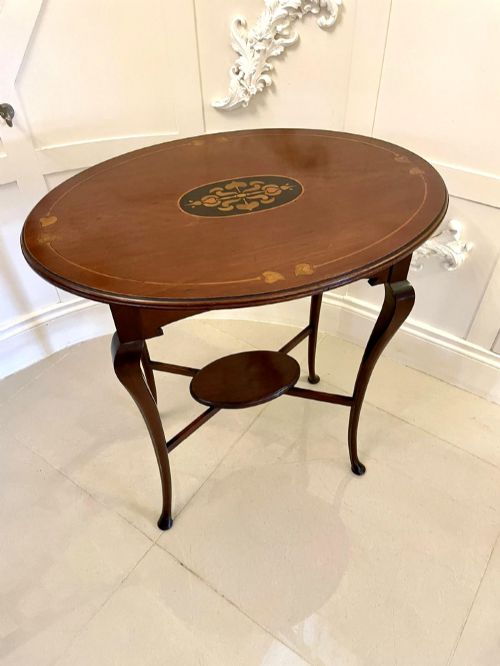
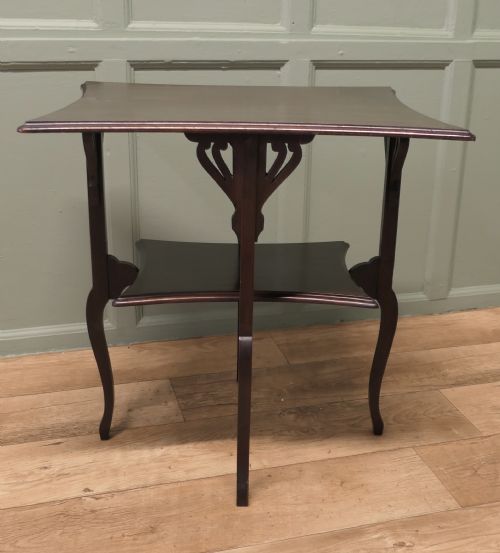
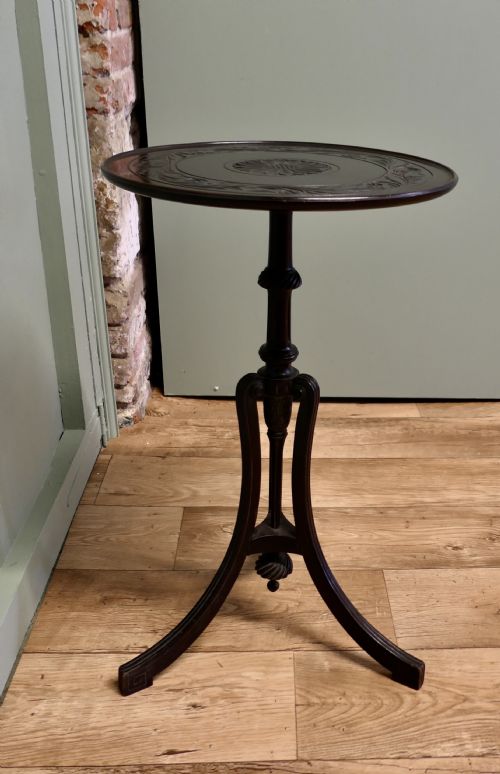
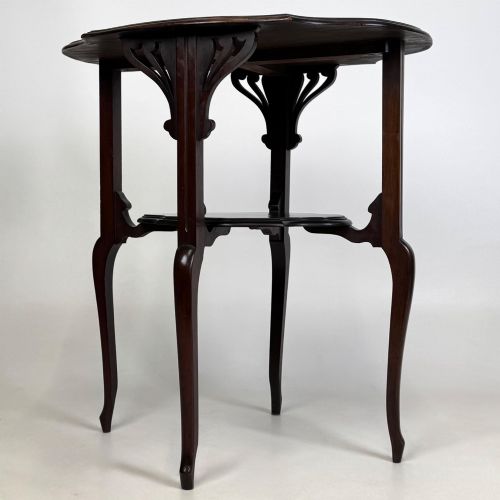
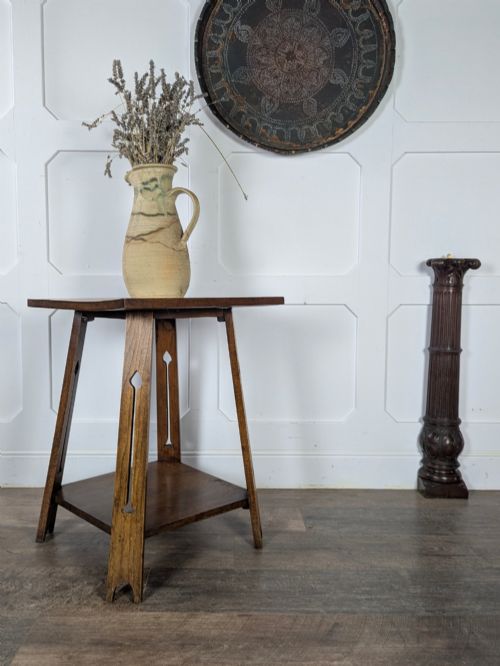
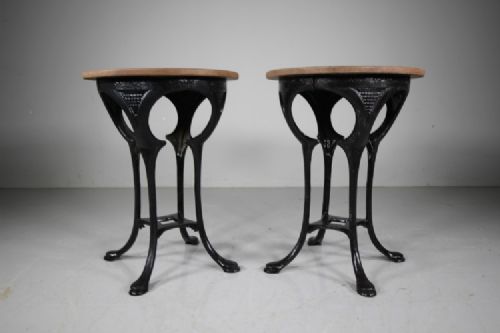
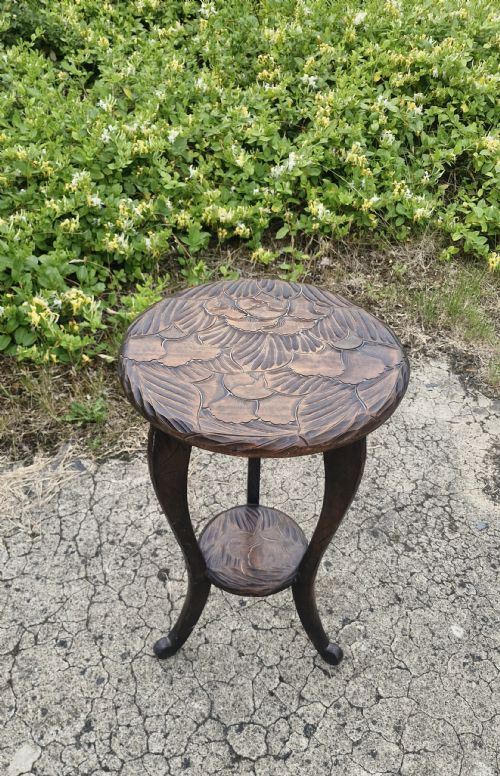


Art Nouveau Occasional Table
An art nouveau occasional table brings fluid floral lines and organic timber forms straight into a room.
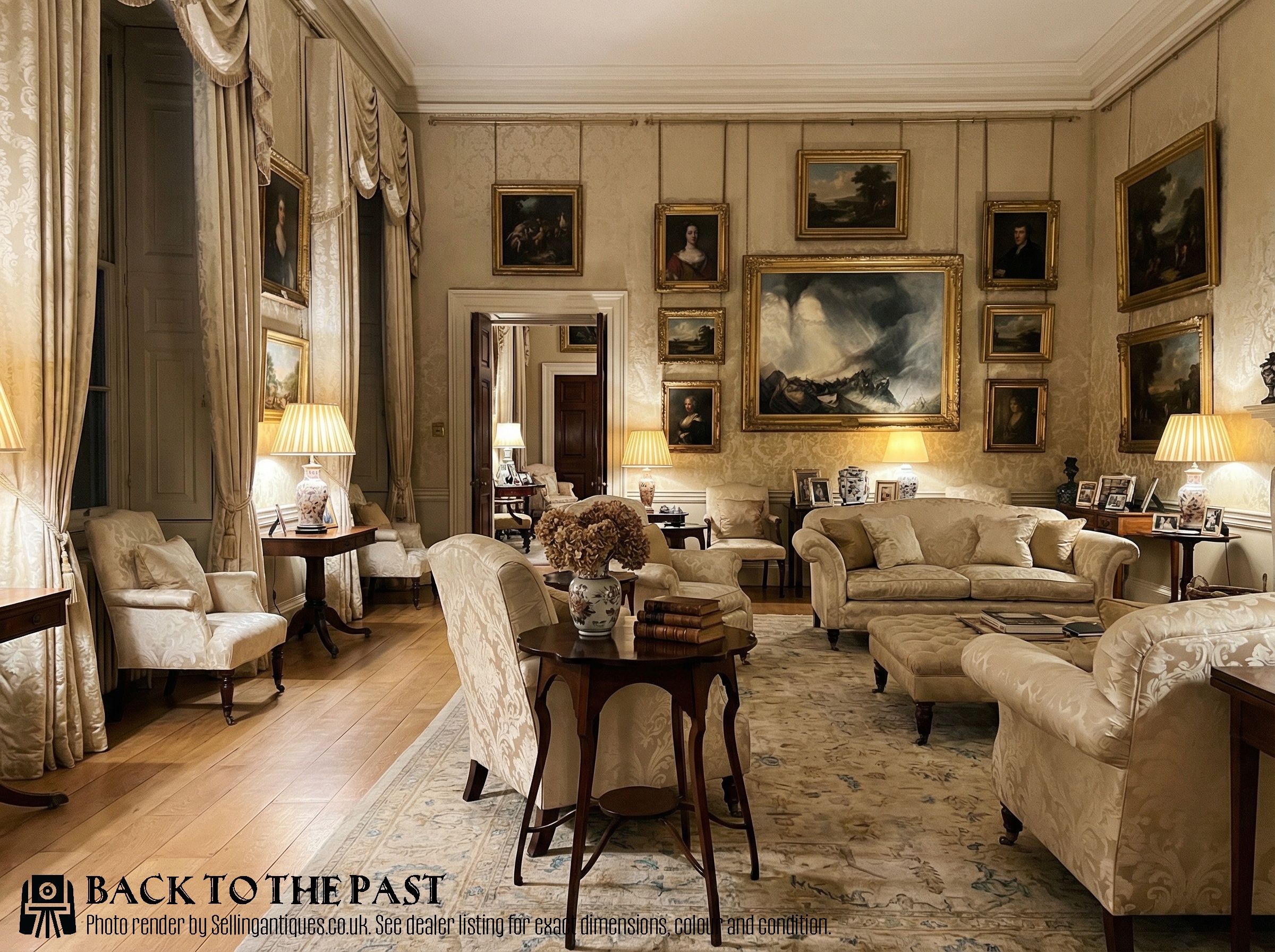
Art Nouveau Occasional Table
An art nouveau occasional table is a small, movable surface designed for holding books, lamps, or plants in a domestic interior. These pieces appear most frequently in mahogany, oak, and walnut, often taking the form of side tables, two-tier stands, or tray tables.
The objects span the late nineteenth century into the nineteen-twenties, incorporating Edwardian and Arts and Crafts influences alongside continental designs. Mahogany and oak predominate, frequently featuring inlaid woodwork, carved motifs, or metal inserts.
Buyers meet these pieces in various configurations, including oval lamp tables, two-tier plant stands, and occasional tables with ceramic tiles or engraved copper trays. Many align with the Edwardian period or emerge from workshops influenced by Liberty and kindred designers.
What varies in quality
Quality rests upon the crispness of the carving, the precision of wood inlay, and the integrity of the materials employed. Pieces from documented workshops exhibit tighter joinery and more ambitious design execution than standard commercial output.
The choice of secondary materials, such as heavy gauge copper trays, inset ceramic tiles, or finely figured mahogany veneers, distinguishes standard tables from superior examples. Structural balance and the retention of original surface finishes further divide the range.
Art Nouveau Occasional Table Retail Price Guide 2026
Typical asking prices for art nouveau occasional table among the pieces listed under this phrase on Sellingantiques today, from the lower quarter to the upper quarter. They describe what is for sale here now, not the wider market.
Period styles recorded here encompass Edwardian, Arts and Crafts, and Viennese bentwood alongside classic art nouveau forms.
Liberty's·Archibald Knox·Fischel·Morris and Co·Carlo Bugatti·Thonet
The Art Nouveau Occasional Table Glossary
- Occasional table
- A small, movable table designed for a specific, non-permanent use in a room, such as holding a lamp or books.
- Inlay
- A technique where pieces of contrasting wood, shell, or metal are inserted into depressions flush with the surface to create decorative patterns.
- Tray table
- A piece featuring a removable or fixed tray top, commonly executed in metal such as copper or brass above a wooden or metal stand.
- Jugendstil
- The continental European manifestation of the art nouveau movement, prevalent in German-speaking countries and distinct in its graphic linearity.
- Bentwood
- Wood heated with steam and bent into curved structural forms, utilised extensively by continental makers for lightweight frames.
Art Nouveau Occasional Table: Frequently Asked Questions
Where should I place an art nouveau occasional table?
These pieces suit living rooms, hallways, or studies as companion surfaces beside seating.
Their modest proportions allow them to fit into corners or spaces where larger furniture does not reach.
How do I care for the timber surface?
Dust the wood regularly with a dry cloth and apply natural wax occasionally to nourish the grain.
Keep the tables away from direct heat sources and strong sunlight to protect the polish and prevent timber movement.
Can these tables support a heavy lamp?
Most pieces are built for light domestic duties rather than heavy loads.
A standard table holds books, small lamps, or plants comfortably without straining the joints.
How do I distinguish art nouveau from Edwardian styles?
Art nouveau focuses on asymmetric, organic, and flowing plant-based motifs.
Edwardian furniture often employs classical symmetry and lighter traditional stringing, though many pieces combine both design vocabularies.
What is the purpose of a two-tier table?
The lower shelf provides extra surface area for storage or display without expanding the footprint of the table.
This tier often stabilizes the legs while holding magazines or small decorative objects.