


Mahogany Folding Tea Stand
A mahogany folding tea stand offers a clever surface for afternoon hospitality, combining rich timber with the convenience of collapse.
Mahogany Folding Tea Stand
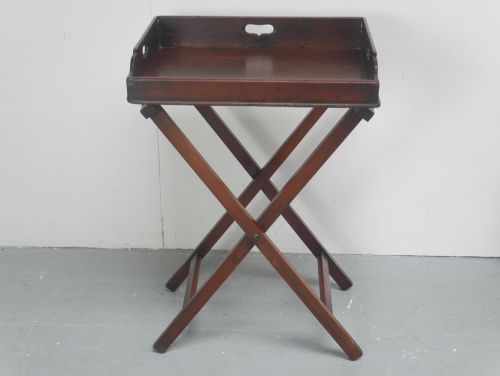
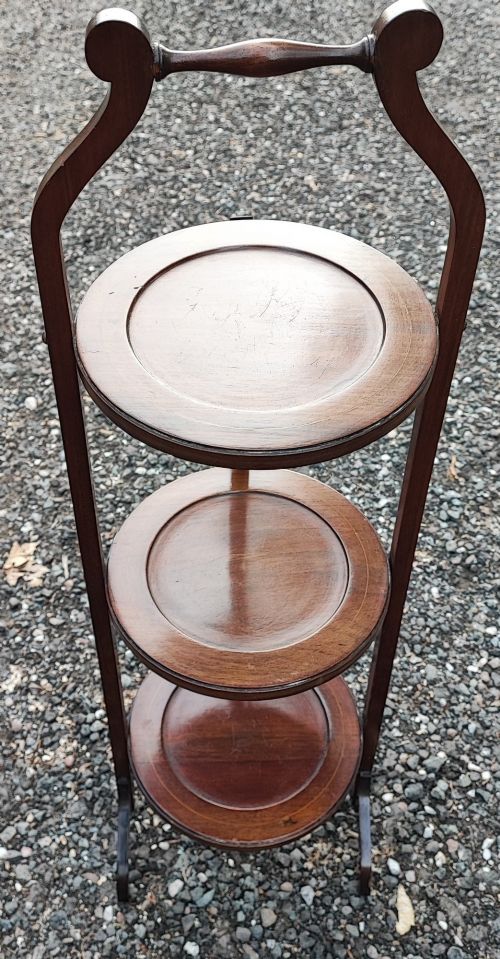
A mahogany folding tea stand serves as a versatile piece of furniture designed for serving refreshment, encompassing forms such as cake stands, butler tray tables, tiered stands, and occasional tip tables. These items appear across multiple periods including the eighteenth century, Georgian era, Regency, nineteenth century, and Edwardian years.
The objects take various structural shapes, ranging from single-tray folding tables and occasional tables to multi-tiered cake stands with three or four tiers. Buyers encounter pieces influenced by Georgian and Regency traditions alongside Sheraton Revival designs and Edwardian productions.
Originating to facilitate domestic entertaining and the serving of afternoon tea, these stands provide practical display surfaces that fold away when not in use. The selection reflects both formal eighteenth-century craftsmanship and the lighter, inlaid aesthetic of the early twentieth century.
How they were made
Cabinetmakers constructed these pieces primarily using solid mahogany, often complemented by secondary woods and decorative accents such as satinwood, boxwood, and brass hardware. Artisans integrated inlay work to embellish surfaces, particularly within Sheraton Revival and Edwardian examples.
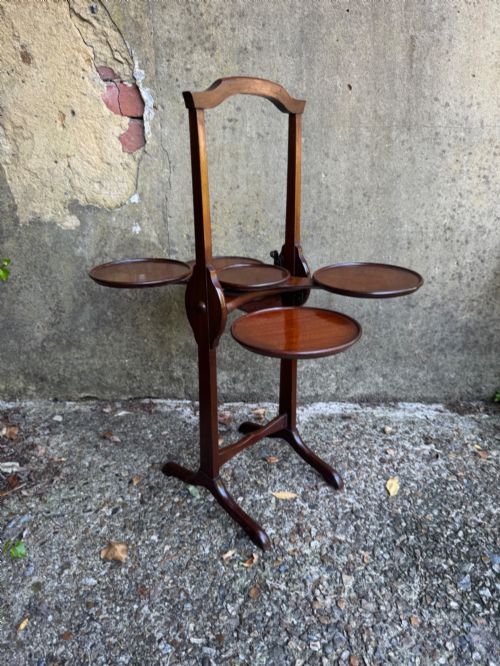
Construction techniques focused on mobility and stability, incorporating hinged mechanisms for folding tea tables and tray stands alongside tiered supports for cake stands. Felt surfaces occasionally appeared on tray tables to cushion porcelain, while metals like brass provided functional hinges and fittings.
One Edwardian model carries the delightful moniker of a monoplane folding tea table, bringing aviation enthusiasm into the afternoon tea ritual.
What varies in quality
The standard of timber selection and intricacy of inlay distinguish different examples, with finer pieces displaying carefully figured mahogany grain and precise boxwood or satinwood stringing. The crispness of the turning on tiers and uprights further indicates the skill of the maker.
Mechanical integrity defines the better pieces, where folding actions, hinges, and tiered joints operate smoothly without compromising the overall stability of the stand. The proportion and balance of the frame, whether supporting a single oval tray or four distinct tiers, dictate the structural refinement of the object.
The Mahogany Folding Tea Stand Glossary
- Butler tray
- A portable wooden tray with hinged or fixed sides, designed to sit upon a folding stand for serving drinks or meals.
- Sheraton Revival
- A late nineteenth and early twentieth-century design movement inspired by the neoclassical furniture of George Sheraton, characterised by refined proportions and delicate inlay.
- Tiered stand
- A piece of furniture featuring multiple ascending shelves or platforms used for displaying cakes, afternoon tea items, or decorative objects.
- Tip table
- An occasional table with a hinged top that pivots to a vertical position, allowing the item to be stored flat against a wall when not in use.
- Inlay
- A decorative technique where contrasting woods such as satinwood and boxwood are set flush into the mahogany surface to create geometric or floral patterns.
Mahogany Folding Tea Stand: Frequently Asked Questions
How do I use a folding tea stand today?
These stands function effectively as side tables for holding drinks, books, or plants in living spaces. Their collapsible nature allows for easy storage when floor space is needed.
Multi-tiered versions serve well for displaying collections or serving refreshments during gatherings, maintaining their original domestic utility.
How do I tell an Edwardian stand from a Georgian one?
Edwardian stands frequently feature lighter constructions with delicate satinwood or boxwood inlay, reflecting the Sheraton Revival style popular around nineteen hundred. They often take the form of multi-tiered cake stands.
Georgian and eighteenth-century examples tend to focus on rich mahogany grains, robust butler trays, and simpler architectural lines without excessive surface decoration.
Are these stands stable when loaded?
Properly maintained stands provide reliable support for everyday items such as tea sets or decorative objects. The stability depends on the integrity of the folding hinges and upright joints.
Heavier items balance best on the lower tiers of multi-level stands or on solid butler tray bases to prevent tipping.
What maintenance do mahogany stands require?
Routine dusting with a soft cloth keeps the mahogany timber and any inlay work clean. Avoid placing the stands in direct sunlight or near heat sources to protect the wood finish.
Occasional application of appropriate furniture wax preserves the lustre of the grain and protects the surface from minor wear.