




Traditional Three Tier Stand
A traditional three tier stand organises space vertically with stepped tiers, offering compact display or serving surfaces found mostly in Edwardian and Georgian examples.
Traditional Three Tier Stand
When you search for a traditional three tier stand, you encounter pieces designed to hold cakes, books, or display items across three distinct horizontal levels. These tiered pieces function well in compact rooms where floor space is at a premium yet surface area is required.
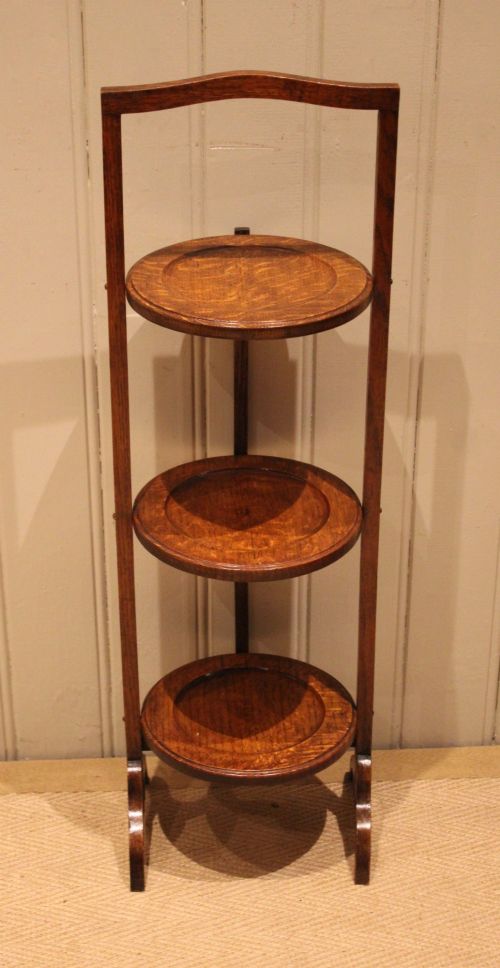
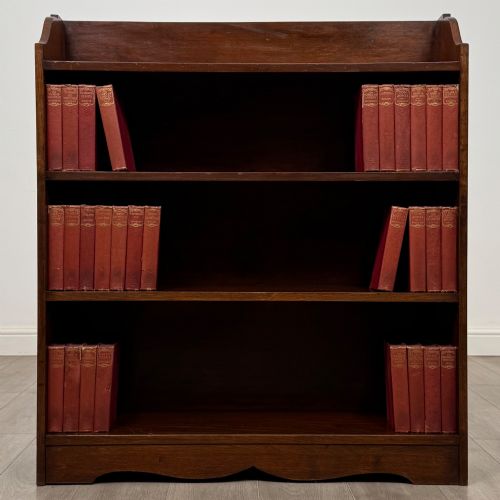
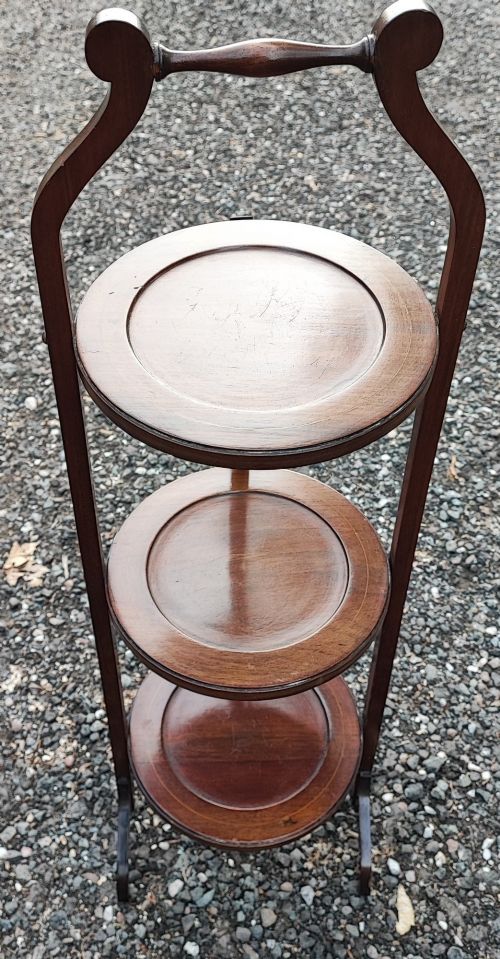
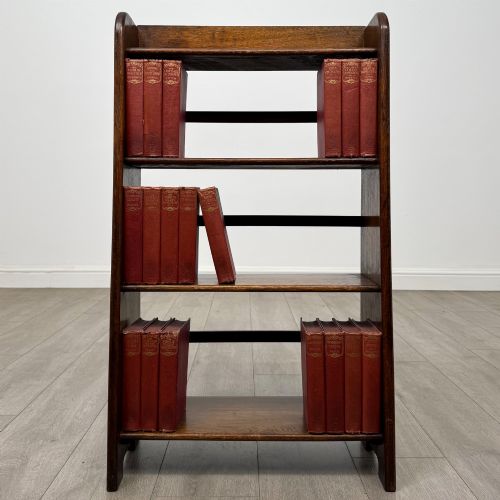
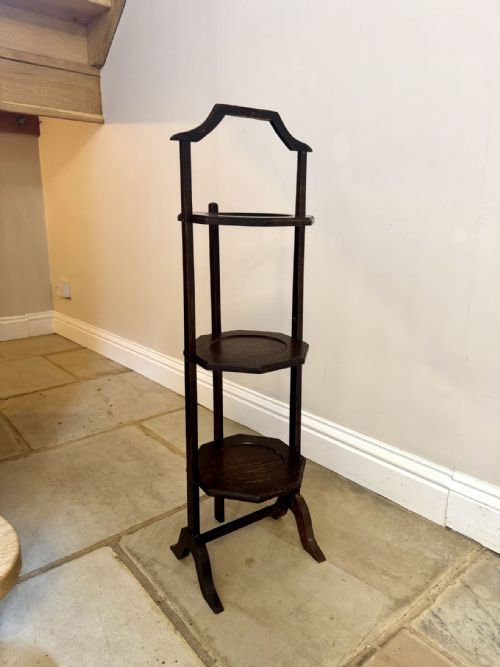
The most common forms on this page take the shape of folding cake stands and dumb waiters originating from the Edwardian period or the nineteenth century. Makers also produced variations such as open bookcases, bedside tables, and display stands that utilise the same tiered format.
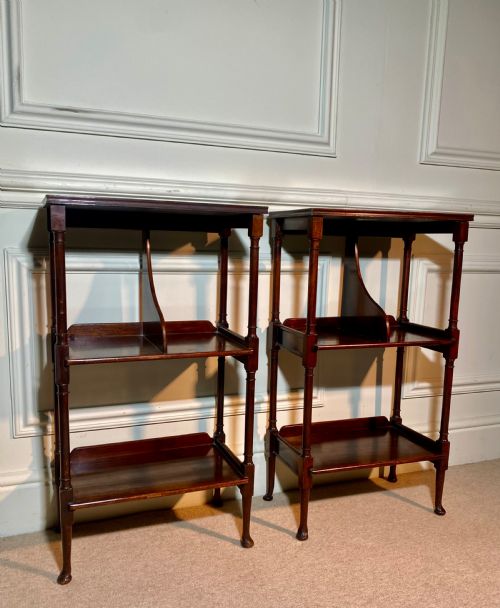
Examples span several distinct styles, including Edwardian utility, Arts and Crafts workmanship, and Sheraton Revival refinement. Woods like mahogany and oak dominate the selection, often accompanied by brass fittings or satinwood inlay.
How they were made
Cabinet makers constructed these stands using solid timbers such as mahogany, oak, walnut, and pine, occasionally incorporating satinwood inlay for decorative contrast. Folding mechanisms in Edwardian cake stands rely on pivoted wooden frames that allow the tiers to collapse together.
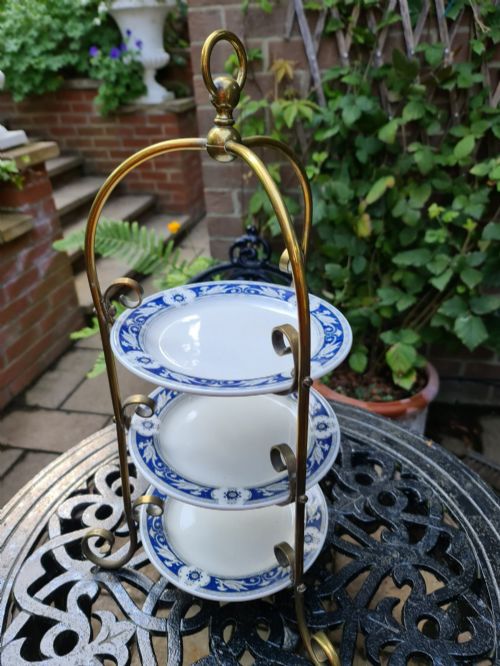
Brass fittings appear frequently on tiered display stands and dumb waiters, serving both structural and decorative functions. Polished finishes highlight the natural grain of the timber, whether on a Georgian dumb waiter or an early twentieth-century magazine rack.
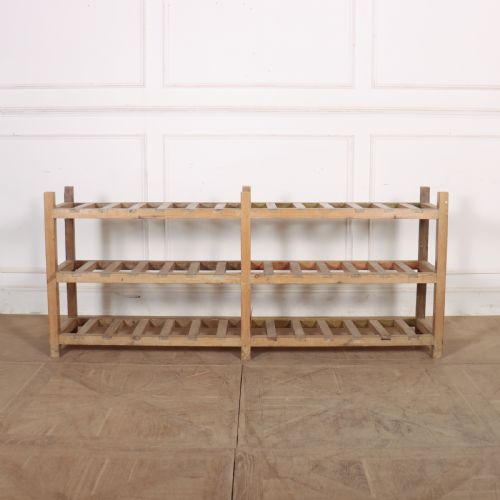
Scottish pine shoe racks share floor space with delicate satinwood inlay, proving that practical boots and polite tea cakes require equal elevation.
What varies in quality
The distinction between ordinary and superior pieces rests on the choice of timber and the precision of the joinery. Mahogany and walnut examples with fine satinwood inlay display a higher grade of craftsmanship than utilitarian pine or basic oak versions.
Stability and movement define the construction standard, particularly in folding cake stands and rotating dumb waiters. Tiers that remain level and hinges that operate smoothly indicate careful workshop production during the nineteenth and early twentieth centuries.
The Traditional Three Tier Stand Glossary
- Dumb waiter
- A tiered stand traditionally used for serving food or holding books without the need for a servant. These multi-level pieces often feature circular trays graduated in size.
- Sheraton Revival
- A late nineteenth and early twentieth-century style inspired by the designs of Thomas Sheraton. Pieces in this style typically feature delicate mahogany frames and satinwood inlay.
- Inlay
- A decorative technique where contrasting woods such as satinwood or boxwood are inserted into recesses within the primary timber. This method adds linear or floral patterns to table tops and tiers.
- Folding stand
- A collapsible furniture design utilising hinged supports. This mechanism enables the tiers to fold flat for storage when not in use.
- Tiered display stand
- A multi-level structure constructed from materials like brass and glass or polished timber. Such stands elevate objects to create visible separation between levels.
Traditional Three Tier Stand: Frequently Asked Questions
What is a traditional three tier stand used for?
These tiered pieces were originally designed for serving afternoon tea or holding books and small items in domestic rooms. Today, they function effectively as display surfaces for plants, ornaments, or collections in living spaces.
Their vertical arrangement allows them to occupy minimal floor space while providing three separate tiers for placement. This makes them adaptable furniture items for corners or beside seating.
How do I identify an Edwardian cake stand?
Edwardian cake stands typically feature light oak or inlaid mahogany construction with folding wooden frames. They often date from the period around nineteen hundred to nineteen ten and display straightforward domestic utility.
Unlike heavier Georgian dumb waiters, these Edwardian pieces prioritise lightweight portability and collapsible mechanisms for easy storage.
Are these stands stable enough for daily use?
Stands built with solid timbers like mahogany and oak possess robust frames suitable for everyday placement of objects. Folding mechanisms on older examples require gentle handling to preserve the original hinges and joints.
Checking that all three tiers sit level ensures the stand remains secure when holding books, display items, or tableware.