


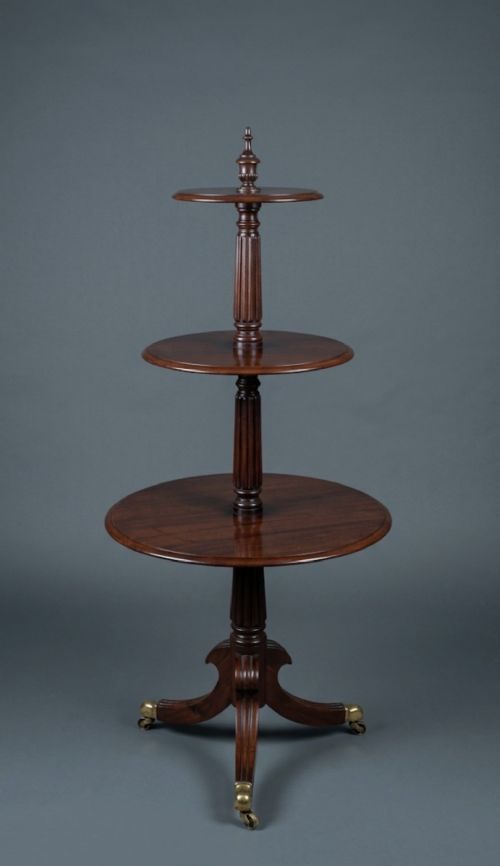

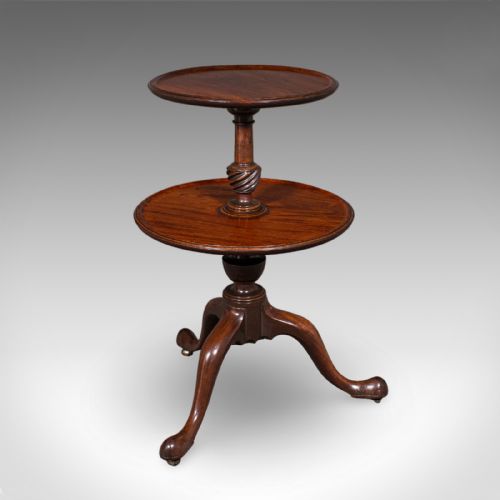


Mahogany Cake Tier
These mahogany cake tier pieces provide multiple circular shelves for afternoon tea or serving, drawing collectors for their tiered utility.
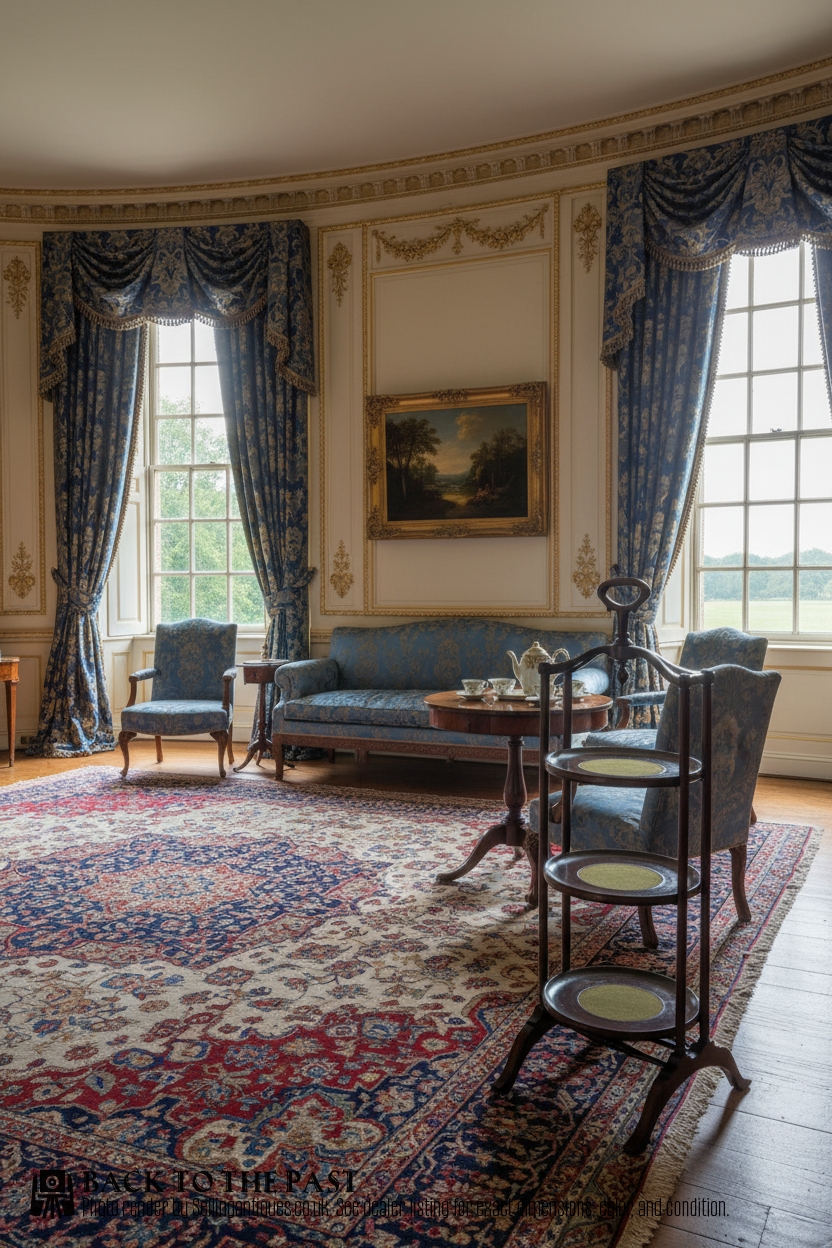
Mahogany Cake Tier
A mahogany cake tier search brings up tiered stands, dumb waiters, etageres and folding cake stands designed for serving afternoon tea or displaying items across multiple levels. These items appear across Georgian, Regency, Victorian and Edwardian periods, stretching from the late 18th century into the early 20th century.
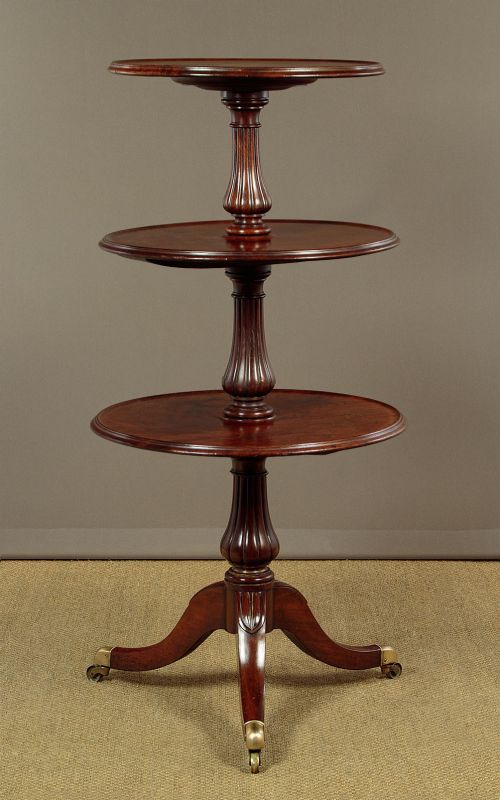
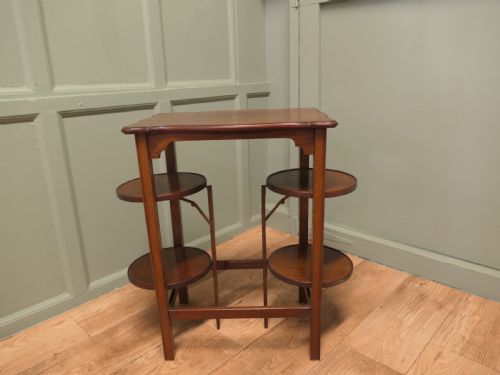
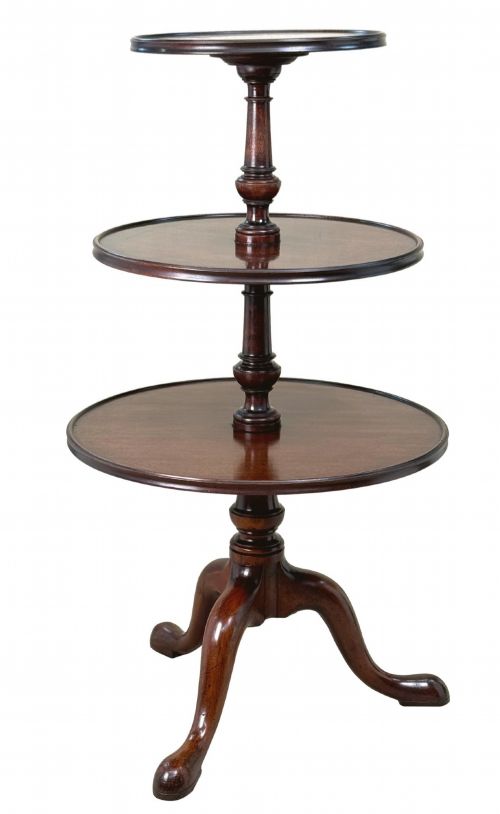
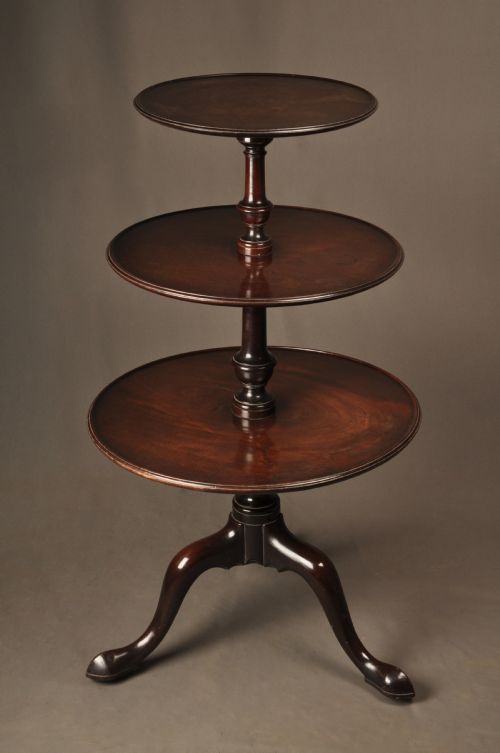
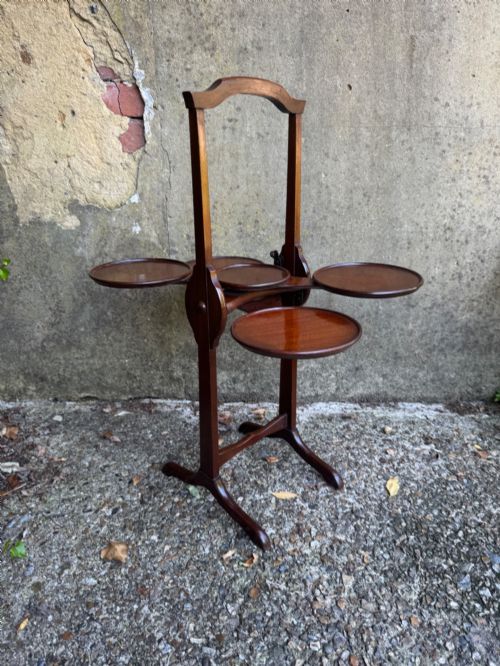
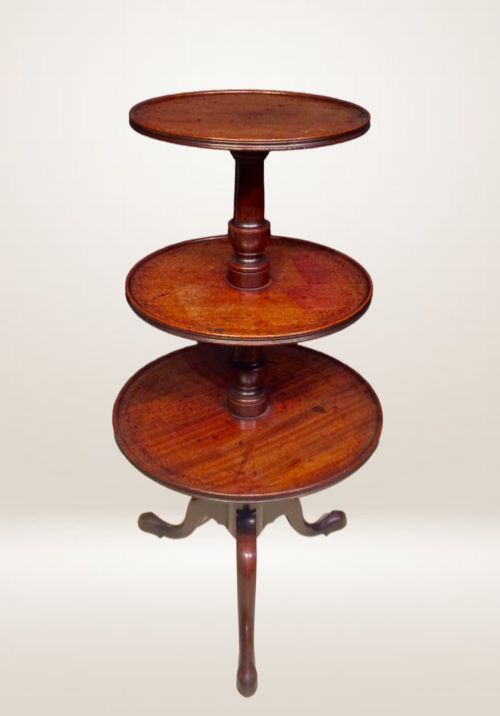
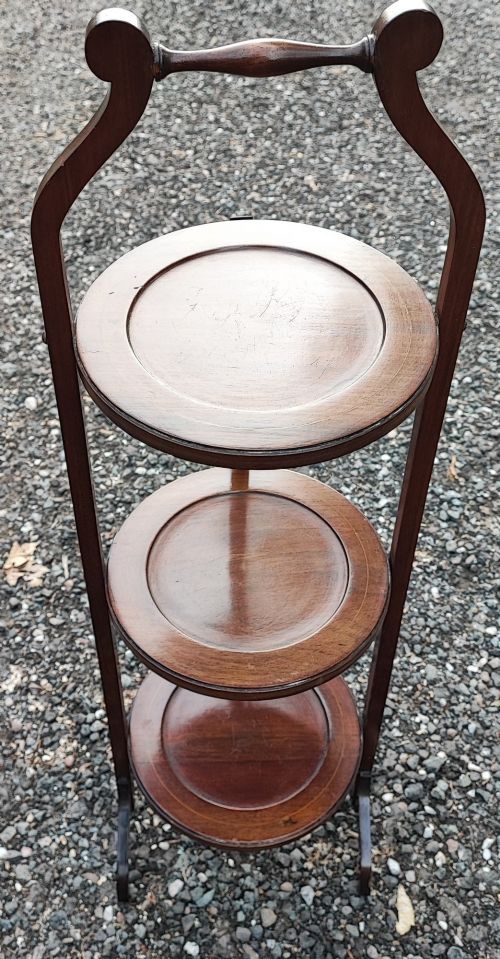
The most common version on this page is the Edwardian three-tier folding cake stand, often enhanced with satinwood or boxwood inlay. Alongside these lighter folding pieces, larger Georgian and Regency dumb waiters feature solid mahogany circular tiers mounted on tripod bases for dining room service.
Materials and construction
Makers utilised solid mahogany and mahogany veneers for the structural tiers and upright supports, combining durability with rich grain patterns. Brass fittings secure the moving parts of folding stands and the pivoting mechanisms of revolving dumb waiters.
Finer examples incorporate decorative stringing and banding in contrasting boxwood and satinwood inlay around the rim of each tier. Some Edwardian and Victorian variants introduce specialised surfaces like felt or cane work to cushion the plates and tea wares.
Mahogany Cake Tier Retail Price Guide 2026
Typical asking prices for mahogany cake tier among the pieces listed under this phrase on Sellingantiques today, from the lower quarter to the upper quarter. They describe what is for sale here now, not the wider market.
Some Edwardian stands fold completely flat, proving that Victorian and Edwardian makers anticipated modern space-saving furniture long before flat-pack delivery.
Quality differences
The distinction between standard items and finer pieces rests on timber selection, structural proportion and the precision of the joinery. Early Georgian and Regency examples demonstrate superior turning on the central columns and substantial tripod bases designed to bear heavy circular trays without tipping.
Decorative refinement separates ordinary stands from exceptional ones, particularly where makers added intricate boxwood and satinwood inlay or fashioned unusual four-tier configurations. The smoothness of the folding action or the stability of a revolving tier marks the standard of the original workshop.
Gillows
The Mahogany Cake Tier Glossary
- Dumb waiter
- A tiered serving stand designed to hold food and drink near a dining table without the presence of servants. These pieces typically feature two or three graduating circular trays on a central column.
- Etagere
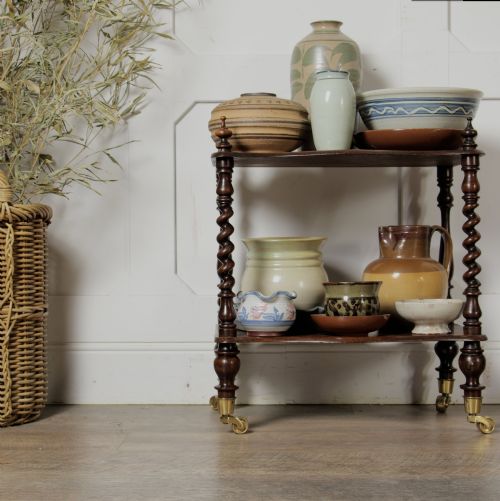
- A set of open shelves for displaying small objects or serving afternoon tea. The form provides multiple tiers supported by slender uprights.
- Sheraton Revival
- A late 19th and early 20th century style drawing on the neoclassical designs of Thomas Sheraton. Pieces from this movement frequently feature delicate satinwood inlay and classical proportions.
- Tripod base
- A three-legged support structure commonly found beneath the central columns of dumb waiters and occasional tables. This arrangement ensures stability on uneven floors.
Mahogany Cake Tier: Frequently Asked Questions
What is a mahogany cake tier used for?
These pieces served historically for presenting afternoon tea, cakes and side dishes across multiple levels. Today they function as display stands for plants, decorative plates or occasional items in living spaces.
Their tiered design maximises vertical display space while maintaining a compact footprint on the floor.
How do I identify an Edwardian cake stand?
Edwardian examples typically date from around 1900 to 1910 and often feature folding mechanisms for easy storage. They frequently incorporate contrasting boxwood or satinwood inlay on the mahogany tiers.
Earlier Georgian and Regency pieces are heavier, non-folding dumb waiters constructed with solid timber and robust tripod bases.
Are these stands sturdy enough for daily use?
Most pieces are structurally sound for holding light items, plants or afternoon tea wares. Folding stands rely on hinged joints that benefit from gentle handling during opening and closing.
Heavier revolving dumb waiters from the 18th and 19th centuries provide a more substantial weight distribution across their central columns.
What is the difference between a dumb waiter and a cake stand?
Dumb waiters originated in the Georgian and Regency periods as heavy dining room serving furniture with revolving or fixed tiers on tripod bases. Cake stands are typically lighter Edwardian or later folding structures designed for tea service.
Both share the multi-tiered circular format but serve different functional contexts within historic interiors.