


Vintage Cake Display
Vintage cake display stands bridge practical entertaining and decorative display, offering tiered structures for serving afternoon tea or showcasing ceramics.
Vintage Cake Display
A vintage cake display encompasses various tiered stands, folding tables, and display pieces designed to present baked goods or decorative items. When searching for a vintage cake display, buyers encounter practical wooden folding stands alongside glass and brass platters.
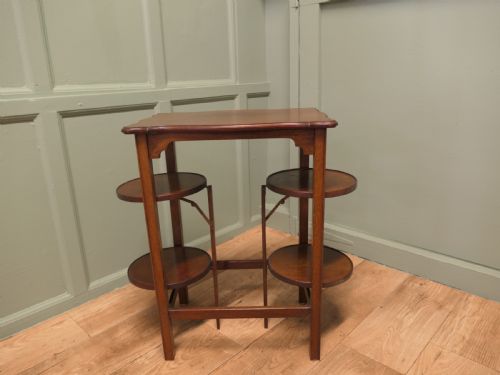
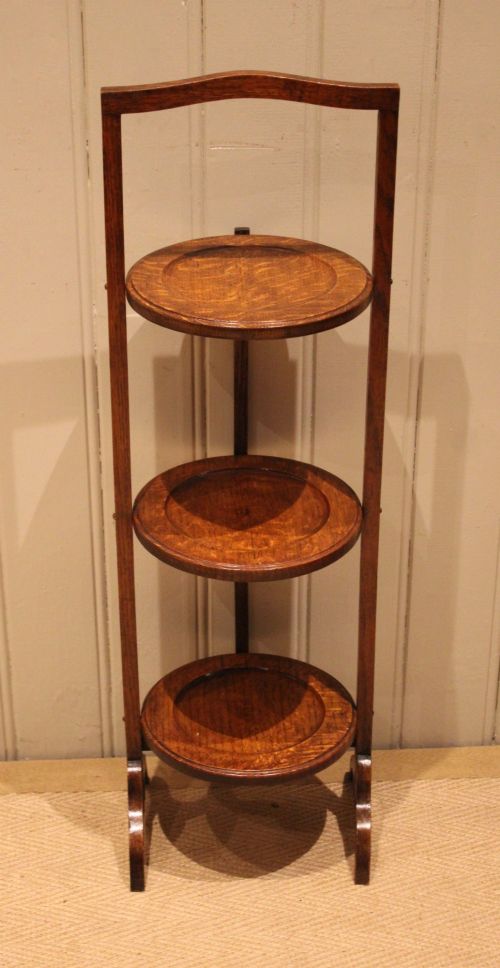
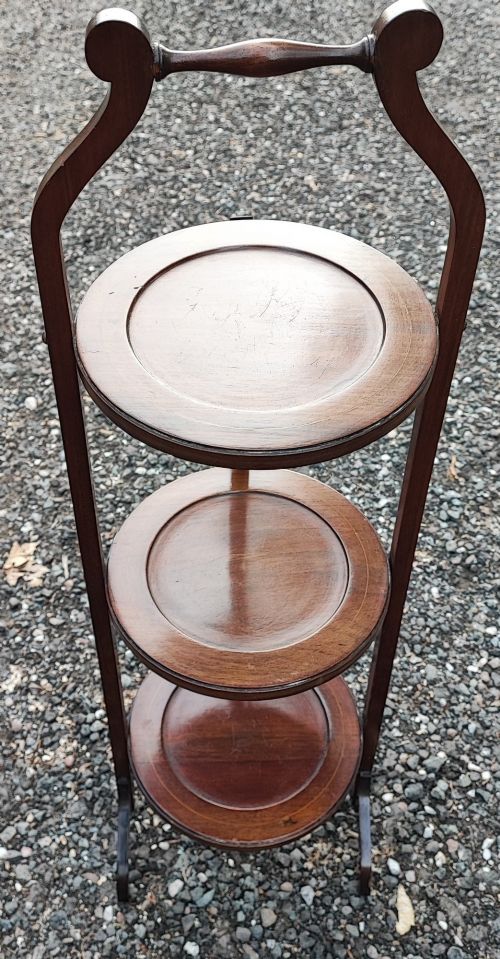
The most common examples on this page date from the Edwardian period and the early twentieth century, heavily featuring oak and mahogany. These frequently take the form of three-tier folding stands intended for easy storage when not in use.
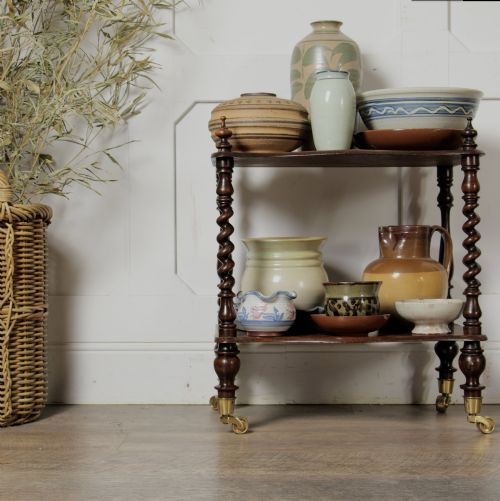
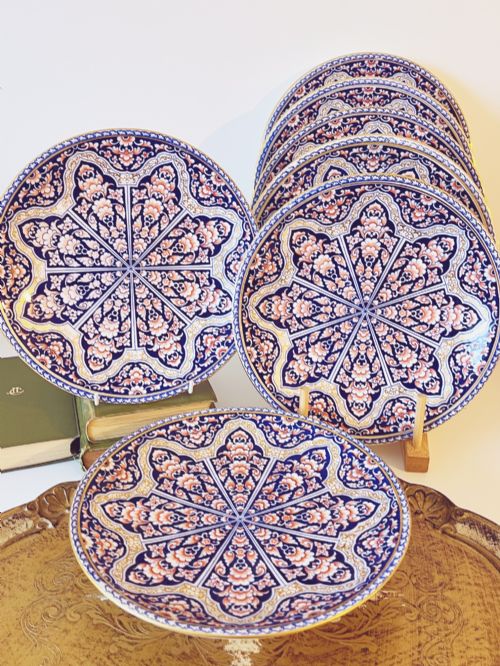
Earlier Victorian and Georgian iterations also appear, ranging from mahogany cheese stands to tiered dumb waiters and ceramic dessert services. Each era brings distinct structural approaches to presenting food and objects in domestic spaces.
Materials and construction methods
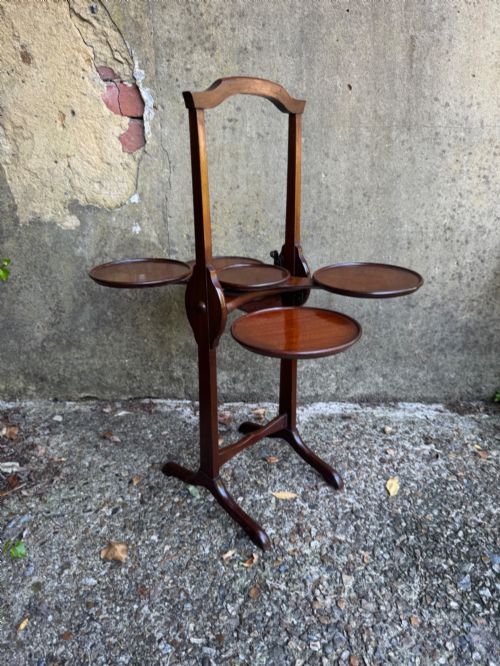
Makers utilised solid hardwoods like oak and mahogany for structural frames, frequently incorporating satinwood and boxwood inlay to decorate tiered surfaces. Folding mechanisms rely on hinged joints integrated neatly into the upright supports.
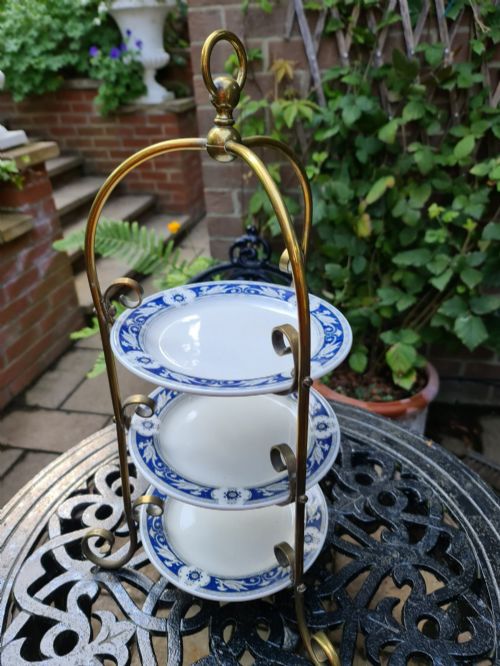
Metal components appear through silver plate finishes, polished brass, and cast metal frames that support glass plates or mirrored centerpieces. Ceramic elements utilise bone china decorated with intricate patterns.
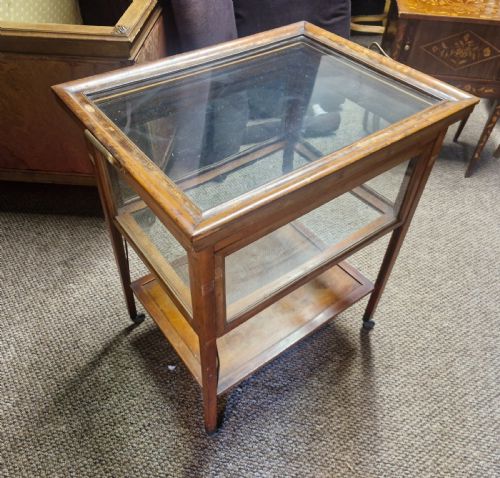
Joinery techniques range from simple turned uprights on Victorian stands to sophisticated drop-side mechanisms on tea trolleys and tiered occasional tables.
Listings feature items spanning from the eighteenth century through to the nineteen thirties, encompassing mahogany, oak, brass, and bone china.
Assessing craftsmanship and condition
Quality rests primarily in the selection of timber and the precision of the folding mechanisms. Superior pieces feature well-figured mahogany or quarter-sawn oak with crisp inlay, whereas simpler items rely on plain secondary woods.
The stability of the tiered structure distinguishes finer examples from utilitarian ones. Well-made stands lock securely into position without wobble, maintaining alignment across all tiers when loaded with weight.
The Vintage Cake Display Glossary
- Comport
- A shallow bowl raised on a stem, used for serving fruit or small cakes as part of a dessert service. They often match a series of decorative plates.
- Dumb Waiter
- A tiered piece of freestanding furniture designed to hold tableware or food without requiring a servant at the table. Georgian versions typically use heavy mahogany construction.
- Tazza
- A small shallow saucer or plate mounted on a pedestal foot, originating in glass or silver. These elevate individual display items above the tabletop.
- Mirror Plateau
- A mirrored base enclosed in a metal or wooden frame, originally placed in the centre of a table to reflect light and display decorative objects. They protect table surfaces while enhancing visual depth.
- Barley Twist
- A type of furniture turning shaped like a spiral resembling twisted barley sugar. This decorative detail appears frequently on upright supports from the Victorian era.
Vintage Cake Display: Frequently Asked Questions
How do I use a folding cake stand today?
These stands serve effectively for afternoon tea gatherings, holding pastries, sandwiches, and small cakes across multiple tiers. They also function in living spaces as plant stands or display surfaces for ornaments.
When not in use, the folding mechanism allows the structure to collapse flat for storage behind furniture or inside cupboards.
What is the difference between a cake stand and a tea trolley?
Cake stands are typically static or folding vertical tiers designed purely for vertical presentation of food items. Tea trolleys incorporate wheels and flat surfaces with drop sides for transporting entire tea services.
Both items emerged strongly during the Edwardian period to accommodate changing domestic habits around hospitality.
How do I date an Edwardian cake stand?
Edwardian pieces generally date between nineteen hundred and nineteen ten, identifiable by light mahogany or oak construction. They often incorporate subtle satinwood inlay influenced by the Sheraton revival.
Heavier turned timber and darker finishes usually point toward earlier Victorian manufacturing periods.
Can I use antique glass platters for food?
Most glass and silver plate items from the nineteenth and early twentieth centuries can safely present dry foods and cakes. Hand washing protects delicate silver plate surfaces and aged glass from damage.
Avoid exposing antique mirrors or silver plate to acidic foods for extended periods.