
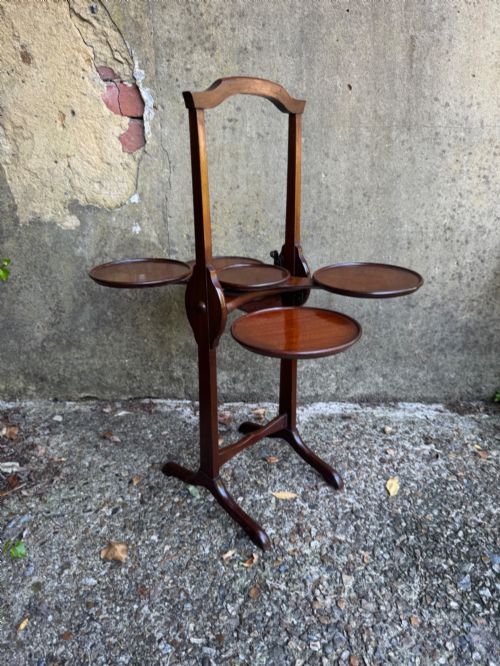


Folding Tiered Stand
These folding tiered stand examples offer practical surface space that collapses flat when not in use, combining utility with period charm.
Folding Tiered Stand
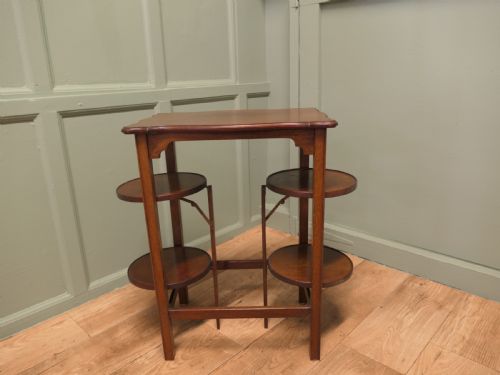
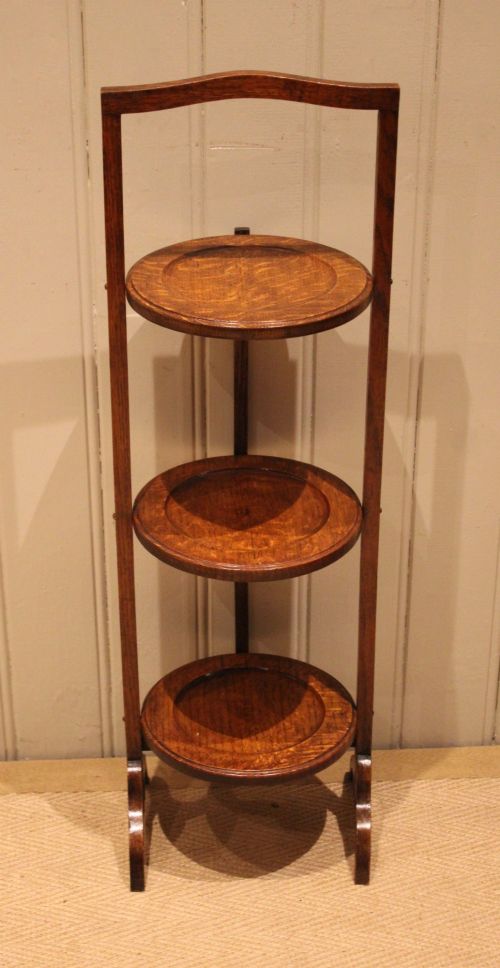
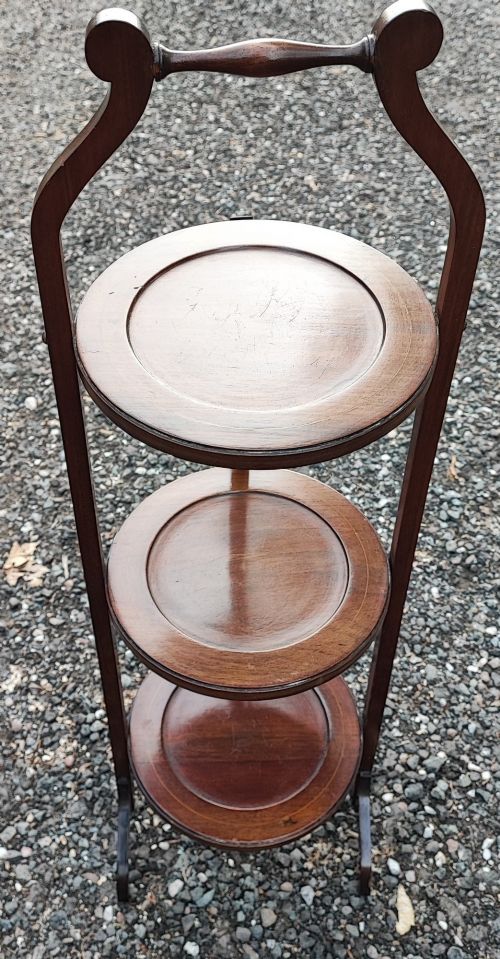
A folding tiered stand provides multiple levels for serving or display, most frequently encountered as Edwardian or Georgian cake stands and dumb waiters. These pieces are designed to save floor space while holding several tiers of items.
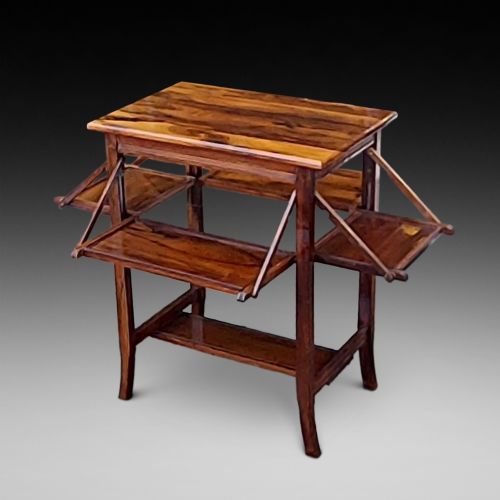
The selection ranges from early George III mahogany drop-leaf dumb waiters to Edwardian inlaid mahogany and oak cake stands from nineteen hundred and nineteen ten. One also finds occasional tables and serving stands among the forms.
Materials and construction
Makers relied principally on mahogany, oak, and rosewood, occasionally incorporating satinwood, boxwood, and walnut for inlaid details. Brass fittings and iron hardware provide the functional hinges and folding mechanisms.
Surfaces frequently feature fine veneers, delicate stringing, and drop-leaf or scissor-action folding joints that allow multi-tiered structures to collapse neatly.
One piece carries the name of the Sandringham School, bringing royal association to tea time.
Evaluating the standard of execution
Quality rests in the precision of the folding mechanism and the stability of the tiers when open. Finer examples balance sturdy joints with light proportions.
The choice of timbers and the crispness of inlay, such as Sheraton Revival motifs or satinwood banding, separate standard utilitarian pieces from more ambitious workshop production.
The Folding Tiered Stand Glossary
- Dumb waiter
- A multi-tiered piece designed to hold food or tableware without servants present. These often feature folding sides or drop-leaves.
- Sheraton Revival
- A late nineteenth and early twentieth century style drawing on the lighter neoclassical designs of Thomas Sheraton. It incorporates satinwood inlay and tapered legs.
- Campaign style
- Furniture constructed for portability and travel, often folding or dismantling easily. Pieces of this type utilise brass corners and strapwork.
- Inlay
- A technique where contrasting woods or other materials are inserted into recessed cavities on the surface. This creates decorative patterns or borders.
- Drop-leaf
- A hinged table surface that can be lowered when not required. This mechanism allows large tiers to reduce in footprint.
Folding Tiered Stand: Frequently Asked Questions
What were folding tiered stands used for?
These stands served primarily for afternoon tea, holding cakes and small dishes in parlours and drawing rooms. They allowed hosts to present multiple items without crowding the main tables.
In dining rooms, similar tiered forms functioned as dumb waiters to hold extra plates and courses near the dining table.
How do I fold and unfold them safely?
Most pieces rely on a scissor action or pivoting hinged brackets that swing the tiers into alignment. Support each tier gently while operating the mechanism to avoid straining the pivot points.
Check that the locking brackets or catches are fully engaged before placing any weight onto the shelves.
How can I tell a Georgian piece from an Edwardian one?
Georgian examples, dating from the eighteenth century, typically use heavier solid mahogany and feature mechanical drop-leaves or revolving tiers designed for dining room service. Their construction prioritises robust utility and simple turned pillars.
Edwardian pieces are lighter, often incorporating decorative satinwood inlay, varied wood veneers, and scissor-action folding frames specifically intended for cake and tea service.
How do I care for wood surfaces on these stands?
Maintain the timber by dusting regularly with a dry lint-free cloth and applying occasional quality beeswax to nourish the polished surface. Keep the stands away from direct heat sources and strong sunlight to prevent the veneer from drying out or cracking.
Take care with moisture on older polished tops by using coasters under any items placed on the tiers.