


Nineteenth Century Dumb Waiter
A nineteenth century dumb waiter brings tiered practicality and timber presence to a room, offering the tiered utility that collectors prize.
Nineteenth Century Dumb Waiter
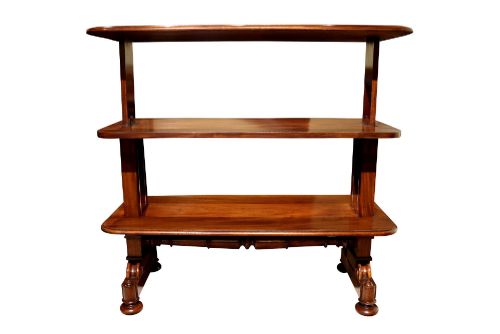
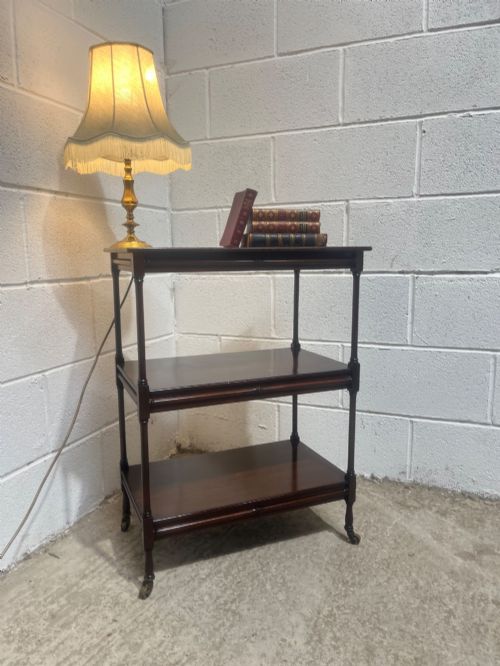
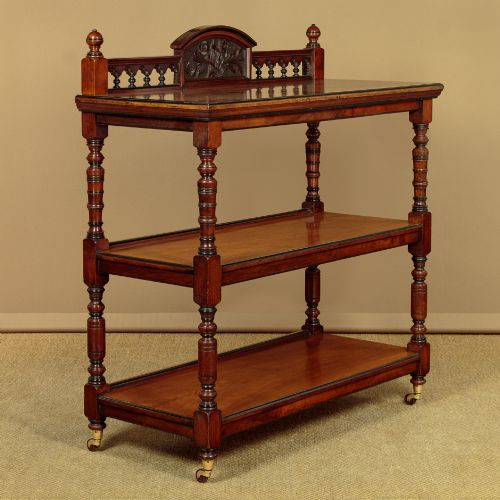
When you search for a nineteenth century dumb waiter, you examine multi-tiered serving pieces designed to hold dishes, wine, or books within reach. The versions you meet most often on this page take the form of mahogany or walnut trolleys, tiered stands, and buffets spanning the Victorian and Regency periods.
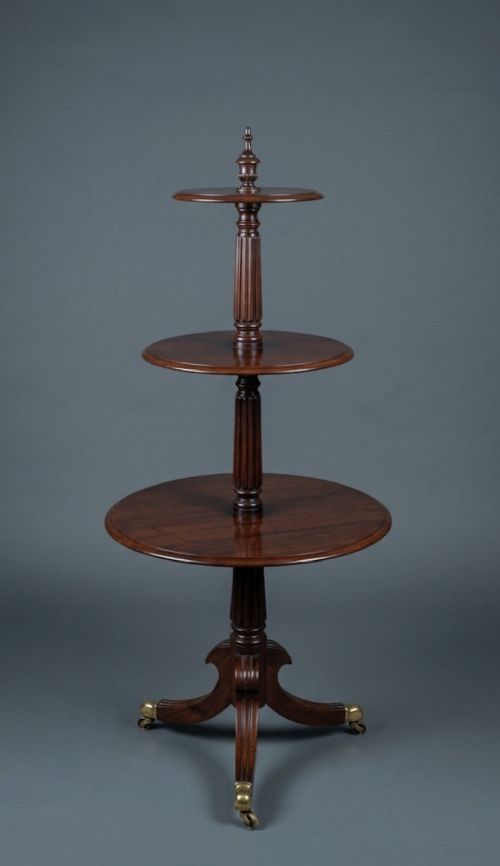
These items range from circular tiered serving stands on tripod bases to adjustable rise-and-fall buffets and campaign washstands. They reflect the shifting dining and domestic habits of the nineteenth century, moving from formal dining rooms to versatile living spaces.
Construction and materials
Cabinetmakers built these pieces using solid and veneered timbers, predominantly rich mahogany and walnut alongside occasional oak and ebonised wood. Construction often involved turned columns, carved tripod bases, and tiered platforms designed to bear weight securely.
Hardware played a practical role, with brass fittings appearing on adjustable mechanisms and campaign pieces. Tiered shelves were assembled with sturdy joinery to support the daily demands of serving and display.
Distinguishing quality
Quality rests in the selection of timber grain, the crispness of turned or carved details, and the reliability of mechanical elements like rise-and-fall actions. Finer examples display carefully matched veneers and robust tripod bases that remain steady under a heavy load.
Simpler pieces rely on plain timber and straightforward bracket or tier construction without decorative carving or adjustable engineering. The distinction lies in whether the piece serves as a utilitarian support or a showcase of cabinetmaking skill.
The Nineteenth Century Dumb Waiter Glossary
- Rise and fall
- A mechanical feature allowing tiers or surfaces to be adjusted in height through a central column. This mechanism permitted the server to adapt the piece for different dining or serving requirements.
- Campaign
- Furniture designed to be dismantled or folded for military travel, typically fitted with brass corners and recessed handles. These items combined portability with domestic utility.
- Tripod base
- A three-legged support structure commonly found beneath circular tables and dumb waiters. It provided stability on uneven floors.
- Tiered stand
- A piece of furniture featuring multiple horizontal surfaces arranged vertically. It maximised display or storage space without expanding the floor footprint.
Nineteenth Century Dumb Waiter: Frequently Asked Questions
What is a nineteenth century dumb waiter?
A nineteenth century dumb waiter is a tiered wooden stand or trolley used originally for serving food and holding tableware during meals. They provided auxiliary surface space when servants were not present in the dining room.
Over time, these pieces evolved in form, incorporating revolving shelves, adjustable mechanisms, or multiple tiers constructed from mahogany, walnut, and oak.
How were these pieces used?
They were positioned near dining tables to hold extra plates, bottles of wine, and dishes, allowing diners to help themselves. This reduced the need for constant attendance by household staff.
Outside the dining room, similar tiered stands and trolleys functioned as occasional tables, display shelves, or washstands in bedrooms and parlours.
How do I date a dumb waiter?
Dating relies on observing the prevailing style, timber choices, and construction techniques associated with periods like the Regency or Victorian eras. For instance, heavier carved tripod bases often point toward earlier nineteenth-century production.
Design shifts, such as the emergence of Aesthetic Movement walnut pieces around eighteen-eighty, help narrow the window of manufacture alongside hardware details.
Can I use one in a modern home?
These pieces integrate easily into contemporary rooms as bedside tables, plant stands, or side tables for books and drinks. Their multi-tiered design offers vertical storage that suits smaller spaces.
Their timber tones and turned supports add warmth and character to modern interiors while providing practical surface area.