


Victorian Walnut Buffet
A victorian walnut buffet brings rich timber grain, carved detail, and practical dining room storage to a nineteenth-century interior.
Victorian Walnut Buffet
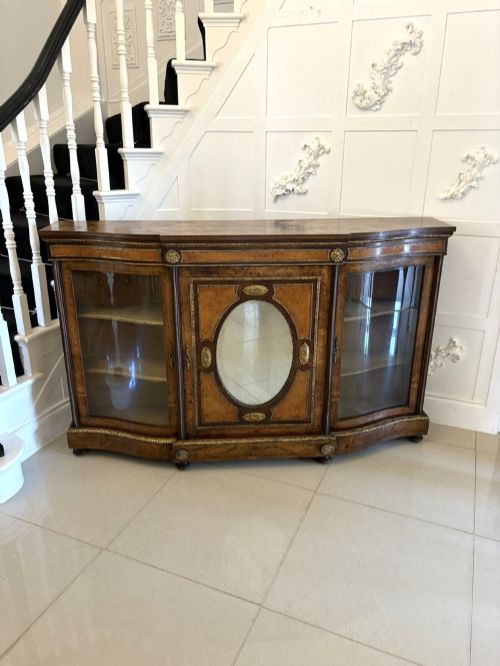
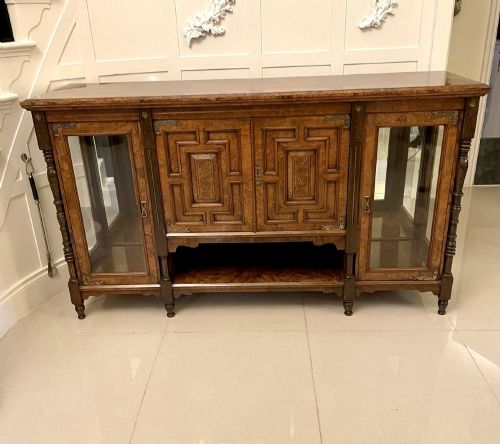
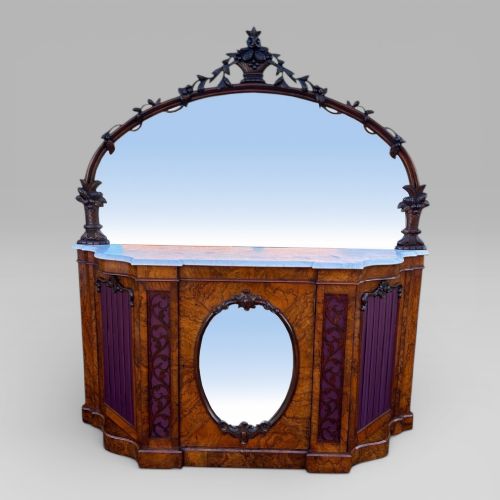
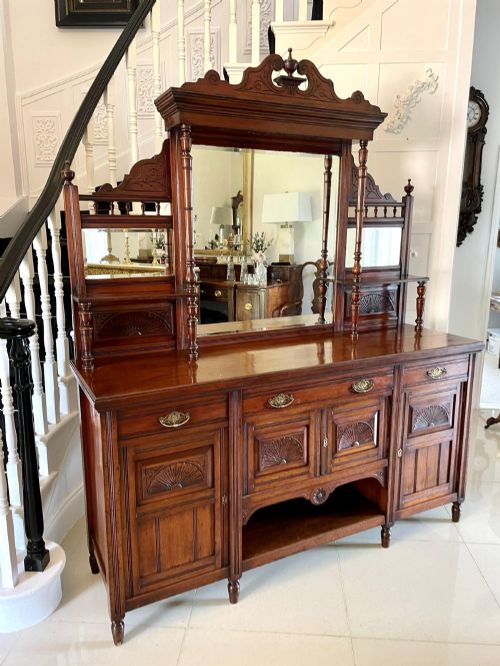
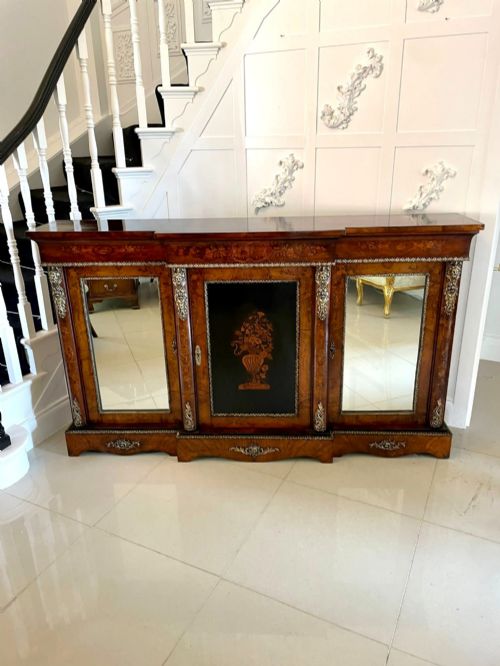
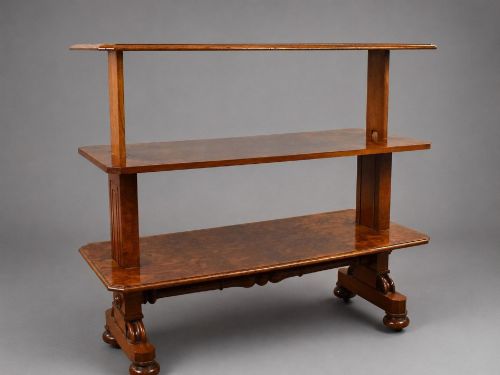
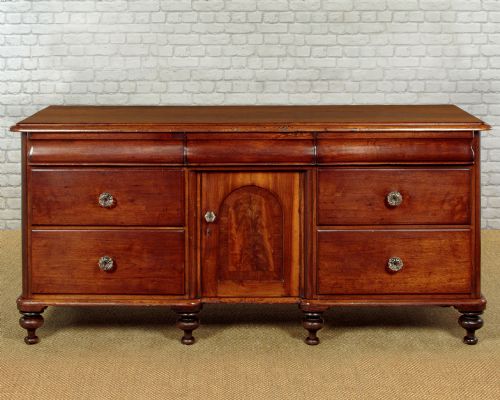
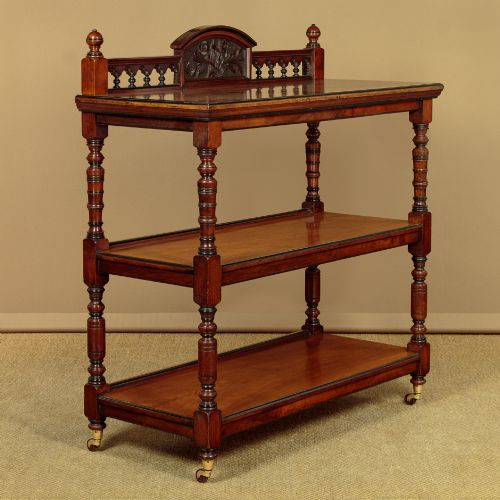
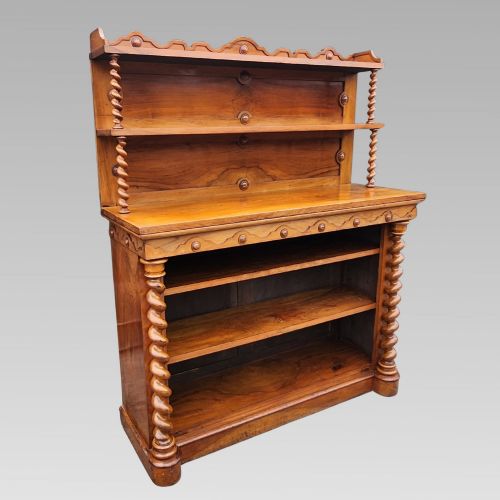
A victorian walnut buffet encompasses a range of dining and entertaining furniture, including credenzas, sideboards, tiered dumbwaiters, and serving cabinets dating from the nineteenth century. These pieces emerge in styles spanning Renaissance Revival, Gothic Revival, French Rococo, and the Aesthetic Movement.
Pieces span decades from the mid-nineteenth century through to the Edwardian era, reflecting shifting domestic habits from formal dining rooms to intimate drawing rooms.
Materials and Technique
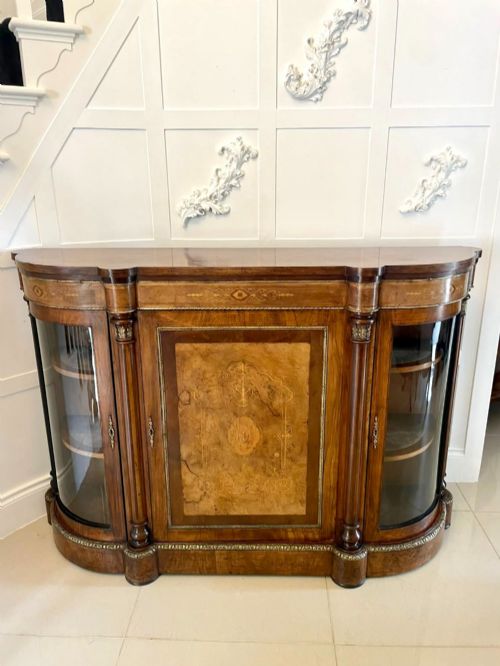
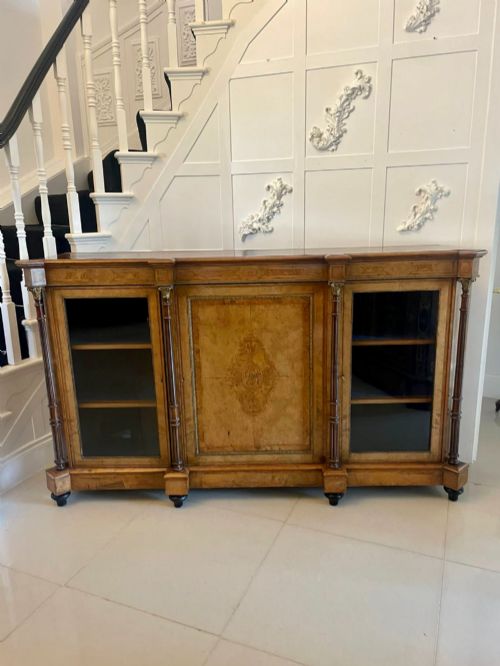
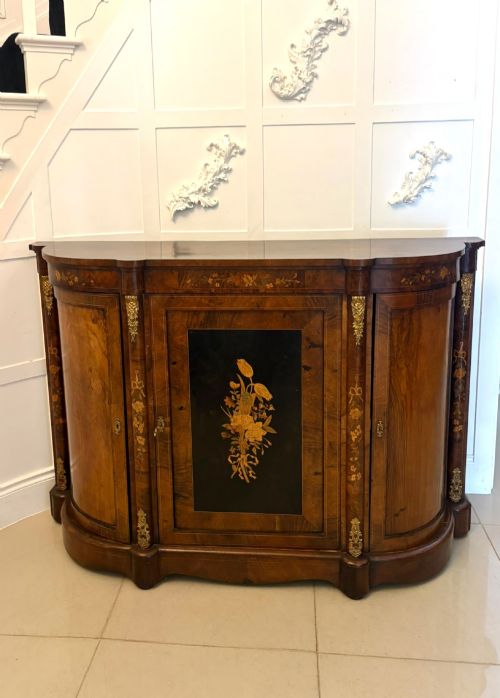
Cabinet makers utilised solid walnut and burr walnut veneers for their figured grain, applying them across curved serpentine fronts and flat cabinet panels. Timber selection dictated the visual character, with burr veneers offering intricate patterning.
Mounts in ormolu and gilt bronze accent doors and columns, whilst brass hardware secures interior compartments. Inlays incorporate boxwood, amboyna, and mother-of-pearl to create floral and geometric marquetry panels.
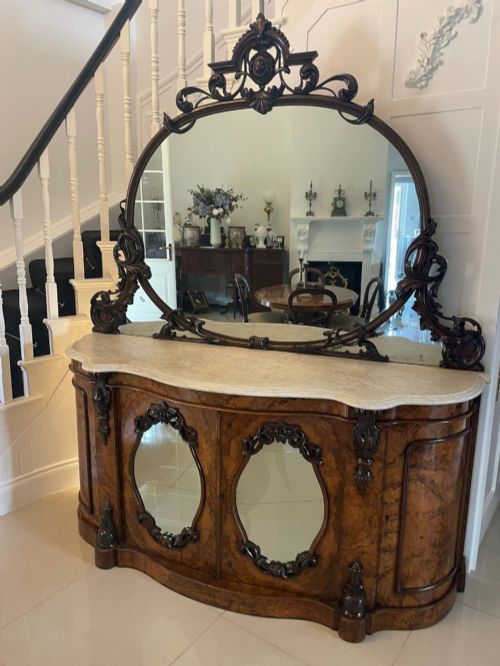
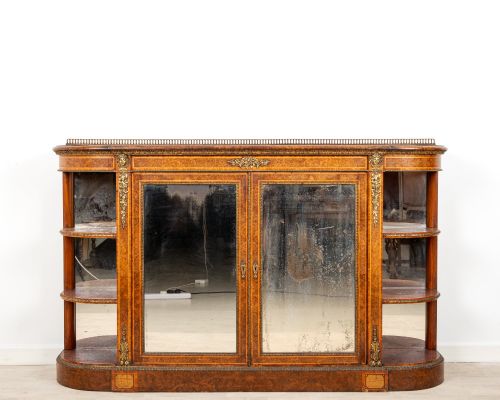
Surfaces frequently feature inset white marble tops or carved mirror backs, combining reflective glass with polished wood to amplify light in Victorian reception rooms.
Victorian Walnut Buffet Retail Price Guide 2026
Typical asking prices for victorian walnut buffet among the pieces listed under this phrase on Sellingantiques today, from the lower quarter to the upper quarter. They describe what is for sale here now, not the wider market.
Listings feature walnut, burr walnut, and amboyna woods combined with marble, glass, and ormolu mounts across Victorian and Edwardian eras.
Craftsmanship and Proportion
The distinction between standard production and exhibition quality rests on the selection and matching of the burr walnut veneers across the facade. Superior pieces display symmetrical grain patterns that flow seamlessly across doors and drawers.
Carved wooden elements demonstrate varying degrees of depth and precision, distinguishing mechanical output from hand-chiselled ornamentation on mirror backs and console legs. Ormolu mounts and Sevres porcelain plaques further elevate the status of individual items.
Structural integrity relies on the retention of original mechanisms, such as adjustable shelving, telescopic dumbwaiter actions, and fitted keys that operate working cabinet locks.
Gillow
The Victorian Walnut Buffet Glossary
- Burr walnut
- A timber harvested from walnut tree growths, producing highly figured, swirling grain patterns prized by nineteenth-century cabinet makers. It is sliced into thin veneers for decorative surfaces.
- Credenza
- A low cabinet originating as a serving table, often featuring mirrored doors and enclosed side cupboards flanked by curved glass panels. In Victorian rooms, it functioned primarily for display.
- Ormolu
- Gilded bronze used for decorative mounts, feet, and key escutcheons on nineteenth-century furniture. It provides metallic contrast to dark timber surfaces.
- Marquetry
- The art of applying pieces of veneer to a structural structure to form decorative patterns and pictorial scenes. Boxwood and amboyna are frequently employed for colour contrast.
- Dumbwaiter
- A multi-tiered serving stand or sideboard used for holding dishes and glassware during dining. Victorian versions occasionally incorporate telescopic mechanisms for height adjustment.
Victorian Walnut Buffet: Frequently Asked Questions
Where were buffets placed in Victorian homes?
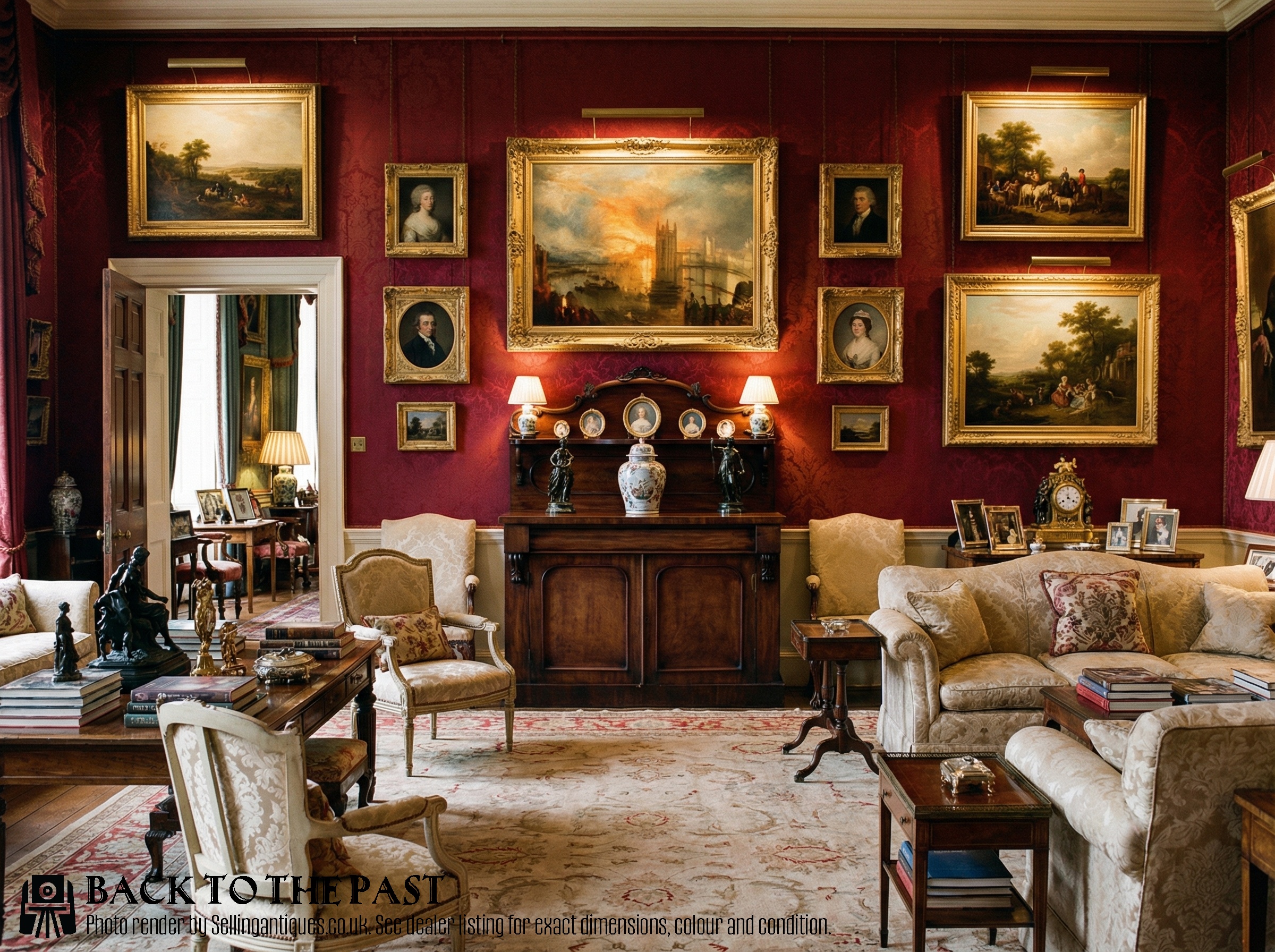
These pieces generally stood against dining room or drawing room walls, serving as central surfaces for displaying silver, porcelain, and glassware. They also functioned practically during meals to hold serving dishes.
In smaller forms like dumbwaiters and etageres, they sat beside seating areas or in hallways to accommodate smaller decorative objects and books.
How do I care for walnut veneer?
Polished timber surfaces benefit from regular dusting with a dry, soft cloth to prevent particulate accumulation in the grain and marquetry crevices. Avoid placing furniture in direct sunlight or near heat sources to prevent veneer lifting.
Applying a traditional beeswax polish occasionally maintains the lustre of the wood without building up synthetic residues.
How do I identify a mid-Victorian piece?
Mid-Victorian furniture often displays characteristic revival styles, including French Rococo curves, Renaissance Revival columns, and elaborate burr walnut marquetry. The presence of hand-carved mirror backs and ormolu mounts points securely to this central period.
Construction methods, such as hand-cut dovetails and secondary woods like mahogany or pine inside drawers, help confirm the nineteenth-century date.