
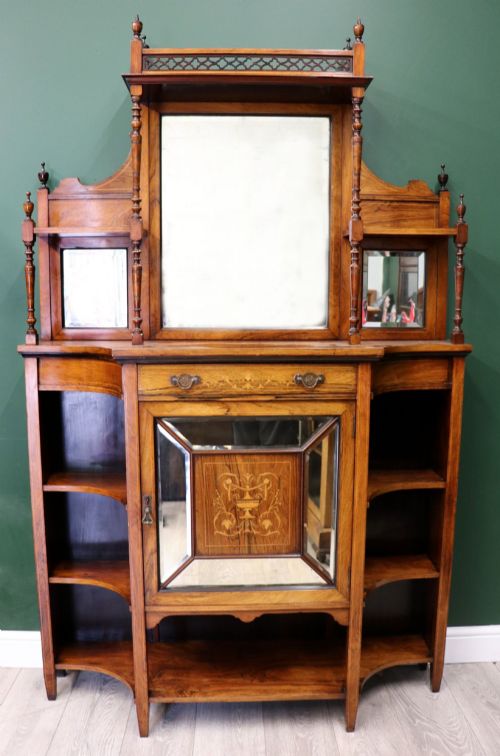
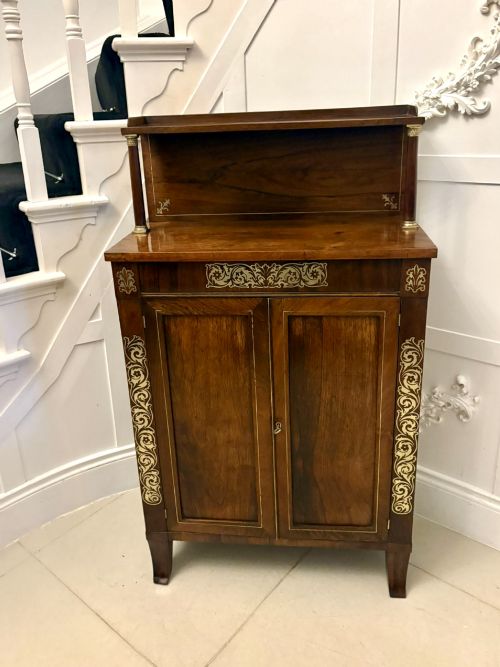
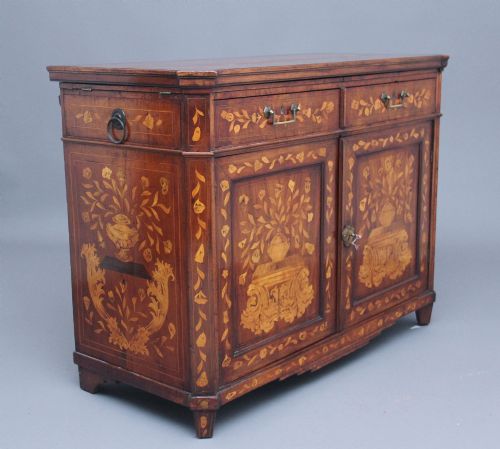
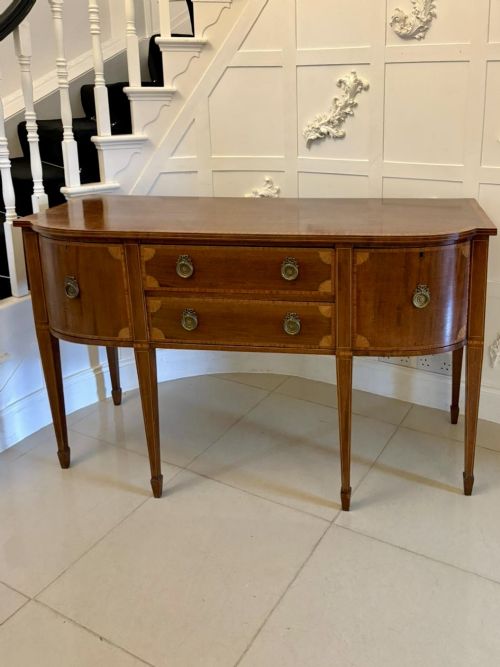
Inlaid Wood Sideboard
An inlaid wood sideboard brings warmth and intricate detail to a dining room, combining practical storage with centuries of cabinet-making skill.
Inlaid Wood Sideboard
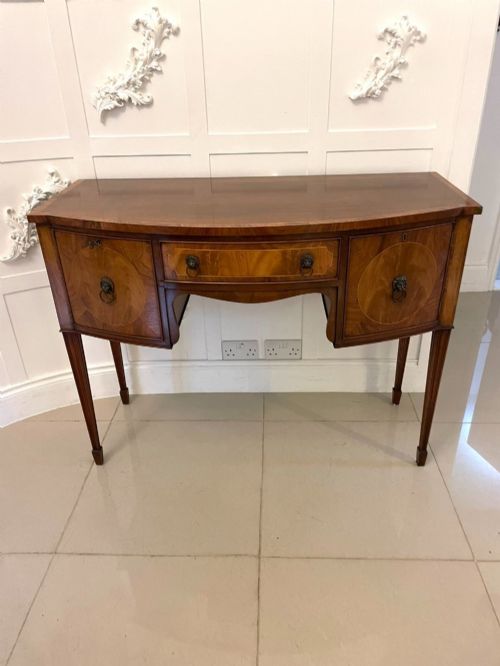
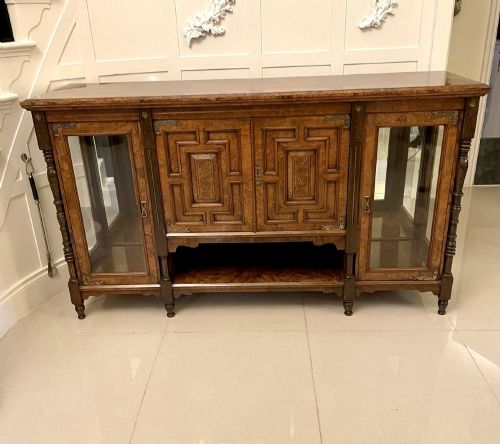
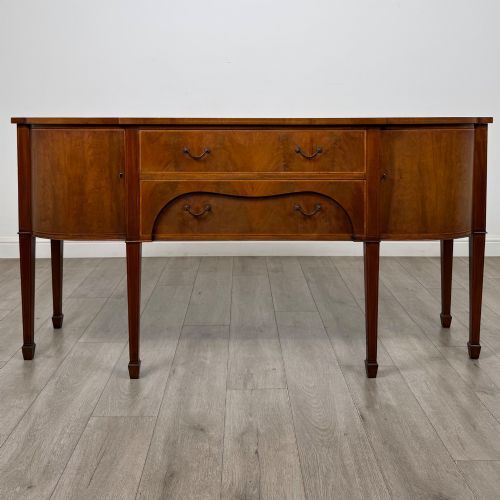
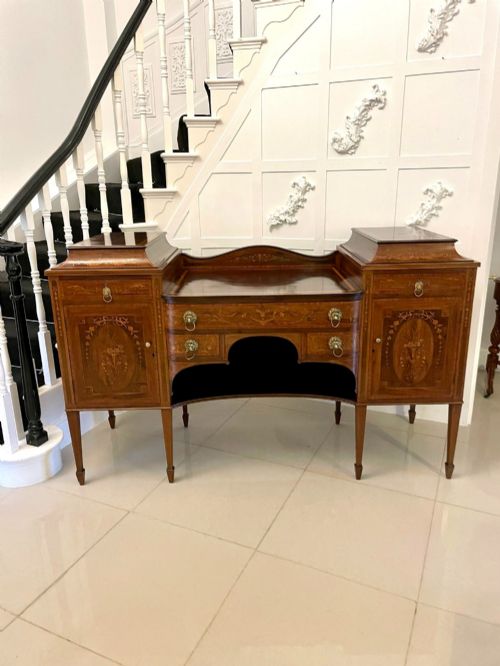
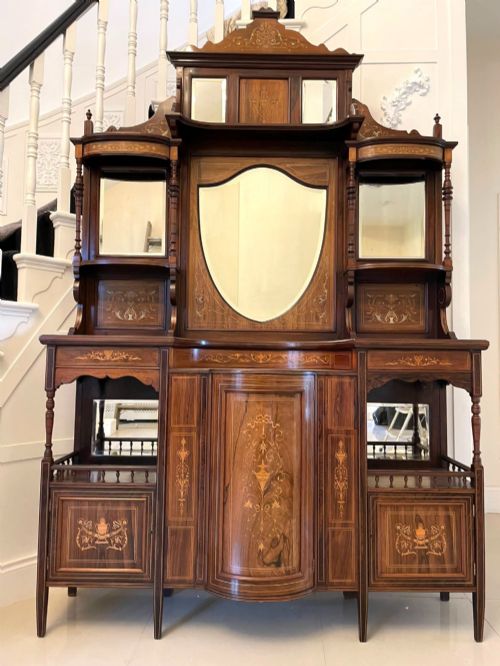
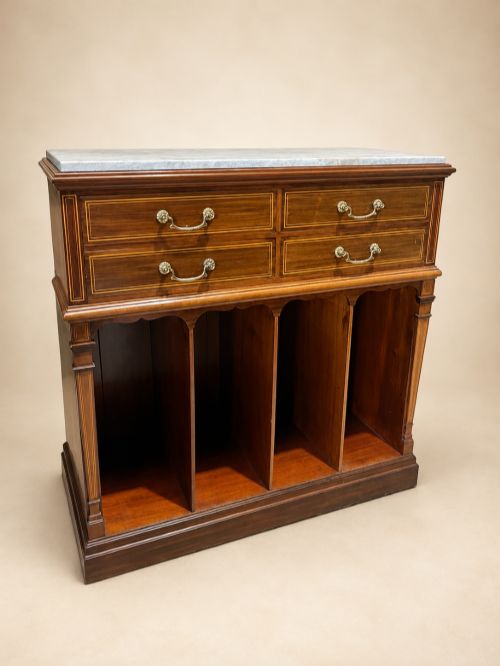
When you search for an inlaid wood sideboard, you encounter large dining room servers, credenzas, and side cabinets built to hold linen, silver, and china. These pieces range from eighteenth-century Georgian formats to later Victorian and Edwardian revivals.
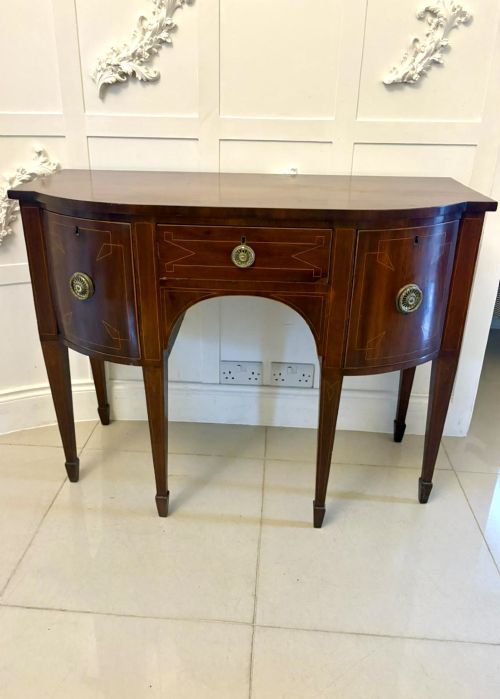
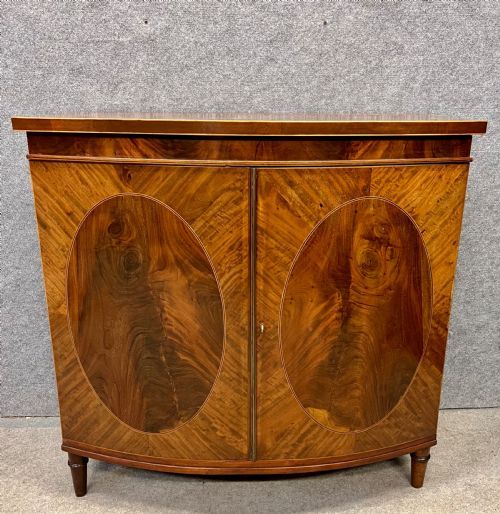
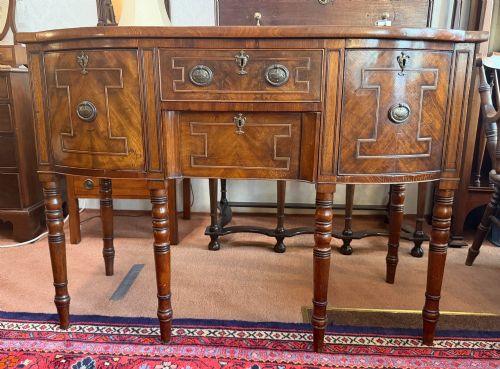
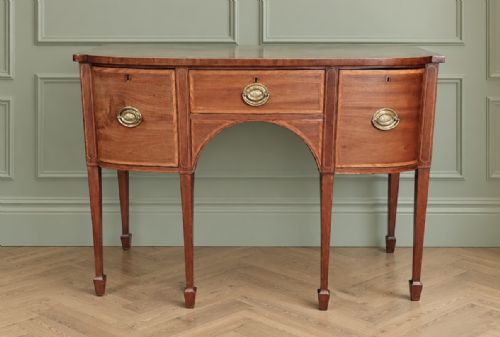
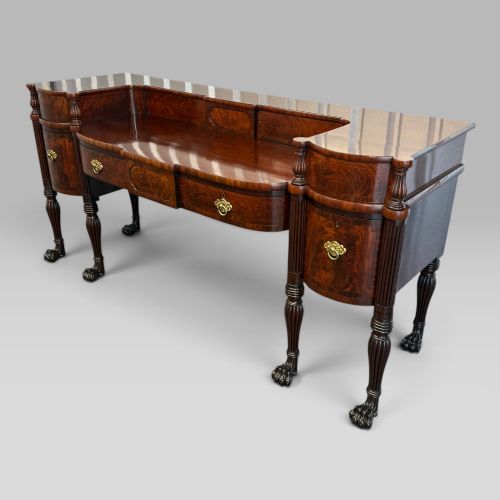
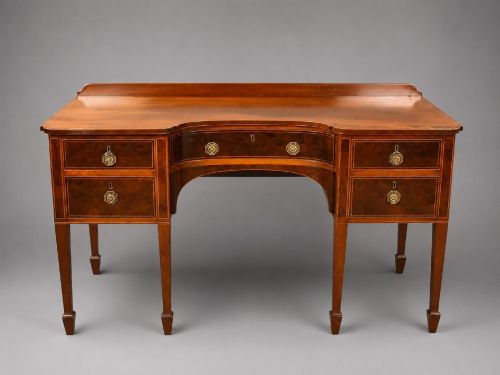
Mahogany and rosewood form the primary body of most examples, enriched with lighter contrasting timbers such as satinwood, boxwood, and tulipwood. You will frequently find bow-fronted shapes, serpentine fronts, and straight-sided servers across the available selection.
Makers and workshops constructed these items to anchor formal dining spaces, offering surface area for serving food alongside concealed cupboard space and drawers.
How they were made
Cabinet-makers selected timber with strong grain patterns, such as flame mahogany or burr walnut, applying thin veneers over sturdy secondary woods to create rich surface movement. They then cut recesses into the primary wood to insert contrasting linear banding and pictorial marquetry motifs.
Details like brass handles, feet, and gallery rails augmented the timber construction, while specialised joinery secured curved doors and bow-front drawers without warping.
Listings feature mahogany, rosewood, and satinwood combined with brass fittings and marble tops across various centuries.
What varies in quality
The precision of the marquetry and inlay work separates standard utility furniture from exceptional pieces, visible in tight joints where different wood species meet without visible gaps. The choice of primary timber also dictates value, with highly figured flame mahogany, burr walnut, and satinwood demanding greater skill to veneer successfully.
Proportion and structural integrity define the higher tiers, where original brass hardware, well-figured secondary timbers inside drawers, and undisturbed patination indicate superior original manufacture.
Hewetsons London·Collinson and Lock·Henry Walker
The Inlaid Wood Sideboard Glossary
- Marquetry
- Decorative patterns formed by fitting together thin slices of wood veneer and other materials onto a structural surface. This technique creates pictorial scenes or geometric designs across cabinet doors and drawer fronts.
- Banding
- A narrow strip of contrasting timber inlaid around the perimeter of a drawer front or table top. It creates a defined border that frames the main wood grain.
- Serpentine
- A furniture front curved in a wave shape, convex at the centre and concave at the ends. This contour requires advanced woodworking skill to execute properly.
- Demi-lune
- A half-moon shape used for tables and side cabinets designed to sit flat against a wall. Such pieces often feature curved doors and fitted internal shelving.
- Chiffonier
- A low sideboard or cabinet featuring a cupboard base, frequently topped with a small tier of shelves. Originating in the nineteenth century, it served smaller dining rooms and parlours.
Inlaid Wood Sideboard: Frequently Asked Questions
How do I distinguish a Georgian sideboard from a later revival piece?
Examine the interior construction methods, timber choice, and secondary woods like oak or pine used inside drawer linings. Eighteenth-century pieces display hand-cut joinery and specific patination that differ from nineteenth-century Sheraton Revival interpretations.
Secondary woods and drawer bottom construction often reveal the true period of manufacture when exterior styling mimics earlier decades.
What is the difference between a credenza and a standard sideboard?
A credenza typically sits lower to the floor and often includes glass-fronted display cabinets flanking central cupboards. Sideboards usually focus on drawer capacity and larger solid doors for dining room storage.
Victorian drawing rooms favoured credenzas for displaying decorative objects, while dining rooms utilised sideboards for serving meals.
How should I care for antique veneered and inlaid furniture?
Keep these items away from direct sunlight and heat sources to prevent the wood veneers from drying out and lifting. Regular dusting with a soft, dry cloth preserves the polished surface without moisture damage.
Apply high-quality beeswax sparingly to nourish the timber and maintain the natural lustre of the French polish.