
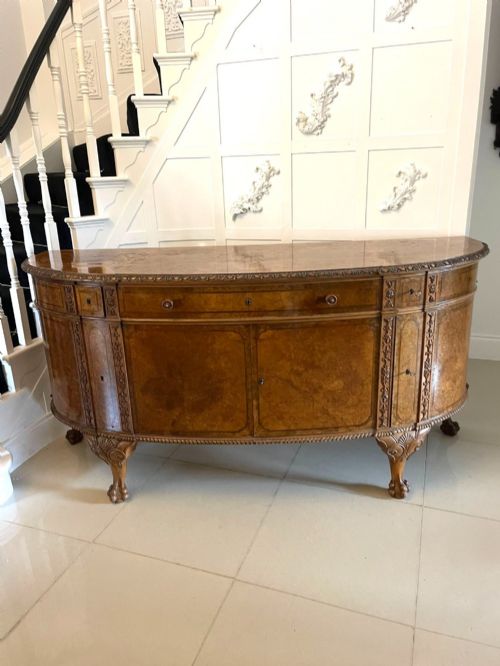
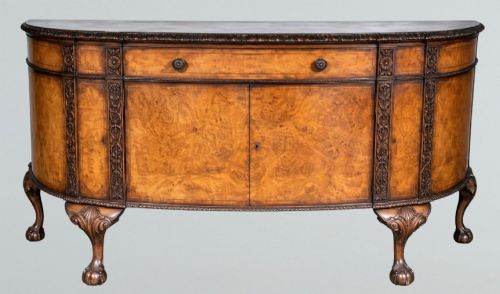
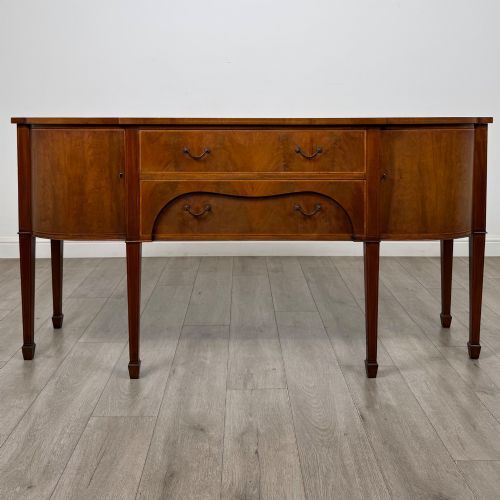
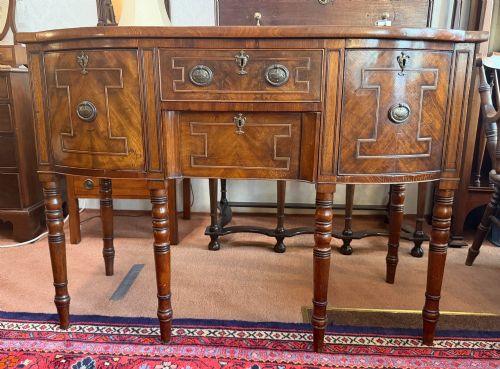
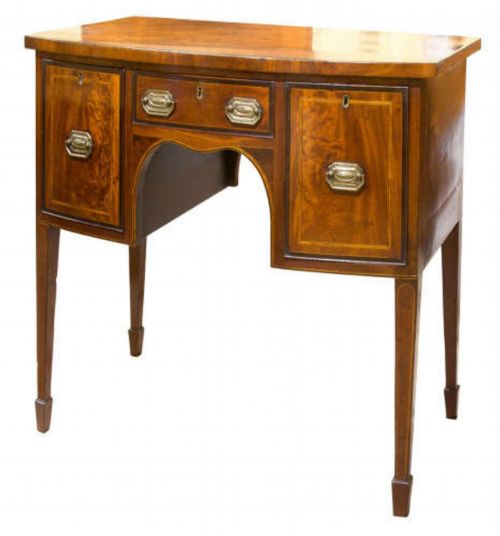
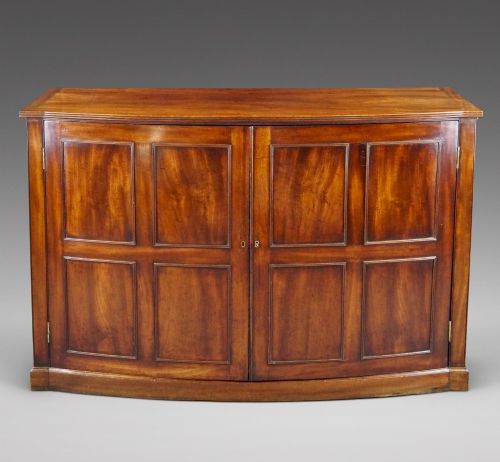
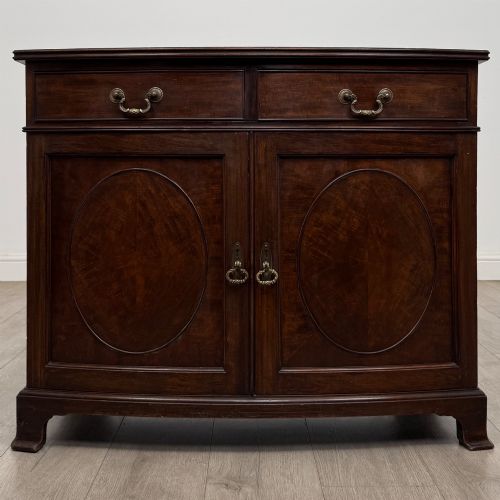
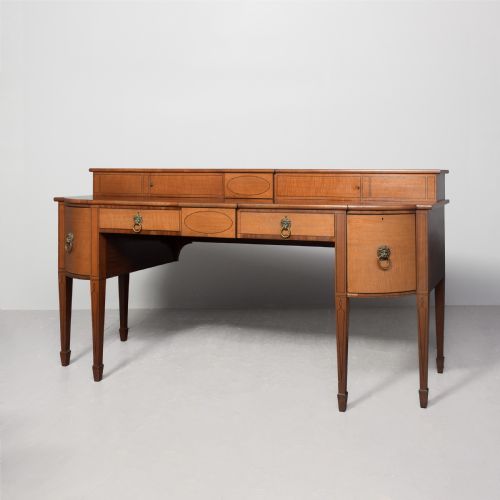
Bow Front Credenza
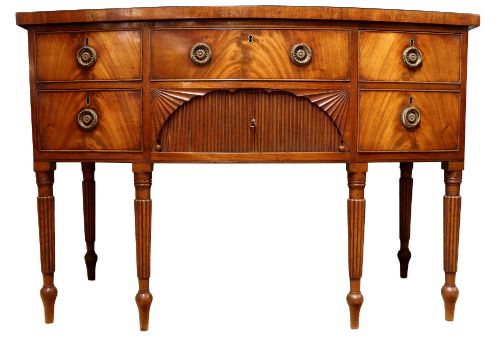
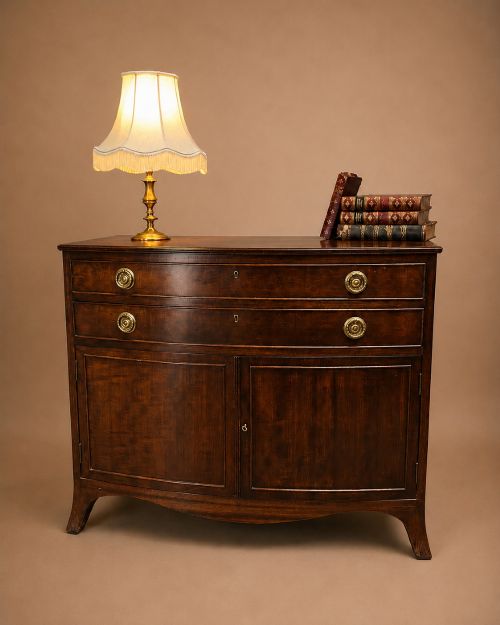
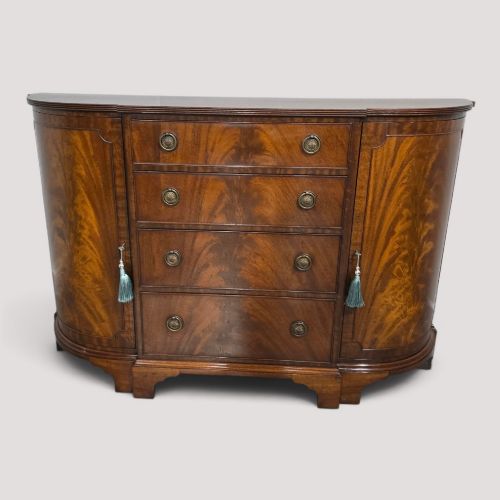
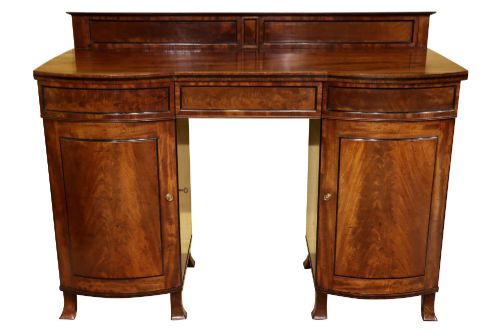
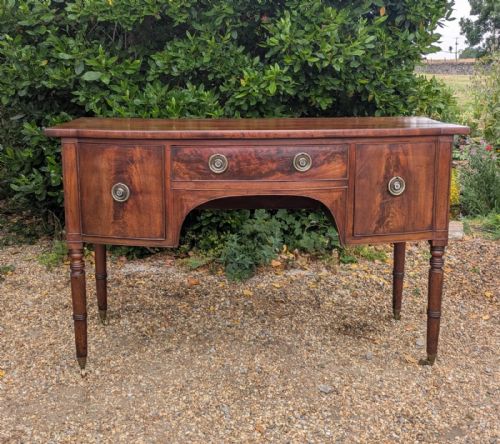
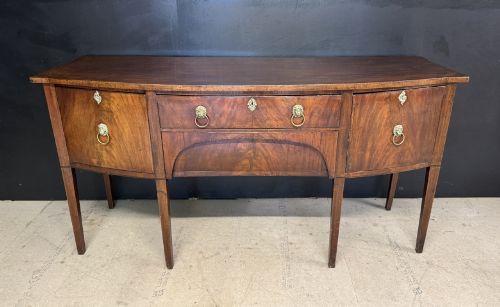
These bow front credenza pieces bring curved mahogany and burr walnut forms into a room, offering both surface display and deep storage.
What a bow front credenza is
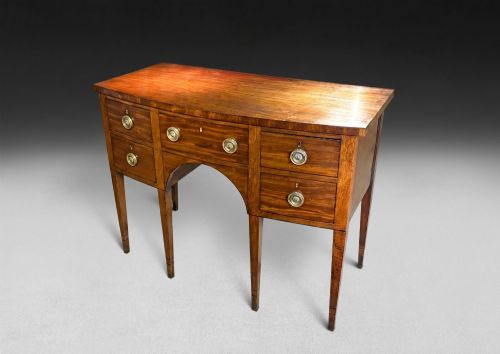
When you search for a bow front credenza, you are looking at substantial timber furniture designed with a convex curving front facade. These items function primarily as sideboards, side cabinets, and chiffoniers that stand against a wall while providing considerable interior capacity.
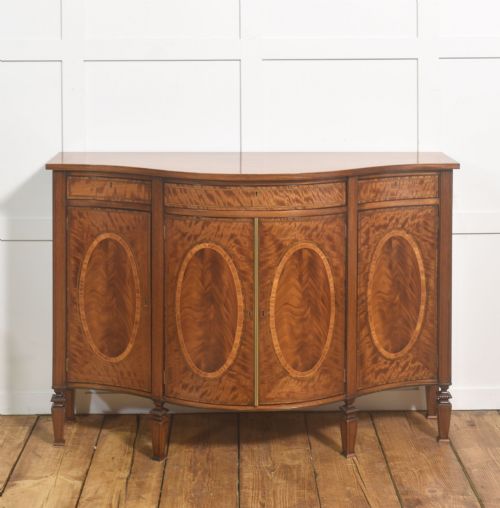
The pieces available here span the 19th Century, Victorian period, and 1900, with Edwardian examples also appearing in the record. Forms range from straightforward mahogany sideboards to painted satinwood side cabinets and burr walnut credenzas.
You are most likely to meet mahogany and burr walnut variants on this page, reflecting the dominant timber choices recorded in past sales and current listings. These diverse iterations share the characteristic curved front line that defines the group.
How they were made
Maker construction relies heavily on solid timber foundations surfaced with flame mahogany veneer or burr walnut to create striking grain patterns across the curved doors and drawers. Satinwood provides an alternative pale ground, sometimes enriched with paint.
Metalwork details such as brass handles, mounts, and ormolu accents finish the cabinetry, complementing the polished wood surfaces. Glass panels also feature in specific cabinet and credenza doors to allow visual display of the interior.
Retail Price Guide 2026
Typical UK retail prices for bow front credenza, calculated from the Sellingantiques database of over a million retail prices indexed since 2003. This retail price guide relies exclusively on Sellingantiques data; no external sources or auction records are used, so the figures do not describe the wider market.
Listings feature items spanning the 19th Century, Victorian period, and 1900, utilising mahogany, burr walnut, satinwood, and ormolu.
What varies in quality
Quality across these pieces rests upon the selection and matching of veneers, where skilled timber placement creates symmetrical grain patterns across a curved front. Superior examples display careful figuring in the flame mahogany or burr walnut.
The integration of decorative elements like ormolu mounts, brass fittings, and painted satinwood defines the upper tier of the range. Finer execution shows in the precision of the joinery along the complex bow curve and the crispness of any applied ornamentation.
The Bow Front Credenza Glossary
- Bow front
- A cabinet front that curves outward in a convex arc. This shape requires specialised joinery to bend timber or veneer smoothly.
- Credenza
- A low cabinet or sideboard used for storage and display. Victorian examples often incorporate glass doors and ormolu mounts.
- Flame mahogany
- A veneer cut from mahogany branches where the grain resembles flickering flames. It creates a highly figured, dramatic surface pattern.
- Burr walnut
- Timber taken from a walnut tree growth, producing intricate swirling patterns. Cabinetmakers prize this material for high-status furniture fronts.
- Ormolu
- Gilded bronze used for decorative mounts and furniture trim. It adds metallic contrast to polished wood surfaces.
Frequently Asked Questions
What is a bow front credenza?
A bow front credenza is a low storage cabinet featuring a convex curved front facade. These pieces serve as functional sideboards and display units in dining and living spaces.
They combine substantial timber construction with decorative veneers like mahogany and burr walnut, often including glass doors or brass hardware.
How do I date a bow front credenza?
Dating involves examining the primary timbers, secondary woods, and decorative styles present in the piece. Victorian, 19th Century, and 1900 Edwardian examples each display distinct veneer choices and hardware configurations.
Comparing the specific combination of mahogany, burr walnut, or painted satinwood helps place the item within its historical period of manufacture.
Where should I place a credenza?
These cabinets sit flat against interior walls in dining rooms, hallways, or living spaces where their curved fronts can be fully appreciated. Their substantial depth provides a wide top surface for display alongside internal storage.
Ensure adequate floor space in front of the cabinet so the curved doors and drawers open fully without obstruction.
How do I care for mahogany furniture?
Maintain polished mahogany surfaces by dusting regularly with a soft, dry cloth to prevent abrasive particle buildup. Avoid placing the timber in direct sunlight or near heat sources to protect the polished finish and underlying veneer.
Occasional treatment with appropriate furniture wax nourishes the wood without creating heavy build-up on the grain.