
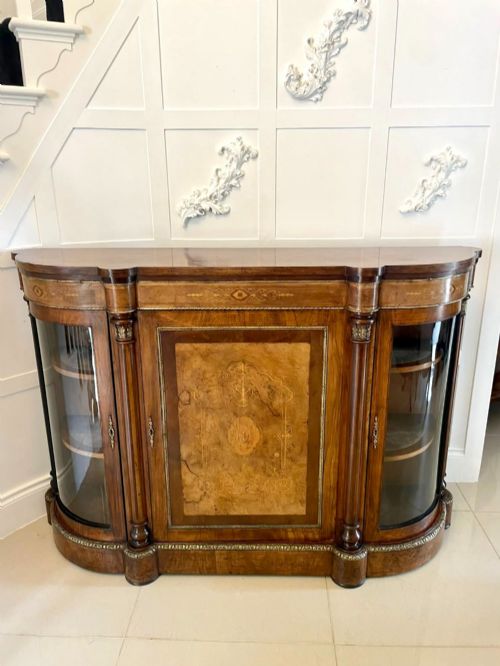
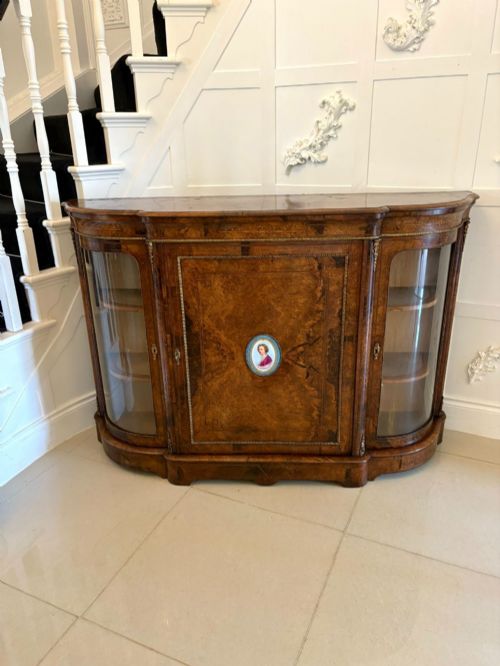
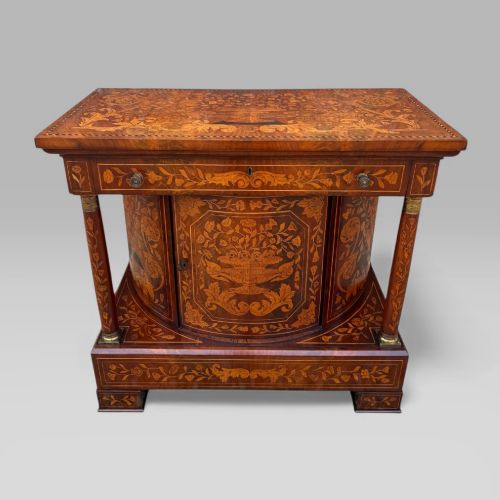
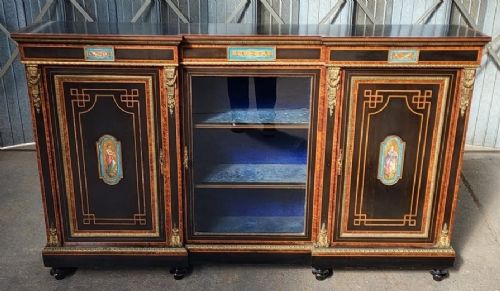
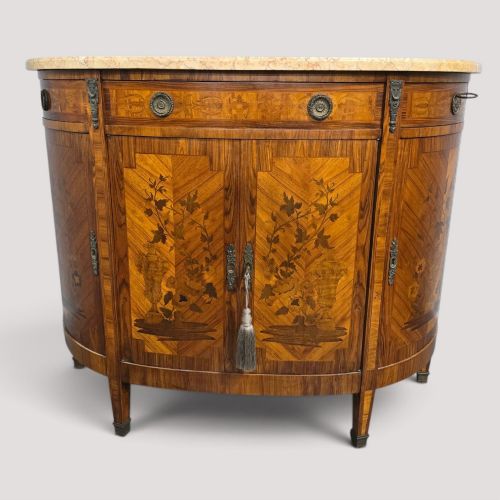
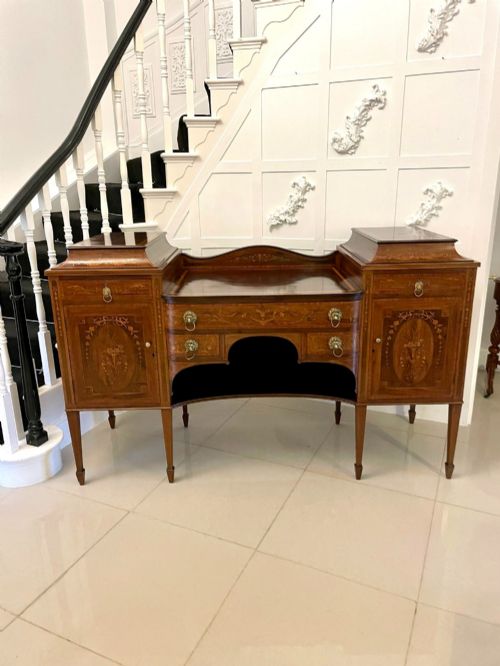

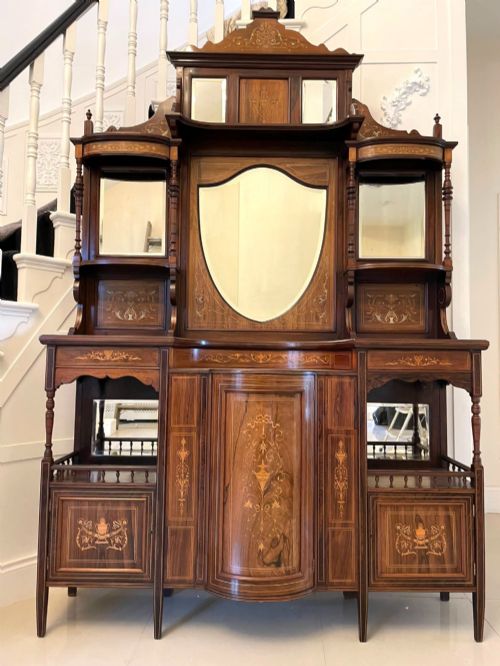
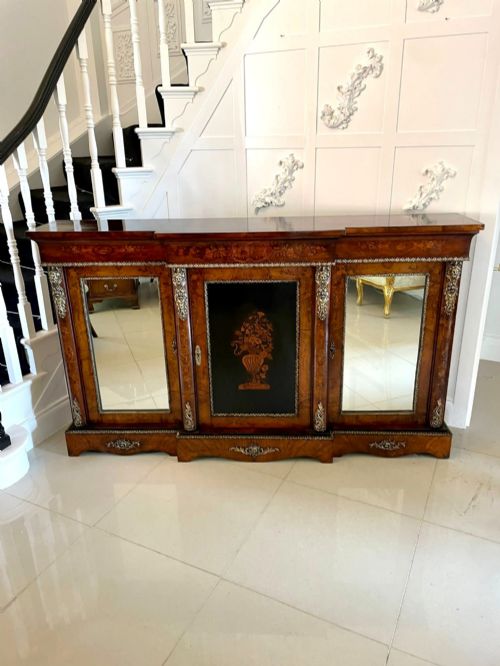
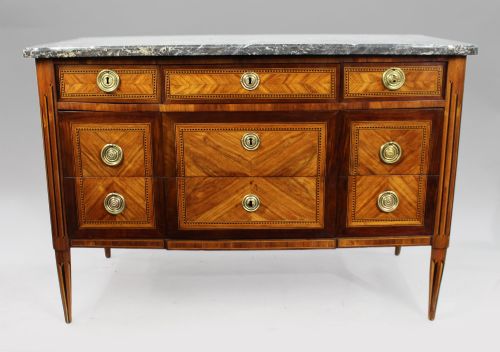
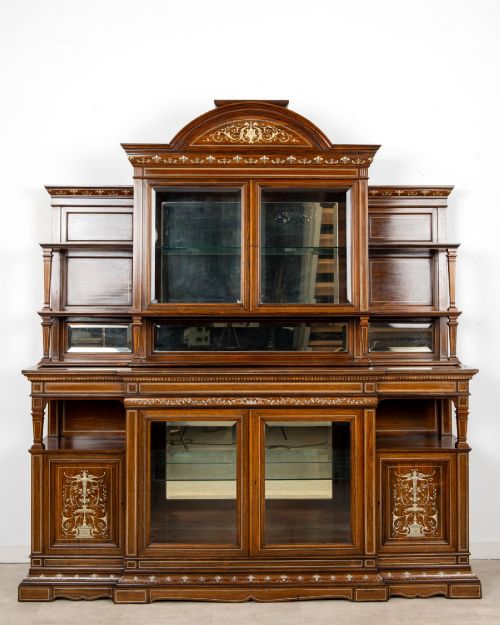
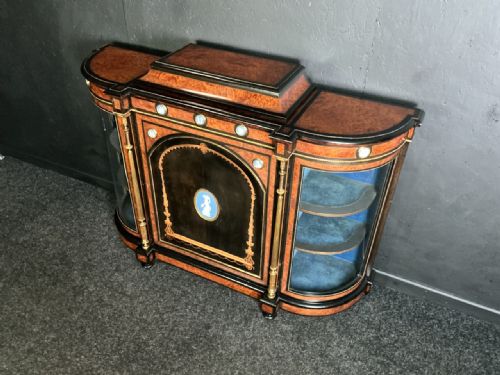
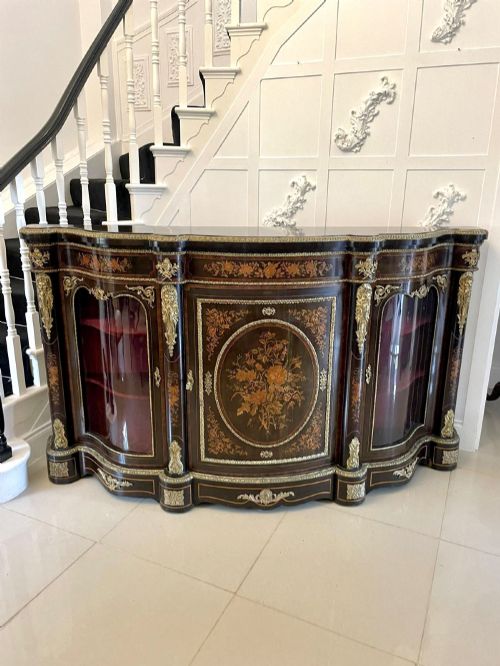
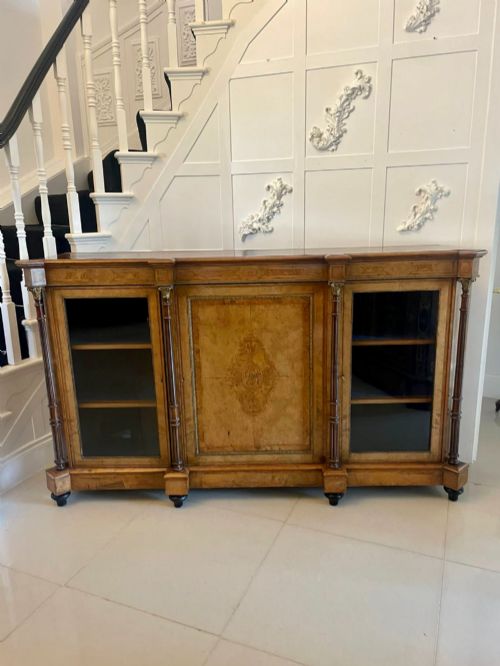
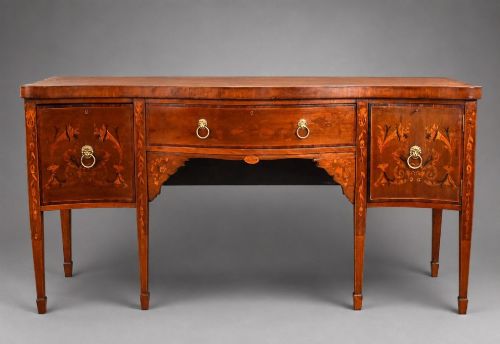
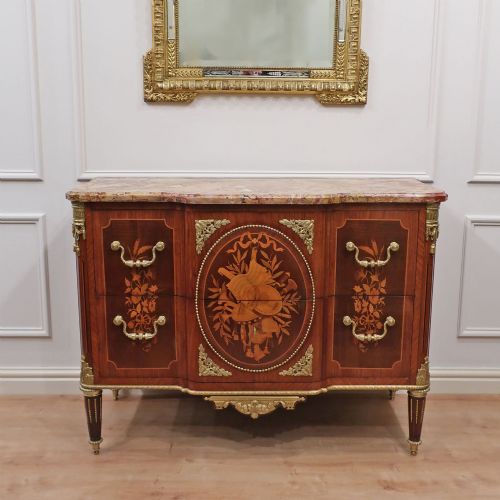
Marquetry Inlay Sideboard
A marquetry inlay sideboard brings intricate wood patterns and rich historic character to a room.
Marquetry Inlay Sideboard
When searching for a marquetry inlay sideboard, buyers encounter a diverse selection of storage furniture including credenzas, side cabinets, and display cabinets dating from the eighteenth century through to the Edwardian period.
The Victorian era dominates the selection, frequently presenting burr walnut and rosewood pieces decorated with floral marquetry and ormolu mounts.
Alongside British Victorian examples, pieces reflect Georgian, Sheraton Revival, and French Louis styles, offering varied proportions and silhouettes from serpentine fronts to bow fronts.
Materials and construction methods
Cabinet makers utilised dense hardwood timbers including mahogany, walnut, satinwood, and rosewood as the structural foundation and canvas for detailed veneer work.
Decorative surfaces combine contrasting timbers in marquetry patterns alongside brass ormolu mounts, porcelain plaques, and glass panels.
Ebonised finishes and intricate parquetry further define the construction of these nineteenth-century and earlier cabinets.
Listings feature eighteenth-century walnut alongside Victorian burr walnut, rosewood, and satinwood pieces decorated with floral marquetry.
Distinctions in craftsmanship
The precision and complexity of the wood inlay separate standard furniture from exceptional examples produced by prominent makers.
Integration of cast bronze ormolu mounts, hand-painted porcelain plaques, and figured burr veneers indicates higher ambition in the workshop.
Structural harmony, from serpentine and bow-front shaping to the crispness of the floral marquetry, dictates the standing of each piece.
Hewetsons London·Collinson and Lock·Edwards and Roberts·Gillows·August Ungethüm·Maison Gagneau
The Marquetry Inlay Sideboard Glossary
- Marquetry
- Decorative veneer work arranged in pictorial or geometric patterns using various coloured woods. This technique requires immense skill to cut and fit each piece precisely.
- Ormolu
- Gilded bronze mounts applied to furniture for ornamentation. These decorative elements add metallic contrast to the timber surfaces.
- Credenza
- A sideboard or display cabinet originating in Italy and popular during the Victorian period. They often feature enclosed cupboards flanked by glass-fronted shelves.
- Burr Walnut
- Timber taken from the wart or growth on a walnut tree, yielding swirling grain patterns. It provides a highly decorative surface for cabinet doors and panels.
- Parquetry
- Geometric mosaic woodwork used for floors and cabinet surfaces. It relies on regular shapes like squares and triangles rather than pictorial designs.
Marquetry Inlay Sideboard: Frequently Asked Questions
How do I identify a Victorian credenza?
Victorian credenzas typically appear in burr walnut, rosewood, or ebonised finishes, often featuring curved serpentine fronts and gilt ormolu mounts. Many incorporate central cupboards flanked by glass doors to display porcelain and glassware.
Makers frequently added floral marquetry and porcelain plaques to enhance the visual weight of these substantial nineteenth-century cabinets.
Where were these cabinets placed?
Historically, these statement cabinets occupied principal reception rooms, dining rooms, and drawing rooms as both serving surfaces and display furniture. Their finished backs and refined detailing allowed them to stand against prominent walls.
Today, they function similarly in modern interiors, providing surface display area and concealed storage for tableware or collections.
How do I care for antique veneer?
Maintaining antique marquetry requires stable indoor humidity away from direct sunlight and heat sources, which can dry out ancient timbers and cause lifting veneers. Gentle cleaning with a dry cloth preserves the polished surface without moisture damage.
Avoiding harsh chemical polishes ensures the original finish and delicate wood inlays remain undisturbed over time.