



Vintage Walnut Chiffonier
A vintage walnut chiffonier brings rich wood grain and practical storage to a room, offering both display surface and enclosed shelving.
Vintage Walnut Chiffonier
A vintage walnut chiffonier represents a distinct tradition of dark timber cabinetry, frequently appearing in Victorian and later styles. These items function primarily as low sideboards or cabinets designed for dining rooms and parlours.
How they were made
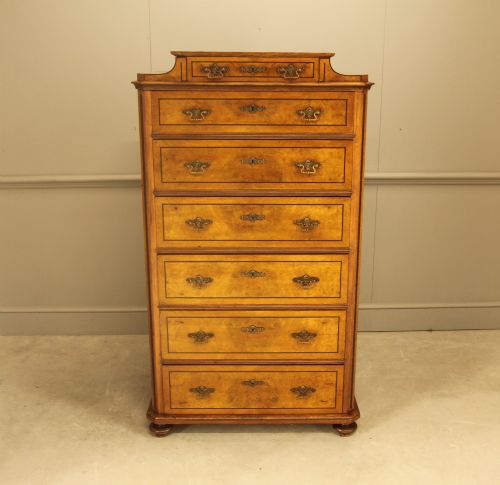
Construction relies heavily on solid walnut and walnut veneer, often utilising burr walnut to create striking figured patterns across doors and drawer fronts. Cabinetmakers selected these veneers for their decorative grain, applying them to stable secondary timbers.
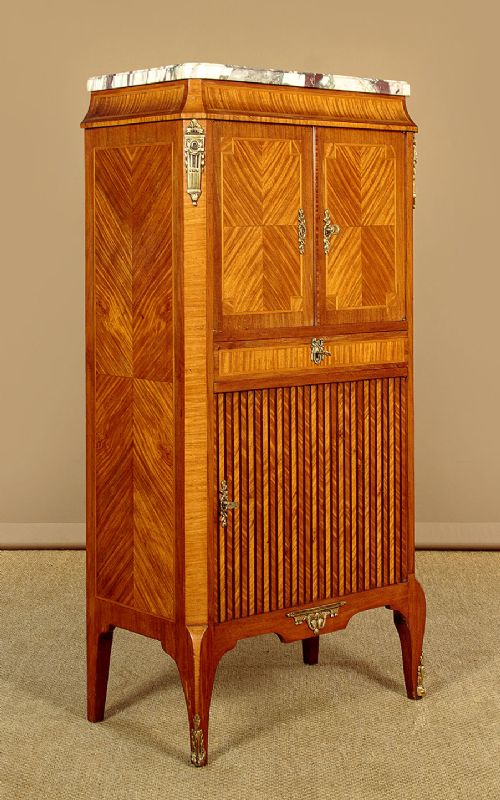
Many examples incorporate decorative elements such as brass fittings, ormolu mounts, and mirrored back panels. French and revival pieces frequently integrate marble tops into the cabinetry, combining stone surfaces with carved wooden frames.
Vintage Walnut Chiffonier Retail Price Guide 2026
Typical asking prices for vintage walnut chiffonier among the pieces listed under this phrase on Sellingantiques today, from the lower quarter to the upper quarter. They describe what is for sale here now, not the wider market.
Secretaries hide your deepest correspondence behind discreet drop-down writing flaps, proving that walnut furniture loves to keep a quiet secret.
What varies in quality
Quality shows in the selection and matching of the walnut veneer across large surfaces. Superior items demonstrate careful book-matching where grain patterns mirror one another symmetrically.
Carving depth and the crispness of applied ornamentation distinguish finer examples from standard production. Cabinetmakers who invested time in detailed carving and secure joinery produced pieces that retain their structural integrity and visual depth.
The Vintage Walnut Chiffonier Glossary
- Burr walnut
- A specialised timber cut from the warted growths on walnut trees, prized for its swirling, highly figured grain patterns. Cabinetmakers reserve this material for prominent surfaces.
- Credenza
- A low sideboard or cabinet used for serving and display, often featuring mirrored backs or glass doors in 19th-century iterations. This form frequently complements larger dining furniture.
- Marquetry
- The art of applying pieces of veneer to a structure to form decorative patterns and pictures. Craftsmen utilise various coloured woods to create floral and geometric designs.
- Ormolu
- Gilded bronze ornamentation applied to furniture and decorative objects. This technique adds metallic highlights to wood and marble surfaces.
- Tallboy
- A tall chest of drawers, typically constructed by stacking one chest upon another. This form maximises vertical storage capacity within a compact floor footprint.
Vintage Walnut Chiffonier: Frequently Asked Questions
What is a walnut chiffonier used for?
These cabinets provide surface display space alongside enclosed shelving for dining rooms and living areas. Historically, the surface held glassware or decorative objects while cupboards stored linens and tableware.
Today, they serve similar practical functions in modern homes while introducing period character and warmth through figured walnut timber.
How do I identify a Victorian piece?
Victorian examples often display heavier proportions, rich burr walnut veneers, and darker finishes compared to later 20th-century items. Look for traditional construction methods and period-specific hardware.
Cabinetry from this era frequently incorporates arched panel doors and substantial cornices reflecting 19th-century design preferences.
Are French revival styles common?
The selection includes several continental interpretations drawing on Louis XV and Louis XVI styles, alongside French Empire designs. These pieces often feature marble tops and intricate marquetry.
Such cabinets bring a lighter decorative feel through floral inlay and shaped cabriole legs or classical columns.
How do Art Deco pieces differ?
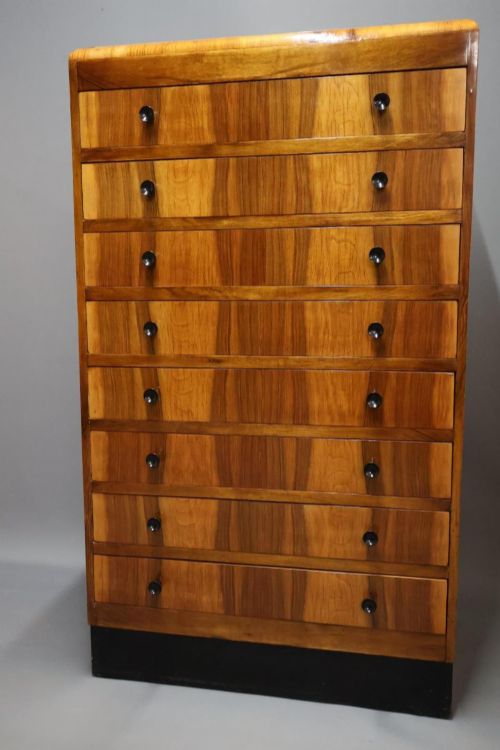
Art Deco walnut pieces from the 1930s lean towards streamlined forms and geometric tallboy configurations. They emphasise smooth surfaces and the natural grain of the wood over applied ornamentation.
These items reflect a shift toward modernism while retaining the rich brown tones of traditional walnut timber.