


Regency Bowfront Sideboard
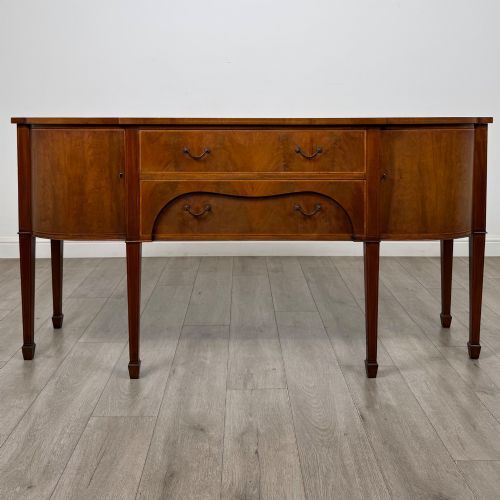
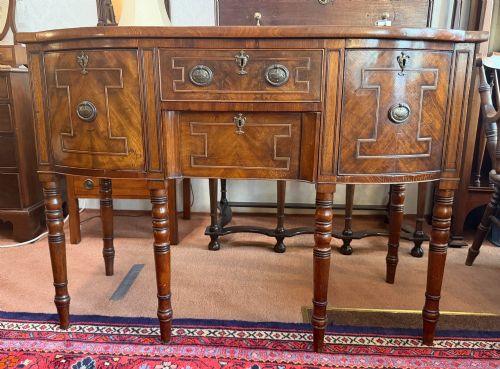
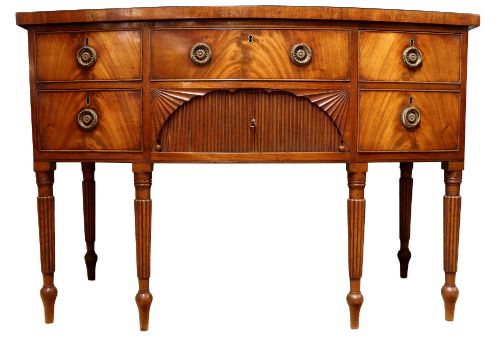
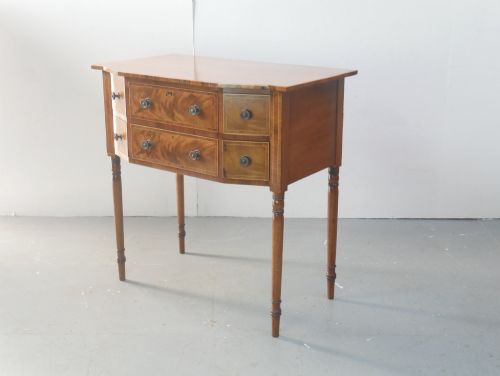
A regency bowfront sideboard brings sculptural grace to a dining room, offering deep curved storage crafted in rich mahogany.
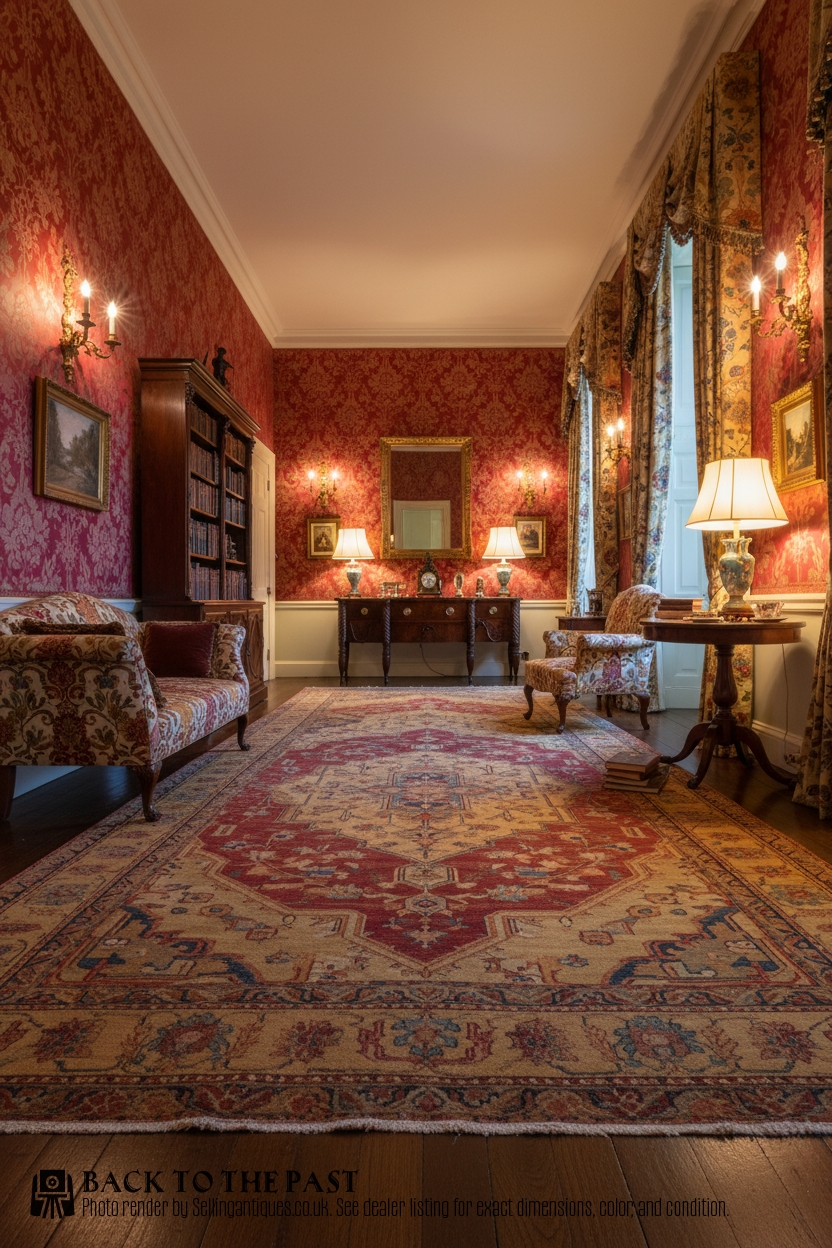
Defining the Regency Bowfront Sideboard
A regency bowfront sideboard stands as a formal dining room serving piece defined by its outward curving front facade. These items appear primarily from the nineteenth century and the Regency period, with occasional twentieth century interpretations.
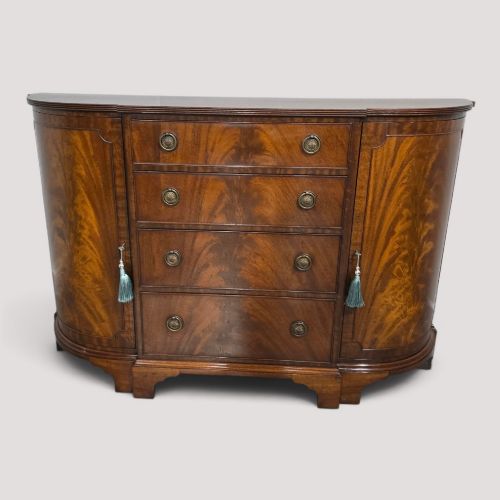
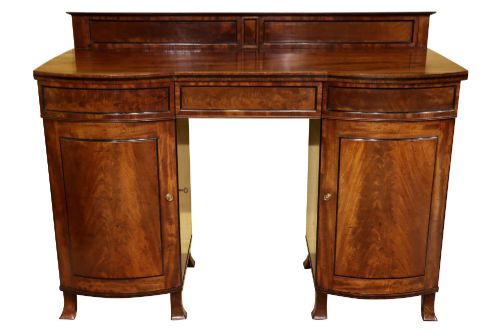
Makers designed these pieces as practical servers for dining spaces, incorporating generous storage behind curved doors and drawers. The form ranges from simple rectilinear frames with bowed fronts to elaborate pedestal arrangements.
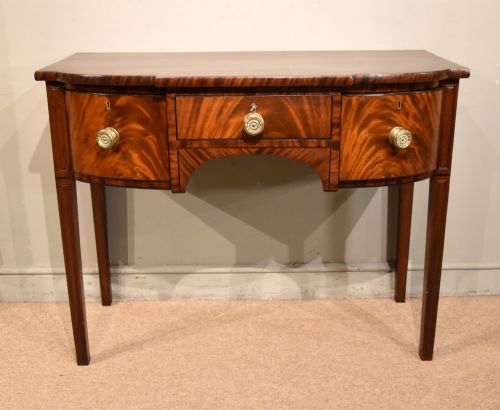
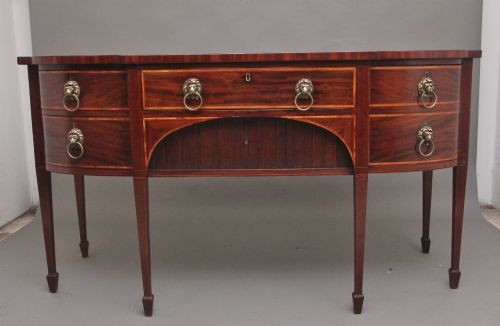
Most examples found on this page utilise solid mahogany and flame mahogany veneer, often decorated with contrasting stringing. Buyers frequently encounter standard bow fronts alongside painted variations and inlaid geometric patterns.
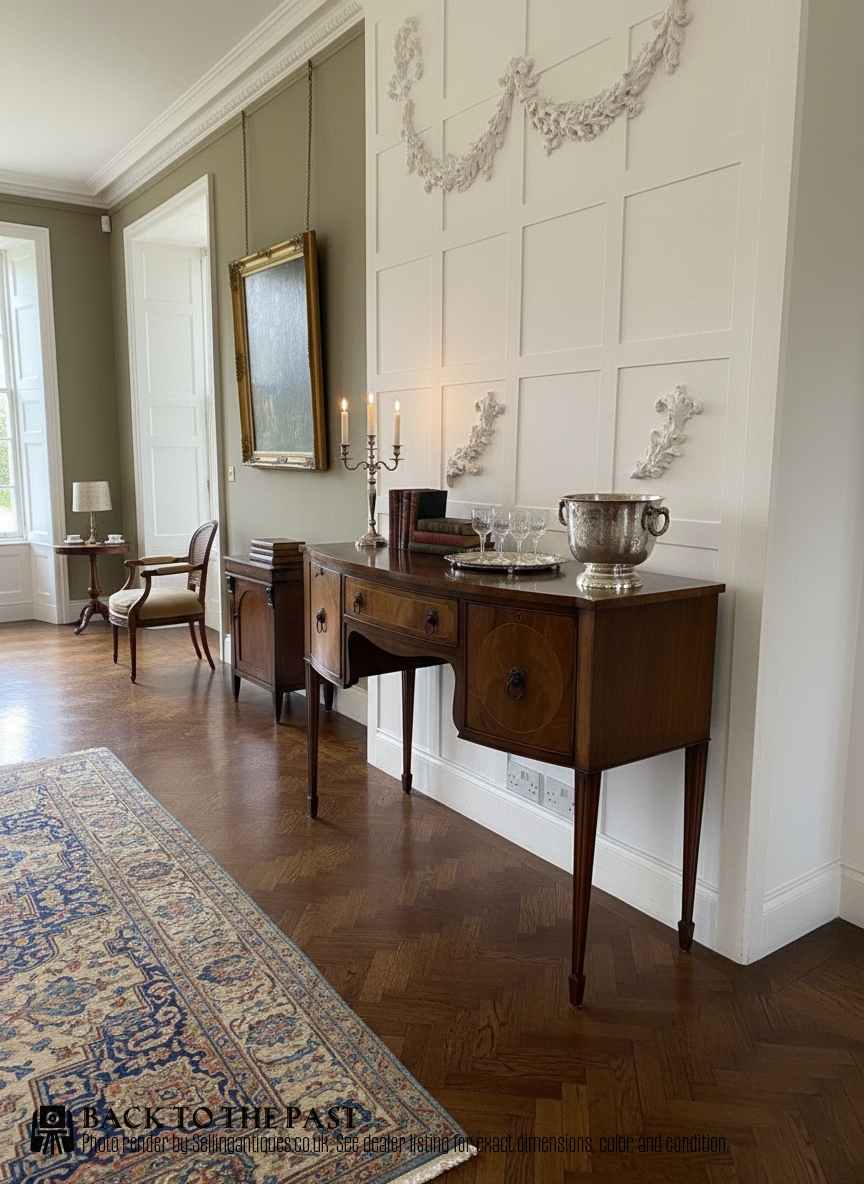
Materials and Construction
Cabinet makers constructed the primary carcasses using solid mahogany, applying figured flame mahogany veneers to the drawer fronts and doors to create dramatic grain patterns. Boxwood stringing provides crisp linear contrast around the borders and panels.
Brass fittings appear as key escutcheons, ring pulls and lion mask handles, securing the doors and drawers while adding metallic detail. Wood veneer technology allowed artisans to select highly figured timber faces for maximum visual impact.
Retail Price Guide 2026
Typical UK retail prices for regency bowfront sideboard, calculated from the Sellingantiques database of over a million retail prices indexed since 2003. This retail price guide relies exclusively on Sellingantiques data; no external sources or auction records are used, so the figures do not describe the wider market.
The listings across this site feature mahogany timber, brass hardware, boxwood inlay, and flame mahogany veneers from the nineteenth century.
Markers of Quality
Quality rests upon the choice of timber figure, where superior pieces display matched flame mahogany veneers carefully arranged across the curved drawer fronts. The crispness of boxwood inlay and the integration of brass mounts further distinguish finer pieces from standard production.
Proportion and scale dictate the visual success of the curve, separating balanced sideboards from heavier, less refined examples. Superior cabinet work ensures the curved drawers operate smoothly within their sweeping frames.
The Regency Bowfront Sideboard Glossary
- Bowfront
- A convex curved cabinet front that projects outward in a smooth arc. This shape softens the rigidity of traditional dining room furniture.
- Flame mahogany
- A veneer cut from timber where the branch joins the trunk, producing a flickering flame-like grain pattern. Cabinet makers reserved this wood for the most prominent display surfaces.
- Stringing
- Thin inlaid lines of contrasting timber used to outline drawers and panels. Boxwood provides a pale linear accent against dark mahogany.
- Pedestal sideboard
- A form featuring central drawers flanked by distinct pedestal cupboards or cabinets. These larger pieces dominate formal dining spaces.
- Escutcheon
- A protective brass plate surrounding a keyhole. It prevents the key from damaging the surrounding mahogany veneer during daily use.
Frequently Asked Questions
What is a regency bowfront sideboard used for?
These pieces served as dining room servers for holding silver, linen and serving dishes during meals.
Today they function as striking storage credenzas in dining rooms or large hallways.
How do I date a bowfront sideboard?
Examine the secondary woods, handle styles and veneer thickness to estimate the period of manufacture.
Nineteenth century pieces typically display hand-cut dovetails and genuine flame mahogany veneers rather than modern laminates.
What wood are most sideboards made from?
Mahogany serves as the primary timber across almost every listed example in this category.
Cabinet makers enhanced these surfaces using exotic wood veneers and contrasting boxwood stringing.
How do I style a sideboard at home?
Position the piece against a principal dining room wall where the curved front can be fully appreciated.
Keep the top surface uncluttered with perhaps a pair of matching candlesticks or a silver tray.