
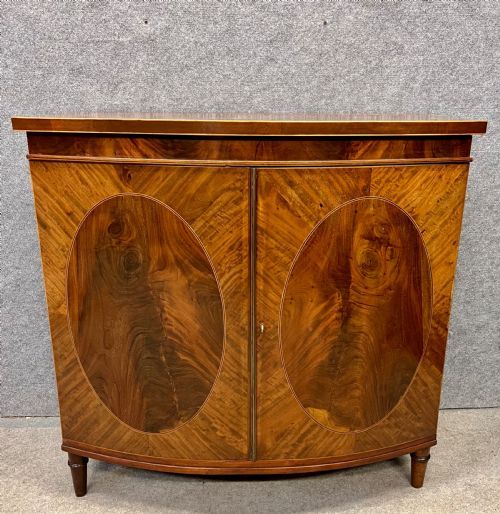
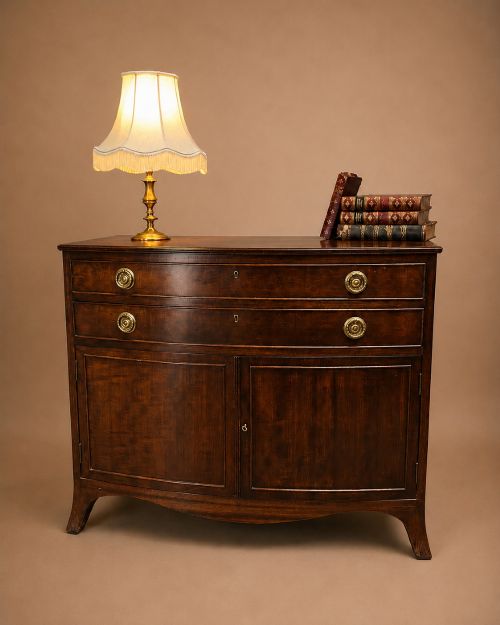
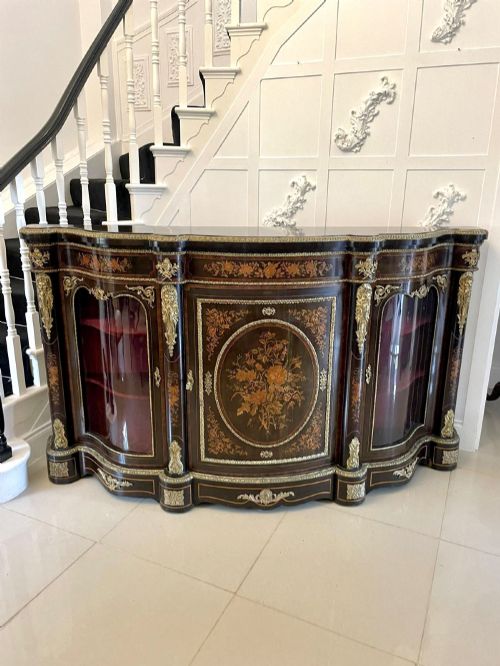
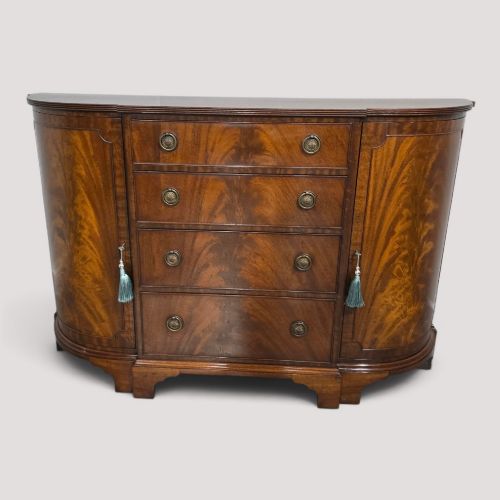
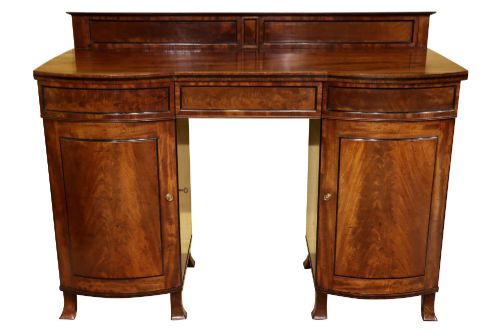
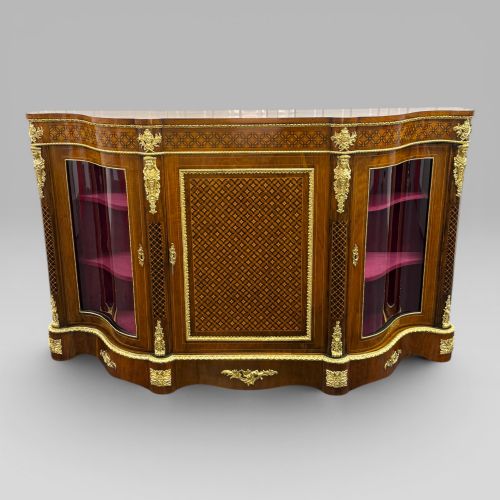
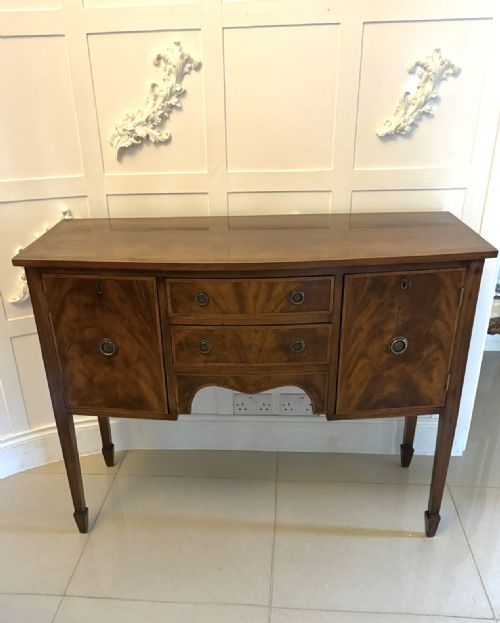
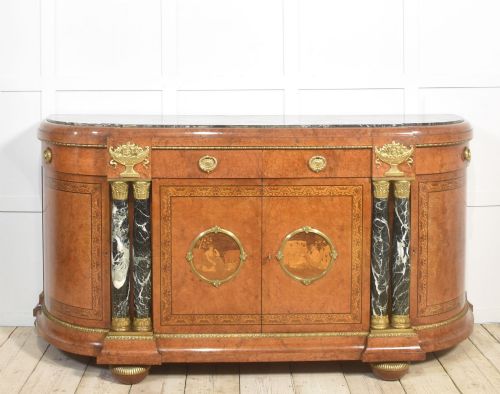

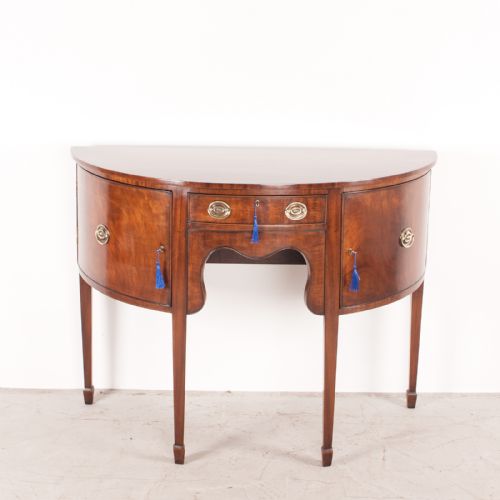


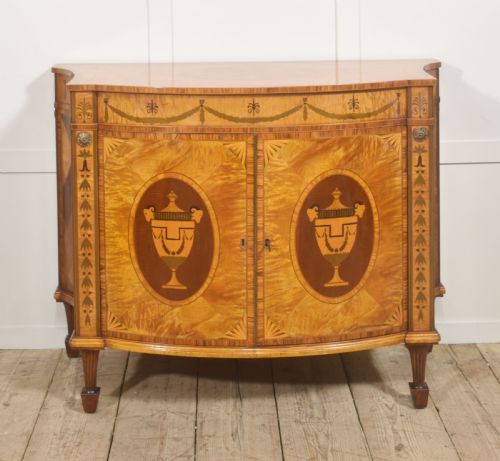


Curved Front Sideboard
A curved front sideboard brings a graceful sweep of mahogany and brass into a room, offering generous storage with a refined silhouette.
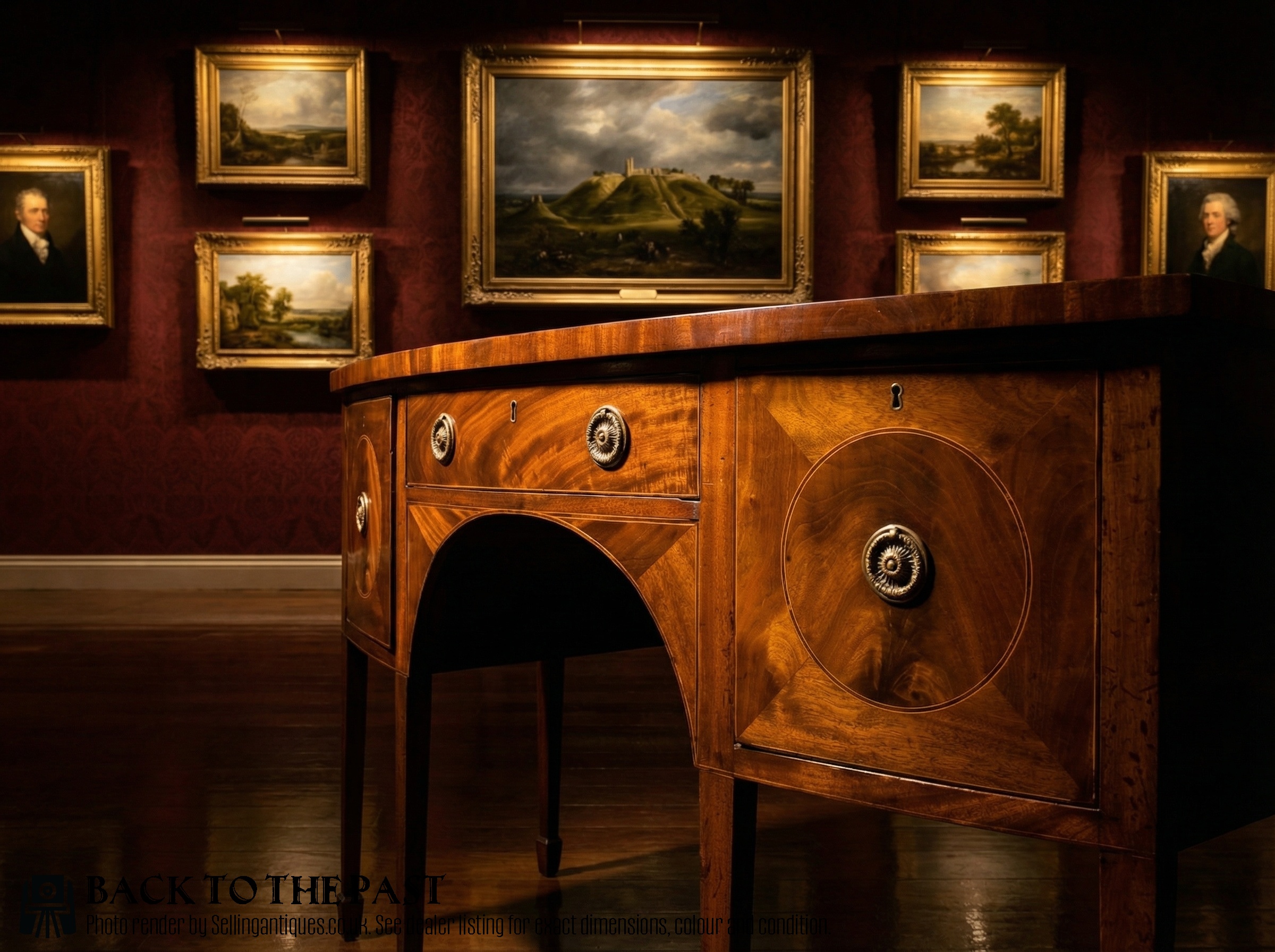
What a curved front sideboard is
A curved front sideboard provides formal dining room storage through substantial cupboards and drawers arranged along a bowed, demi-lune, or curved line. These pieces appear in Georgian, Regency, Edwardian, and early twentieth-century iterations.
The most common version met on this page is the mahogany bowfront sideboard, hailing from periods such as the Georgian era, the nineteenth century, and nineteen-twenty. These items balance practical cabinetry with decorative front profiles.
Originating in domestic dining spaces, a curved front sideboard serves to store silver, linen, and glassware while anchoring the room's decorative scheme with traditional woodwork.
How they were made
Cabinet makers constructed these sideboards primarily from mahogany, often incorporating satinwood details and intricate inlay work to enhance the polished timber surfaces. Timber selection focused on rich grain patterns and durable structural integrity.
Metal fittings such as brass hardware completed the construction, securing drawers and doors while adding contrasting metallic highlights to the dark wood cabinetry.
Retail Price Guide 2026
Typical UK retail prices for curved front sideboard, calculated from the Sellingantiques database of over a million retail prices indexed since 2003. This retail price guide relies exclusively on Sellingantiques data; no external sources or auction records are used, so the figures do not describe the wider market.
Listings span the Georgian, Regency, and early twentieth-century periods, utilising mahogany, satinwood, and brass.
What varies in quality
Quality separates through the finesse of the timber preparation and the precision of the curved joinery, where tighter grain matching and cleaner lines elevate a piece. The integration of fine satinwood inlay and high-grade brass mounts marks out superior examples.
Proportion and scale distinguish standard utility from exceptional design, with smaller bowed sideboards and finely executed George III or Regency pieces demonstrating superior cabinet-making expertise.
The Curved Front Sideboard Glossary
- Bowfront
- A convex curved cabinet front that projects outward in a smooth arc. This shape softens the room's geometry compared to flat-fronted furniture.
- Demi-lune
- A half-moon shape characteristic of semicircular tabletops and cabinet fronts. This profile allows the furniture to sit flush against a wall while presenting a rounded facade.
- Inlay
- A decorative technique where contrasting woods like satinwood are inserted into recesses in the primary mahogany surface. This creates intricate patterns and borders.
- Regency
- An English design period spanning the early nineteenth century defined by classical restraint and archaeological motifs. Pieces from this era often feature clean architectural lines.
Frequently Asked Questions
What is a bowfront sideboard?
A bowfront sideboard is a dining room cabinet featuring a convex, curved front that projects outward in a smooth arc.
This shaping distinguishes it from standard flat-fronted furniture and provides a softer visual silhouette in a room.
How do I date a sideboard?
Dating a sideboard involves examining the timber species, construction methods, and characteristic hardware associated with specific periods like the Georgian era or the early twentieth century.
Cabinet-making styles shifted over time from strict classical proportions to later revival pieces.
Where should I place a curved sideboard?
A curved sideboard fits naturally against a dining room wall where its prolonged sweep can be fully appreciated without obstructing movement.
Smaller bowed versions also suit hallways or drawing rooms requiring formal storage.
What wood was used?
These sideboards are constructed primarily from mahogany, frequently complemented by satinwood veneers and decorative stringing.
Brass fittings are also standard for handles and key escutcheons.