
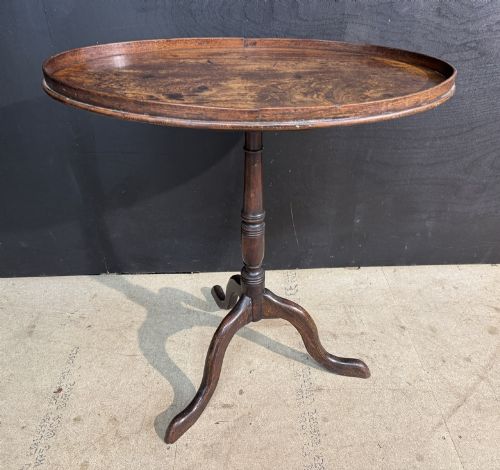
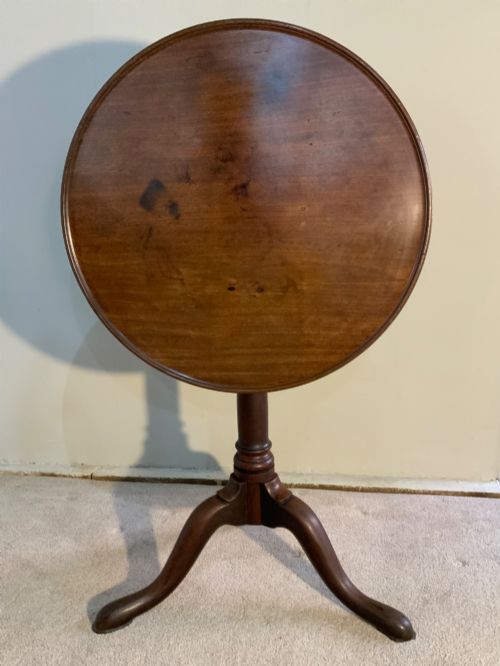


Circular Mahogany Tray
These circular mahogany tray pieces bring rich timber grain and polished practicality to any room, offering the exact serving surface and occasional display top collectors seek.
Circular Mahogany Tray
A circular mahogany tray appears in various forms across this selection, ranging from portable serving pieces and card trays to table tops and multi-tiered dumb waiters. These pieces span Georgian, Edwardian, and nineteenth-century periods, showing how domestic serving habits evolved over generations.
The most frequent examples combine deep timber tones with raised rims, sometimes featuring satinwood or boxwood inlay work. Buyers encounter both standalone handheld trays and fitted table tops designed for tripod bases or rotating mechanisms.
Originating as practical items for dining and hospitality, these circular forms bridge the gap between portable serving accessories and static occasional furniture. Each piece reflects the functional requirements of its era, from simple Georgian card trays to elaborate Edwardian revolving stands.
Materials and construction methods
Makers utilised solid and veneered mahogany timber as the primary structural material, prized for its durability and rich grain patterns. Craftsmen selected boards with care to ensure stable circular surfaces that resisted warping during daily use.
Inlay techniques incorporate contrasting timbers such as satinwood and boxwood to create geometric or decorative borders along the edges. Brass fittings appear on handles and structural joints, adding functional contrast to the dark timber.
Party guests in the Edwardian era spun canapé turntables with genuine enthusiasm before anyone had invented the modern buffet.
Factors influencing quality
The refinement of the timber selection dictates the baseline quality, with tightly figured grain and rich patination marking out superior pieces. Craftsmen who matched grain directions across joints achieved a more cohesive visual appearance.
Detailing in the edge mouldings and the precision of inlaid boxwood or satinwood stringing separate standard utility items from finer parlour pieces. Original brass handles and sound structural integrity further distinguish better examples from heavily restored ones.
The Circular Mahogany Tray Glossary
- Mahogany
- A durable tropical hardwood known for its deep reddish-brown colour and stable grain. It became the dominant timber for fine English furniture from the eighteenth century onwards.
- Satinwood
- A pale, lustrous timber utilised for contrasting inlay work and decorative banding. Craftsmen applied it in thin veneers to highlight geometric borders.
- Dumb Waiter
- A multi-tiered revolving table designed to hold food and drinks without servant assistance. These tiered structures feature stacked circular trays on a central pillar.
- Tilt Top Table
- A piece of furniture featuring a tabletop that pivots vertically on a catch mechanism. This design allowed tables to stand flat against walls when not in use.
Circular Mahogany Tray: Frequently Asked Questions
How were these trays used historically?
These pieces served primarily for carrying drinks, cards, and small tableware items between rooms during social gatherings. Portable versions moved easily around the home, while larger iterations sat on dedicated stands.
Stationary variants functioned as surface tops for serving tea or displaying decorative objects in formal reception spaces. Their raised edges prevented items from sliding during transit.
What is a lazy susan?
A lazy susan is a revolving tray or table top that allows diners to share dishes easily across a table. The mechanism sits on a central pivot for smooth rotation.
In this selection, these pieces appear both as table tops and standalone serving accessories dating from the Georgian and Edwardian eras.
How do I care for mahogany timber?
Maintain mahogany surfaces by keeping them away from direct sunlight and extreme temperature fluctuations, which can dry out the timber. Regular dusting with a soft, dry cloth preserves the natural finish without damaging the patina.
Avoid using silicone-based polishes or excessive moisture. Traditional wax polish applied sparingly helps nourish the wood grain over time.
How can I tell Georgian pieces apart?
Georgian pieces generally exhibit heavier construction, deep timber patination, and hand-cut joinery typical of eighteenth-century workshops. Details often include simpler, robust mouldings rather than delicate revival inlays.
Later Edwardian examples frequently incorporate lighter satinwood stringing, shell motifs, and brighter finishes influenced by the Sheraton revival style.