




Georgian Inlaid Mahogany Tray
A georgian inlaid mahogany tray is a functional piece of heritage furniture, prized for its timber warmth and precise decorative bandings.
Georgian Inlaid Mahogany Tray
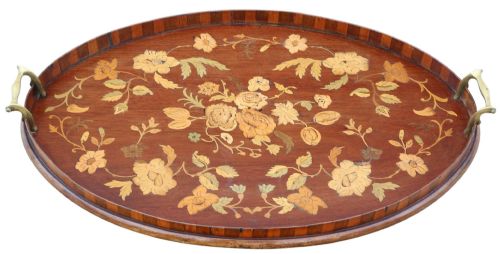
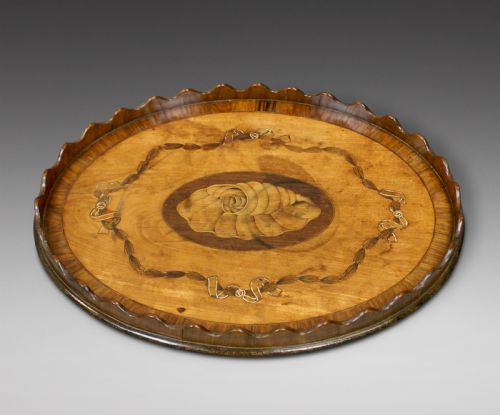
A georgian inlaid mahogany tray appears in various circular and oval configurations, designed originally for carrying tea or serving wine. Many examples date from the Georgian era and the Regency period, though later nineteenth century and Edwardian revivals also populate the selections.
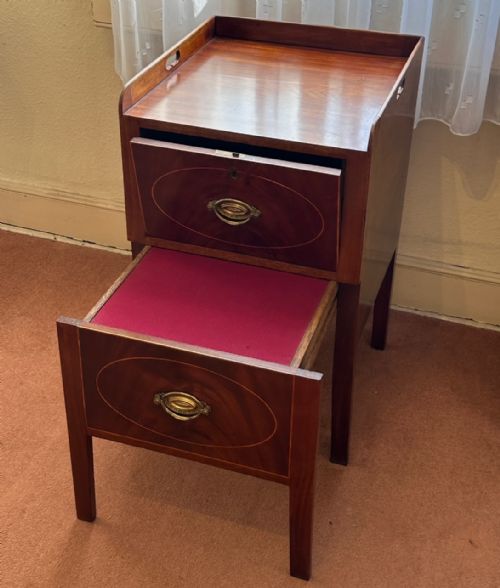
The inventory demonstrates that these serving trays and platters share space with related forms such as bedside cupboards and side tables featuring similar timber work. Buyers seeking a strict serving piece will encounter both dedicated trays and occasional pieces adapted with raised edges.
Materials and Techniques
Cabinet makers utilised dense mahogany as the primary structural and visual base, often selecting timber with rich grain patterns. Flame grain variations provide a distinct rippled surface texture across the centre panels.
Contrasting woods such as satinwood, boxwood, and ebony form intricate marquetry inlay and linear bandings. These lighter botanical insertions create crisp geometric or floral borders against the dark mahogany body.
Some trays hide tiny brass handles so delicate they look like reluctant earrings.
Judging the Standard
Quality rests in the precision of the timber selection and the crispness of the contrasting inlay work. Finer examples display tightly fitted bandings without gaps, alongside well-figured mahogany boards that present a deep natural lustre.
Structural integrity of the raised edges, handles, and underlying joints dictates the grade of the piece. Superior craftsmanship shows in the seamless integration of decorative borders with the main body of the tray.
The Georgian Inlaid Mahogany Tray Glossary
- Mahogany
- A durable tropical hardwood known for its reddish brown tone and stable grain. It forms the primary body for these items.
- Inlay
- A technique where pieces of contrasting wood are inserted into recess cavities to create a flat decorative surface. This method defines the decorative borders.
- Satinwood
- A luminous yellowish timber utilised for bright contrasting stringing and geometric details. It provides a sharp visual balance to dark mahogany.
- Marquetry
- The art of forming decorative patterns using fitted veneers of various timbers. It appears on finer panel surfaces.
- Flame grain
- A distinctive ripple pattern within timber figures caused by wavy wood growth. It commands attention on principal display surfaces.
Georgian Inlaid Mahogany Tray: Frequently Asked Questions
How were these trays used?
These trays served primarily for carrying tea ware, wine bottles, and glasses between rooms in larger homes.
Servants transported beverages on them, and the raised rims prevented items from sliding off during transit.
Can I use an antique tray daily?
Modern daily use is possible with careful handling, though moisture and heat present risks to old polish.
Most owners prefer to use them for static display or light serving rather than heavy hospitality duties.
How do I spot a revival piece?
Revival items from the Edwardian period or later often show machine precision and lighter secondary timbers underneath.
Georgian originals display hand-cut joinery methods and older patination on the underside.
What maintenance does mahogany need?
Regular dusting with a dry cloth keeps the surface clean without stripping the aged wax finish.
Occasional application of quality beeswax maintains the moisture and depth of the mahogany grain.