


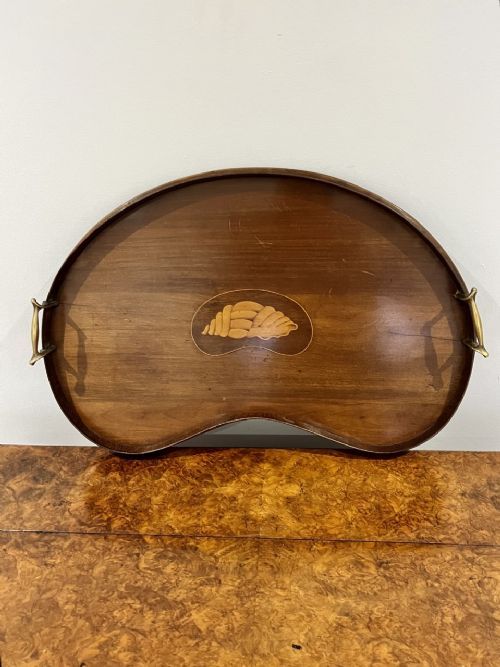

Inlaid Drinks Tray
An inlaid drinks tray brings polished mahogany, intricate marquetry and practical elegance to the table.
Inlaid Drinks Tray
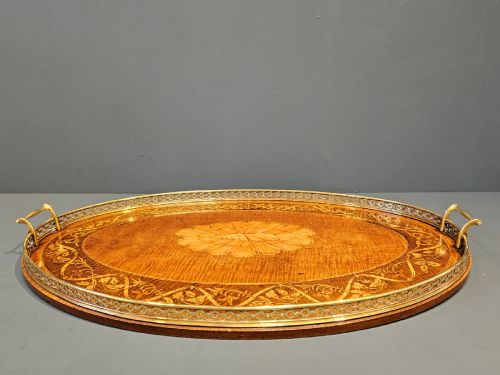
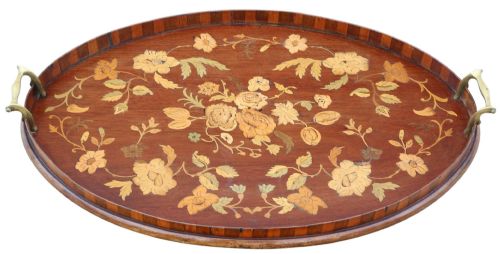
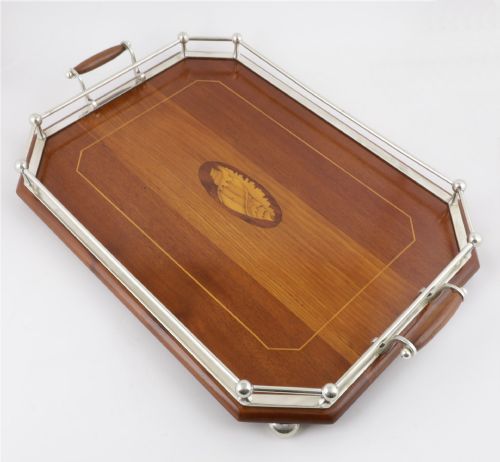
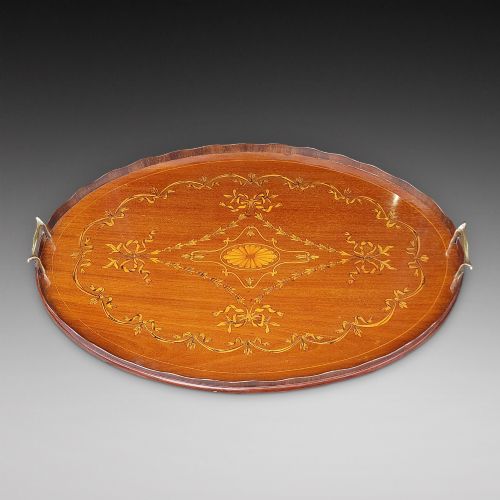
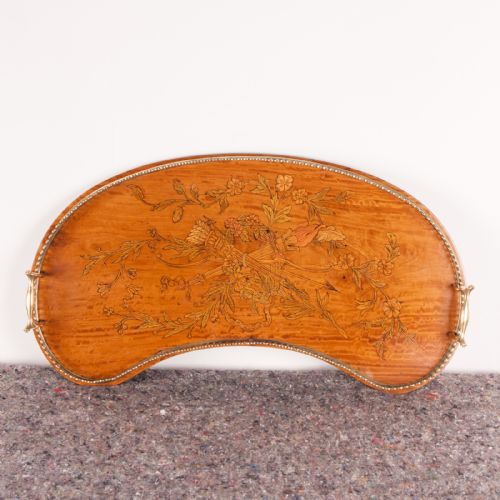
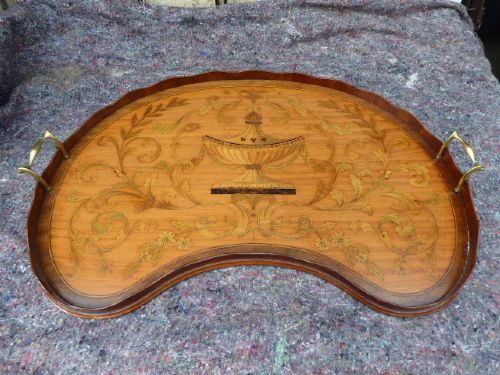
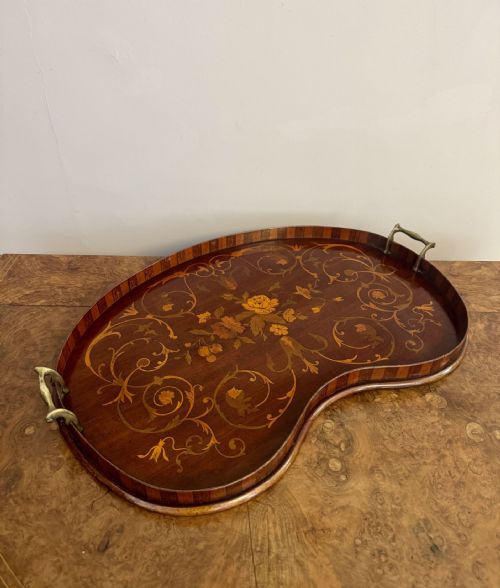
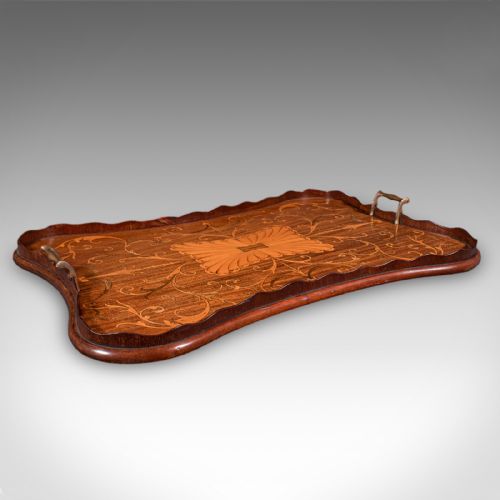
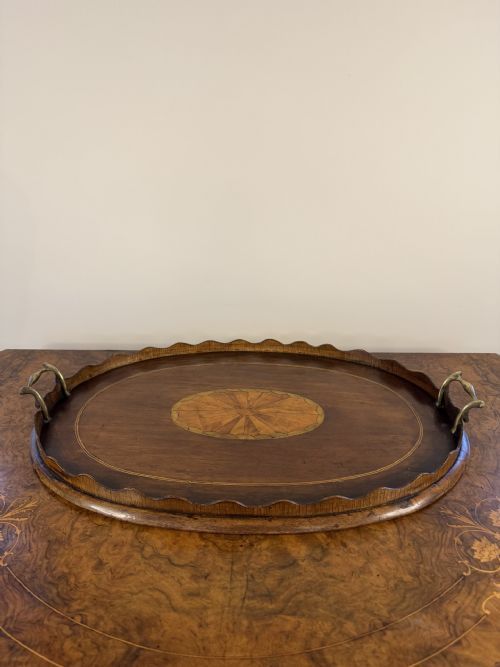
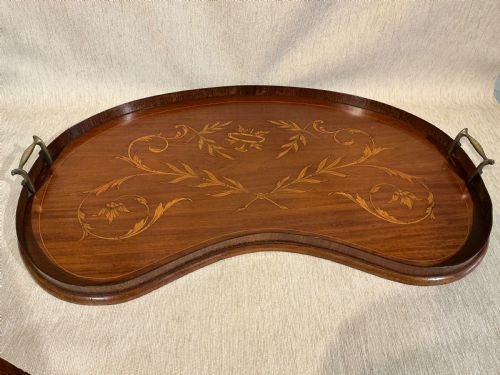
An inlaid drinks tray is a serving piece designed for afternoon tea, spirits or hospitality, taking forms from oval and kidney shapes to octagonal platters. These pieces appear frequently from the Victorian, Edwardian and Georgian periods, often constructed as standalone trays or adapted to sit upon occasional tables and stands.
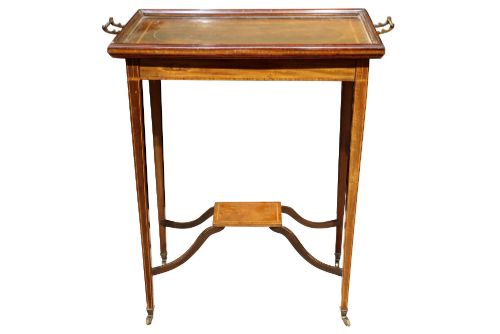
The most common examples on this page are Edwardian and Victorian mahogany serving trays, frequently detailed with satinwood inlay or marquetry. Alongside standard serving trays, buyers encounter variations such as butler trays, etageres and two-tier occasional tables featuring removable trays.
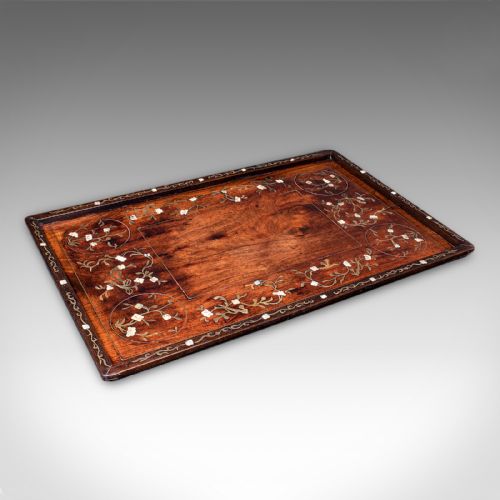
Origins span English workshops to Anglo-Indian production, employing timbers like teak, rosewood, burr yew and satinwood. Whether circular, rectangular or shaped to the body, each object combines utility with decorative woodwork intended for display.
How they were made
Cabinetmakers constructed these trays primarily using solid mahogany, teak or rosewood as a stable base, applying fine veneers of satinwood, burr yew and exotic woods to the surface. Marquetry techniques involved cutting contrasting timber veneers to form floral, shell or geometric motifs embedded directly into the primary wood.
Edges often incorporated raised wooden galleries, silver-plated rails or solid brass handles secured to the frame. Many pieces also integrated glass covers to protect delicate marquetry and satinwood inlay from liquid spills during service.
Some trays include surprise tables where the top lifts away to reveal a hidden compartment for bottles.
What varies in quality
Quality rests upon the precision of the marquetry and the choice of timbers, where crisp contrast in the satinwood and boxwood inlay distinguishes finer workshops from standard production. The selection of figured woods, such as burr yew or highly grained mahogany, elevates the visual depth of the surface.
Structural refinement shows in the joinery of the gallery rails, the integration of brass or silver-plated mounts, and the balance of shaped handles. Trays paired with original stands or retaining glass inserts demonstrate greater completeness and original utility.
Edwards and Roberts
The Inlaid Drinks Tray Glossary
- Marquetry inlay
- Decorative woodwork formed by fitting contrasting veneer patterns into a prepared wooden surface. This technique creates pictorial designs such as shells, urns and floral sprays.
- Gallery
- A raised border or rail running around the outer edge of a tray to prevent glasses and decanters from sliding off. Galleries appear in pierced brass, silver plate or turned wood.
- Kidney shaped
- A curved, indented outline designed to rest comfortably against the body of the person serving. This form is particularly typical of finer Edwardian afternoon tea trays.
- Etagere
- A piece of furniture comprising multiple tiers or open shelves for display and serving. These often incorporate a removable tray as the top surface.
- Satinwood
- A hard, lustrous yellow timber imported from tropical regions and utilised extensively for contrasting inlay and veneering. It provides a bright, reflective quality against darker base woods.
Inlaid Drinks Tray: Frequently Asked Questions
How were drinks trays used historically?
These trays served to transport teapots, decanters, glasses and silver service from the kitchen to the drawing room or parlour. Servants used them during afternoon tea or evening gatherings to present refreshments to guests.
Many designs included raised galleries or silver-plated rails to keep glassware secure while moving between rooms. Some examples doubled as table tops when placed upon folding stands or occasional frames.
How do I distinguish Edwardian trays from Victorian ones?
Edwardian trays frequently favour lighter timbers like satinwood, burr yew and delicate marquetry in the Sheraton Revival style. They often appear in kidney shapes or with refined brass handles.
Victorian pieces lean towards heavier solid mahogany with bolder brass mounts, silver plate or simple boxwood stringing. The earlier Georgian examples display restrained circular or oval mahogany forms with understated decorative banding.
Can I use an antique tray for serving drinks today?
Most wooden trays remain robust enough for light daily service, provided they are handled with care and kept away from standing water. Many period pieces feature protective glass inserts placed over the marquetry to guard against spills.
If a tray lacks glass, using coasters and wiping moisture immediately preserves the delicate satinwood inlay and French polished finish. Trays mounted on stands function well as permanent side tables in a living space.
What is an etagere drinks tray?
An etagere is a multi-tiered stand designed for display, which in this context incorporates a removable tray as its upper surface. This dual-purpose construction allowed the tray to be lifted off for serving while the stand remained stationary.
These pieces typically date from the late Victorian and Edwardian eras, combining mahogany frames with inlay work and lower shelves for bottle storage.