




Mahogany Wine Coaster
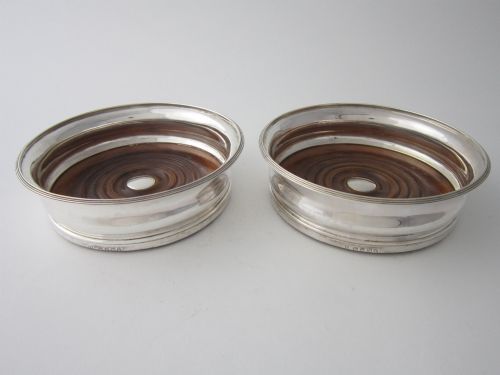
These mahogany wine coaster examples protect the dining table and carry decanters smoothly from hand to hand.
Mahogany Wine Coaster
A mahogany wine coaster sits upon the dining table to hold a bottle or decanter and protect the polished wood beneath from rings and spills. The pieces on this page span the Georgian period, the nineteenth century, and the early twentieth century.
Most examples appear as low, circular trays formed from turned timber, often paired with silver plate, sterling silver, or brass mounts. One meets single pieces, matched pairs, and larger sets designed to hold multiple bottles for port and claret.
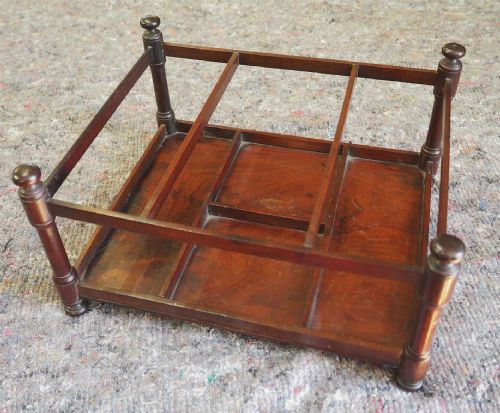
Forms range from simple turned treen rings to large freestanding bottle stands and carved decanter holders fitted with castors. Some incorporate inlaid decoration, boxwood stringing, or satinwood banding to accent the rich grain of the wood.
Materials and construction
Cabinetmakers turned solid mahogany on a lathe to create the circular bodies, bringing out the deep red and brown tones of the timber. Many pieces incorporate brass or silver plate rims, secured around the wooden perimeter to strengthen the structure.
Internal bases often feature green felt or baize lining to cushion the glass bottle base as it rests inside the tray. Larger nineteenth century examples add small metal castors beneath the wooden base so the stand glides easily across the dining table.
Finer Georgian and Regency specimens employ decorative techniques such as pierced metalwork, armorial engravings, or subtle inlay using boxwood and satinwood. These elements combine to balance the dense weight of the mahogany body with polished metal accents.
Some nineteenth century coasters wear tiny metal wheels so they roll politely across the port.
Judging quality
Quality rests in the crispness of the wood-turning and the depth of the mahogany grain selected by the maker. Superior pieces show clean, precise turning lines without chips or repairs to the delicate upper rim.
The integration between the timber body and the metal or silver plate mount reveals the standard of craftsmanship. Better examples fit tightly together without gaps, and heavy castors or weighted bases run true and smooth.
The presence of maker marks, armorial engravings, or attributed workshop origins elevates certain items beyond standard utility pieces. Finer examples retain their original felt linings and show a rich, mellow polish earned through long use.
James Mein·John and Thomas Settle
The Mahogany Wine Coaster Glossary
- Treen
- Small handmade wooden objects produced by turning or carving. These items show the everyday skill of the woodworker using local timbers.
- Old Sheffield Plate
- An early method of fusing a thin sheet of silver to a thicker copper base. This technique produces a durable dual-metal material found on many nineteenth century items.
- Castor
- A small swiveling wheel attached to the base of a heavy piece. These fittings allow large bottle stands to roll smoothly across a dining table.
- Decanter stand
- A larger version of a coaster designed to hold a handled bottle or serving vessel. They often feature heavier wooden bases and reinforced rims.
- Stringing
- A thin line of contrasting wood inlay used to decorate furniture and treen. Makers set light boxwood into dark mahogany to create geometric borders.
Mahogany Wine Coaster: Frequently Asked Questions
What is a mahogany wine coaster?
A low circular tray designed to hold a wine bottle on the dining table.
They protect polished table surfaces from moisture rings and allow guests to slide bottles between each other.
How do I date an old coaster?
Look to the timber, the metal mounts, and the turning style.
Georgian and Regency pieces often show dense mahogany with hand-turned profiles, whilst later twentieth century examples pair silver plate with distinct manufacturing marks.
Were they always used in pairs?
Not exclusively, though many survive as matched pairs or larger sets.
Single pieces, four-bottle holders, and larger magnum stands also appear across the historical record.
How do I care for the wood?
Keep the timber away from direct heat sources and sudden humidity changes.
A gentle application of appropriate wax maintains the natural lustre of the mahogany surface without harming any felt base.