
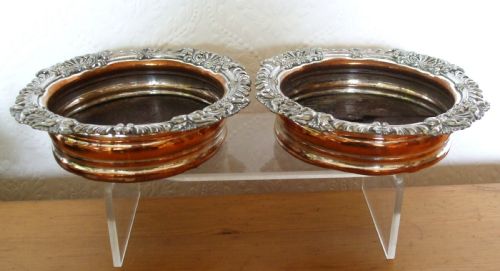


Georgian Wine Coasters
Georgian wine coasters protect polished dining tables while passing bottles with grace, crafted from gleaming silver, rich timber, and lustrous papier-mâché.

What Georgian wine coasters are
When searching for Georgian wine coasters, collectors look for circular table accessories designed to hold wine bottles and circulate them smoothly across the dining surface. These pieces date from the Georgian and Regency periods, spanning the late eighteenth and early nineteenth centuries.
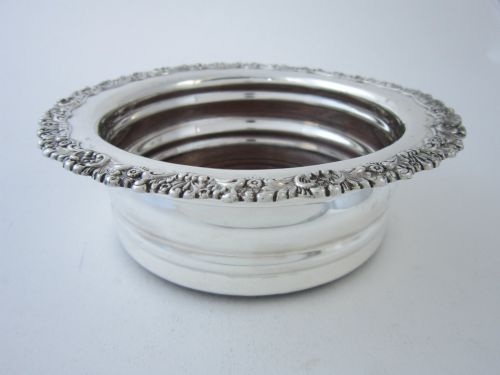
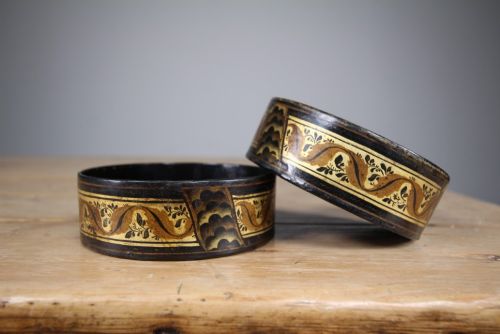
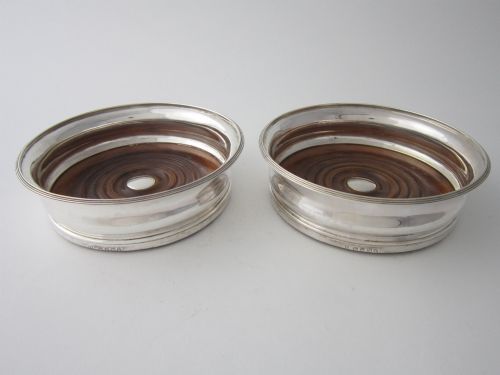
The versions most commonly met on this page include pairs fashioned from sterling silver, Old Sheffield plate, and timber such as oak and mahogany. Many examples feature turned wooden bases, often fitted with silver mounts or brass stringing, while others showcase papier-mâché with gold leaf.
Makers and workshops of the era produced these items to serve both a practical and social function during formal dinners. The styles range from George III designs to later Regency interpretations, reflecting changing tastes in dining room accessories.
How they were made
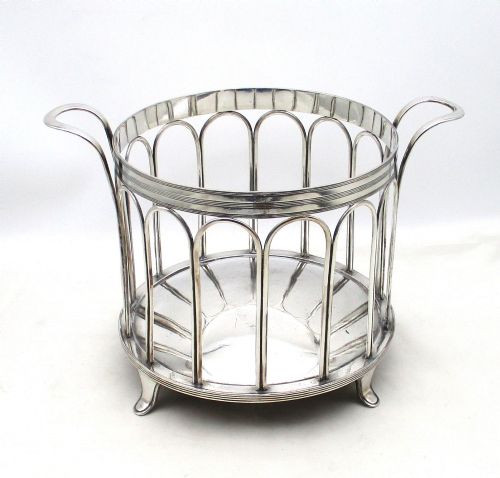
Silversmiths and manufacturers utilised a variety of metalworking techniques, combining sterling silver or Old Sheffield plate with wirework and piercing. Silver-mounted wooden examples required skilled carpentry to turn the oak and mahogany bases to fit snugly within metal galleries.
Papier-mâché pieces relied on layered paper pulp treated with lacquer and embellished with gold leaf to create durable yet decorative bodies. Old Sheffield plate combined a thin layer of silver fused to a copper core, a method that required precise thermal bonding.
Retail Price Guide 2026
Typical UK retail prices for georgian wine coasters, calculated from the Sellingantiques database of over a million retail prices indexed since 2003. This retail price guide relies exclusively on Sellingantiques data; no external sources or auction records are used, so the figures do not describe the wider market.
Table guests once relied on these rolling wooden circles to keep the claret moving freely long after the butler departed.
What varies in quality
The distinction between standard examples and finer pieces rests upon the crispness of the chasing, the delicacy of the piercing, and the quality of the timber turning. Superior silver coasters often display detailed armorial engravings or cast decorative borders.
In papier-mâché and lacquered items, the depth of the finish and the preservation of the gold leaf determine the overall calibre. Timber bases that retain their original polished patination and tight grain structure indicate superior original craftsmanship.
Barnards·William Allen
The Georgian Wine Coasters Glossary
- Old Sheffield Plate
- A composite material made by fusing a thin sheet of sterling silver onto a thicker copper base. This technique was widely utilised before the invention of electroplating.
- Papier-mâché
- A composite material consisting of paper pulp or reinforced paper sheets mixed with adhesive, then moulded and lacquered. It provided a lightweight alternative to wood and metal.
- Treen
- Small handmade wooden objects of domestic use. In this context, it refers to coasters turned entirely from timber without metal galleries.
- Brass Stringing
- Fine inlay work using thin strips of brass inserted into wood surfaces. This decorative technique accentuates the circular profile of wooden coasters.
- Piercing
- A metalworking technique where patterns are cut through the silver sheet to lighten the structure. It creates openwork geometric or floral designs around the gallery.
Frequently Asked Questions
How were wine coasters used?
These pieces were placed on the dining table to hold wine bottles during dessert when the servants had left the room. Guests slid the coasters from person to person to pass the bottle without scratching the polished wood of the table.
The raised galleries kept the bottles secure while moving across uneven surfaces. They formed an essential part of formal dining etiquette in the period.
What materials are most common?
The listings show a frequent use of sterling silver and Old Sheffield plate alongside turned woods like oak and mahogany. Papier-mâché and lacquer also appear, often decorated with gold leaf.
Metal examples typically feature wooden inserts at the base to deaden the sound of the bottle setting down. Some uncommon variations incorporate wirework or brass stringing for added decoration.
How do I tell George III from Regency pieces?
George III pieces often display classic neoclassical motifs, restrained piercing, and formal silver borders. They date from the broader Georgian era spanning the late eighteenth and early nineteenth centuries.
Regency examples frequently embrace bolder forms, including papier-mâché construction and heavier turned timber bases. The transition in style reflects shifting aesthetic preferences during the early nineteenth century.
Can I still use them on a dining table?
Many collectors continue to use antique coasters for their original purpose during dinner parties. The fitted wooden bases and sturdy metal galleries protect modern table surfaces just as they did centuries ago.
Care should be taken with silver plate and delicate papier-mâché finishes to avoid moisture damage. Gentle cleaning preserves the historic patination of the materials.