


Silver and Wood Coasters
Silver and wood coasters are tactile table accessories combining precious metal and timber, prized for protecting dining surfaces while displaying rich period character.
Silver and Wood Coasters
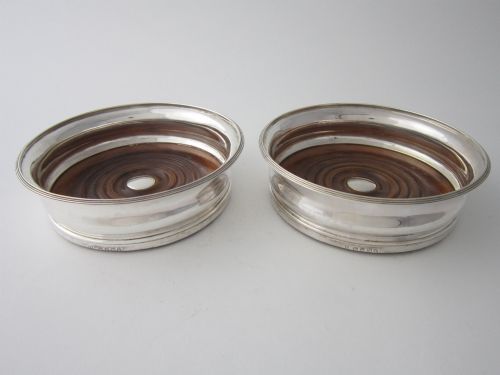
Silver and wood coasters are table vessels designed to hold wine bottles and decanters safely on polished dining furniture. When exploring silver and wood coasters on this page, buyers frequently encounter matched pairs and sets originating from the Georgian, Regency, and Edwardian eras. These domestic items merge functional timber bases with decorative metal rims, reflecting the social dining habits of past centuries.
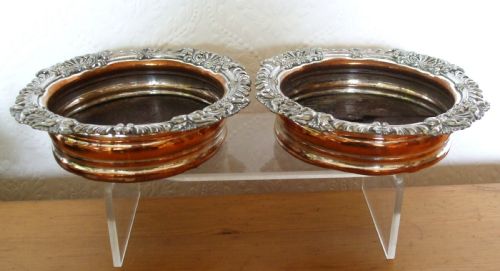
The selection encompasses wine coasters, decanter coasters, and broader barware items spanning the nineteenth century. Forms range from simple turned timber discs encircled by plain metal bands to pierced edges with intricate borders. Collectors encounter both single vessels and assembled sets of three or four pieces.
How they were made
Makers utilised traditional woodworking techniques to shape dense timbers such as mahogany and oak into turned wood bases. These wooden elements were frequently polished to highlight the natural grain before being fitted to the metal galleries. Metal components were then securely seated around the perimeter to complete the structural form.
Metalwork involved both solid sterling silver construction and composite methods like Old Sheffield plate, where a thin layer of silver was fused to a copper core. Workshops also employed silver plating techniques over base metals, alongside specialised piercing methods to create openwork borders. Skilled artisans soldered decorative mounts and turned wooden inserts to achieve a stable, weighted vessel.
Many a nineteenth-century dining table bore the silent scars of enthusiastic port circulation, making these weighted coasters the unsung heroes of polished mahogany.
What varies in quality
Quality rests upon the crispness of the metal casting and the precision of the joinery between timber and silver. Superior examples display sharply defined pierced patterns and substantial metal gauges rather than thin, pliable stampings. The balance of the piece depends on a well-fitted turned wood base that sits flush within the metal rim.
Maker attribution and material integrity elevate particular items, particularly those retaining clear hallmarks or documented workshop origins. The warmth and condition of the turned wood base, alongside the preservation of the original plating or solid silver elements, dictate the overall standard of survival.
Asprey·Matthew Boulton·James Dixon and Son
The Silver and Wood Coasters Glossary
- Old Sheffield plate
- A composite material made by fusing a thin sheet of silver to a copper ingot before rolling them together into sheets for manufacturing. This technique predates modern electroplating.
- Sterling silver
- A silver alloy containing ninety-two point five percent pure silver and seven point five percent other metals, usually copper, chosen to strengthen the material for functional objects.
- Turned wood
- Timber shaped on a lathe to create symmetrical circular forms, commonly utilised for the interior bases of bottle coasters to protect furniture and glass.
- Decanter coaster
- A specialised vessel sized specifically to hold spirit or wine decanters, often featuring a wider diameter and lower gallery than standard wine bottle holders.
- Gallery
- The upright outer rim of a coaster, frequently decorated with pierced designs, gadroon borders, or chased foliage motifs.
Silver and Wood Coasters: Frequently Asked Questions
How were silver and wood coasters used?
These vessels were placed on dining tables to hold wine bottles and decanters, preventing condensation and stains from reaching polished wood surfaces. Diners slid them along the table during port and wine circulation after meals.
The raised gallery kept bottles secure while the turned wood base absorbed minor impacts and muffled the sound of glass meeting timber.
What is Old Sheffield plate?
Old Sheffield plate is an early nineteenth-century composite material created by fusing a layer of silver to a thick copper base with heat and pressure. The combined metal was then worked into items like wine coasters.
Under magnification, subtle hints of the underlying copper might be visible along edges or wear points, which helps authenticate the period manufacturing process.
How do I care for wooden bases?
The turned wood elements require occasional conditioning with suitable furniture wax to prevent the timber from drying out or splitting. Avoid submerging the coasters in water during cleaning.
Moisture can weaken the adhesive or mechanical bonds between the wood and the metal gallery, so wipe the timber dry promptly after use.
How do I distinguish Georgian pieces?
Georgian examples, spanning the eighteenth and early nineteenth centuries, often exhibit heavier gauges of silver, hand-beaded rims, and substantial turned mahogany inserts. Maker marks and lack of standard date letters on plated items provide further clues.
Stylistic cues such as gadrooned borders and simpler geometric piercing also point toward earlier manufacturing periods compared to later Victorian output.