
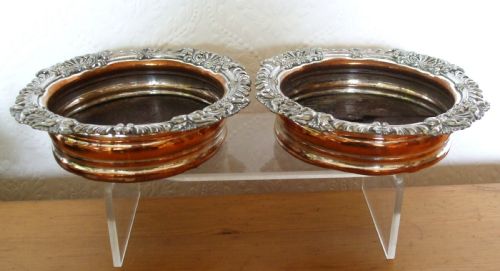


Pair of Coasters
A pair of antique coasters protects the dining table while passing the decanter from guest to guest in traditional style.
Pair of Coasters
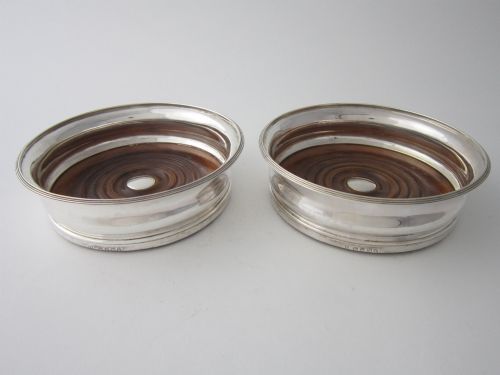
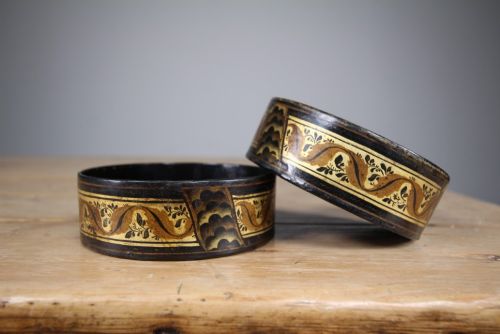
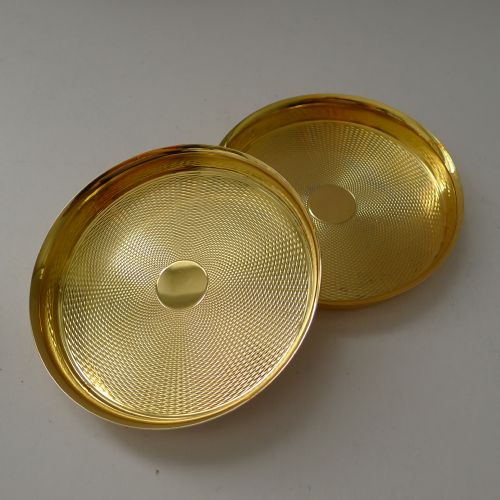
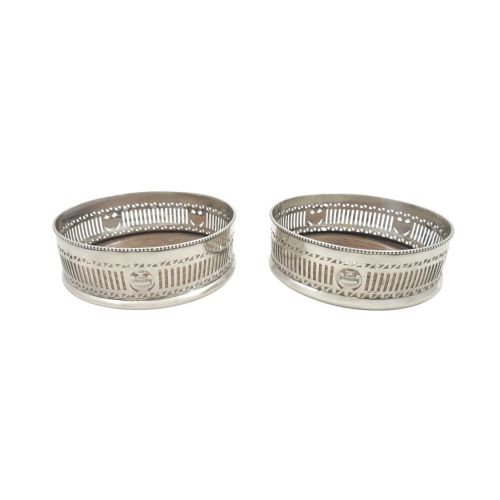
A pair of antique coasters, also known as wine bottle stands or decanter coasters, serves the historic function of holding bottles safely during dinner. The listings show forms ranging from Georgian sterling silver to Victorian papier-mâché and Edwardian silver plate.
The most common examples encountered on this page date from the Georgian, Regency, and Victorian periods, often taking circular forms designed to fit standard wine and port bottles.
Makers produced these items in various materials, including solid silver, Old Sheffield plate, mahogany, and lacquered papier-mâché, reflecting the dining customs of their respective eras.
How they were made
Silversmiths constructed solid silver and silver-plated examples using techniques like piercing, chasing, and mounting wooden bases, frequently incorporating turned mahogany or oak inserts to cushion the glassware.
Papier-mâché pieces required layers of paper compressed, lacquered, and finished with hand-painted or gilded decoration, while metal coasters often utilised rolled Old Sheffield plate or spun silver over a copper core.
What varies in quality
The standard of craftsmanship shows in the crispness of cast decorative borders, such as vine motifs or gadrooned edges, and the tightness of the join between metal galleries and wooden bases.
Superior examples display heavier gauge metals, clear hallmarks or maker stamps, and well-preserved original inserts, whereas lesser pieces exhibit worn plating, split wood, or heavy restoration.
Matthew Boulton·John and Thomas Settle·William Allen·Mappin and Webb·Tiffany and Co·Hermes Paris
The Pair of Coasters Glossary
- Old Sheffield Plate
- A method of fusing a thin sheet of silver to a copper core, common in Georgian and Regency items before electroplating developed.
- Gallery
- The pierced or solid upright rim of a coaster designed to keep the bottle secure.
- Treen
- Small handmade wooden objects, encompassing the turned wooden bases found in many bottle stands.
- Vermeil
- Sterling silver plated with gold, appearing in mid-century items.
- Papier-mâché
- A composite material made from paper pulp or reinforced sheets, moulded and lacquered for decorative trays and coasters.
Pair of Coasters: Frequently Asked Questions
How were coasters used on the dining table?
Coasters held wine bottles and decanters, allowing diners to slide them smoothly across the polished mahogany surface after the servants cleared the table.
This method kept the bottles upright and prevented rings from damaging the wood during long dinner parties.
Can I use antique coasters for modern wine bottles?
Most standard antique coasters accommodate traditional wine and port bottles comfortably, though larger magnum sizes require specific wider dimensions.
Buyers should check internal diameters if intending to use them regularly with contemporary packaging.
What is the difference between silver plate and Old Sheffield plate?
Old Sheffield plate involves fusing a layer of sterling silver to copper through heat and pressure, creating a durable material characteristic of the eighteenth and early nineteenth centuries.
Later silver plating relies on an electroplated process introduced around the mid-nineteenth century.
How do I care for wooden and silver coasters?
Wooden bases benefit from occasional waxing to maintain the grain, while silver and plated galleries require gentle cleaning with appropriate metal polishes.
Avoiding excessive moisture protects both the wooden inserts and the structural integrity of older papier-mâché or metal pieces.