
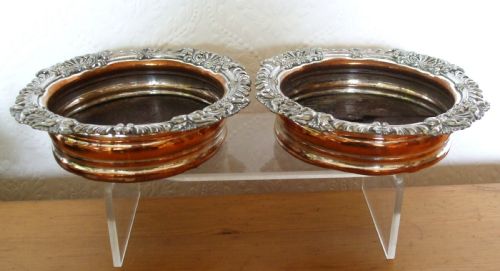


Georgian Wine Bottle Coasters
Georgian wine bottle coasters are practical tabletop accessories designed to protect dining surfaces, and collectors seek them for their fine metalwork and turned timber bases.
How they were made
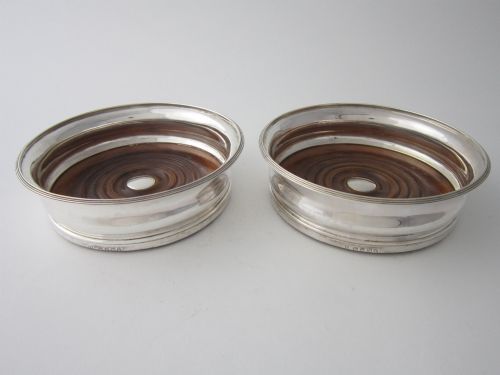
Artisans constructed georgian wine bottle coasters utilising sterling silver, silver plate, copper, and metals combined with turned wooden bases. Cabinetmakers selected dense timbers such as mahogany and rosewood to form the interior inserts.
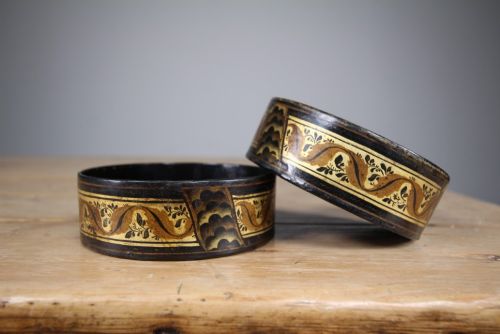
Workshops employed techniques like piercing, silver-mounting, and applied gilding on materials including papier-mâché and lacquer. Silversmiths worked silver and Old Sheffield Plate to fashion flexible gallery walls and shaped rims.
What varies in quality
Quality in georgian wine bottle coasters rests upon the weight of the metal, the crispness of pierced or embossed decoration, and the integrity of the turned wooden base. Heavy gauge silver and thick Old Sheffield Plate demonstrate superior original expenditure.
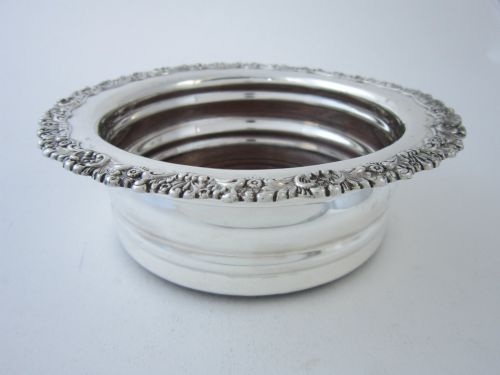
Makers marked distinct tiers of craftsmanship through engraved armorial bearings, well-fitted timber inserts, and intact gadroon or scroll borders. Lesser items display thinner plating, replacement timber bases, or worn chased details.
Listings feature items formed from mahogany, rosewood, papier-mâché, sterling silver, and Old Sheffield Plate across the Georgian, Regency, and Victorian periods.
Matthew Boulton·John and Thomas Settle·Barnards·William Allen·Mein of Kelso·Asprey
The Georgian Wine Bottle Coasters Glossary
- Old Sheffield Plate
- A fused composite material made by melting a sheet of silver onto a thicker copper base. This technique creates a durable metal body used extensively for eighteenth and nineteenth-century tableware.
- Treen
- Small handmade wooden objects produced by turning on a lathe or through basic carpentry. These items exhibit the natural grain and colour of timbers like mahogany.
- Armorial
- A design featuring a heraldic coat of arms or crest engraved onto metal surfaces. These motifs indicate the original aristocratic or landed ownership.
- Papier-mâché
- A composite substance formed from paper pulp or layered paper sheets mixed with glue and resin. Craftsmen moulded this material into rigid table articles before applying black lacquer and gilded decoration.
- Pierced work
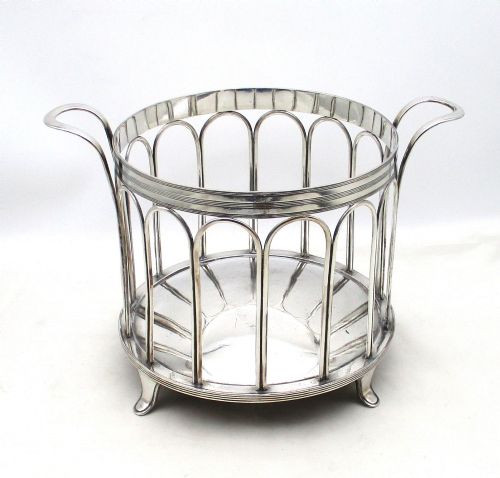
- Metal pierced with decorative openwork patterns such as trellis, lattices, or vertical slots. Silversmiths utilised this method to reduce weight and ornament gallery walls.
Georgian Wine Bottle Coasters: Frequently Asked Questions
What were wine coasters used for?
These vessels held wine bottles and decanters in place on the dining table. They protected polished wooden surfaces from ring marks and spilled liquid.
Dinners utilised these stands to slide bottles smoothly between guests once servants cleared the main courses.
How do I clean silver coasters?
Maintenance requires soft cloths and mild silver polish applied gently to preserve the metal surface. Owners must avoid getting moisture onto the turned wooden bases inside.
Regular careful upkeep prevents tarnish from building up within pierced or engraved details.
Are coasters sold in pairs?
Many examples survive as matched pairs or larger sets intended for serving multiple bottles along a dining table. Single pieces also appear frequently in collections.
Pairs usually share identical hallmarks, weights, and decorative motifs from the same workshop.
How can I date my coaster?
Dating relies upon hallmarks stamped into silver items, combined with stylistic markers like Regency curves or Georgian piercing. Wood types and construction methods also indicate specific historical periods.
Makers' marks provide the most direct evidence for manufacturing dates and origins.