

Antique Bottle Stands
Antique bottle stands protect polished dining tables and hold wine vessels steady, combining practical utility with period craftsmanship.
Antique Bottle Stands
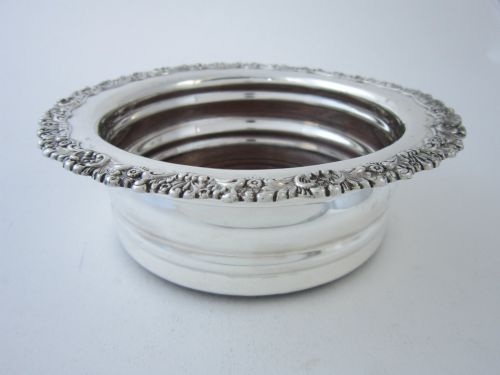
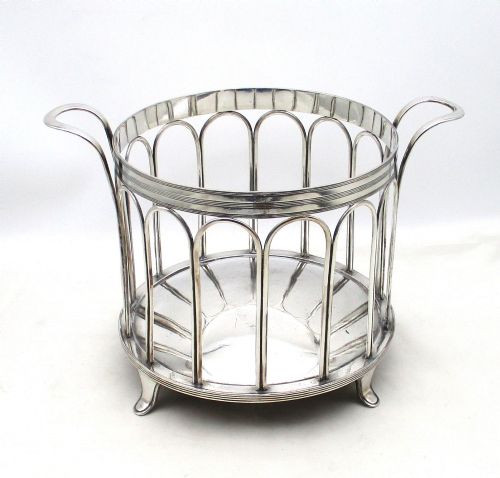
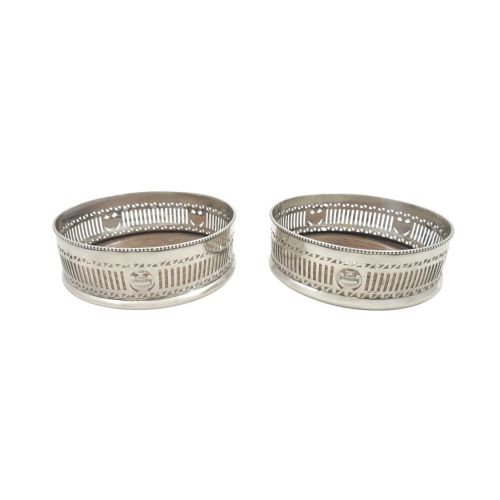
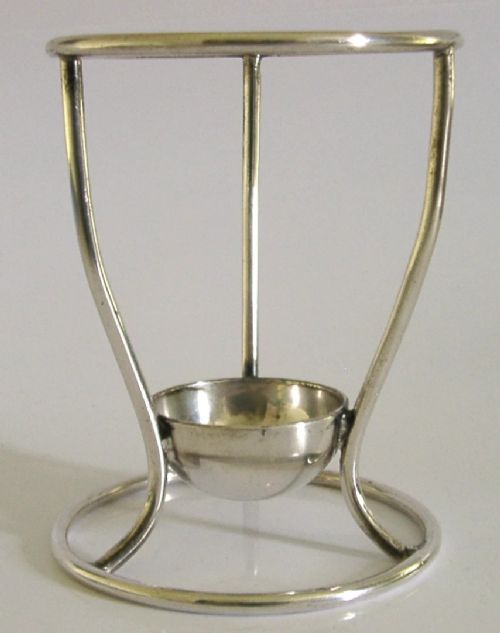
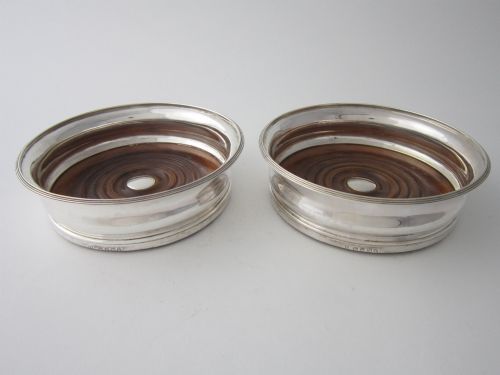
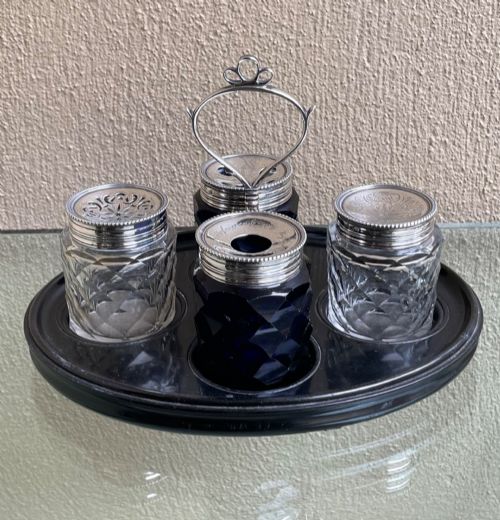
Antique bottle stands encompass wine coasters, cruet sets, tantalus frames, and cellarettes designed to hold dining and drinking vessels securely.
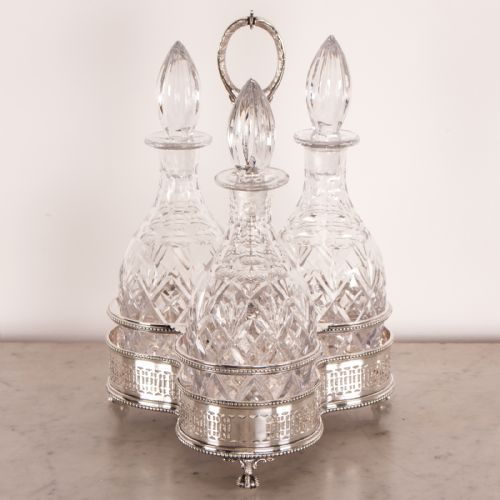
The selections on this page lean heavily towards Georgian, Regency, and Edwardian wine coasters and silver-plated cruet sets.
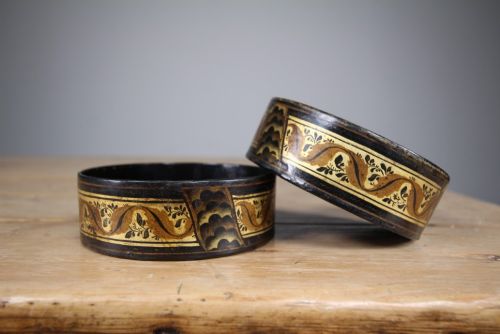
Makers utilised various forms, from circular wooden and silver coasters to multi-bottle table frames meant for daily dining use.
How they were made
Craftsmen relied on sterling silver, old Sheffield plate, and silver plate combined with turned mahogany, oak, and brass bindings.
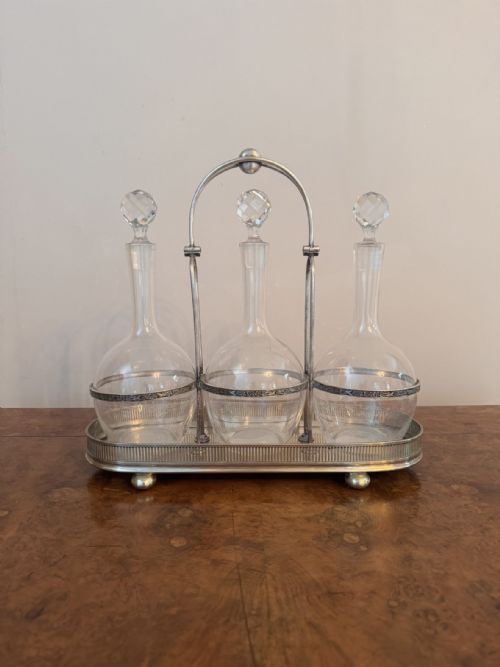
Glass components often featured cut glass, cranberry flashed details, and crystal decanters fitted into metal frames.
Joinery and metalwork involved precise turning for wooden bases and careful casting or plating for silver mounts.
The object forms range from single wine coasters and multi-bottle cruet sets to locking tantalus cabinets.
What varies in quality
Quality rests in the crispness of metal chasing, the depth of cut glass, and the density of timber such as mahogany or padouk.
Weight and balance distinguish finer silver and plate examples from simpler utility pieces, alongside intact hallmarks and original fittings.
Walker & Hall·Brook & Son·Gillows
The Antique Bottle Stands Glossary
- Wine Coaster
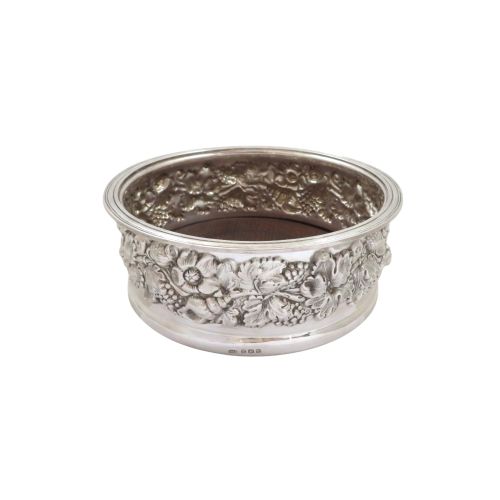
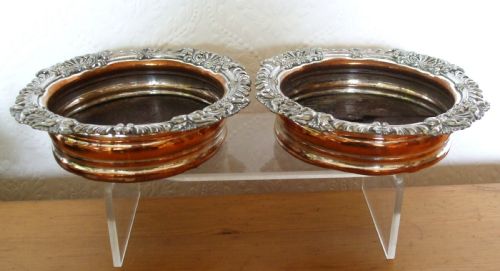
- A small, flat-bottomed tray or dish, often with a raised rim, designed to hold a wine bottle on the dining table. They frequently incorporate felt-lined wooden bases.
- Cruet Set
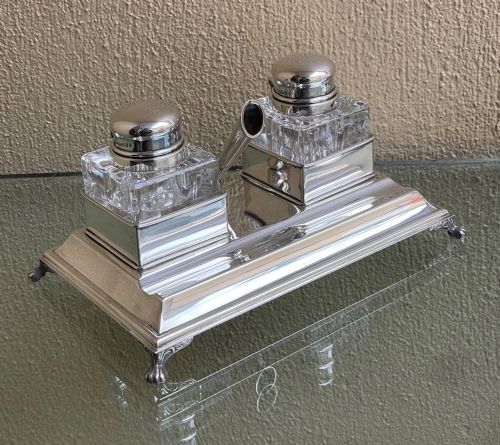
- A frame holding multiple small bottles or cruets for condiments, oil, vinegar, and sauces. They appear in silver plate and sterling silver.
- Tantalus
- A locking wooden frame that secures decanters of spirits to prevent unauthorised access. They commonly feature oak or coromandel bodies with silver-plated locking bars.
- Cellarette
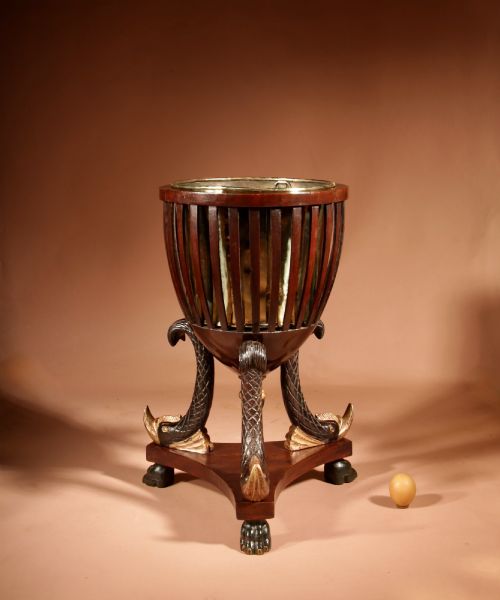
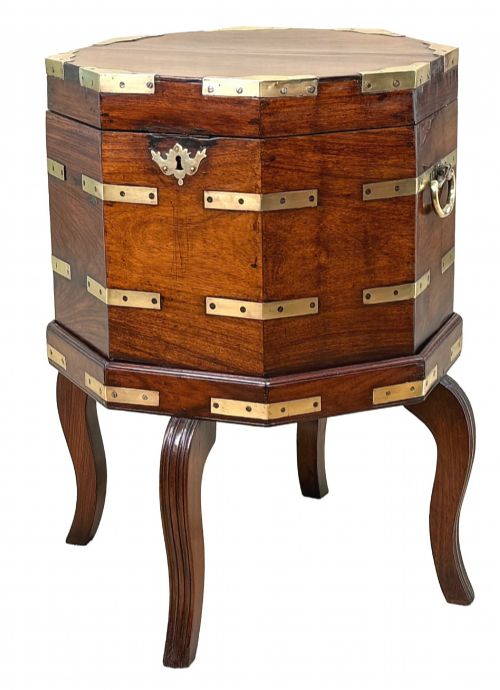
- A large freestanding or table-standing box for cooling and storing wine bottles. Georgian and Regency examples often utilise inlaid mahogany with brass mounts.
- Old Sheffield Plate
- An early fusing technique where a thin sheet of silver is fused to a copper core. This method predates modern electroplating.
Antique Bottle Stands: Frequently Asked Questions
What is the difference between a coaster and a cellarette?
Coasters are small, portable trays meant to sit on the dining table and slide between guests to pass wine.
Cellarettes are larger floor or sideboard cabinets designed to hold multiple bottles securely in reserve.
How do I care for silver plated stands?
Silver plate requires gentle cleaning with a soft cloth and specialised polish to preserve the thin metal layer.
Avoid harsh abrasives that can wear through the plating down to the base metal.
Were tantalus frames used in the dining room?
Tantalus frames generally stood on sideboards, studies, or smoking rooms to secure spirits.
The locking mechanism kept expensive liqueurs safe from household staff.
What woods were commonly used for wooden stands?
Mahogany and oak dominate the timber frames, often chosen for their durability and rich grain.
More decorative pieces incorporated coromandel or inlaid veneers.