


Antique Wine Bottle Holder
An antique wine bottle holder brings the craftsmanship of Georgian, Victorian, and Edwardian dining rooms directly to the modern table.
Antique Wine Bottle Holder
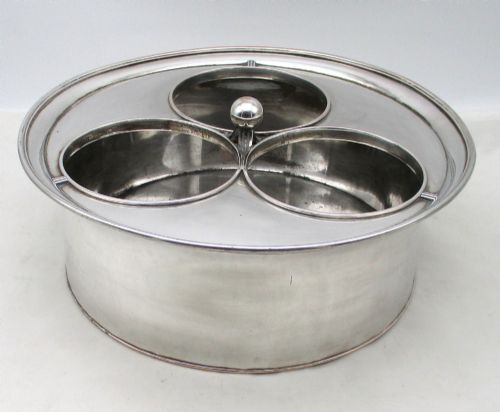
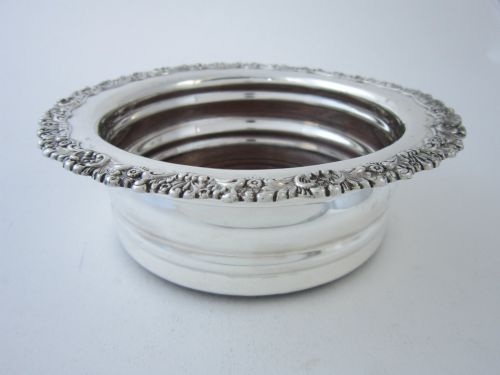
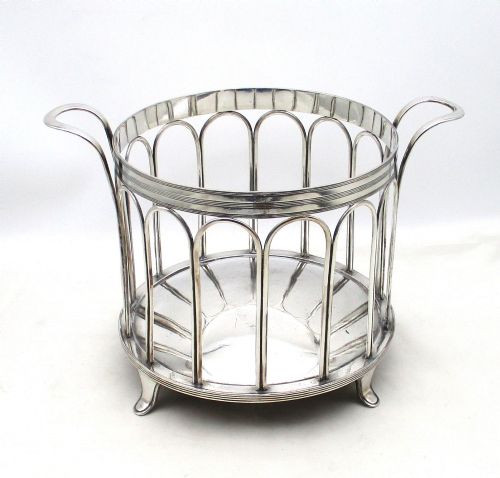
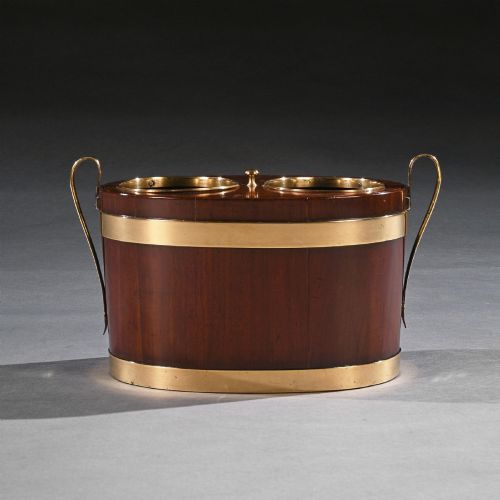
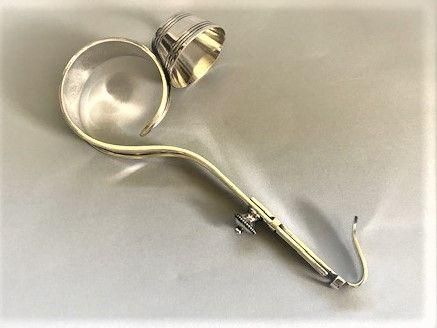
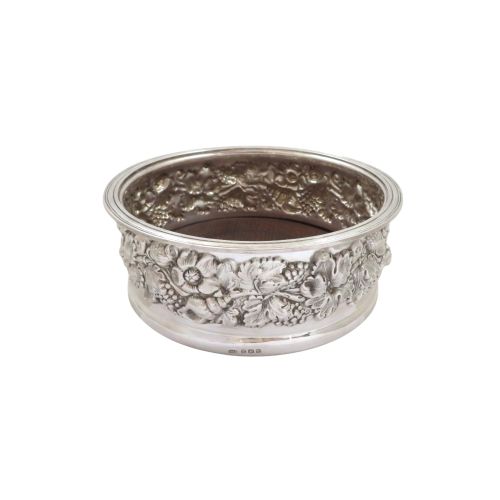
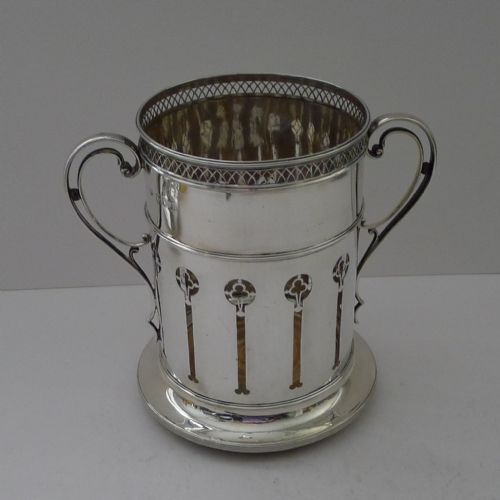
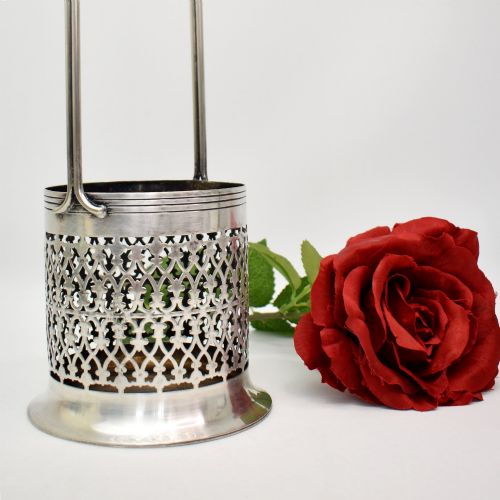
Tableware from these eras prioritises both utility and presentation, taking forms such as oval wooden stands, silver plated rings, and brass-bound mahogany carriers. Pieces designed for multiple bottles or magnums frequently appear alongside simpler single-container coasters made of wood or metal.
English workshops dominate the available selection, incorporating styles that reflect the shifting tastes of the dining room from heavy mahogany woodwork to ornate silver plate and papier-mâché.
Materials and Techniques
Silversmiths and manufacturers utilised sterling silver and silver plate over copper, particularly in Old Sheffield Plate pieces where a thin sheet of silver is fused to a base metal core. Brass mounts, copper accents, and turned mahogany form the structural foundations for many coasters and bottle caddies.
Cabinetmakers constructed multi-bottle carriers and frames from dense hardwoods like mahogany, frequently incorporating brass bindings, handles, or wooden inserts. Papier-mâché examples demonstrate specialised moulding techniques finished with dark lacquer and hand-gilded decoration.
Some nineteenth-century dining tables featured wheeled wine coasters so guests could roll bottles back and forth during dinner.
Evaluating Execution
Quality in these pieces rests upon the crispness of the metal chasing, the solidity of the wood turning, and the integrity of the joints in framed carriers. Superior examples display substantial weight in the metalwork and precise joinery in the timber frames.
Makers who invested time in hand-engraved crests, detailed cast mounts, or well-fitted baize bases produced items that separated standard utilitarian table accessories from high-status dining pieces.
Brook and Son Edinburgh·Christofle·Matthew Boulton·Rupert Favell and Co·James Dixon and Sons·George Bowen and Sons·Asprey and Co·Mappin and Webb·Barnards·Robert Garrard·William Allen·Elkington and Co·The Alexander Clark Co
The Antique Wine Bottle Holder Glossary
- Old Sheffield Plate
- An early composite material made by fusing a thin layer of silver onto a copper base, visible where the silver wears thin at raised edges.
- Wine Coaster
- A small, flat-bottomed tray or stand designed to hold a single bottle and protect the dining table from condensation and spills.
- Bottle Caddy
- A framed wooden or metal carrier featuring multiple sections designed to transport several wine bottles simultaneously.
- Papier-mâché
- A durable composite material formed from paper pulp mixed with glue and resin, pressed into moulds, and finished with lacquer and paint.
- Treen
- Small handmade wooden objects and household utensils produced by turning on a lathe.
Antique Wine Bottle Holder: Frequently Asked Questions
What is an antique wine bottle holder used for?
These items served to hold wine, port, or champagne bottles on the dining table, allowing guests to pass bottles easily without damaging polished wood surfaces.
Larger versions accommodated magnums or multiple containers, keeping drinks secure and close at hand during formal meals.
How do I care for silver plated wine holders?
Silver plate requires gentle cleaning with a soft cloth and a specialised silver polish to maintain the shine without wearing away the thin metal layer.
Wooden components benefit from occasional waxing to preserve the grain and protect against moisture.
How can I tell a Georgian piece from a Victorian one?
Georgian examples often feature restrained mahogany woodwork, simple silver rims, or early Old Sheffield Plate construction with clean lines.
Victorian pieces tend toward heavier ornamentation, elaborate silver plating, and more complex multi-bottle configurations.
Can modern wine bottles fit in antique holders?
Standard Bordeaux and Burgundy wine bottles generally fit within nineteenth-century single coasters, though modern magnum or wider champagne bottles may require larger coolers.
Measuring the internal diameter of the holder helps determine compatibility with contemporary bottle shapes.