




Dark Wood Wine Cooler
A dark wood wine cooler is a piece of period furniture built to chill bottles for the table, offering deep mahogany and rosewood tones that anchor a dining room.
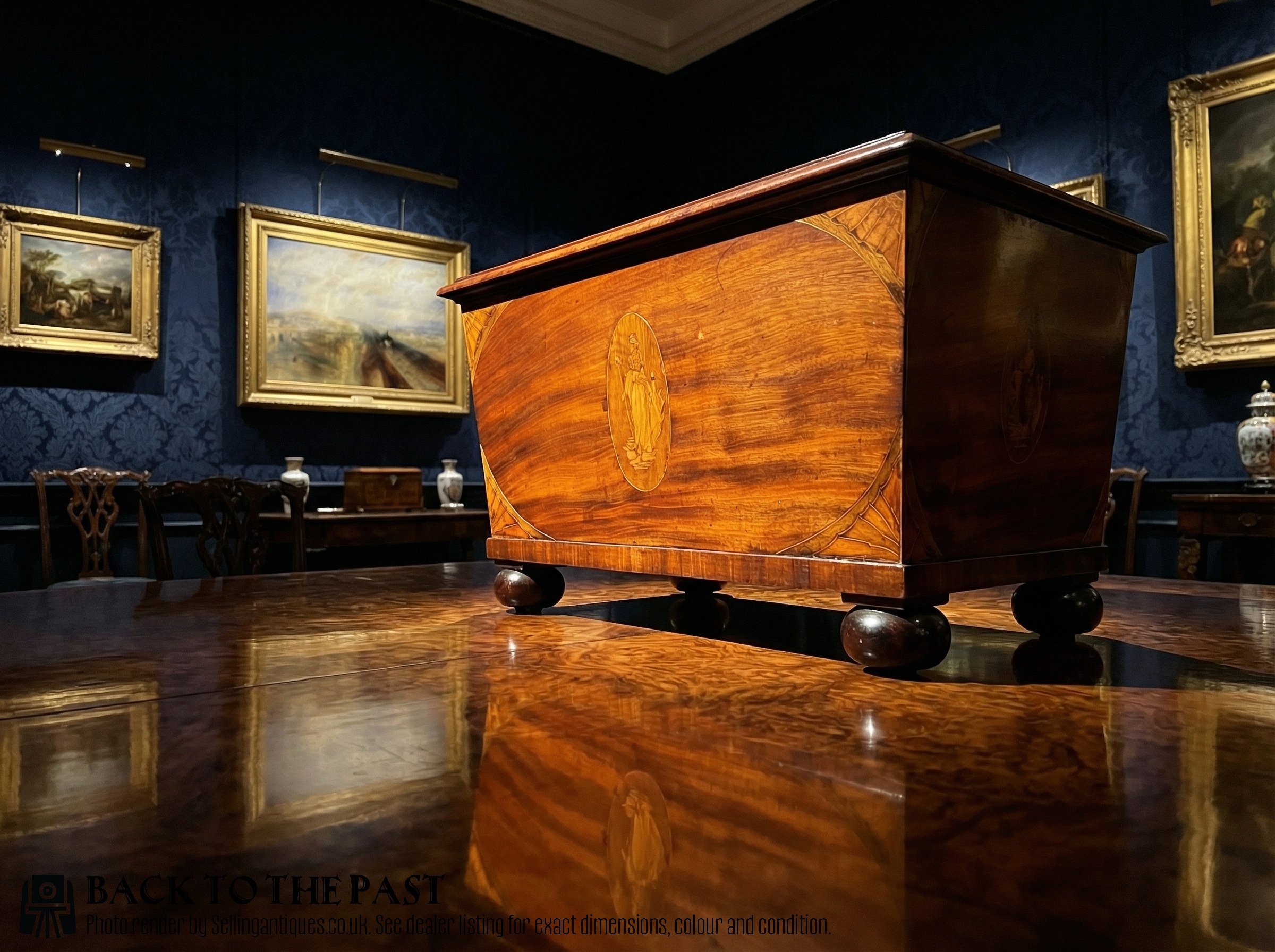
What dark wood wine coolers are
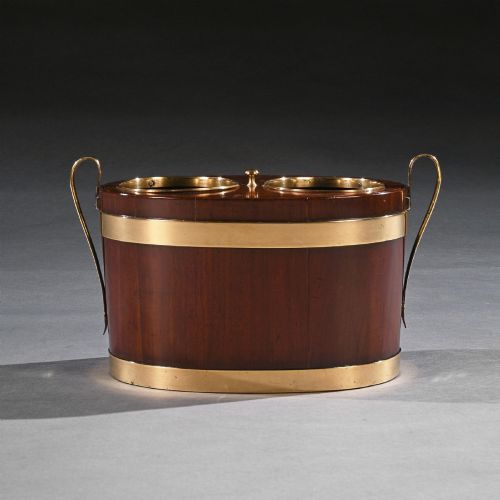
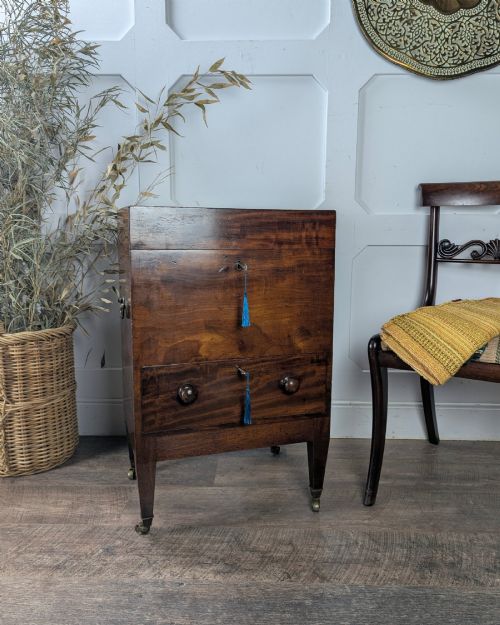
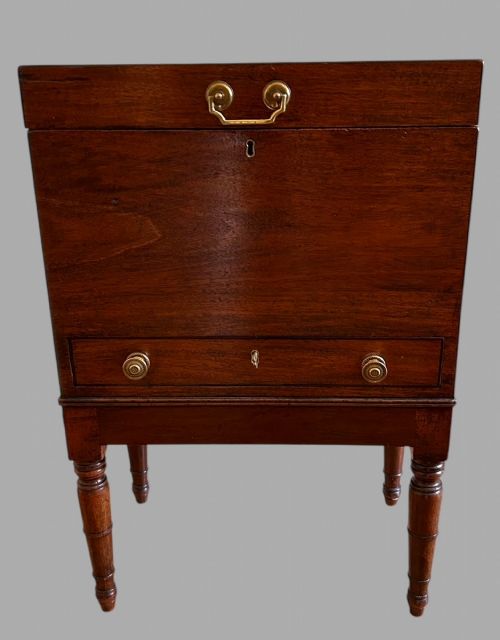
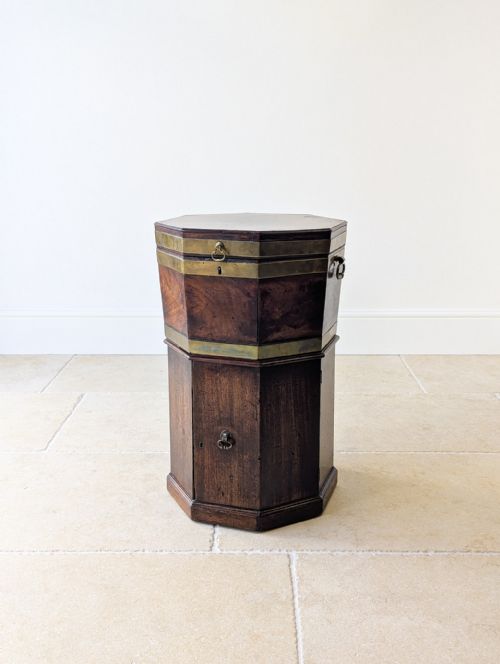
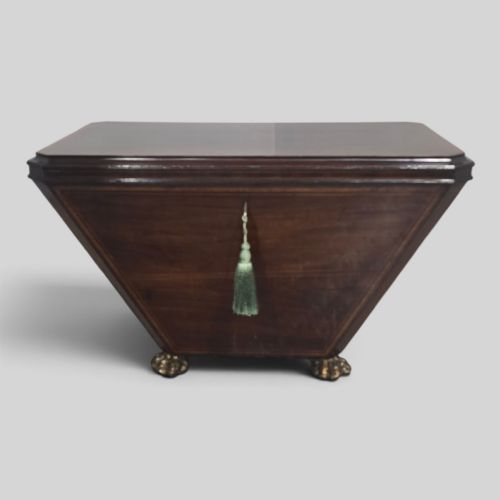
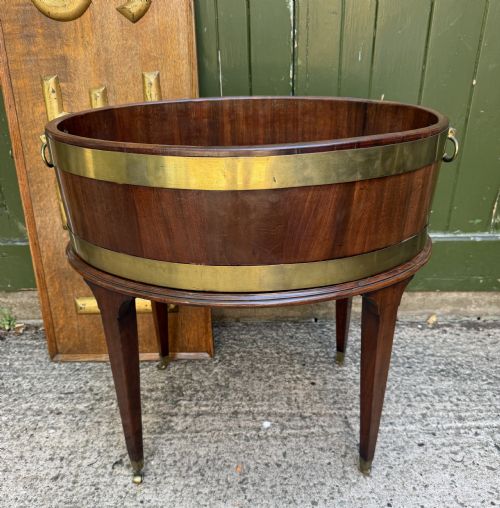
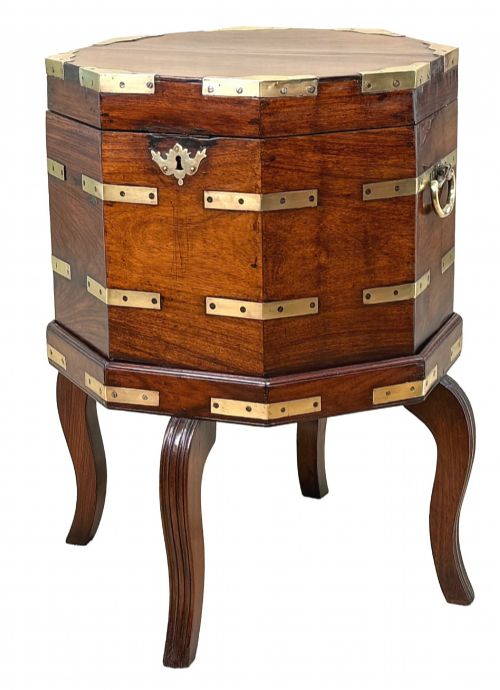
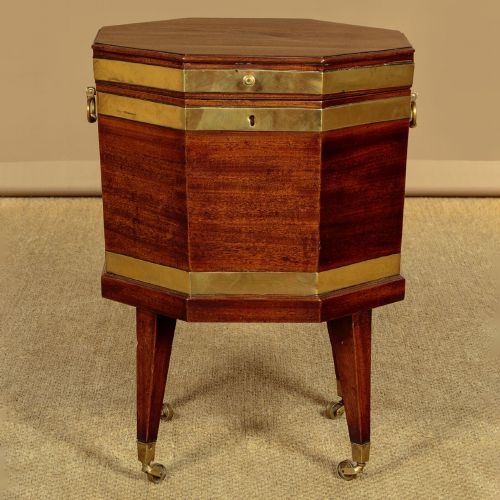
A dark wood wine cooler takes the form of a cellarette or wine cooler, designed to hold bottles in ice or water during formal meals. These vessels appear in Georgian and Regency styles, reflecting the domestic habits of the eighteenth and nineteenth centuries.
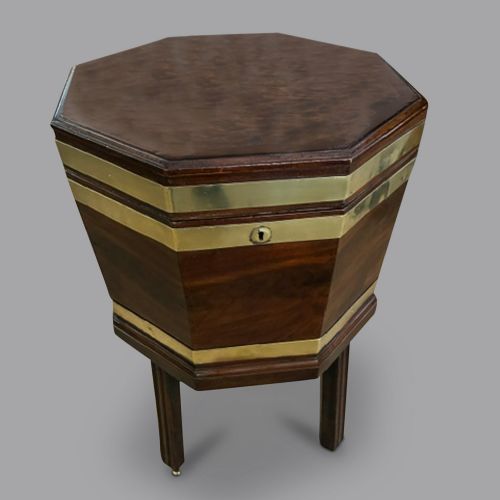
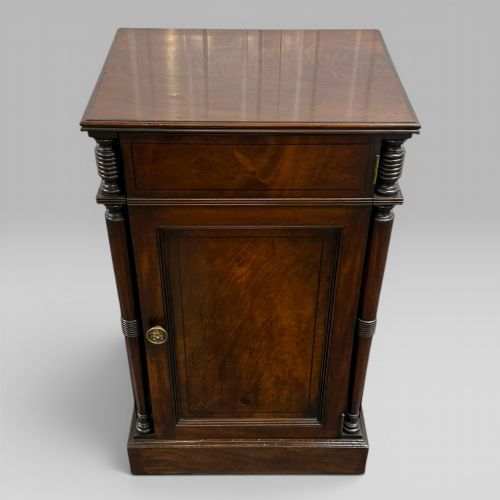
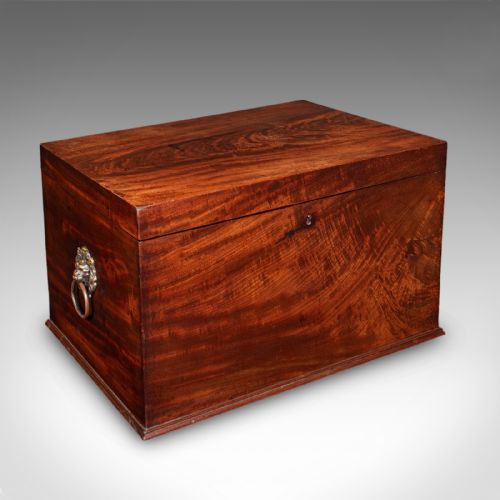
The pieces listed on this page span the eighteenth century, the regency period, and the early nineteenth century. Mahogany and rosewood form the primary bodies of these containers, often augmented by inlay and brass fittings.
How they were made
Cabinet makers utilised dense timbers such as mahogany and rosewood, building sturdy frames to contain heavy loads of ice and liquid. Satinwood inlay added contrast to the dark surfaces, requiring precise hand-cutting and fitting by skilled artisans.
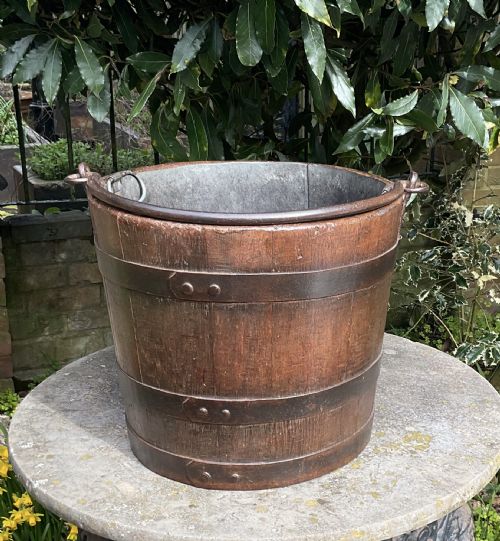
Interiors frequently incorporated lead linings to hold water and ice safely without damaging the surrounding wood. Brass handles and bands provided structural reinforcement and functional grip for moving the heavy containers.
Retail Price Guide 2026
Typical UK retail prices for dark wood wine cooler, calculated from the Sellingantiques database of over a million retail prices indexed since 2003. This retail price guide relies exclusively on Sellingantiques data; no external sources or auction records are used, so the figures do not describe the wider market.
Current listings feature pieces spanning the eighteenth century, the regency era, and the early nineteenth century in mahogany and rosewood.
What varies in quality
The distinction between standard examples and superior pieces rests on the crispness of the cabinet work and the choice of timber figures. Finer items exhibit restrained proportions and meticulous attention to decorative details like inlay and mounts.
Makers such as Gillows represent the apex of construction quality, where structural integrity matches refined aesthetic proportion. Lesser pieces show simpler joinery and less ambitious employment of secondary woods and decorative veneers.
Gillows
The Dark Wood Wine Cooler Glossary
- Cellarette
- A lockable container used for storing wine bottles in the dining room before they were served at the table. These objects typically sat beneath the sideboard or beside the dining table.
- Regency
- An English design period spanning the early nineteenth century, characterised by classical restraint and rich timber choices. Pieces from this era often display bold grain patterns and neat brass details.
- Inlay
- A decorative technique where contrasting woods like satinwood are inserted into recesses in the primary surface. This method creates patterns and borders that enhance the visual depth of dark timber.
- Lead lining
- A protective sheet metal interior fitted inside the cooler to hold melting ice and liquid securely. This functional addition prevented rot in the surrounding wooden structure.
Frequently Asked Questions
What is a dark wood wine cooler?
A dark wood wine cooler is a freestanding wooden container built during the Georgian or Regency periods to keep wine bottles chilled with ice during meals. They often feature lead linings and sturdy brass carrying handles.
Cabinet makers constructed these pieces from dense timbers like mahogany and rosewood, sometimes incorporating decorative satinwood inlay. They functioned as both practical dining room equipment and status symbols.
How were cellarettes used?
Cellarettes were kept in the dining room to store bottles of wine close to the table before serving. Servants would pack the interior with ice and water around the bottles to lower the temperature.
Because full bottles and ice weighed heavily, these coolers were built with robust frames and strong bases. Many included fitted interiors to keep bottles separated and upright during chilling.
How do I date a wine cooler?
Dating relies on observing the timber, the style of the hardware, and the construction methods used in the piece. Georgian and Regency examples show distinct stylistic shifts from rectilinear forms to more classical, rounded shapes.
Evidence from makers like Gillows also helps establish specific periods of origin around 1800. Examining the interior lead lining and the type of inlay provides further clues to the exact era of manufacture.
How do I care for antique rosewood?
Antique rosewood requires stable indoor humidity and protection from direct sunlight to prevent the timber from drying out or fading. Gentle dusting with a dry cloth maintains the surface without stripping the old polish.
Avoid placing these pieces near modern heat sources or air conditioning vents. Proper placement preserves the natural oils and rich colour of the wood over time.