
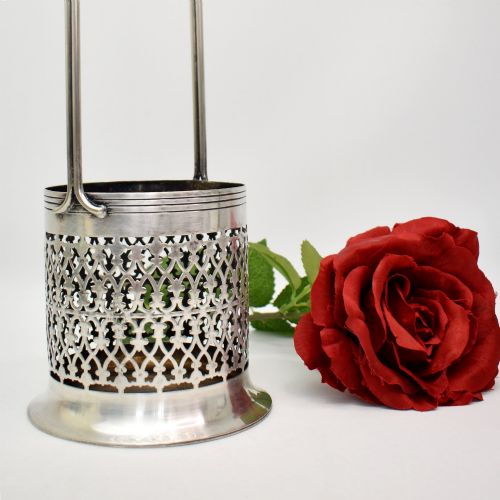


Vintage Silver Wine Stand
These vintage silver wine stands span periods from the Georgian era through the twentieth century, offering practical table service for bottles and decanters.
Vintage Silver Wine Stand
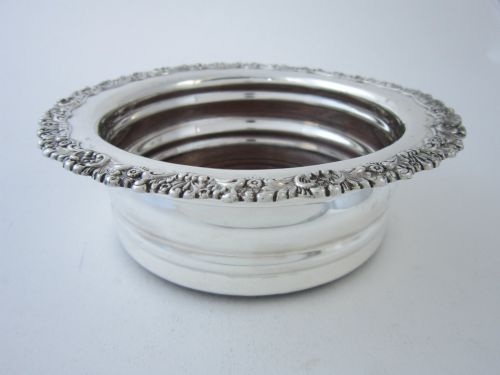
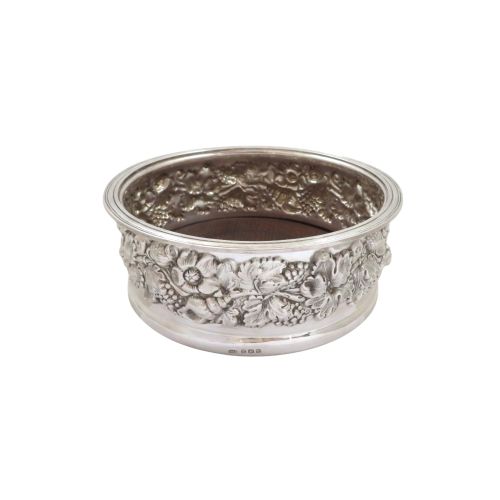
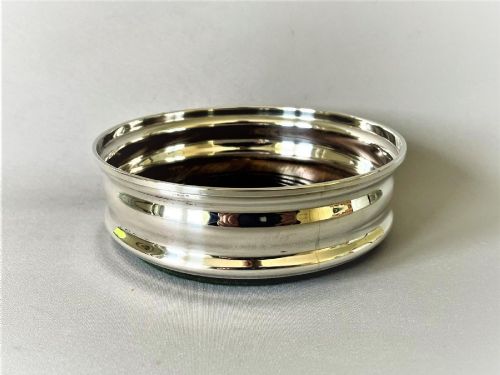
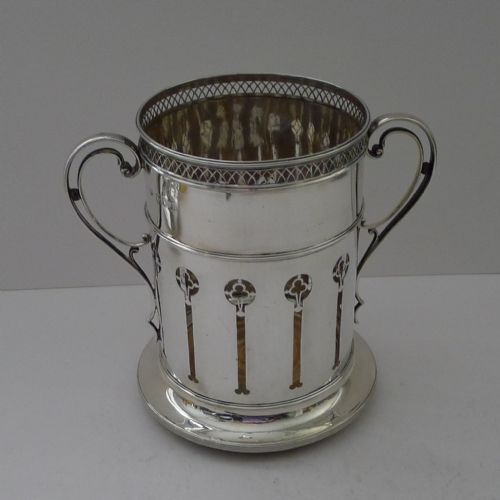
A vintage silver wine stand takes the form of a bottle coaster, holder, or cooler designed to protect dining surfaces during service. These table accessories appear in forms ranging from single coasters to multiple bottle holders and floor standing champagne coolers.
The pieces on this page emerge from periods including the Georgian, Victorian, Edwardian, and mid-twentieth century eras. Buyers frequently encounter silver plated and sterling silver versions alongside combinations incorporating wood and mahogany.
Makers and manufacturers represented across these categories include firms such as Brook & Son, Christofle, Asprey, and Matthew Boulton. Object types span traditional wine coasters, presentation bowls, and drinks rests.
How they were made
Silversmiths utilised solid sterling silver, Old Sheffield Plate, and silver plate over base metals to construct these stands. Many examples incorporate turned wood or mahogany bases designed to absorb moisture and support the bottle securely.
Manufacturing techniques involved metal spinning, stamping, and silver plating, often complemented by cast decorative borders featuring grape and vine motifs. Workshops applied hallmarks or maker marks to sterling silver pieces to indicate origin and standard.
Several stands feature wheels for rolling port down the table.
What varies in quality
Quality rests in the weight of the metal, the crispness of chased or cast decoration, and the integrity of the fitted wooden base. Solid sterling silver pieces and finer Old Sheffield Plate examples demonstrate superior craftsmanship compared to standard commercial plating.
The distinction between workshop execution and mass production defines the range. Maker attribution to notable silversmiths like Matthew Boulton or retailer firms such as Asprey elevates the standing of an individual piece.
Brook and Son·Christofle·Asprey·Matthew Boulton·Mappin and Webb
The Vintage Silver Wine Stand Glossary
- Silver Plate
- A layer of silver fused or electroplated onto a base metal such as copper or nickel brass. This method offered the appearance of solid silver at a lower cost for dining accessories.
- Old Sheffield Plate
- An early method of fusing a thin sheet of sterling silver to a thicker copper core before rolling them together into sheets. Pieces created this way often reveal a thin line of copper showing at the edges.
- Wine Coaster
- A small circular tray or stand designed to hold a wine bottle and protect the dining table from drips. They frequently feature raised rims and lined bases made of wood or felt.
- Hallmark
- An official stamp applied to precious metals indicating the standard of purity, the assay office, and the year of manufacture. Sterling silver pieces typically bear these marks.
- Coaster Cart
- A framed carrier fitted with wheels or rollers designed to transport multiple wine bottles along a dining table. These multi-bottle holders date across the nineteenth and twentieth centuries.
Vintage Silver Wine Stand: Frequently Asked Questions
How do I clean silver wine stands?
Clean silver plated and sterling silver stands using a soft cloth and a dedicated silver polish formulated to remove tarnish without harming the metal.
Avoid abrasive materials that might scratch the surface or wear through silver plating, especially around engraved details and maker marks.
Are these stands suitable for modern wine bottles?
Most standard vintage wine and champagne bottles fit comfortably within traditional coaster dimensions, though unusually wide magnum bottles require specific larger stands.
Check the diameter of the interior gallery before use to ensure a proper fit for contemporary bottle shapes.
What is the difference between Old Sheffield Plate and silver plate?
Old Sheffield Plate involves physically fusing silver to a copper base by heat before rolling, creating a layered metal structure unique to the eighteenth and nineteenth centuries.
Standard silver plate typically utilises an electrochemical process developed later in the nineteenth century to deposit a thin silver coating over a base metal.
How can I date an unmarked silver wine stand?
Dating relies upon stylistic markers such as Georgian proportions, Victorian decorative motifs, Edwardian pierced galleries, or Art Deco geometric lines.
Material composition, construction techniques, and the presence of turned mahogany bases also provide clear indications of the period of manufacture.