


Pierced Silver Wine Coaster
A pierced silver wine coaster protects your dining table while showing off the bottle in style.
What a pierced silver wine coaster is
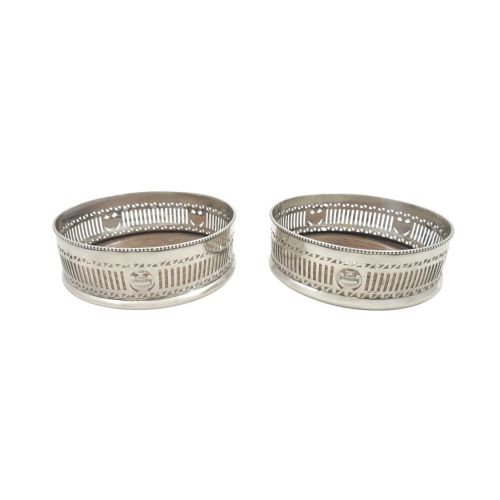
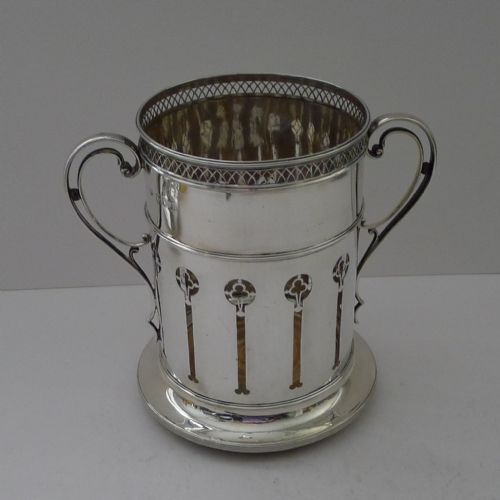
When you search for a pierced silver wine coaster, you are looking at functional tableware designed to slide across the dining table during port or wine service. These pieces hold the bottle safely while adding a decorative border to the setting.
The versions you are most likely to meet on this page span the Georgian, Victorian, and Edwardian eras, alongside pieces from 1800. They combine metal galleries with warm wooden bases to balance appearance and utility.
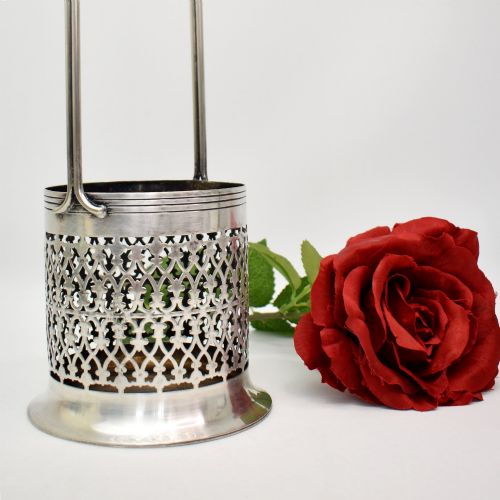
Many examples feature pierced or reticulated sides, sometimes decorated with motifs like grapes and vines. They appear as single coasters or in pairs, ready for modern use on a polished wooden surface.
Materials and construction
These items use silver plate, solid silver centres, and Old Sheffield Plate for the metal galleries. Copper forms the base metal in older plated techniques, while turned mahogany, hardwood, and other turned wood create the stable interior platform.
Craftsmen fitted the metal galleries around wooden bases, often adding felt underneath to protect furniture. Piercing and reticulation work created openwork patterns in the metal walls, sometimes complemented by applied motifs.
Grape and vine motifs quietly remind diners what belongs inside.
Distinctions in quality
Quality rests in the crispness of the pierced or reticulated gallery work and the choice of materials. Fine examples combine substantial Old Sheffield Plate or solid silver centres with precisely turned hardwood bases.
The weight of the piece and the joinery between the metal wall and the wooden base separate standard production from superior workshop output. Maker attribution and the preservation of original felt liners further define the better specimens.
Mappin & Webb·D & J Welby·William Comyns·James Dixon and Son
The Pierced Silver Wine Coaster Glossary
- Pierced
- Metalwork cut through to create a pattern or openwork design. This technique lightens the visual weight of the coaster gallery.
- Old Sheffield Plate
- A fused bilayer of silver and copper produced before electroplating became common. It shows a rich depth of metal over time.
- Turned Wood
- Wood shaped on a lathe to form the circular base of the coaster. Hardwoods like mahogany frequently serve this purpose.
- Gallery
- The vertical outer wall of the coaster that encircles the bottle. This portion carries the pierced or decorated patterns.
Frequently Asked Questions
What is a wine coaster used for?
A wine coaster holds a bottle of wine or decanter on the dining table. It allows guests to slide the bottle smoothly between people during a meal.
The raised gallery prevents condensation or drips from reaching the polished surface of the table. Turned wooden bases inside the metal frame provide a stable platform for the glass.
How do I date a piece?
Dating relies on stylistic details, manufacturing techniques, and hallmarks where present. Georgian and Victorian examples show distinct motifs and plating methods.
Old Sheffield Plate points toward earlier manufacture around 1800 to the mid-nineteenth century. Later Edwardian and 1920s pieces often utilise different plating technology and cleaner lines.
Are they sold in pairs?
Many listings feature pairs of coasters, reflecting traditional dining service where two bottles circulated at once. Single coasters also appear regularly.
Matching pairs are particularly sought after for formal table settings. The evidence shows both individual items and matched pairs surviving from various periods.
What woods are used in the base?
Bases are typically fashioned from turned hardwoods such as mahogany. The wood is fitted neatly inside the metal gallery.
Felt is frequently applied to the underside of the wooden base. This protects the dining table from scratches as the coaster moves.