


Silver Decanter Bottle Stand
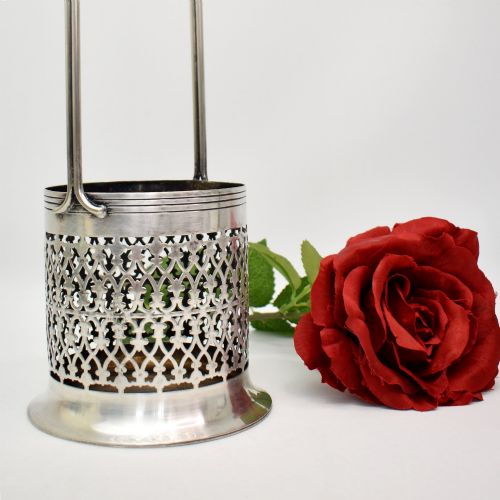
A silver decanter bottle stand holds your wine and spirits securely on the dining table, combining practical service with solid metal and glass craftsmanship.
Silver Decanter Bottle Stand
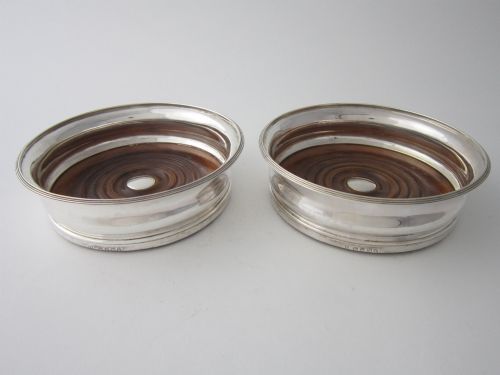
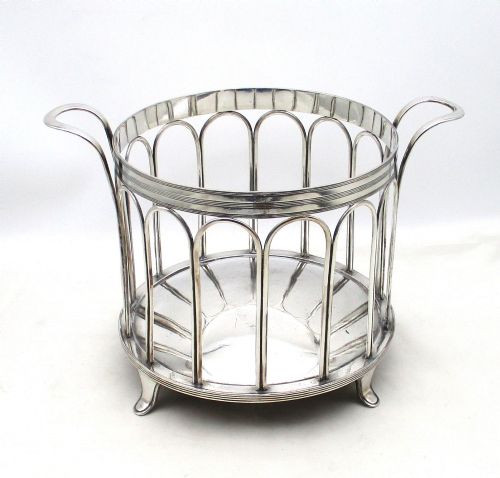
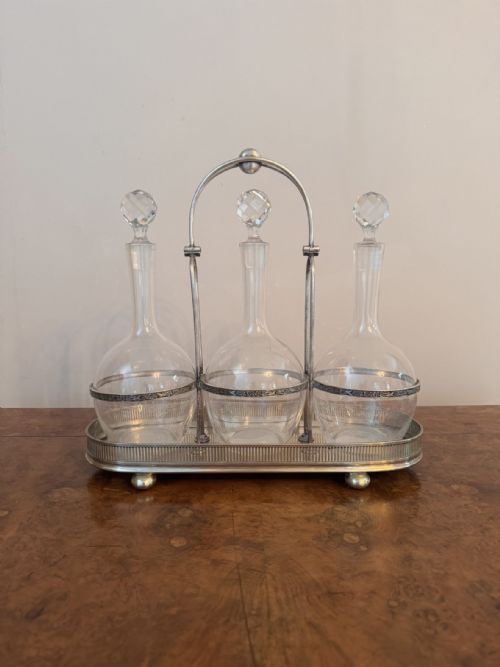
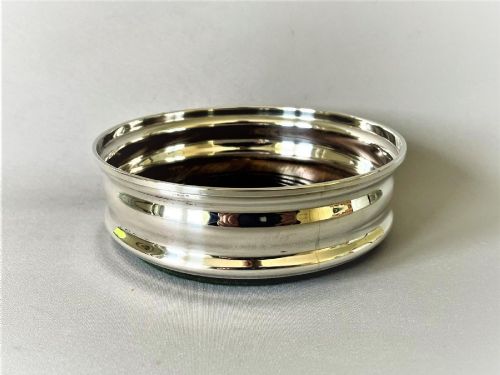
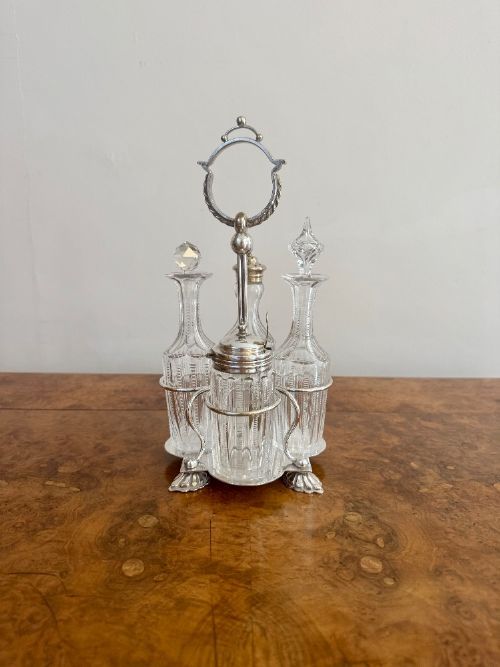
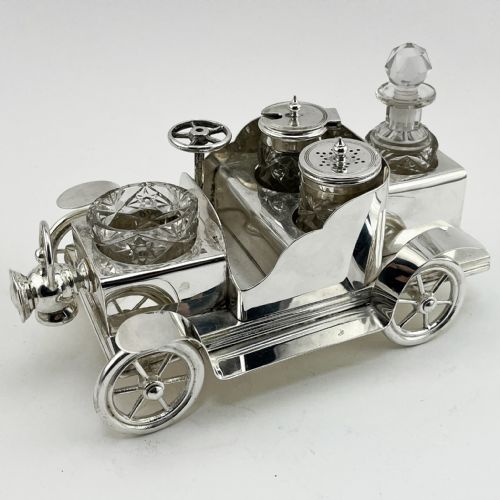
A silver decanter bottle stand encompasses wine coasters, multi-bottle cruet sets, and locking tantalus frames designed to keep bottles orderly and accessible. These pieces emerge primarily from Georgian, Victorian, and Edwardian periods, reflecting the shifting dining habits of British households.
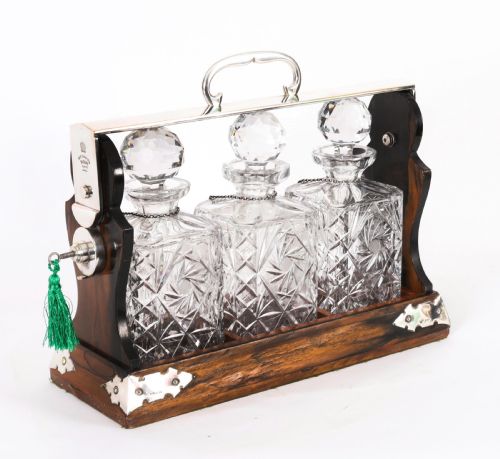
You are most likely to encounter silver plated or sterling silver wine coasters and frames paired with cut glass decanters or wood bases. The forms range from single bottle holders to elaborate three-bottle tantalus frames housed in oak or mahogany.
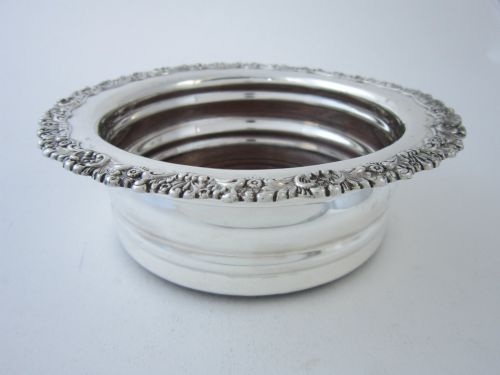
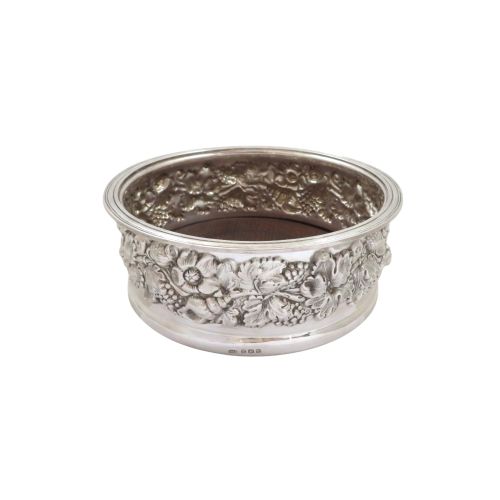
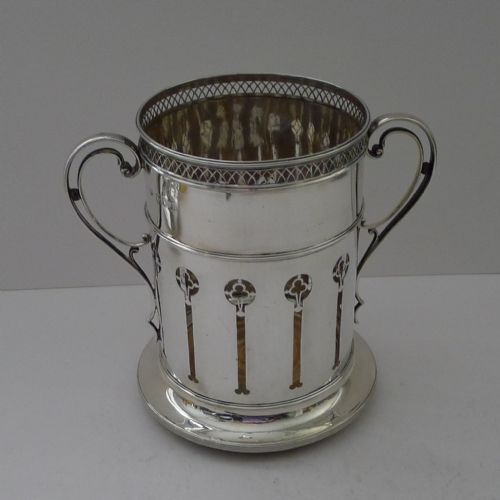
Originating to protect polished dining tables from ring marks and spills, these stands often incorporate turned wooden bases or pierced metal galleries. Their designs span plain Georgian circles to ornate Edwardian repoussé work and Art Nouveau curves.
Materials and construction methods
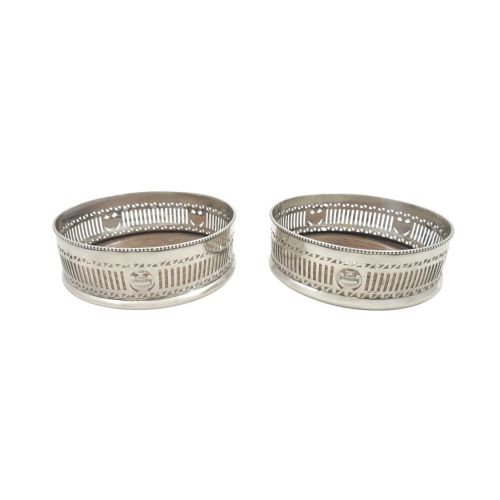
Silversmiths utilised sterling silver and Old Sheffield Plate, later shifting to electroplated nickel silver on copper bases. These metals were shaped through spinning, stamping, and piercing to create decorative galleries around the bottle rims.
Makers integrated dense timbers such as oak, mahogany, and coromandel into the bases and locking frames, often lining the interiors with baize or felt. Cut glass decanters and crystal bottles were hand-ground to fit snugly within silver plated collars and partitions.
Victorian hosts locked their brandy away in tantalus frames, teasing guests with visible spirits they could not reach without asking.
Assessing build quality and execution
The distinction between standard production and superior work lies in the weight of the metal, the crispness of pierced or embossed vine motifs, and the integration of wood and silver. Heavy gauge sterling silver or thick Old Sheffield Plate retains its structural integrity without distortion around the rims.
Finishing details separate the output of notable workshops from unmarked domestic wares, particularly in the precision of locking mechanisms on tantalus frames and the clarity of cut glass bottles. Original matched sets show a deliberate harmony between the glass cutting and the metal mounts.
Walker & Hall·Betjemann·Brook & Son·Charles Thomas Fox·Elkington·Hester Bateman·Asprey·Matthew Boulton
The Silver Decanter Bottle Stand Glossary
- Tantalus
- A locking wooden or metal frame that secures decanters of spirits to prevent unauthorised access while displaying the contents. The bottles cannot be removed until the top bar is unlocked with a key.
- Old Sheffield Plate
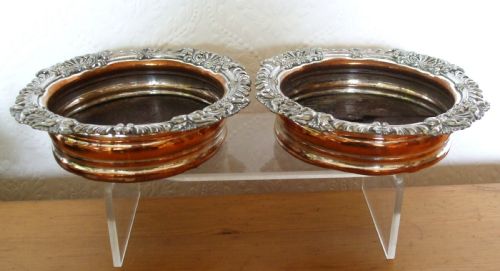
- An early fusing technique where a sheet of sterling silver is fused to a thicker copper core by heat and pressure. This method produces a rich surface that sometimes reveals the underlying copper at high points through natural wear.
- Wine Coaster
- A small circular dish with a low wall, designed to hold a wine bottle and slide smoothly across a mahogany dining table. Many feature turned wooden inserts beneath a central silver button.
- Cruet Set
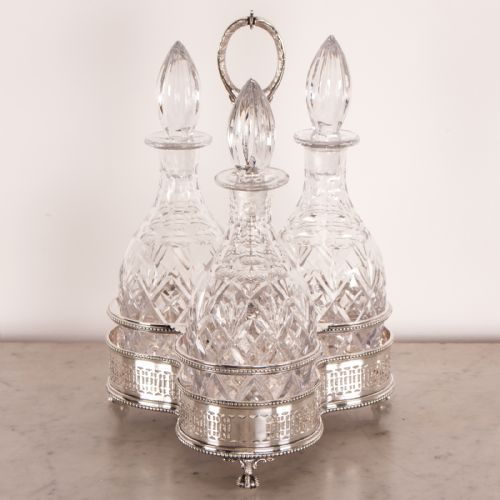
- A frame holding multiple glass bottles or cruets for condiments, oil, vinegar, or sauces during a meal. These often sit on central carrying rings with dedicated silver framed receptacles.
- Repoussé
- A metalworking technique where the silversmith hammers and pushes the metal from the reverse side to form raised decorative patterns. This method frequently creates floral and grape vine motifs on Victorian and Edwardian bottle rims.
Silver Decanter Bottle Stand: Frequently Asked Questions
How do I clean silver plate?
Clean silver plated stands using a soft cloth and a dedicated silver polish, taking care to avoid abrasive materials that can wear through the thin plating layer. Gentle wiping preserves the original surface and any antique patina.
If the stand includes a wooden base or glass decanters, keep moisture away from the joins and felt linings. Wipe the metal components independently before reassembling the pieces.
What is Old Sheffield Plate?
Old Sheffield Plate is an early method of bonding a thin layer of sterling silver to a copper core through heat and rolling. This technique predates modern electroplating and produces a durable material.
You can identify this process by looking at cut edges where the thin copper line occasionally shows through. Pieces made this way date primarily from the Georgian and early nineteenth century eras.
How were bottle stands used?
Bottle stands and wine coasters protected polished dining tables from condensation and wine ring stains during formal dinners. Guests slid the coasters across the mahogany surface to pass the bottle after dinner.
Larger stands accommodated multiple decanters or cruet bottles for sauces and condiments. They remained on the table throughout the meal for easy access by diners.