


Pair Silver Wine Coasters
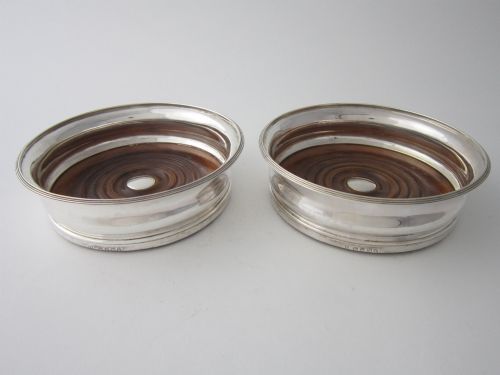
Pair silver wine coasters protect the table whilst carrying bottles around the dining board with grace.

Pair Silver Wine Coasters
Pair silver wine coasters are round serving accessories designed to hold wine bottles and decanters steady on the dining table. The selection spans sturdy George III sterling examples alongside plated Edwardian and Victorian versions.
Most pieces encountered here are formed as matching sets of two, intended to balance the table during formal meals. They appear in sterling silver, old Sheffield plate, and silver plate combined with turned timber bases.

How they were made
Silversmiths constructed these items using sterling silver or applied silver layers over copper plates, often adding turned mahogany or oak inserts to the base. Bases frequently feature a green baize lining underneath to protect polished furniture surfaces.
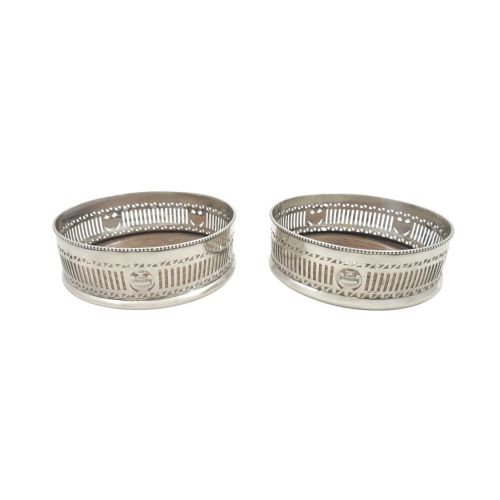
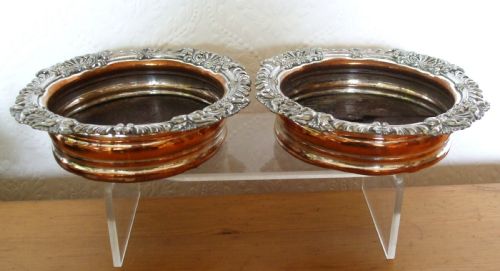
Decoration relied on piercing, embossing, and applied cast borders showing grape vines or gadroon motifs. Old Sheffield plate items display a fused layer of sterling silver upon a copper core, visible at exposed edges.
Pair Silver Wine Coasters Retail Price Guide 2026
Typical asking prices for pair silver wine coasters among the pieces listed under this phrase on Sellingantiques today, from the lower quarter to the upper quarter. They describe what is for sale here now, not the wider market.
Some Victorian examples feature adjoined double rings designed so port and claret could travel round the table hand in hand.
What varies in quality
Quality rests in the crispness of the pierced gallery work and the weight of the metal used in the walls. Heavy gauge sterling and thick old Sheffield plate retain their structural integrity far better than thin pressed metal.
The connection between the metal rim and the wooden base dictates longevity, as does the preservation of any engraved armorial crests or coats of arms upon the silver shields.
Matthew Boulton·John and Thomas Settle·Barker Ellis·Mappin and Webb·Hawksworth Eyre and Co·J Parkes and Co·Elkington and Mason·Bradbury
The Pair Silver Wine Coasters Glossary
- Old Sheffield plate
- An early fusing technique where a sheet of sterling silver is fused to a thick copper base before shaping. This method creates characteristic silver edges where the copper core remains hidden.
- Gallery
- The upright pierced or solid perimeter wall of the coaster that holds the bottle in place. Pierced galleries often display geometric, floral, or slats patterns.
- Armorial
- An engraved family crest or coat of arms displayed upon the silver surface. These heraldic markers indicate the original owning family.
- Vermeil
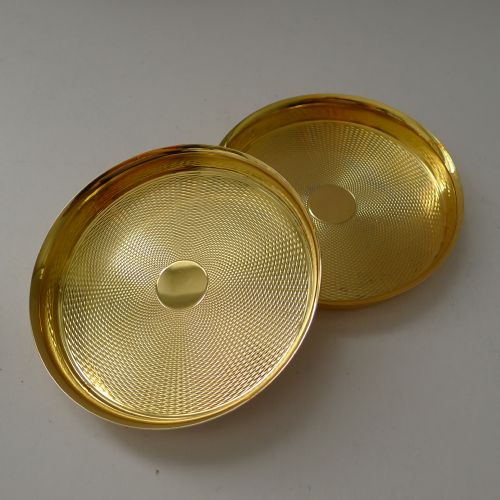
- Sterling silver that has been heavily coated with a layer of fine gold. This finish gives a warm yellow metallic lustre.
- Baize
- A woven woollen fabric glued to the underside of the wooden base. It prevents scratching when sliding the vessel across mahogany dining tables.
Pair Silver Wine Coasters: Frequently Asked Questions
How were pair silver wine coasters used?
These pieces sat upon the dining table to hold heavy wine bottles and decanters. Guests slid them between diners along the polished wood surface after the servants withdrew.
The raised walls kept condensation and drips away from table linens. Matching pairs allowed red and white wines to circulate simultaneously in opposite directions.
What is the difference between sterling and plate?
Sterling silver contains a guaranteed high purity of precious metal throughout its entire structure. Silver plate applies a thin layer of silver over a base metal such as copper or brass.
Old Sheffield plate uses a fused fusion method distinct from later electroplating. Under close inspection, older plated pieces reveal subtle copper lines at the unshielded rims.
Why do some coasters have wooden bases?
Turned mahogany or oak inserts provide a stable platform for heavy glass bottles. The wood adds necessary weight to anchor the piece during transit across the table.
A baize fabric glued beneath the timber protects the dining table from friction marks. This combination of silver and wood became standard during the Georgian period.
How do I date a Georgian coaster?
Hallmarks stamped on sterling pieces reveal the assay office, date letter, and maker's mark. Pieces lacking hallmarks require stylistic clues such as gadroon borders or pierced vertical slats.
Old Sheffield plate relies on manufacturing traits rather than date letters. The thickness of the metal and style of the armorial engraving help narrow down the decade of creation.