

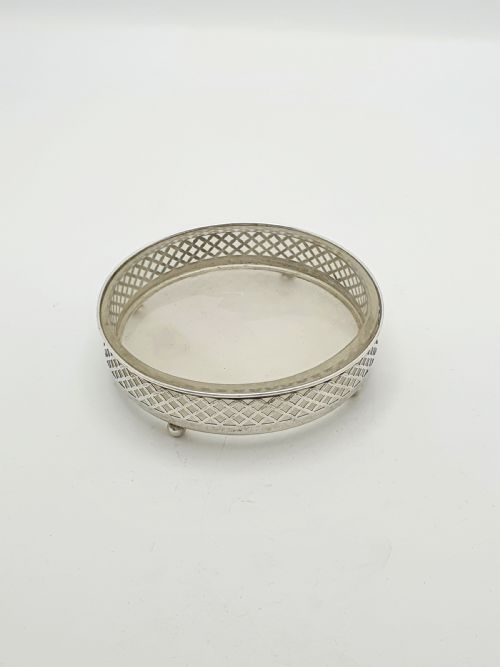


Pierced Silver Coaster
A pierced silver coaster is a table accessory designed to hold wine bottles and decanters while protecting surfaces from spills.
What these pieces are
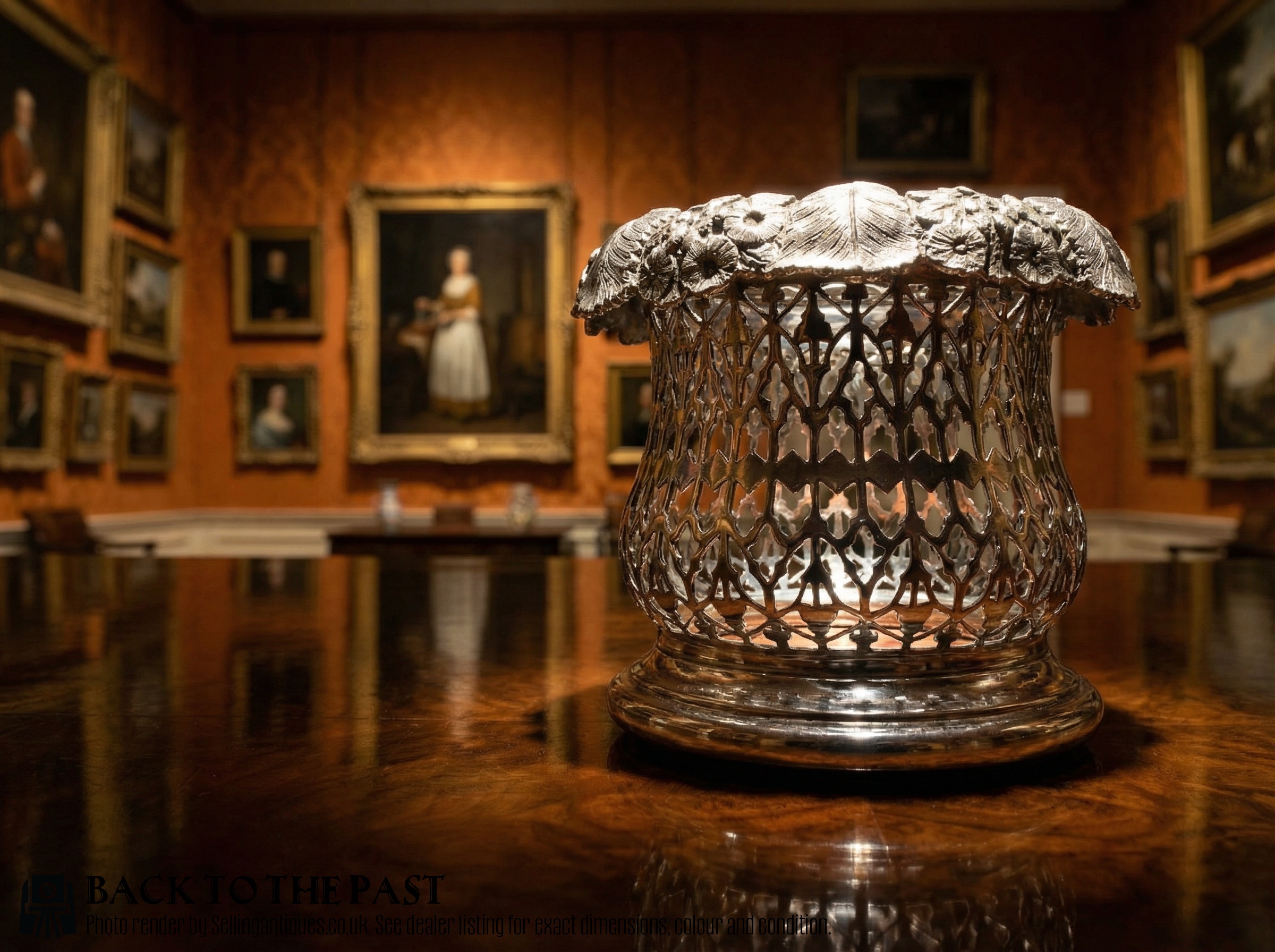
A pierced silver coaster is a table accessory designed to hold wine bottles and decanters while protecting surfaces from spills.
The selections available here range from Victorian and Edwardian examples to items from the nineteen-twenties, alongside pieces executed in the Georgian style.
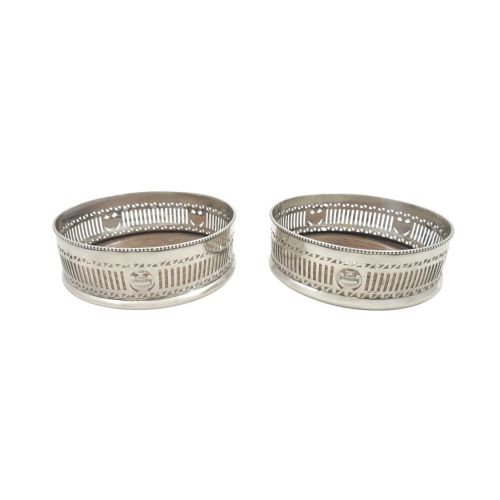
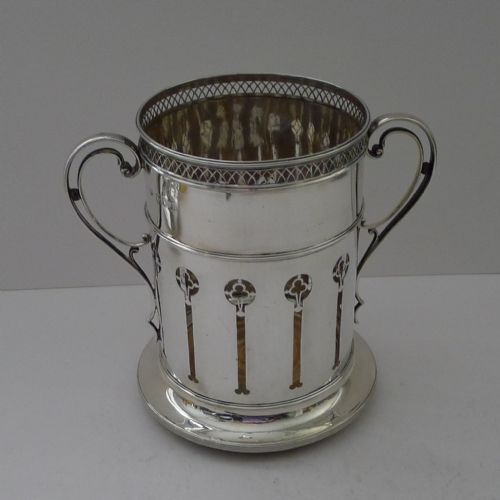
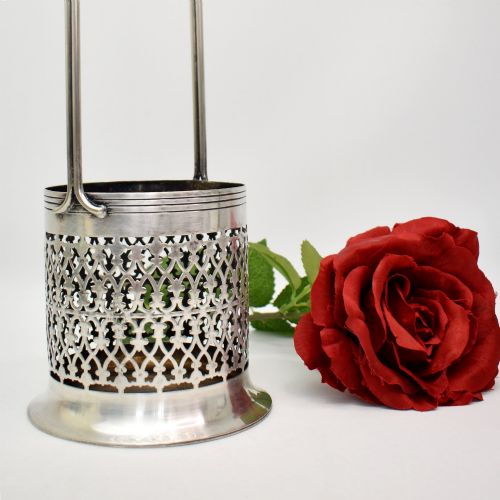
Forms include bottle holders, decanter coasters, and tea pot stands, frequently encountered in pairs or small groupings.
How they were made
Construction relies primarily on silver plate and sterling silver, often combined with turned wood bases in mahogany or pale timber.
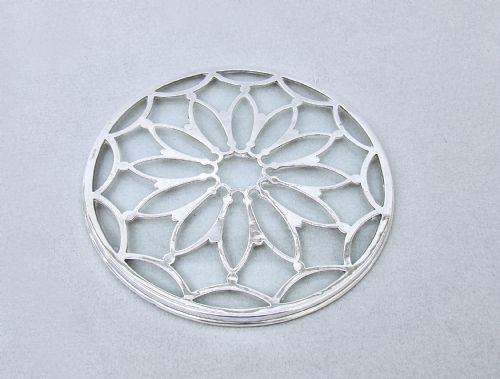
Decoration is achieved through piercing, reticulation, and scrollwork designs, sometimes incorporating grape and vine motifs along the gallery walls.
Some nineteenth-century coasters featured turned wooden bases so guests could slide the wine smoothly across the mahogany without lifting a finger.
What varies in quality
Distinctions in quality rest on the crispness of the pierced or reticulated gallery work and the depth of the metal walls.
The integration of solid silver centres within plated or mixed-material bodies and the preservation of the turned wood base dictate the standing of an individual piece.
Mappin & Webb·D & J Welby·William Comyns·James Dixon and Son
The Pierced Silver Coaster Glossary
- Pierced
- Metalwork that has had patterns cut through it to create openwork designs. This technique lightens the visual weight of the gallery.
- Silver Plate
- A layer of silver bonded to a base metal core such as copper or Britannia metal. Old Sheffield plate represents an early form of this process.
- Turned Wood
- Timber shaped on a lathe to form the flat circular base fitted inside the metal rim. Mahogany is frequently utilised for this purpose.
Frequently Asked Questions
What is a pierced silver coaster used for?
These items serve as decorative rests for wine bottles and decanters on the dining table. They prevent condensation and drips from marking polished wood surfaces.
Historically, they allowed bottles to be slid easily along the table between guests after the servants retired. Today, they remain functional tableware items as well as decorative objects.
How do I care for silver plated coasters?
Maintenance requires gentle cleaning with a suitable silver cloth or non-abrasive polish to preserve the finish. Care must be taken around wooden bases to avoid excess moisture.
Regular, light dusting prevents tarnish from building up within the pierced scrollwork and gallery gaps. Storing them in a dry environment keeps the metal and wood stable.
Are these coasters sold in pairs?
Many examples on the market appear as matched pairs designed for opposite ends of a table. Single items and larger sets of six bottle holders also occur.
Pairs generally command higher interest among collectors who prefer a symmetrical arrangement for formal dining settings.
How can I tell the period of a coaster?
Dating relies on stylistic details such as the complexity of the pierced scrollwork, the shape of the gallery, and associated hallmarks. Victorian and Edwardian pieces often display distinct floral or geometric motifs.
Materials also provide clues, as older examples may utilise Old Sheffield plate methods while later twentieth-century items show different manufacturing traits.