


Wooden Base Bottle Coaster
These wooden base bottle coaster pieces combine warm timber with gleaming silver and plate to protect your dining table in style.
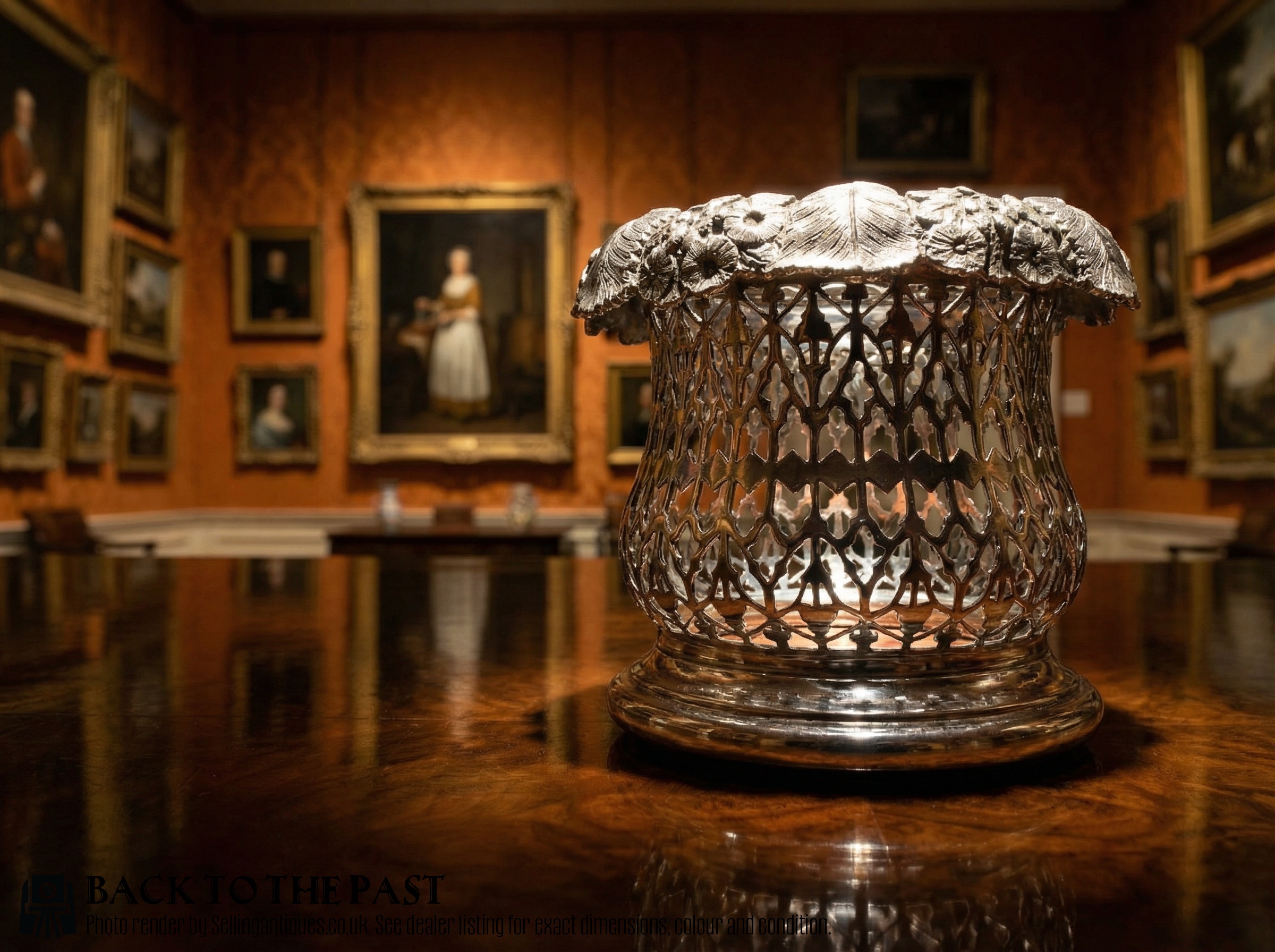
Wooden Base Bottle Coaster
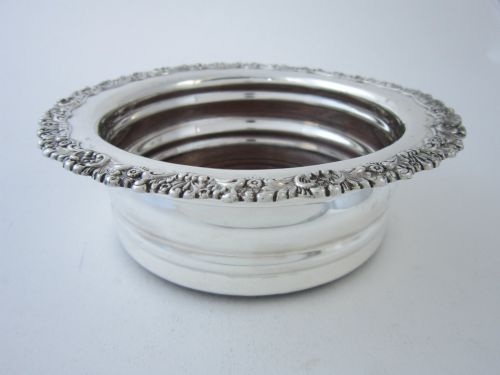
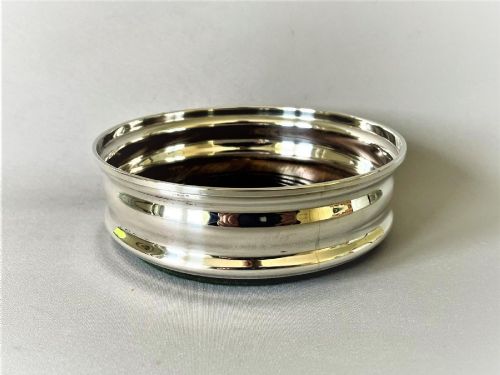
When you search for a wooden base bottle coaster, you are looking at functional table accessories designed to hold wine bottles, decanters and champagne magnums while protecting polished dining surfaces. These items combine timber foundations with metallic rims and mounts to create a stable resting place for glassware during formal meals and gatherings.
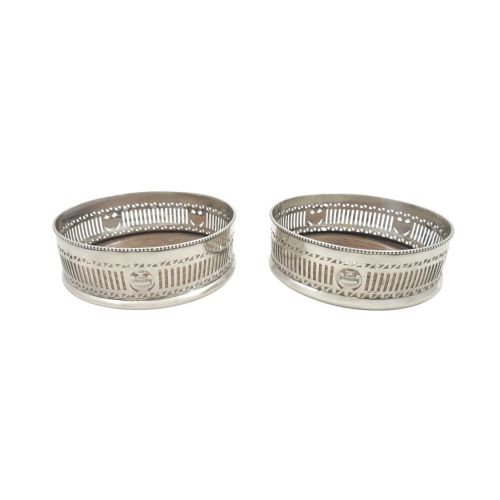
The forms range from traditional circular designs featuring turned wooden bases and pierced silver or silver plated galleries to larger magnum and fruit bowl formats. They bridge the gap between practical dining room utilities and decorative silver work from the nineteenth and early twentieth centuries.
How they were made
Makers constructed these pieces by combining turned wood bases with metal components such as sterling silver, silver plate and Old Sheffield plate. The timber forms the central floor, often featuring a turned profile and a central button or boss, while the metallic outer gallery secures the bottle.
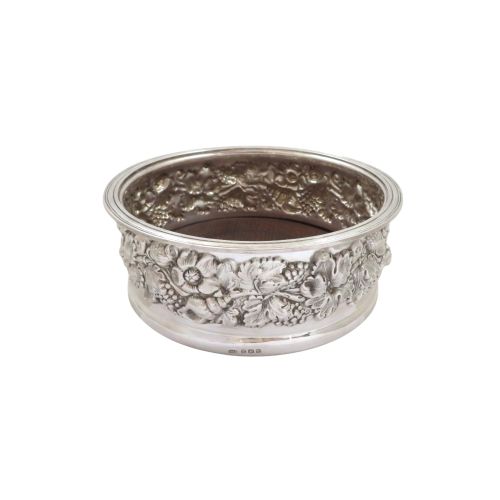
Silver and plated elements were worked using techniques like piercing, embossing and chasing to create decorative rims with motifs including grape and vine patterns and armorial engravings. Steel components also appear in associated mechanisms such as integrated cork pullers found on specific magnum examples.
What varies in quality
The distinction between standard examples and the finest pieces often lies in the weight and substance of the silver or silver plate used for the gallery. Thicker metal allows for crisper chasing, deeper piercing and more sharply defined decorative motifs like the grape and vine borders.
Another factor is the integration between the timber base and the metal mount, where superior construction ensures a tight, seamless fit that withstands regular movement across the dining table. The quality of the wood turning and the presence of hallmarks or original maker stamps further separate ordinary items from exceptional ones.
John and Thomas Settle
The Wooden Base Bottle Coaster Glossary
- Sterling Silver
- An alloy containing 92.5 percent silver and 7.5 percent other metals, typically copper, used extensively in high quality British dining wares.
- Old Sheffield Plated
- A fused composite material made by melting a sheet of sterling silver to a thicker copper base before rolling them into sheets together.
- Silver Plate
- A base metal object coated with a thin layer of silver through electroplating or chemical processes.
- Gallery
- The raised decorative metal rim surrounding the wooden base of the coaster to keep the bottle secure.
- Armorial
- Bearing a coat of arms or heraldic crest, frequently engraved onto the metal mounts or central buttons of Georgian pieces.
Wooden Base Bottle Coaster: Frequently Asked Questions
What are wooden base bottle coasters used for?
These items serve to protect polished dining tables and sideboards from moisture rings and scratches caused by chilled or sweating wine and champagne bottles during meals.
They also provide a stable, decorative base for passing decanters and bottles around the table after dinner.
How do I clean a silver and wood coaster?
Maintenance requires polishing the metal gallery with a dedicated silver cloth while taking care to avoid getting polish or excess moisture onto the wooden base.
The timber floor is best maintained with occasional light waxing to preserve the grain and prevent the wood from drying out.
How can I tell a Georgian coaster from a Victorian one?
Georgian examples often feature hand raised silver galleries, crisp armorial engravings and heavier construction reflecting eighteenth and early nineteenth century craftsmanship.
Victorian and Edwardian pieces frequently utilise machine rolling and advanced silver plating techniques alongside distinct stylistic revivals.
Can these coasters hold modern wine bottles?
Most standard standard wine bottles and bordeaux formats fit comfortably within the internal diameters of these historical coasters.
Larger magnum bottles require specific wider variants, such as dedicated magnum coasters listed from the Edwardian period.