



English Silver Barware
English silver barware brings together centuries of drinking culture through sterling silver, silver plate, glass, and wood.
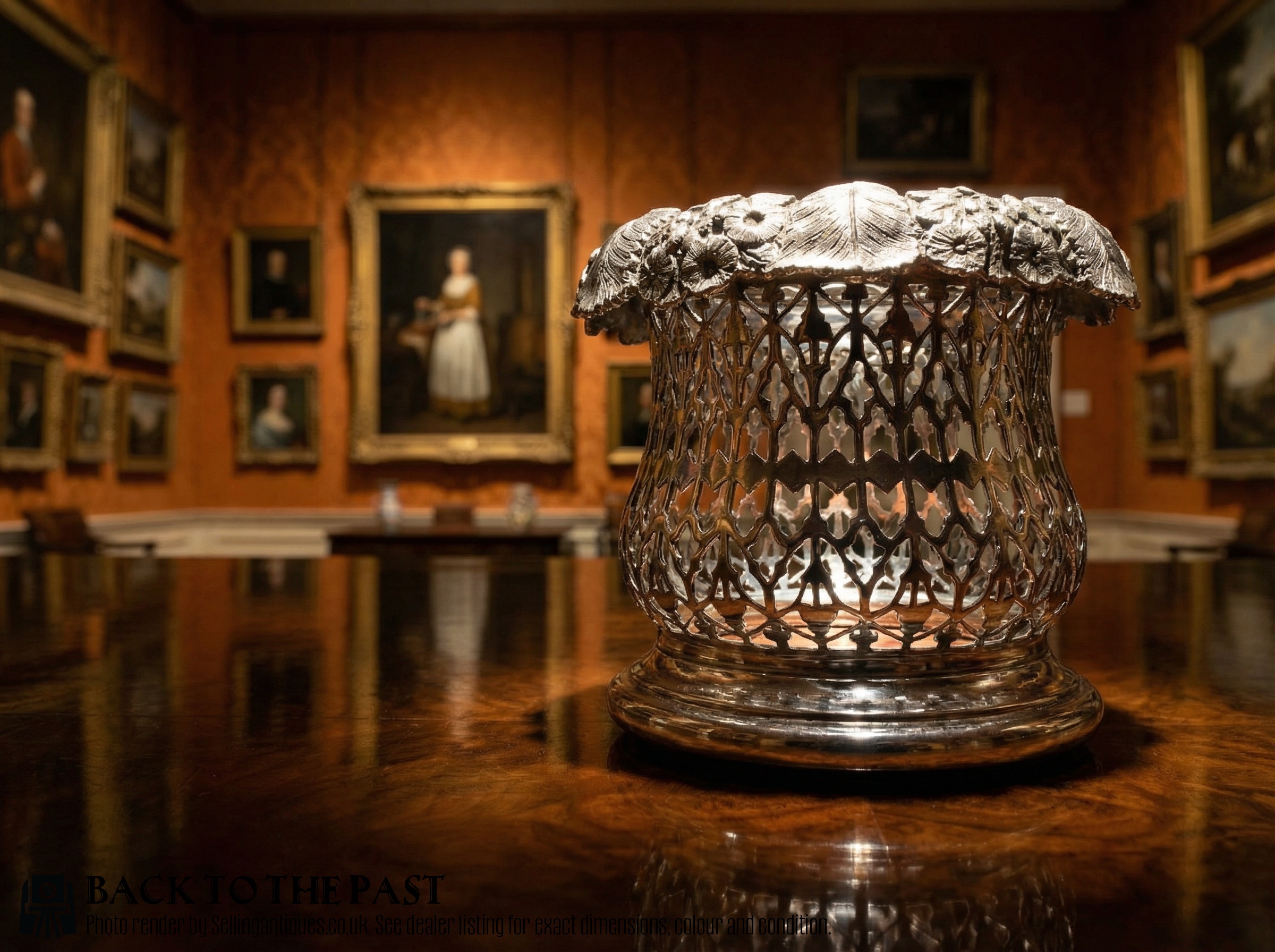
English silver barware
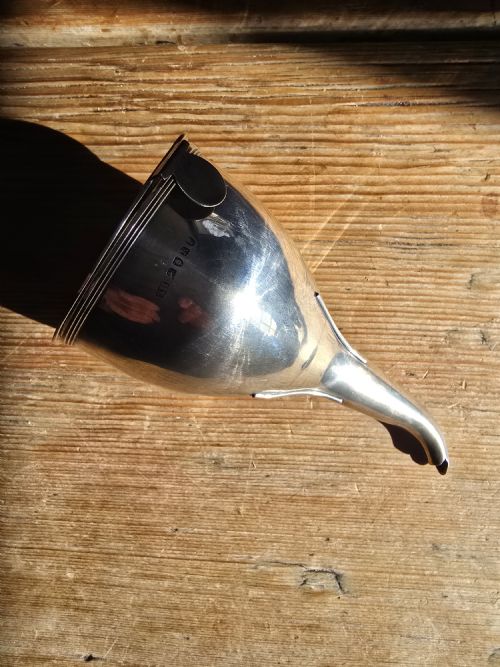
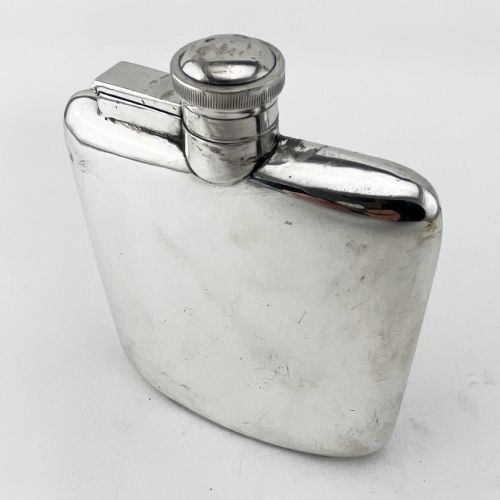
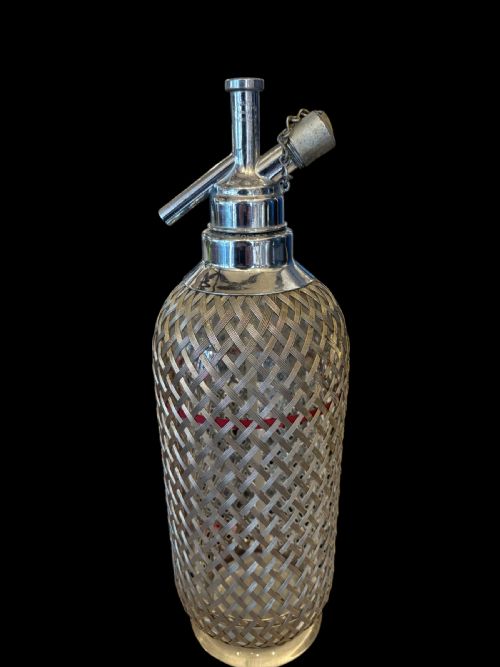
English silver barware encompasses items designed for serving and preparing drinks, spanning functional vessels and table accessories from the Victorian era to the mid-twentieth century. When searching for English silver barware, buyers encounter forms ranging from cocktail shakers and decanters to wine coolers, goblets, and tankards.
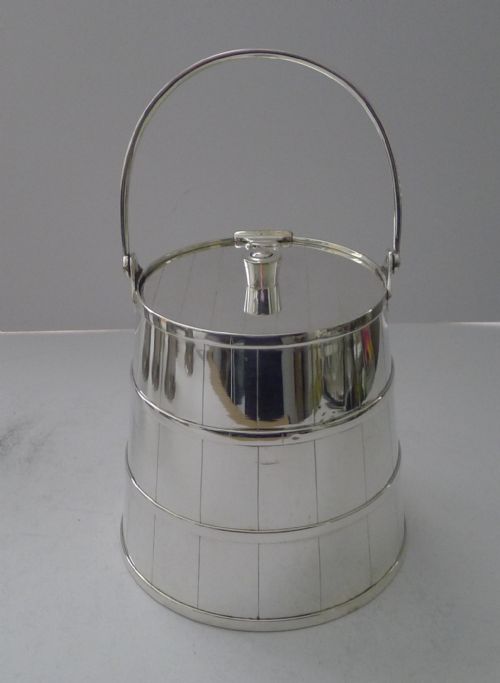
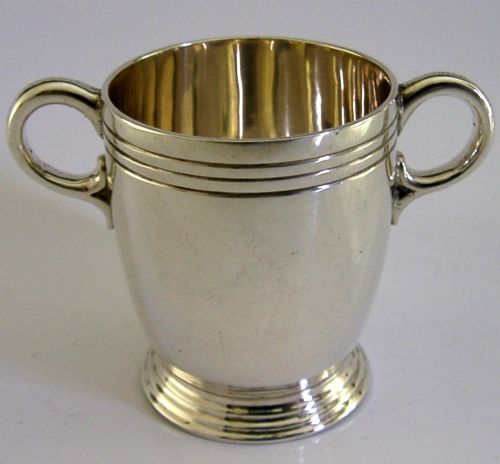
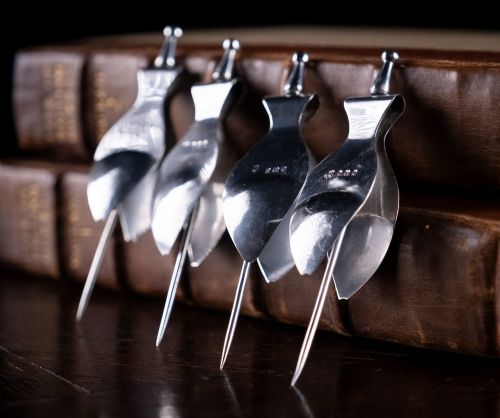
The pieces on this page draw from Victorian, Edwardian, and Art Deco styles, reflecting shifts in social entertaining and hospitality over time. Common survivals include sterling silver wine labels, chalice cups, and bottle coasters alongside silver-plated champagne buckets and rotating cocktail shakers.
Materials and Construction
Items in this category are fashioned primarily from sterling silver or silver plate over a base metal, frequently combined with glass, wood, and ceramic elements. Silversmiths utilised techniques such as casting, spinning, and hand-engraving to shape tankards, wine tasters, and salvers.
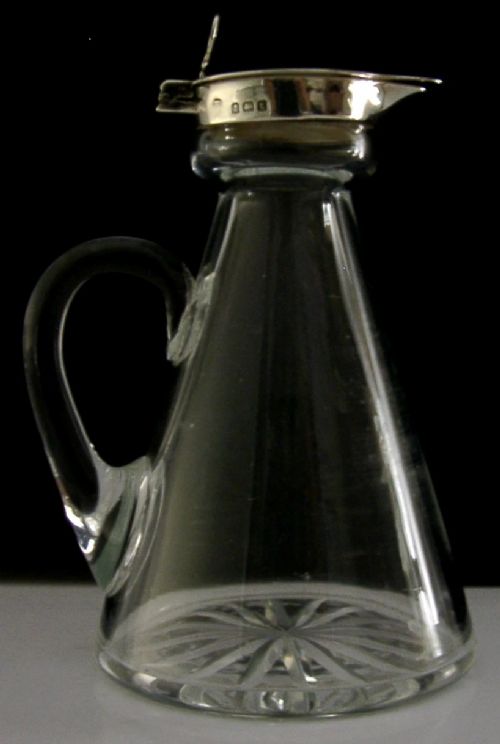
Glass decanters and noggins integrate fitted sterling silver mounts and collars, while cocktail shakers and ice buckets often employ robust metal plating designed to withstand frequent handling during drink preparation.
Retail Price Guide 2026
Typical UK retail prices for english silver barware, calculated from the Sellingantiques database of over a million retail prices indexed since 2003. This retail price guide relies exclusively on Sellingantiques data; no external sources or auction records are used, so the figures do not describe the wider market.
Standards of Execution
Differences across the range depend upon the weight of the metal, the crispness of chased or engraved decoration, and the integrity of structural joins. Heavier gauge sterling silver vessels retain their form and structural stability better than lighter alternatives over decades of use.
Design sophistication also distinguishes individual pieces, seen in the proportion of Art Deco cocktail shakers or the detailed casting found on novelty tot measures and wine tasters.
William Suckling
The English Silver Barware Glossary
- Sterling silver
- An alloy containing 92.5 percent silver by mass, with the remainder usually copper, standard for British domestic plate.
- Silver plate
- A layer of silver applied to a base metal core, common in larger hospitality items where solid silver would prove overly heavy.
- Wine cooler
- A vessel designed to chill wine or champagne before serving, often taking the form of a substantial metal bucket or tub.
- Noggin
- A small mug or decanter, typically holding a single measure of spirits such as whisky.
- Salver
- A flat plate or tray, usually with feet, utilised for serving drinks and glasses.
Frequently Asked Questions
What is included in English silver barware?
This category includes drinking vessels, serving trays, and preparation tools made from sterling silver or silver plate. Common examples range from cocktail shakers and wine coolers to goblets, tankards, and decanter labels.
Items date from the Victorian period through the Edwardian era and into the Art Deco years of the twentieth century.
How were silver cocktail shakers used?
Silver cocktail shakers were employed to mix and chill spirits with ice before pouring into glasses for guests. Many feature built-in strainers and tight-fitting lids to prevent spills during vigorous shaking.
Some mid-century versions incorporate rotating recipe mechanisms on the exterior body.
How do I identify the date of a piece?
British silver items typically feature hallmarks stamped directly into the metal, indicating the assay office, standard of silver, and a date letter corresponding to the year of manufacture. Silver plate items often carry maker marks or registry numbers instead of official hallmarks.
Style characteristics such as Victorian ornamentation or Art Deco geometry also assist in determining the era.
Can these items be used today?
Many historical barware pieces remain fully functional for modern entertaining, from wine coasters protecting surfaces to goblets and tankards holding beverages. Gentle hand washing preserves the finish of both silver plate and sterling pieces.
Regular use brings historical objects into active domestic life rather than leaving them confined to display cabinets.