


Silver Wine Holder
When you seek a silver wine holder, you find dining table accessories designed to hold bottles securely during dinner.
Silver Wine Holder
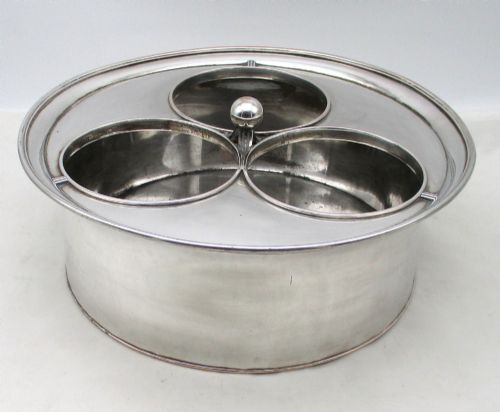
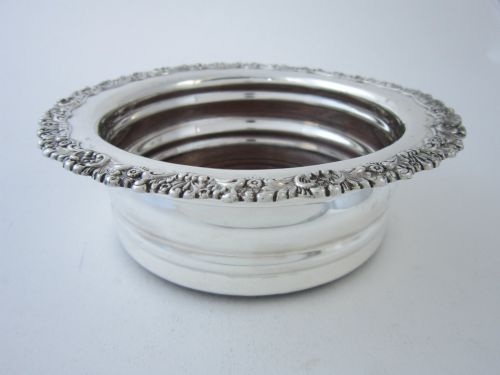
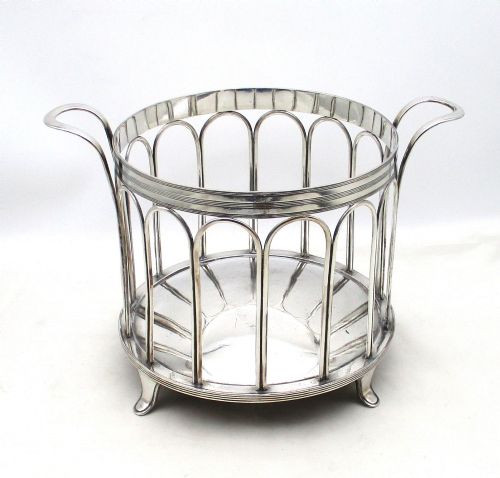
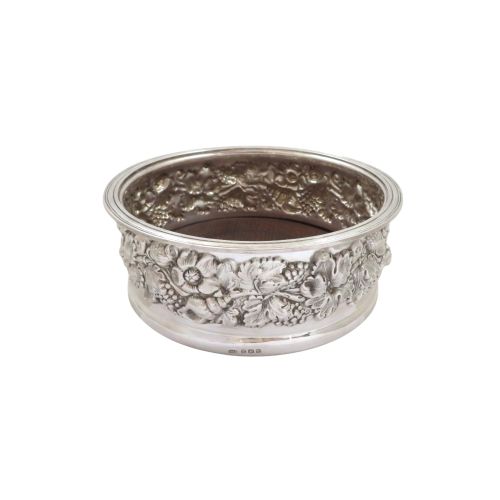
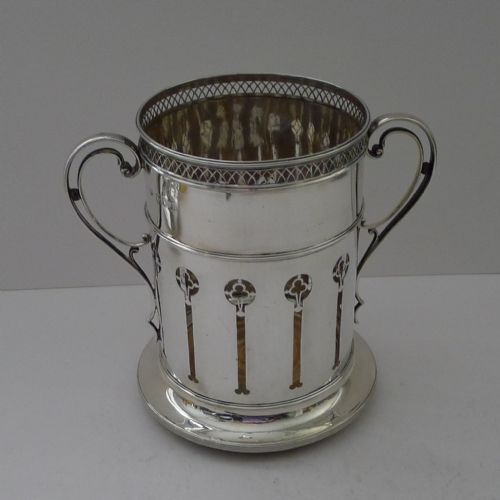
A silver wine holder encompasses various dining table accessories designed to support and display bottles during meals. The forms range from single bottle coasters and sleeves to large magnum buckets, triple carts, and multiple bottle stands.
The pieces appearing most frequently across these records date from the Georgian, Victorian, and Edwardian periods, stretching into the early twentieth century and beyond. Many examples utilise Old Sheffield Plate or silver plate alongside sterling silver, often incorporating turned wood bases.
Makers and workshops across Britain produced these items for domestic dining use, spanning traditional British designs, Regency influences, and later twentieth-century interpretations.
How they were made
Makers utilised sterling silver and silver plate, frequently combining metalwork with turned wooden bases made from mahogany or oak. Old Sheffield Plate appears alongside fused silver layers on copper bases.
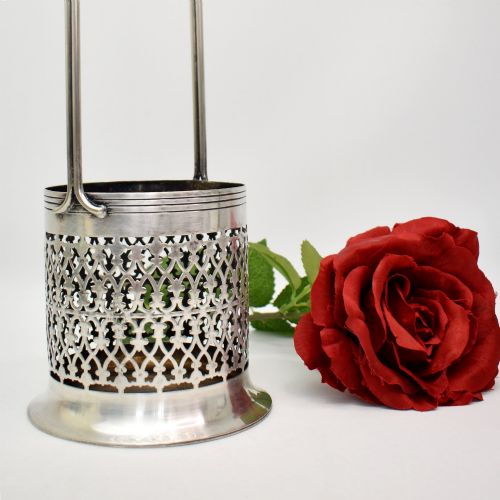
Techniques included piercing, chasing, and engraving to ornament the rims and bodies with motifs such as grapes and vines. Felt linings were often applied to the undersides to protect furniture surfaces.
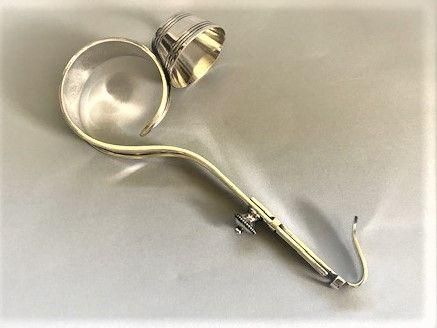
Certain pieces feature collars, extendable handles, or multiple compartments soldered and assembled by established silversmiths and electroplaters.
Some holders arrived with extendable handles, ensuring that passing the port down a very long table required minimal effort.
What varies in quality
The distinction between standard examples and finer items lies in the crispness of the chased decoration and the weight of the metal utilised. Pieces featuring hand-engraved shields or intricate pierced gallery work display greater skill.
The choice of secondary materials, such as well-figured mahogany bases and substantial silver-gilt interiors, separates everyday production from workshop output intended for grander dining rooms.
The integrity of the construction, from the seamless fusion of Old Sheffield Plate to the sturdy fitting of multiple bottle frames, dictates the durability and visual balance of the object.
Brook and Son·Christofle·Martin Hall and Co·George Bowen and Sons·Mappin and Webb·Rupert Favell and Co·Matthew Boulton·Barnards·Robert Garrard·William Allen·Collis and Co·William Hutton·James Dixon·Elkington and Co
The Silver Wine Holder Glossary
- Old Sheffield Plate
- A composite material formed by fusing a sheet of silver to a copper ingot, developed in the eighteenth century. This method was widely utilised before the invention of electroplating.
- Wine Coaster
- A small, circular tray or stand designed to hold a wine bottle on the dining table and protect the cloth from drips. These items often feature turned wooden bases and pierced galleries.
- Magnum Bucket
- A larger vessel intended to hold larger wine or champagne bottles, sometimes equipped with handles or stands. These pieces accommodate bulkier glassware than standard coasters.
- Silver Plate
- A layer of silver applied to a base metal such as copper or Britannia metal. This technique became common during the Victorian period for producing accessible tableware.
- Syphon Stand
- A metal frame designed to hold a soda syphon alongside bottles on the sideboard or dining table. They share similar pierced and plated construction methods with bottle holders.
Silver Wine Holder: Frequently Asked Questions
What is a silver wine holder used for?
These items serve to hold wine and champagne bottles securely on the dining table while protecting surfaces from condensation and drips. They support single vessels or multiple bottles during meals.
Historical examples accommodated port, claret, and champagne, allowing hosts to pass bottles safely around the table after dinner.
How do I identify a Georgian piece?
Georgian examples often feature Old Sheffield Plate construction or solid sterling silver with hallmarks indicating dates from the late eighteenth or early nineteenth century. Look for traditional forms with restrained decoration and sturdy proportions.
Makers from this era typically employed hand-raised techniques and subtle piercing rather than the heavy electroplated ornamentation seen later.
Are wooden bases original?
Many silver coasters and holders incorporate turned wooden inserts made from mahogany or oak, often fitted with a central silver button or shield. These bases provide weight and stability to the metal rims.
Original wooden elements generally show appropriate wear matching the age of the silver work above them.
How should I clean a silver wine holder?
Maintenance requires gentle cleaning with appropriate silver polish to preserve the finish without wearing through thin plated layers. Avoid abrasive cloths on Old Sheffield Plate to protect the underlying copper.
Felt-lined or wooden bases should be kept dry during cleaning to prevent moisture damage to the secondary materials.