

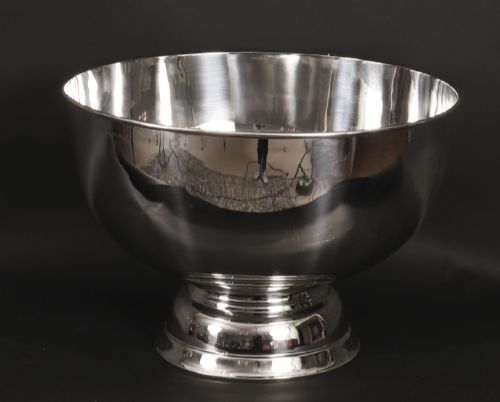
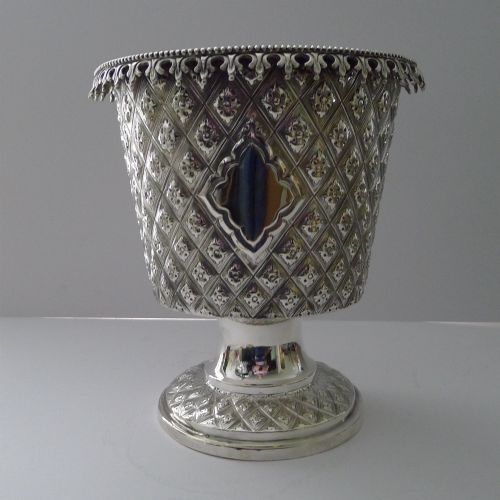
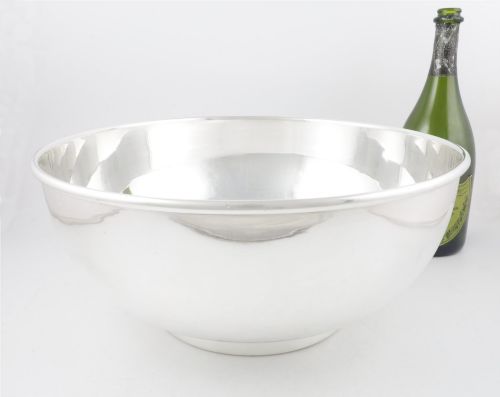
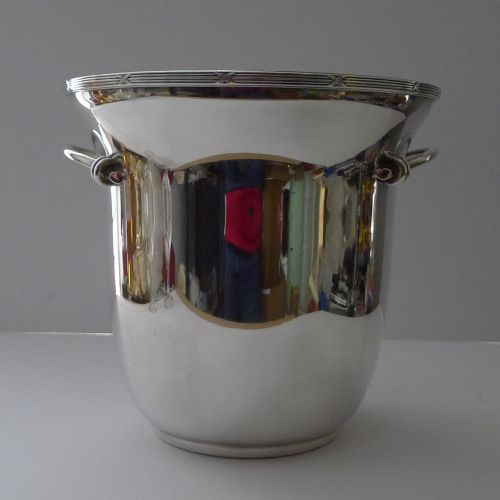
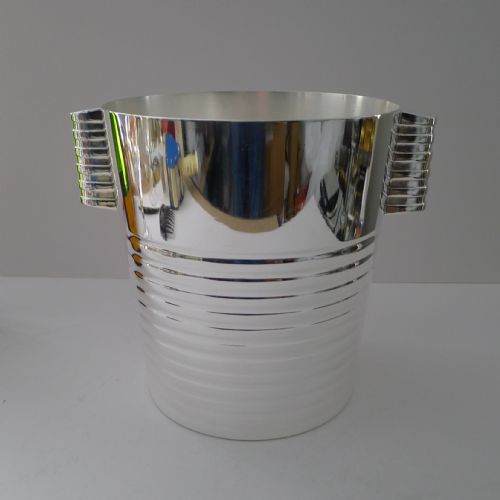
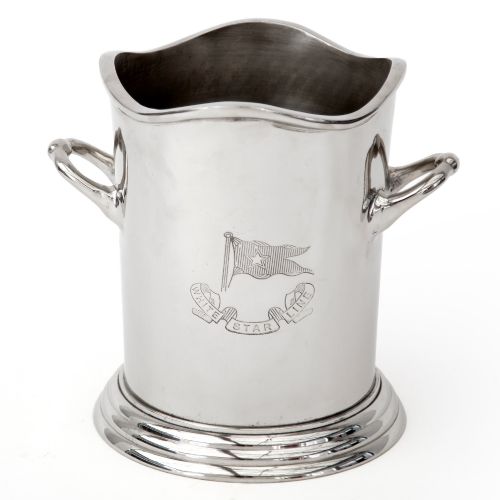
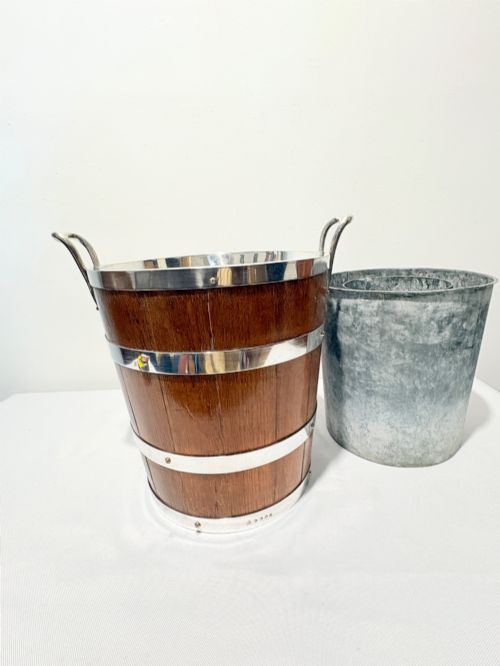
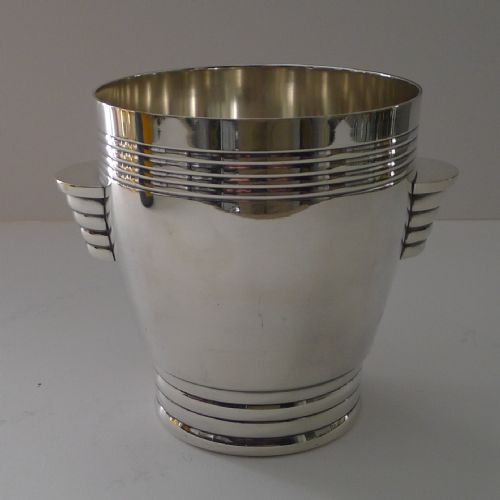
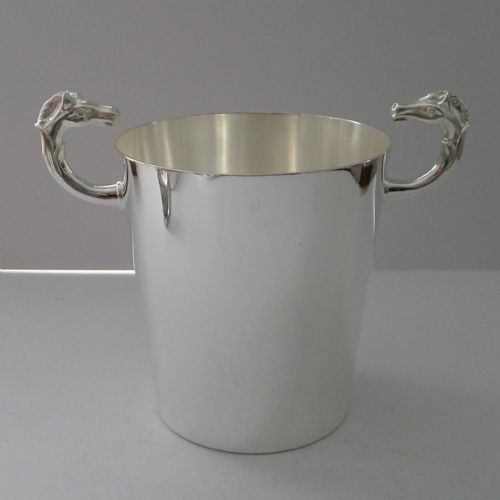
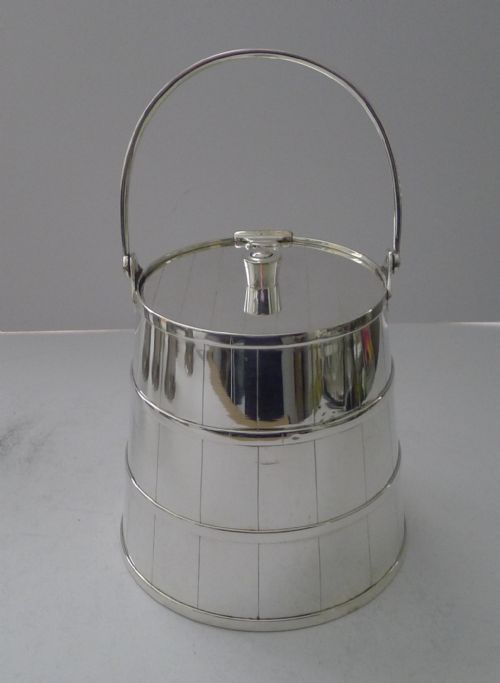
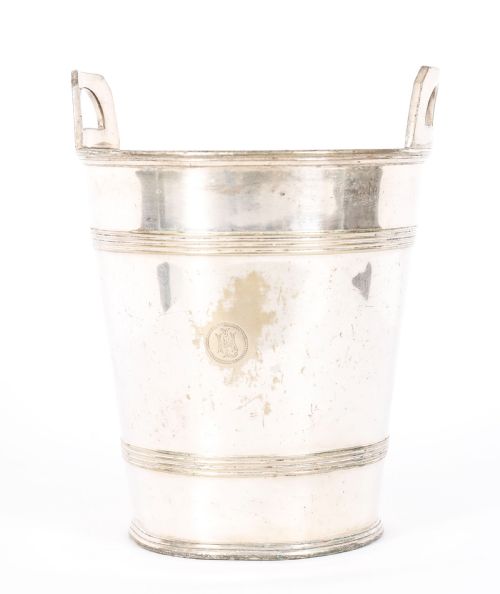
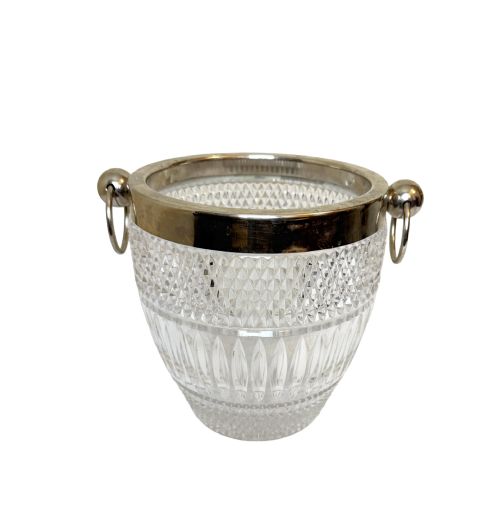

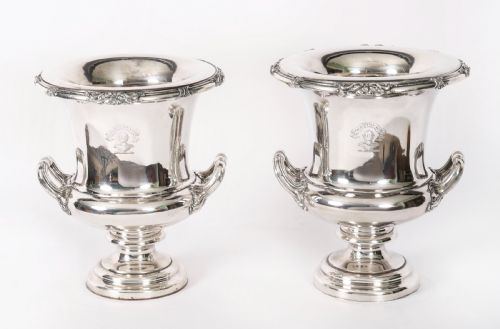
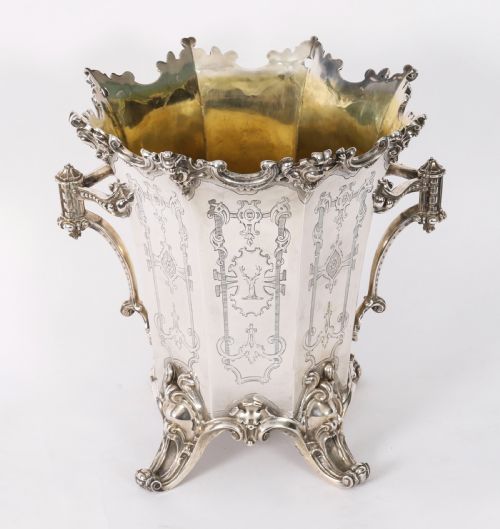
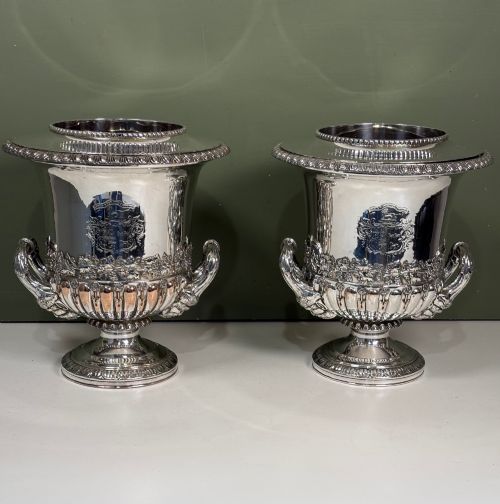
Silver Champagne Cooler
These silver champagne cooler options bring historical hospitality to the modern table, offering substance and style for entertaining.
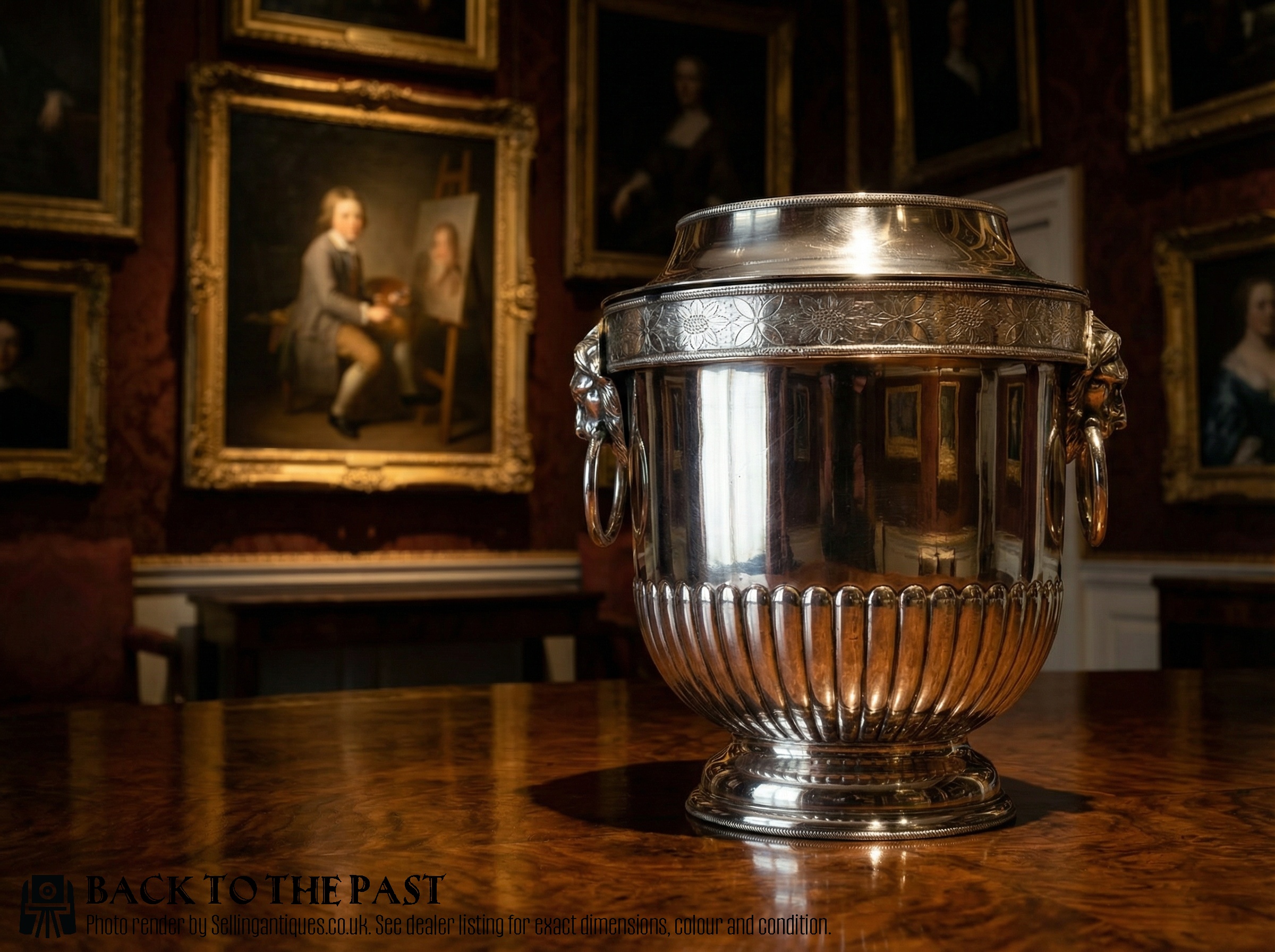
Silver Champagne Cooler
A silver champagne cooler represents centuries of hospitality, functioning as a vessel to chill wine and sparkling bottles during formal meals and gatherings. When searching for a silver champagne cooler, buyers encounter various forms spanning from early Georgian vessels to mid-century French designs.
The pieces appearing most frequently range from Old Sheffield Plate coolers of the late eighteenth and early nineteenth centuries to twentieth-century silver-plated vessels by makers such as Christofle and Mappin & Webb. Forms include single-bottle buckets, multi-bottle holders, and floor-standing models designed for dining rooms and bars.
Materials and Construction
Many early examples utilise Old Sheffield Plate or silver on copper, where a thin layer of silver is fused to a base metal core, visible often where wear reveals the copper underneath. Later production relies heavily on silver plate over a base metal foundation, alongside solid silver pieces found in earlier periods.
Manufacturing techniques combine traditional silversmithing methods such as hand-raising, casting for handles and mounts, and applied ornamentation including crests, armorial bearings, and embossed floral or animal motifs.
Silver Champagne Cooler Retail Price Guide 2026
Typical asking prices for silver champagne cooler among the pieces listed under this phrase on Sellingantiques today, from the lower quarter to the upper quarter. They describe what is for sale here now, not the wider market.
Listings feature items spanning the eighteenth, nineteenth, and twentieth centuries, utilising silver plate, copper, lead crystal, and solid silver.
Evaluating Quality and Origin
Quality rests on the weight of the metal, the crispness of cast decorative details like handles and borders, and the integrity of the original plating. Maker attribution to established workshops or firms elevates a piece, as does documented provenance such as crests or historical association.
The presence of matching pairs, original liners, or stands significantly separates standard production barware from exceptional institutional or commissioned presentation pieces.
Hutton Sheffield·Christofle·Elkington, Mason and Co·WMF·Mappin and Webb·Barker Ellis·Ercuis·Puiforcat·St Medard
The Silver Champagne Cooler Glossary
- Old Sheffield Plate
- An early fusing technique where a sheet of silver is fused to a copper ingot before rolling. This method produces characteristic copper edges on older pieces.
- Silver Plate
- A base metal substrate coated with a layer of pure silver. This technique became widespread during the nineteenth and twentieth centuries.
- Lead Crystal
- Heavy, high-clarity glass often cut into geometric patterns. It forms the body of certain ice buckets paired with silver mounts.
- Base Metal
- The underlying metal body of a plated item, commonly copper, brass, or nickel silver. It shows beneath the silver layer when plating thins from age and use.
Silver Champagne Cooler: Frequently Asked Questions
How do I clean a silver champagne cooler safely?
Use a soft cloth and a specialised silver polish formulated for plated items, avoiding abrasive pads that remove the thin silver layer.
Rinse the vessel thoroughly with warm water and dry it completely with a soft towel to prevent water spots.
Can I use an antique cooler for actual ice and wine?
These vessels were originally manufactured to hold ice and chilled bottles, making them entirely suitable for modern entertaining.
Ensure you dry the interior thoroughly after use to prevent moisture damage or tarnishing of the underlying metal.
What is the difference between Old Sheffield Plate and later silver plate?
Old Sheffield Plate involves physically fusing silver to a copper core through heat and pressure before shaping the metal.
Later silver plate utilises electroplating, applying a chemical layer of silver onto a base metal object after its construction is complete.
How do I date an unmarked silver plated cooler?
Examine the overall style, such as Art Deco geometric lines or Victorian rococo revival scrolls, alongside construction seams and handle attachments.
Base metal showing through worn plating or specific registry marks can also offer clues to the approximate decade of manufacture.