

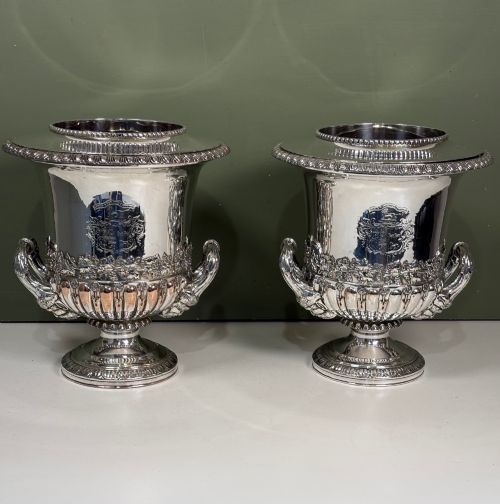


Silver Wine Chiller
These silver wine chiller examples range from Georgian and nineteenth century pieces to mid-century modern designs, offering practical elegance for entertaining.
What silver wine chiller examples are
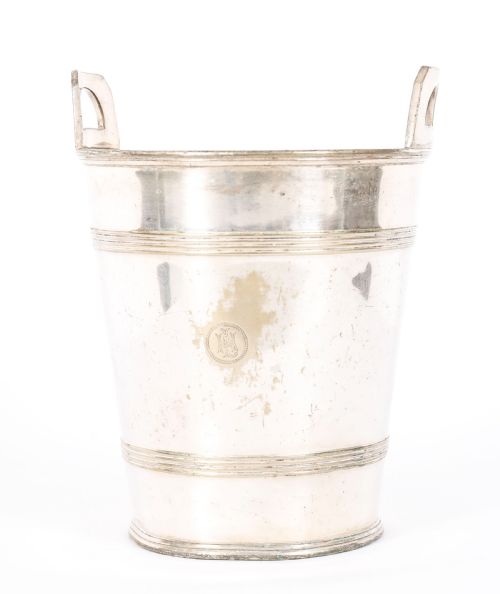
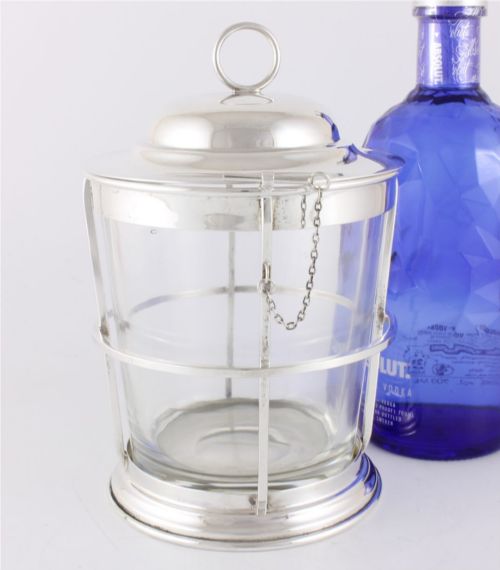
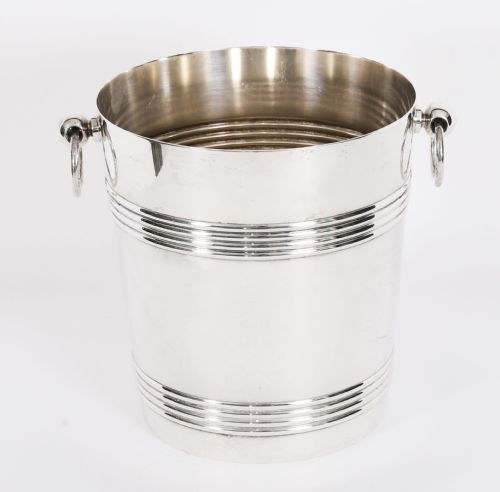
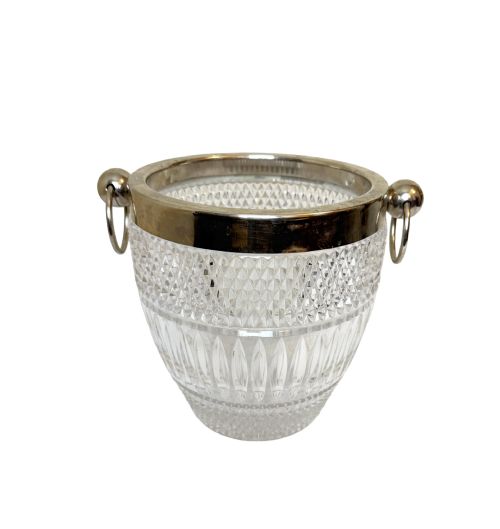
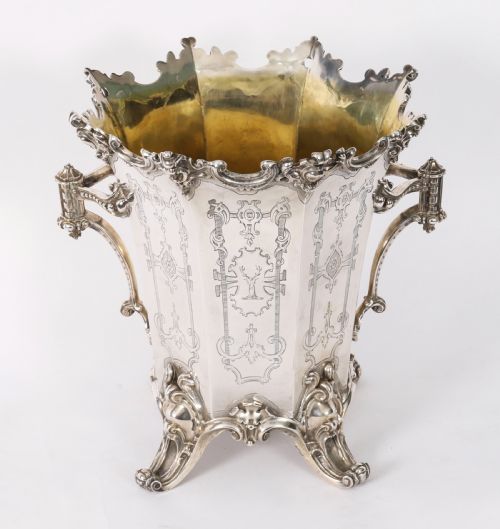
A silver wine chiller serves to keep bottles cold at the table, appearing in forms such as champagne buckets, ice buckets, and twin-handled coolers. Buyers searching for a silver wine chiller will encounter items spanning the nineteenth century through to the nineteen-fifties and nineteen-sixties, reflecting changing dining habits over generations.
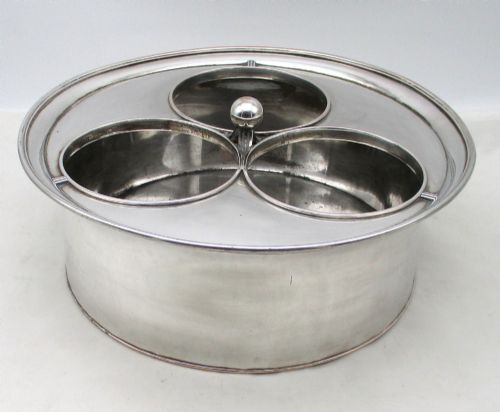
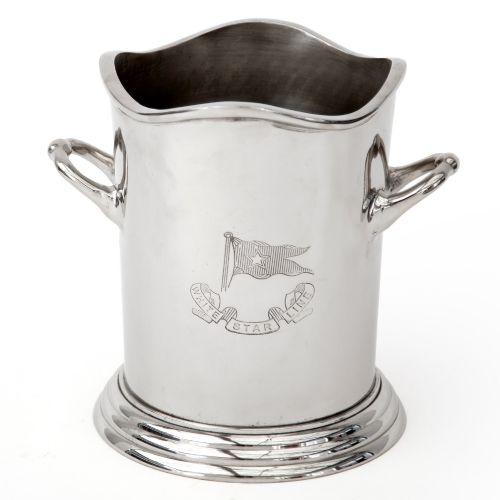
The selection includes specific historical iterations like Old Sheffield plated multi-bottle holders, alongside passenger line pieces and repurposed meat covers from the nineteenth century. Mid-century modern interpretations also feature strongly, bringing cleaner lines to the traditional barware category.
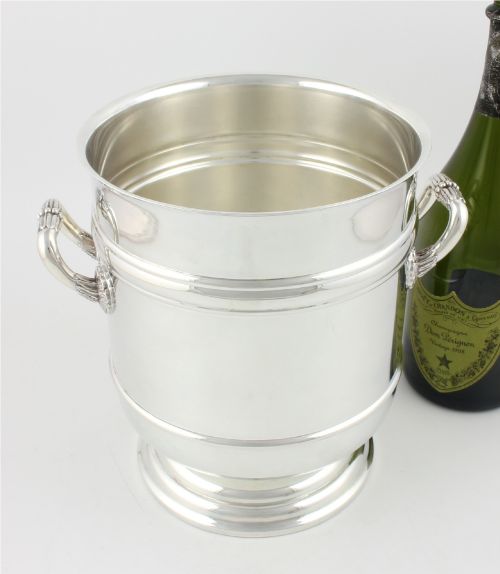
French manufacturers contribute significantly to the available styles, ranging from French Empire influences to sleek Art Deco forms. These vessels double as wine coolers and ice buckets, making them versatile additions to contemporary and traditional barware collections alike.
What varies in quality
Quality separates through the integrity of the plating layer and the weight of the underlying metal body. Heavier-gauge metalwork retains thermal efficiency better and resists denting during active service.
The refinement of decorative casting on handles and rims indicates the maker's hand, where sharper chased details distinguish standard production pieces from finer studio and factory outputs.
Retail Price Guide 2026
Typical UK retail prices for silver wine chiller, calculated from the Sellingantiques database of over a million retail prices indexed since 2003. This retail price guide relies exclusively on Sellingantiques data; no external sources or auction records are used, so the figures do not describe the wider market.
One listed item began life as a Victorian meat cover before finding a second career chilling wine.
Christofle·Christofle Gallia·Lino Sabattini
The Silver Wine Chiller Glossary
- Silver Plate
- A thin layer of silver bonded to a base metal core. This technique provided an accessible alternative to solid silver for large vessels.
- Old Sheffield Plated
- An early fusion method where a sheet of silver was fused to a copper ingot before rolling. It produces a rich surface appearance distinct from modern electroplating.
- Bakelite
- An early synthetic thermosetting plastic used for handles and insulation. Its presence points towards mid-century manufacturing methods.
- Art Deco
- A design style from the early twentieth century characterised by geometric symmetry and streamlined forms. It is frequently seen in champagne buckets from the period.
- Champagne Cooler
- A deep vessel designed specifically to submerge bottles in ice and water. These pieces often feature twin handles for lifting when fully loaded.
Frequently Asked Questions
How do I clean a silver wine chiller?
Wash the interior with warm soapy water and dry thoroughly immediately after use to prevent water spotting. Avoid harsh abrasive cloths that might wear through the plated surface over time.
For the exterior, apply a specialised silver cleaner sparingly with a soft cloth. Buff gently to maintain the lustre without stripping the underlying metal layer.
Can I use an antique chiller for ice?
These vessels were originally built to hold ice and chilled water alongside wine bottles. Modern use for ice cubes follows their historical purpose.
Ensure the interior lining remains sound and free from heavy corrosion before filling it with water and ice for a gathering.
What is the difference between a cooler and a bucket?
Coolers generally offer greater depth and capacity to accommodate wine and champagne bottles upright with ice packing. Buckets often feature more compact dimensions suited specifically for ice cube storage.
In historical listings, the terms frequently overlap depending on the manufacturer's intended barware application.
How do I date a silver plated chiller?
Examine the maker's stamps and hallmarks stamped into the base or rim. Stylistic cues such as Art Deco geometric lines or mid-century minimalism also provide reliable chronological markers.
Construction methods, including the weight of the metal and the presence of bakelite fittings, further narrow down the manufacturing decade.