
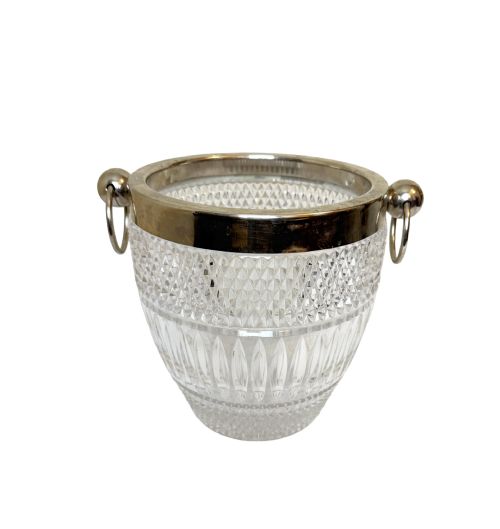


French Silver Ice Bucket
A french silver ice bucket brings substantial weight and polished presence to a table, combining practical cooling with distinct decorative character.
French Silver Ice Bucket
A french silver ice bucket covers a range of barware, wine coolers, and champagne buckets designed for table service. Buyers searching for a french silver ice bucket will encounter vessels spanning the early twentieth century through the middle decades, shaped by prominent Parisian houses and smaller workshops alike.
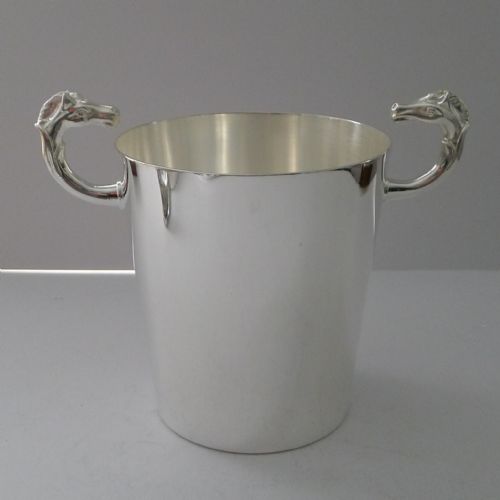
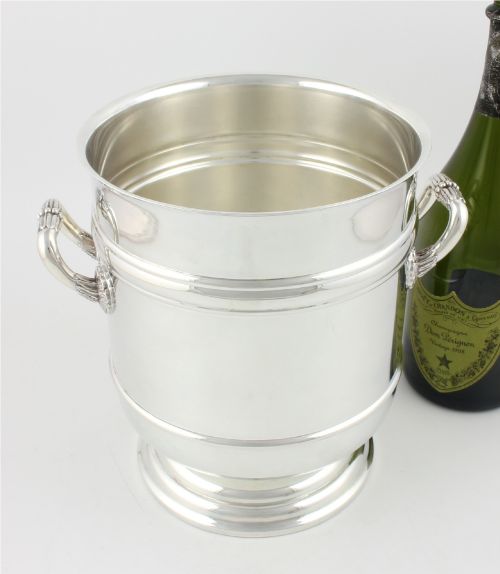
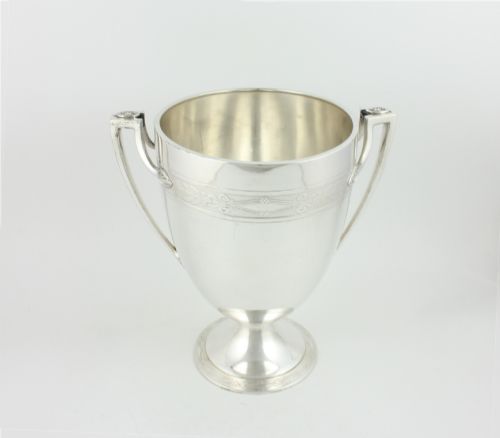
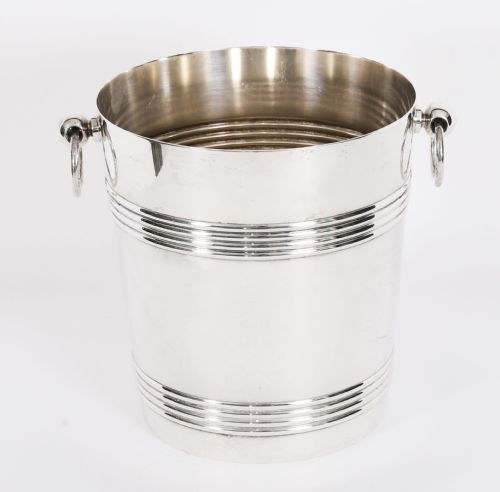
The selection leans heavily toward silver plate, metal, and cut crystal combinations, reflecting both grand entertaining and Parisian bistro use. Forms vary from sleek Art Deco cylinders and heavy trophies to equestrian designs and footed bowls.
Pieces frequently emerge from stylistic movements such as Belle Epoque, Art Deco, and Mid-Century Modern, showing the changing tastes in domestic hospitality over several decades.
Materials and construction
Makers utilised silver plate and base metal as foundational materials, applying heavy plating over sturdy alloy cores to withstand regular use. Many examples incorporate cut crystal or crackle glass inserts, pairing reflective glass with gleaming metal surfaces.
Decoration relied on specialist techniques including deep embossing, applied handles such as grape clusters or horse heads, and geometric shaping associated with Art Deco design. Workshops also employed pewter and specialised chrome plating, particularly in restaurant ware and mid-century items.
French Silver Ice Bucket Retail Price Guide 2026
Typical asking prices for french silver ice bucket among the pieces listed under this phrase on Sellingantiques today, from the lower quarter to the upper quarter. They describe what is for sale here now, not the wider market.
Listings feature items spanning from nineteen-ten to nineteen-sixty, encompassing Art Deco, Mid-Century Modern, and French Empire styles.
Judging execution and design
Quality rests in the weight of the metal, the crispness of applied handles or embossed motifs, and the reputation of the maker. Master silversmiths and major houses produced pieces with balanced proportions, secure joints, and durable plating that survived decades of service.
Simpler vessels intended for bistro or restaurant use prioritize utilitarian thickness over fine ornamentation, whereas signed studio pieces exhibit deliberate artistic vision in their geometric lines and sculptural details.
Christofle·Ercuis·Luc Lanel·Lino Sabatinni·Andre Laine·Le Chardon
The French Silver Ice Bucket Glossary
- Silver plate
- A layer of pure silver bonded to a base metal core. This technique allowed makers to produce substantial vessels without the cost of solid silver.
- Art Deco
- A design style prominent in the interwar years characterised by sleek geometric lines, stylised motifs, and modern industrial materials.
- Gallia
- A high-grade silver-plate alloy developed and utilised by Christofle. It marked a standard of excellence for French metalware production.
- Bespoke
- Made to a specific individual order rather than produced in standard series. Such pieces often feature custom heraldry or distinct functional adjustments.
French Silver Ice Bucket: Frequently Asked Questions
How do I clean a silver plated ice bucket?
Use a soft cloth and a specialised silver polish formulated for plated items, applying gentle pressure to avoid wearing away the silver layer.
Rinse the vessel thoroughly in warm water and dry it immediately with a lint-free cloth to prevent water spots and tarnishing.
Can these buckets hold wine bottles?
Many examples listed as ice buckets double as wine coolers or champagne buckets due to their generous internal capacity.
Check the dimensions of the specific vessel to ensure it accommodates both ice and a standard wine bottle comfortably.
What periods do these pieces come from?
The available selection primarily spans the early twentieth century through the nineteen-sixties, capturing Belle Epoque, Art Deco, and Mid-Century Modern eras.
Design characteristics and maker marks help identify the specific decade of manufacture for each piece.
Were these used in restaurants?
Several pieces originate from Parisian dining establishments, built for heavy daily service and commercial hospitality.
Restaurant-sourced items often display sturdy construction, simpler handles, and utilitarian bases designed to endure constant handling.