
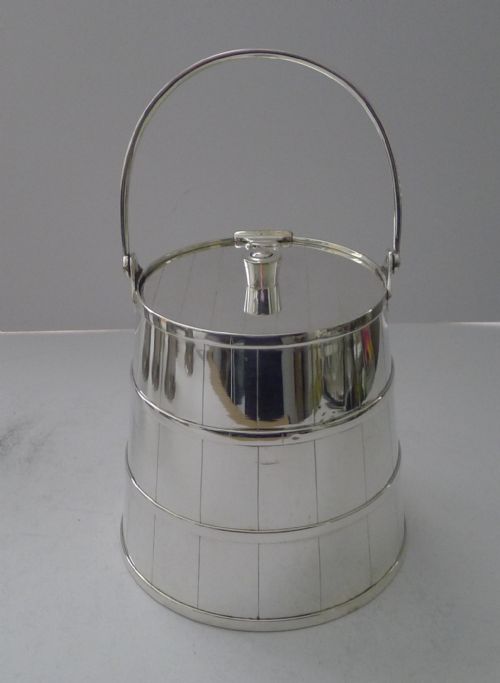
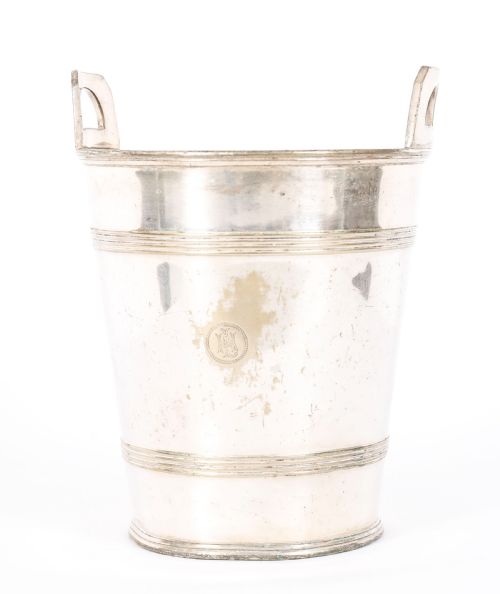
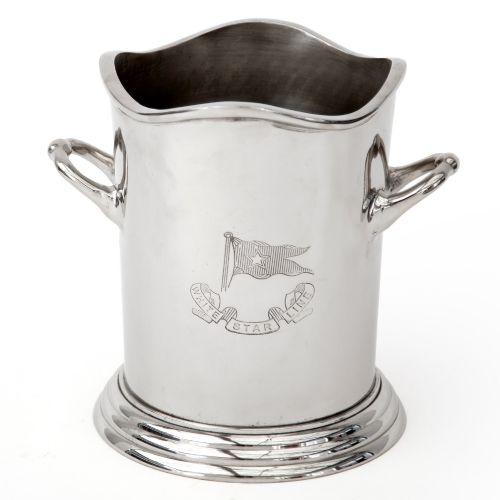
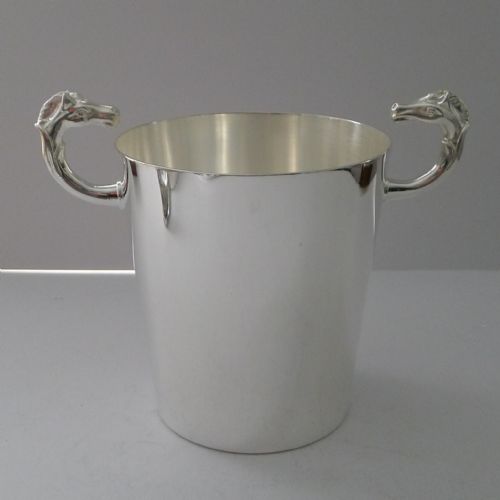
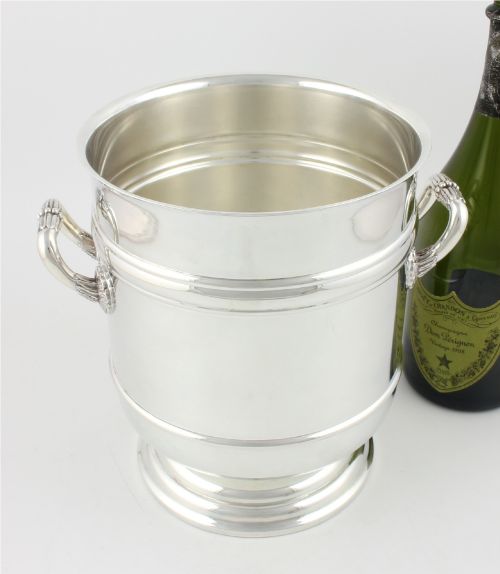
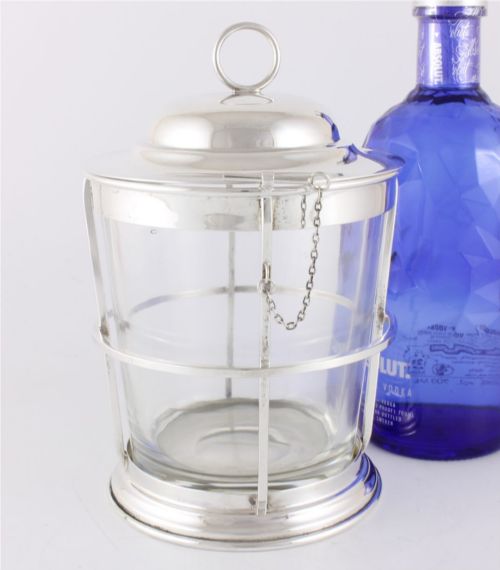
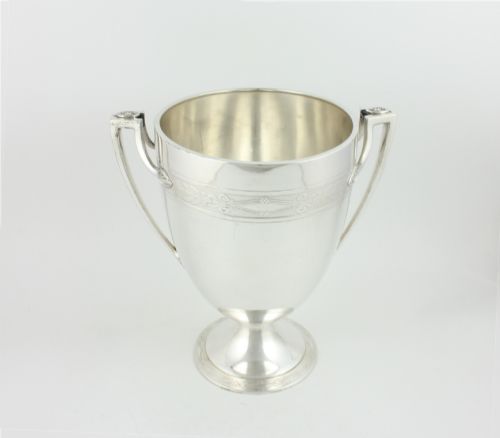
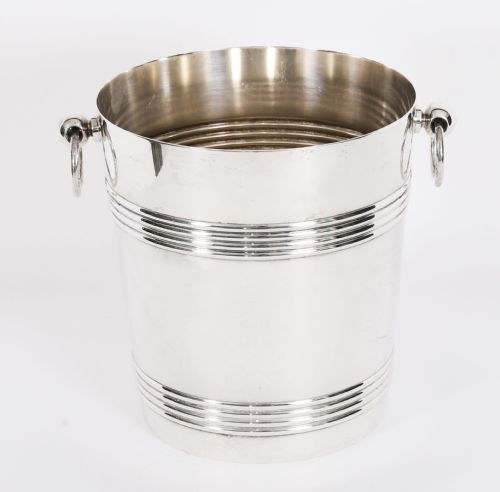

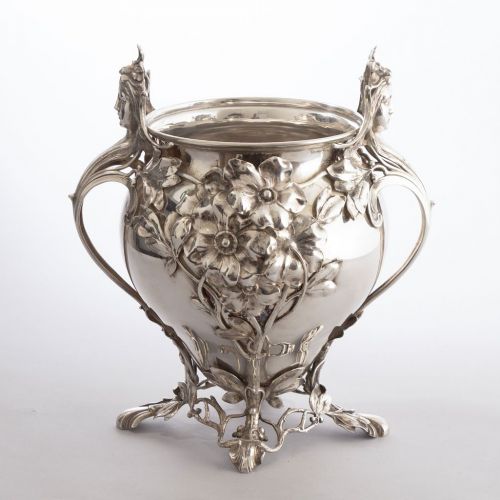
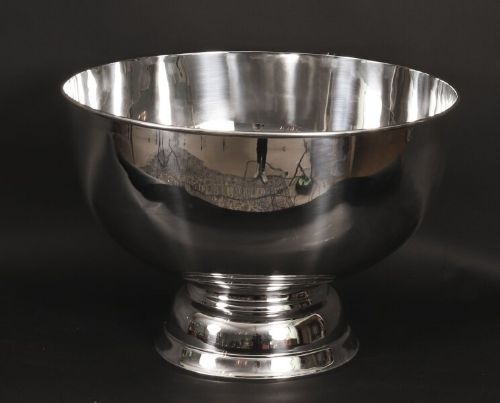

Vintage Silver Wine Bucket
These vintage silver wine bucket examples offer substantial weight and polished elegance, making them essential centrepieces for serious entertaining.
What They Are
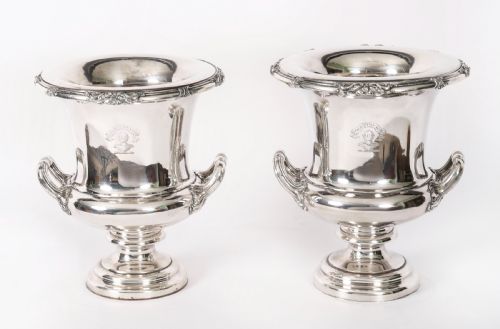
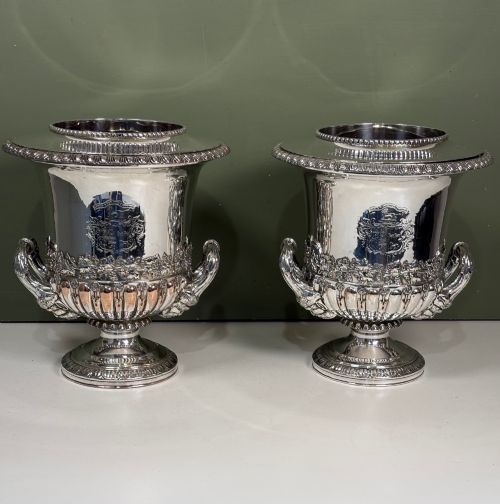
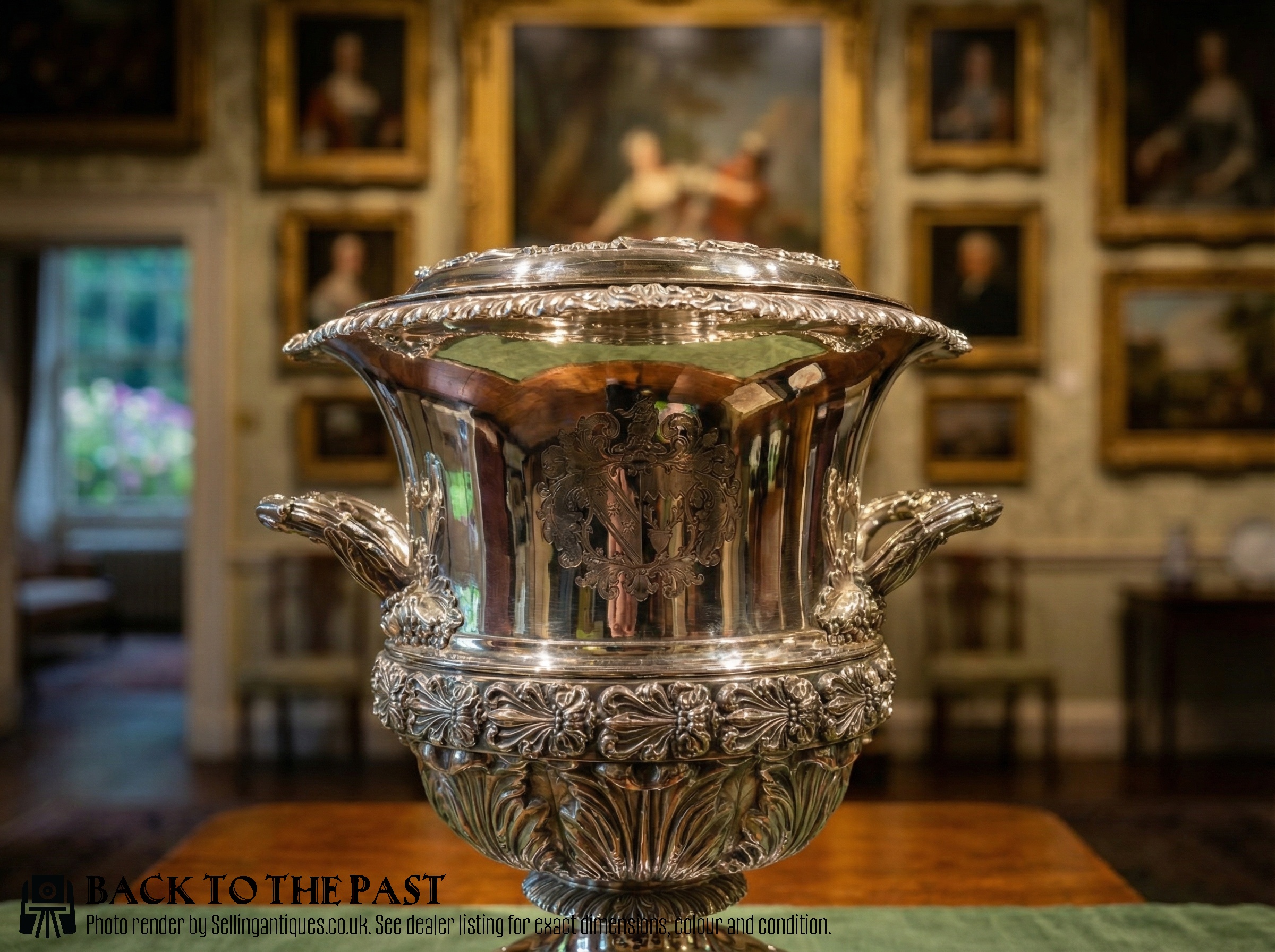
A vintage silver wine bucket serves as a practical vessel for chilling wine and champagne during formal meals. The current selection spans from early nineteenth-century Regency pieces through Edwardian and Art Deco designs up to mid-century examples.
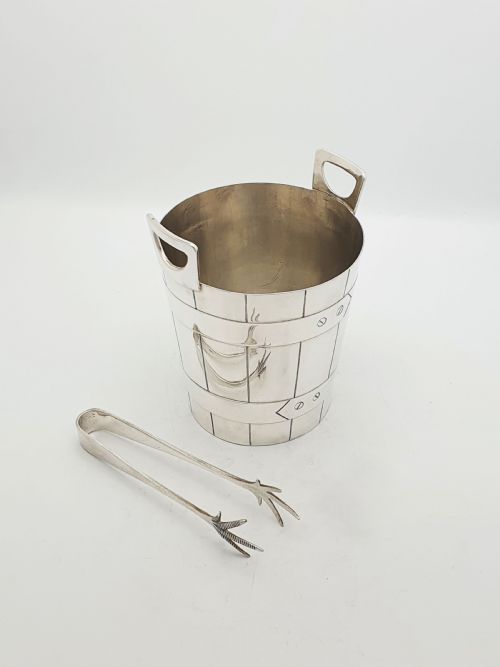
Buyers frequently encounter champagne coolers, ice buckets, and wine coolers produced by major makers and silversmiths. These barware items combine functional utility with distinct historical periods, including the 1900, 1910, 1930, and 1940 decades.
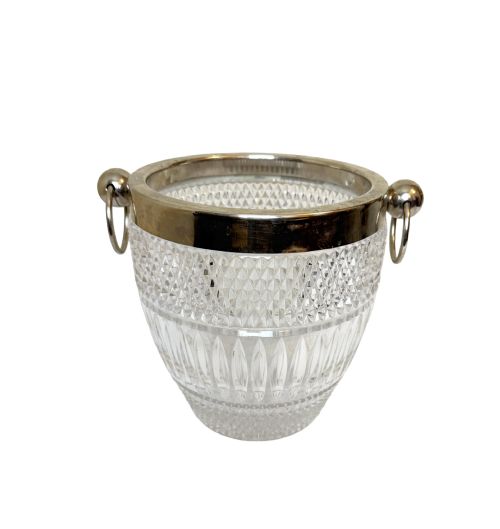
Forms range from heavy lead crystal bodies mounted in silverplate to sleek Art Deco geometric shapes and traditional lion handle French vessels. Each piece reflects the social dining habits and metallurgical capabilities of its specific era of production.
How They Were Made
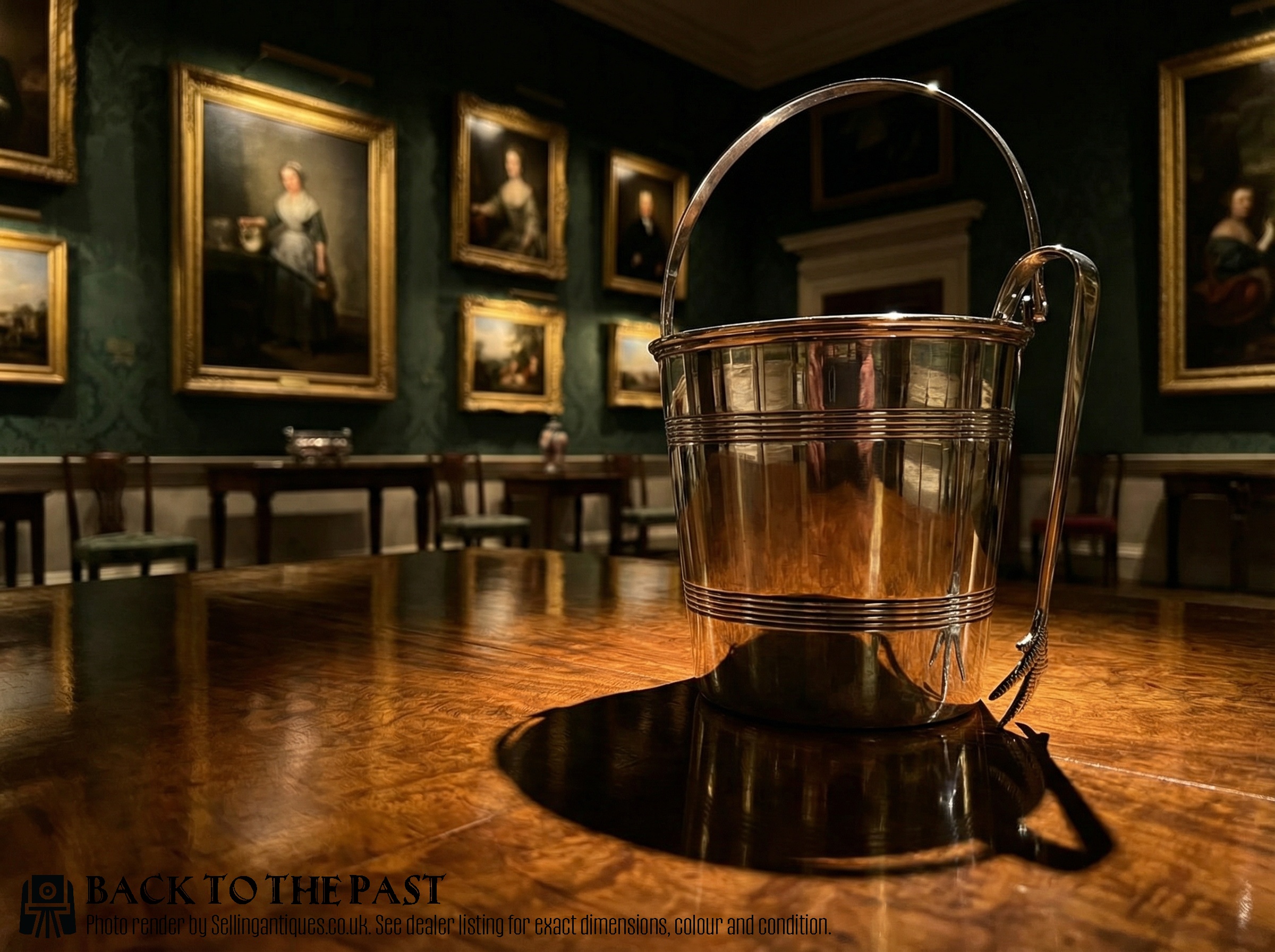
Many items utilise silver plate, nickel silver, or old Sheffield plate applied over base metals such as copper to achieve a lustrous exterior finish. Silversmiths employed traditional metalworking techniques to fuse thin sheets of silver onto copper cores or to plate sturdy base metals.
Makers also combined heavy lead crystal with silverplate mounts to create textured vessels that catch the light. Handles, rims, and decorative bands were cast or stamped separately and soldered onto the main body of the bucket.
Retail Price Guide 2026
Typical UK retail prices for vintage silver wine bucket, calculated from the Sellingantiques database of over a million retail prices indexed since 2003. This retail price guide relies exclusively on Sellingantiques data; no external sources or auction records are used, so the figures do not describe the wider market.
Materials recorded across the archive and current offerings include lead crystal, copper, and old Sheffield plate alongside standard silverplate.
What Varies in Quality
Substantial physical weight often distinguishes premier examples from lighter, mass-produced counterparts, particularly in items combining thick lead crystal with dense silverplate. The integrity of the original plating layer and the crispness of cast decorative details like handles determine the visual impact of the piece.
Attribution to documented makers such as Matthew Boulton, Mappin & Webb, or Christofle elevates a bucket from a standard utility item to a collected design object. The finesse with which joints are finished and the balance of the vessel when filled demonstrate the maker's skill.
Mappin & Webb·Matthew Boulton and Co·Christofle·Christofle Gallia
The Vintage Silver Wine Bucket Glossary
- Silver Plate
- A thin layer of silver bonded to a base metal such as copper or nickel silver. This technique allowed makers to produce luxurious tableware at a lower cost than solid silver.
- Old Sheffield Plate
- An early form of plated metal produced by fusing a sheet of silver to a copper ingot before rolling them together. This method creates a distinctive edge where the copper base becomes visible through wear.
- Lead Crystal
- A heavy glass material containing metallic oxide, known for its high refractive index and clarity. It provides a solid, resonant body for twentieth-century ice buckets.
- Art Deco
- A design style spanning the 1920s and 1930s characterised by streamlined geometric forms and stylised motifs. Bucket designs from this period favour clean lines and architectural silhouettes.
- Regency
- An early nineteenth-century British design era influenced by neoclassical architecture and classical antiquity. Pieces from this period display refined proportions and classical ornamentation.
Frequently Asked Questions
Can I use these buckets for ice?
Most of these vessels were originally designed to hold ice alongside wine bottles, making them suitable for chilling beverages. Heavy lead crystal and silverplate models handle ice cubes without structural issue.
Ensure metal surfaces are dried completely after melting ice to prevent water spotting. Avoid leaving stagnant water inside plated vessels for extended periods.
What is the difference between old Sheffield plate and silver plate?
Old Sheffield plate involves physically fusing a sheet of silver onto a copper base through heat and rolling, an eighteenth- and early nineteenth-century technique. Standard silver plate typically utilises an electroplating process developed later in the nineteenth century.
Under magnification, old Sheffield plate often reveals a thin line of copper along cut edges. This method results in a warmer tone compared to later electroplated wares.
How do I identify an Art Deco bucket?
Art Deco pieces typically feature geometric shapes, stepped rims, and stark vertical lines rather than ornate floral scrolls. Makers such as Christofle Gallia embraced this modernist aesthetic during the 1920s and 1930s.
The handles and mounts on these vessels often show stylized, symmetrical patterns. The overall silhouette prioritizes streamlined industrial elegance over traditional ornamentation.