


Georgian Silver Wine Coasters
Georgian silver wine coasters protect the dining table in style, combining precious metal and turned wood for effortless circulation around the port.
What the pieces are
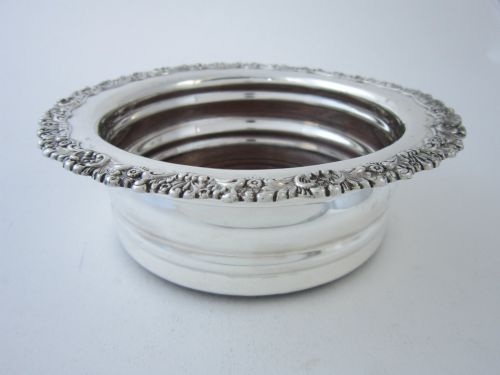
Georgian silver wine coasters are round tabletop accessories designed to hold individual bottles during and after dinner. When you search for georgian silver wine coasters, you encounter practical tableware intended to glide smoothly across polished mahogany without scratching the surface.
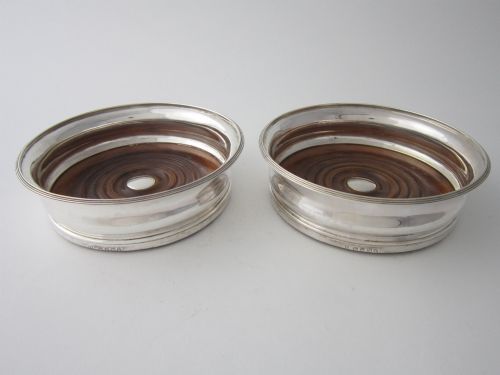
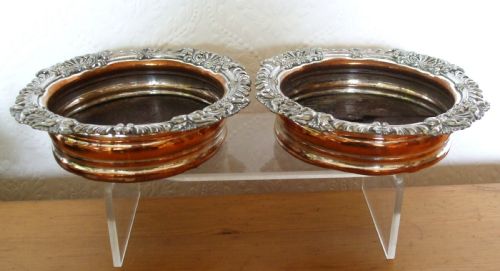
The inventory on this page demonstrates that these items appear primarily as pairs or sets from the nineteenth century. Makers fashioned them to fit standard bottle dimensions of the era, keeping the vintage port or claret within easy reach of every guest.
How they were made
Makers utilised techniques such as silver plating over a copper core, alongside solid casting and hand piercing. The wooden inserts were carefully turned on a lathe and secured to the metal walls with central screws or pins.
Retail Price Guide 2026
Typical UK retail prices for georgian silver wine coasters, calculated from the Sellingantiques database of over a million retail prices indexed since 2003. This retail price guide relies exclusively on Sellingantiques data; no external sources or auction records are used, so the figures do not describe the wider market.
Listings feature items spanning the nineteenth century, incorporating both solid sterling silver and Old Sheffield Plate alongside turned mahogany.
What varies in quality
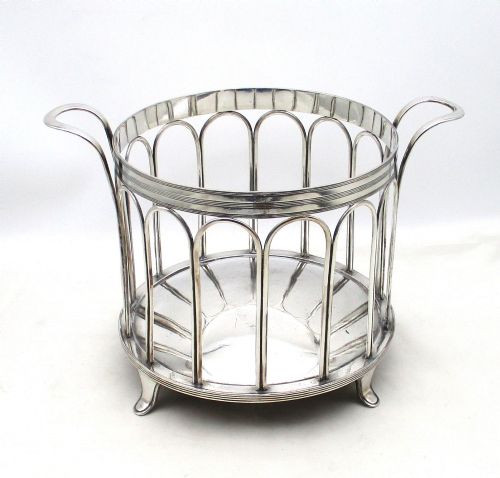
The distinction between standard production and exceptional work lies in the crispness of the chased decoration and the quality of the timber base. Pierced metalwork galleries require precise craftsmanship to remain structurally sound over centuries of handling.
Maker attribution elevates the standing of a piece, particularly when bearing the marks of established workshops. The integration of solid silver mounts with dense, well-figured mahogany separates utilitarian examples from superior collector items.
Matthew Boulton·Barnards·William Allen
The Georgian Silver Wine Coasters Glossary
- Old Sheffield Plate
- A composite material formed by fusing a thin sheet of silver to a thicker copper core. This technique predates modern electroplating and leaves a characteristic copper seam visible on edges.
- Wine Coaster
- A small, raised tray designed to hold a bottle and protect the dining table from drips. They often feature felt or baize on the underside.
- Turned Wood
- Timber shaped on a lathe to create symmetrical round forms. In these pieces, it typically forms the flat or slightly domed base that supports the bottle.
- Armorial
- A heraldic design or coat of arms engraved onto the silver surface. These familial markings indicate original commissioning for a specific household.
Frequently Asked Questions
What are georgian silver wine coasters used for?
These pieces were placed on the dining table to hold wine bottles during dessert when the servants had left the room. They allowed guests to pass the bottle safely around the mahogany surface.
The raised sides kept the bottle upright while the baize or wood underneath protected the polished wood finish from moisture rings and scratches.
How do you tell solid silver from plate?
Solid silver items bear hallmarks indicating the assay office, standard, and maker's mark stamped directly into the metal. Old Sheffield plate often reveals a thin line of reddish copper where the silver layer has worn away along high points.
Examining the weight and looking for hallmarks with a loupe helps clarify the distinction between solid sterling construction and fused plate.
Are they sold individually or in pairs?
Surviving examples frequently appear as matched pairs or larger sets to accommodate multiple bottles of port or red wine on the table. Single pieces do occur, but collectors generally look for pairs to balance the table arrangement.
Matching sets allow hosts to recreate a traditional dining arrangement from the period.
How do you care for wood and silver?
The silver components require gentle cleaning with a non-abrasive polish to maintain the shine without damaging the underlying metal or plate. The wooden bases benefit from occasional waxing to keep the grain nourished.
Harsh chemical dips should be avoided, particularly on plated items where excessive cleaning can strip the silver layer entirely from the copper.