


Silver Plated Bottle Holder
When a search for a silver plated bottle holder brings you here, you are looking at functional dining metalware designed to protect the table while keeping wine, champagne, and spirits close at hand.
Silver Plated Bottle Holder
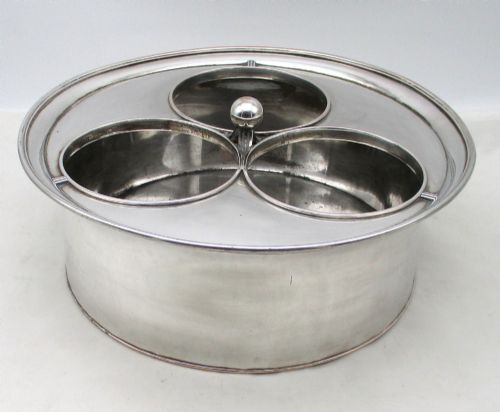
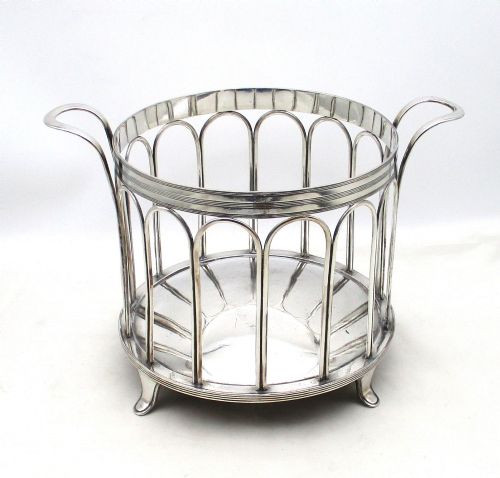
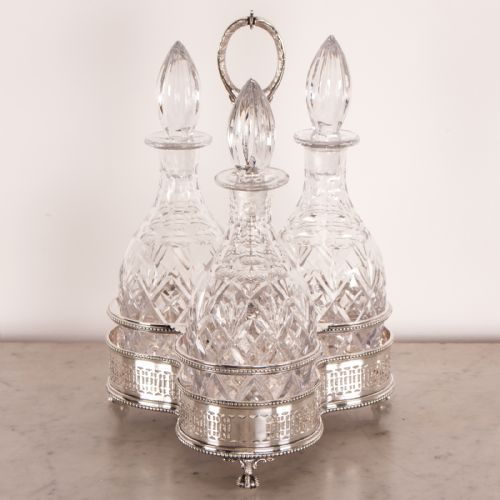
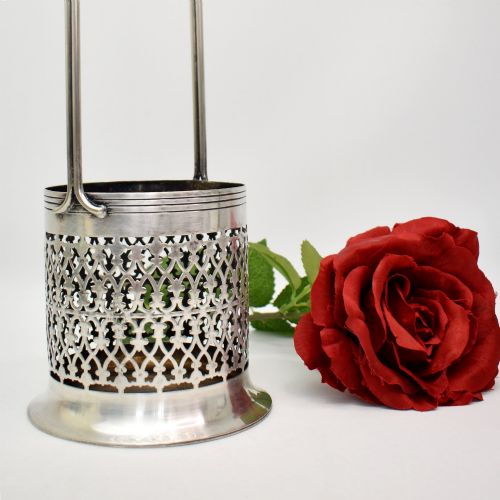
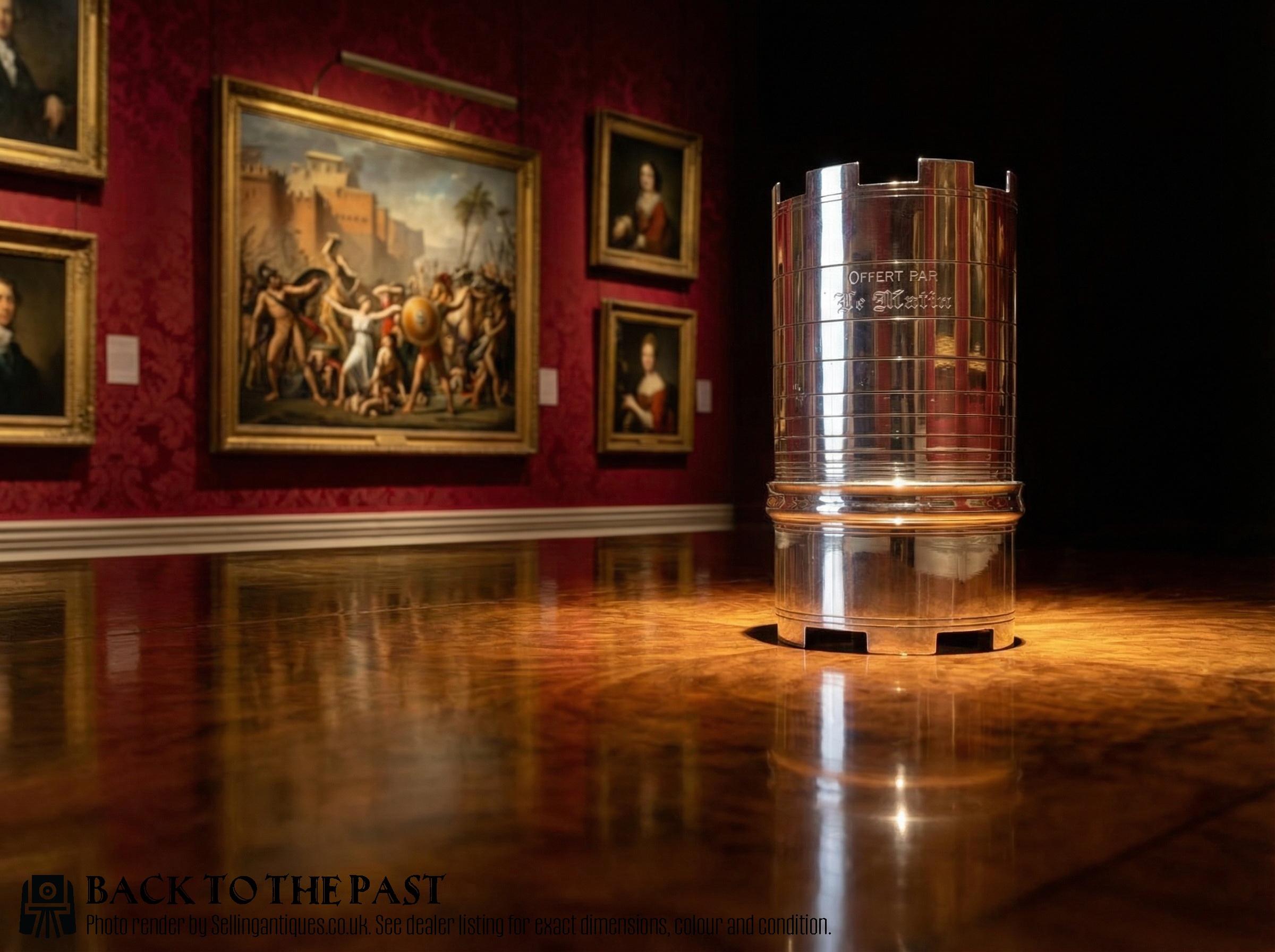
A silver plated bottle holder encompasses single wine coasters, tall champagne buckets, multi-bottle stands, and tantalus frames designed for the dining table or sideboard. These items emerge primarily from Victorian, Edwardian, and early twentieth-century workshops, spanning periods from Old Sheffield Plate through to mass-produced silver plate.
The form varies from low, circular trays intended for individual wine bottles to upright sleeves and frames built to hold multiple decanters, soda syphons, or magnum bottles. Most examples encountered on this page date between the late nineteenth century and the nineteen-twenties, reflecting the formal dining habits of those eras.
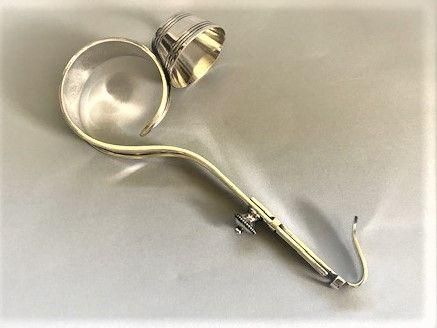
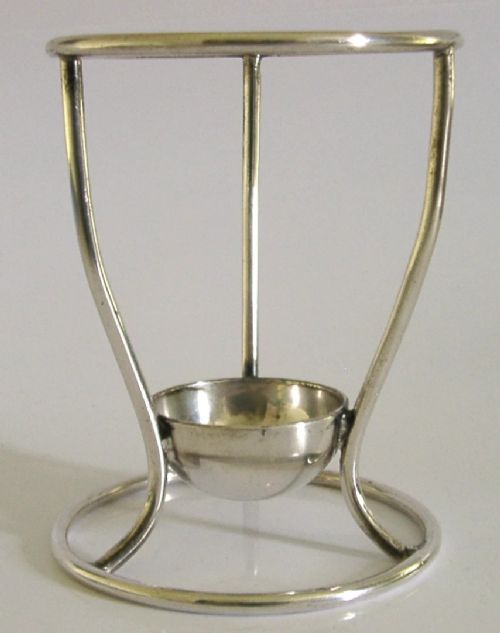
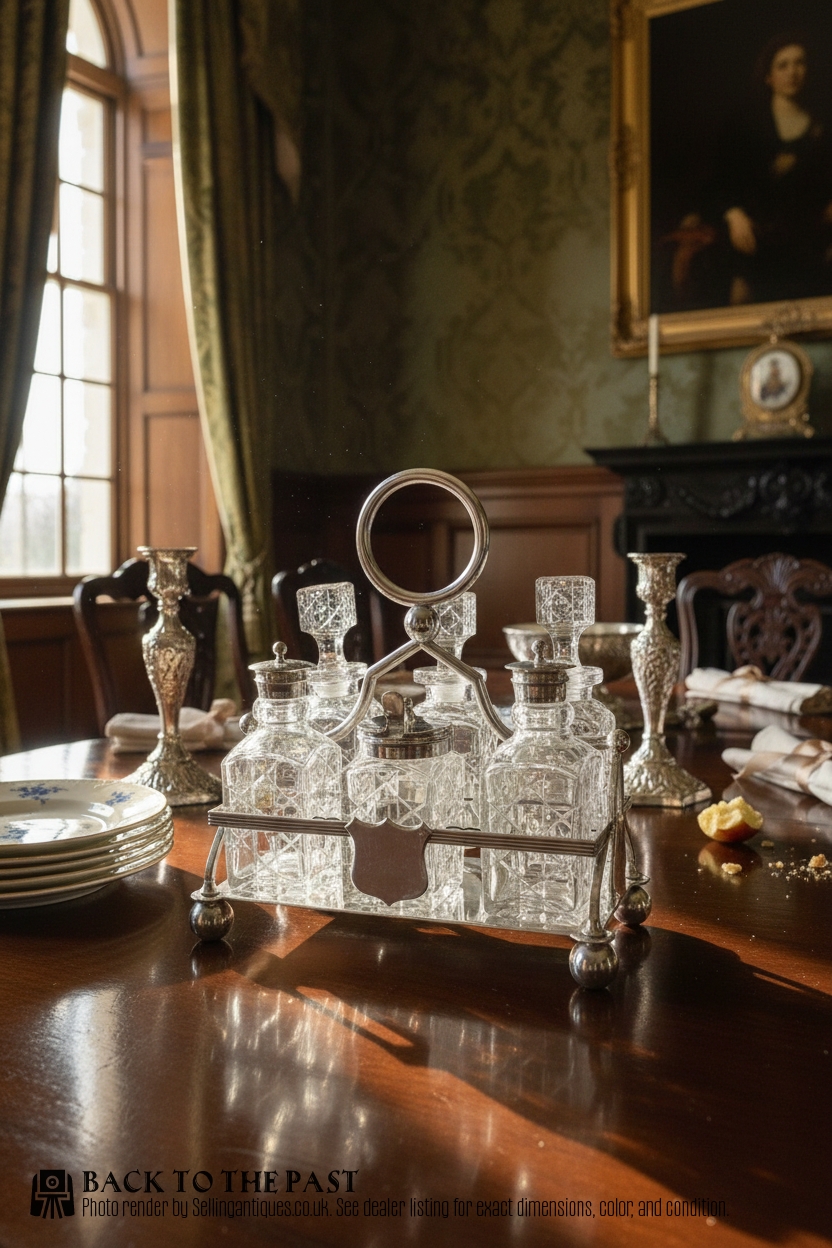
Beyond standard wine coasters, the evidence reveals specialised drinking accessories including cruet sets, desk inkwells, and barware pieces that share the same underlying metal plating techniques. Buyers will find that simpler single-bottle holders and paired coasters appear most frequently among the current selection.
How They Were Made
Makers built these pieces using a base metal such as copper, brass, or Britannia metal, applying a layer of silver through traditional Old Sheffield plating or later electroplating methods. Old Sheffield Plate involves fusing a thin sheet of silver to a thicker copper ingot before rolling and shaping, while electroplating uses an electrical current to bond silver particles to the base metal.
Makers often incorporated secondary materials like turned mahogany bases, oak linings, cut glass inserts, and horn to add weight, insulation, and textural contrast against the reflective silver surface. Piercing, embossing, and applied cast borders provide the decorative detail seen around the rims and galleries of the better examples.
Silver Plated Bottle Holder Retail Price Guide 2026
Typical asking prices for silver plated bottle holder among the pieces listed under this phrase on Sellingantiques today, from the lower quarter to the upper quarter. They describe what is for sale here now, not the wider market.
The selection includes various object types such as wine coasters, cruet sets, barware, decanters, and desk accessories.
What Varies in Quality
Quality rests upon the crispness of the chased or pierced decoration, the thickness of the original silver coating over the base metal, and the integrity of any fitted wooden or glass interior. Pieces featuring heavy cast mounts and maker signatures display superior craftsmanship compared to thin, utilitarian press-formed items.
The preservation of the silver plating itself defines the character of the piece, alongside the quality of auxiliary materials like dense, polished mahogany bases or thick-walled cut crystal inserts. Sound construction in the joints and secure framing of multi-bottle stands separate exceptional dining accessories from everyday utilitarian items.
Walker & Hall·Brook & Son·Christofle·Elkington·Rupert Favell & Co·Matthew Boulton·James Dixon & Sons·Martin Hall & Co·George Bowen & Sons·Mappin & Webb·William Hutton·Henry Wilkinson·Collis & Co·Wade Wingfield Wilkins
The Silver Plated Bottle Holder Glossary
- Old Sheffield Plate
- An early method of fusing silver to a copper base before shaping. This technique creates a distinctive warm tone where the copper occasionally shows through high points.
- Tantalus
- A locking frame holding decanters securely so they cannot be removed without a key. Victorian hosts utilised these to restrict access to spirits by domestic staff.
- Coaster
- A small, flat-bottomed dish designed to hold a wine bottle and protect the dining surface. Many feature felt or wooden bases to prevent scratching.
- Cruet Set
- A matched collection of small glass bottles for condiments mounted within a metal frame. These often share the styling and silver plating of contemporary bottle holders.
- Syphon Stand
- A specialised holder designed to support soda water bottles on the dining table. They frequently incorporate pierced galleries and matching handles.
Silver Plated Bottle Holder: Frequently Asked Questions
What is the difference between a coaster and a wine holder?
Coasters are generally low, flat trays that sit directly on the dining table to move a wine bottle easily between guests without damaging the polished wood surface. Bottle holders and coolers often feature higher sides or sleeves, designed to contain larger champagne bottles or maintain temperature.
While both share silver plated finishes and period decorative styles, the taller holders provide structural support for upright serving or cooling, whereas coasters prioritize smooth lateral movement across the tablecloth.
How do I clean silver plated items safely?
Maintenance requires mild soapy warm water and a soft cloth to remove dust and surface oils without abrading the thin silver layer. Specialised silver dips or harsh abrasive pastes should be avoided, as they strip away the remaining plate over time.
Gentle buffing with a dedicated silver polishing cloth preserves the patina built up over decades of use. Keeping the metal dry after cleaning prevents tarnishing from returning too quickly.
Can I use antique bottle holders for modern bottles?
Most standard wine bottles fit comfortably into nineteenth and early twentieth-century silver plated coasters, though modern champagne and magnum bottles can occasionally exceed older internal dimensions. Measuring the base diameter of contemporary wine bottles ensures they drop cleanly into antique frames.
Tighter receptacles work well for standard Bordeaux and Burgundy shapes, while larger buckets accommodate iced drinks and modern oversized vessels with ease.
How can I tell Old Sheffield Plate from electroplate?
Old Sheffield Plate pieces often reveal a subtle yellowish copper shadow along high points or cut edges where the outer silver layer has worn thin through generations of polishing. Electroplated items, introduced during the mid-nineteenth century, generally display an even silver layer that wears down to a dull grey base metal rather than warm copper.
Examining the weight, construction seams, and any stamped maker marks helps determine which plating technique the workshop utilised.