




Cut Glass Bottle Set
A cut glass bottle set gathers matching glass vessels into a dedicated stand, offering a refined way to serve drinks or display scent.
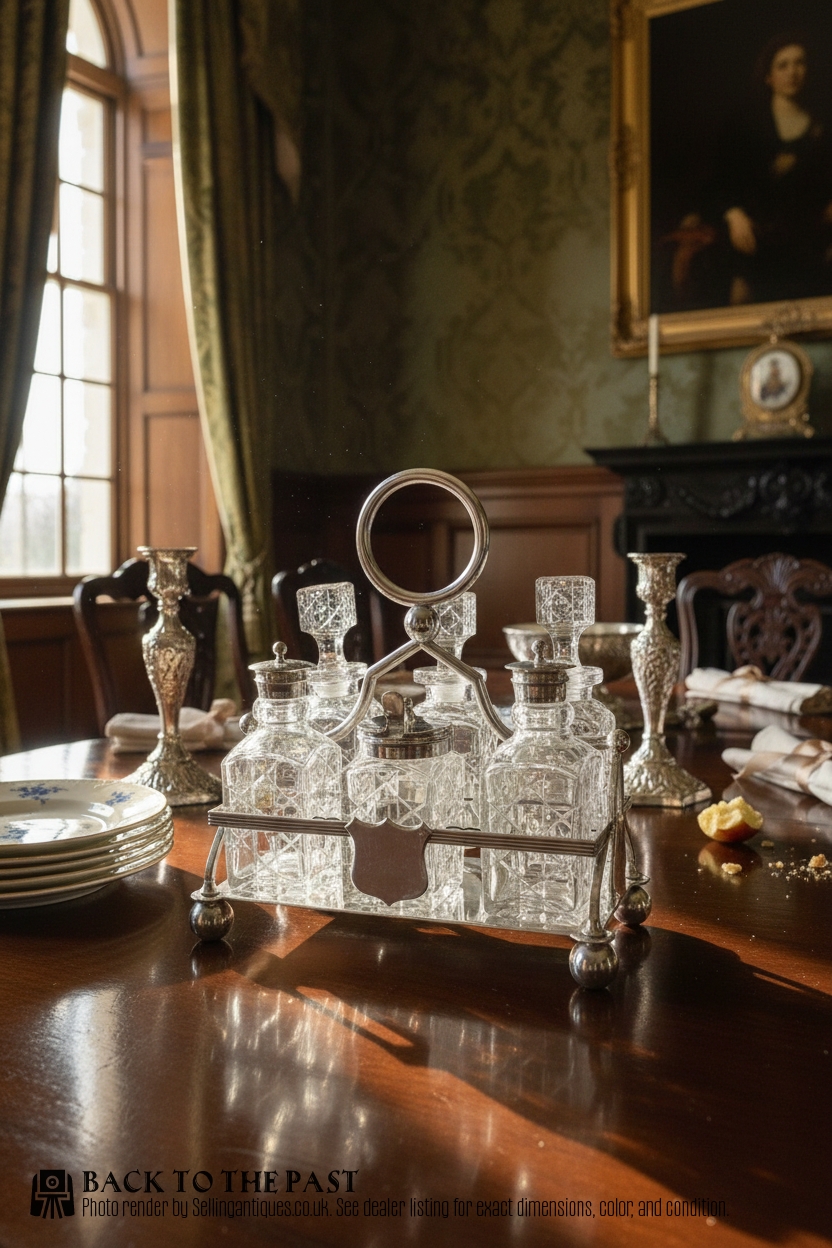
Cut Glass Bottle Set
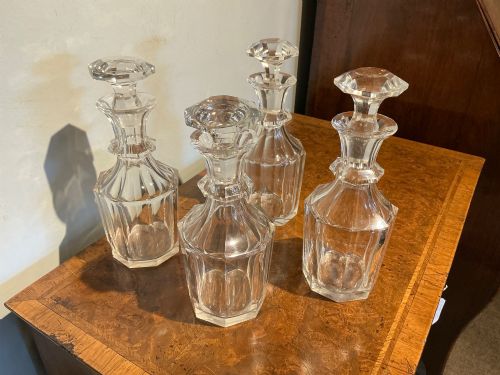
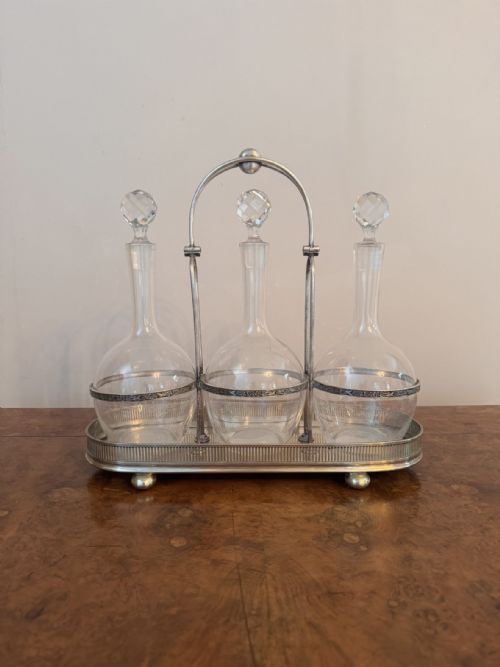
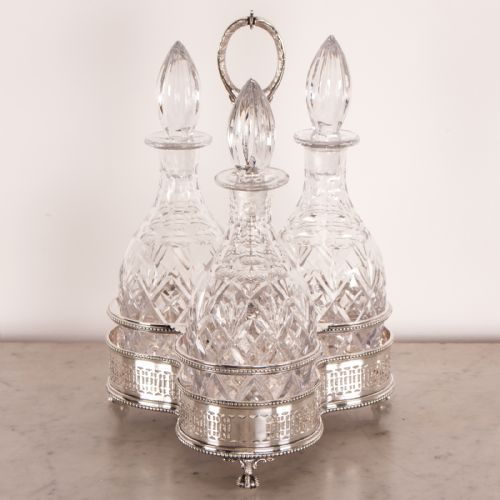
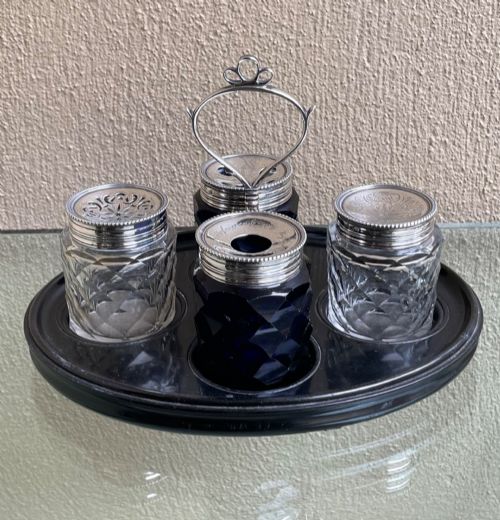
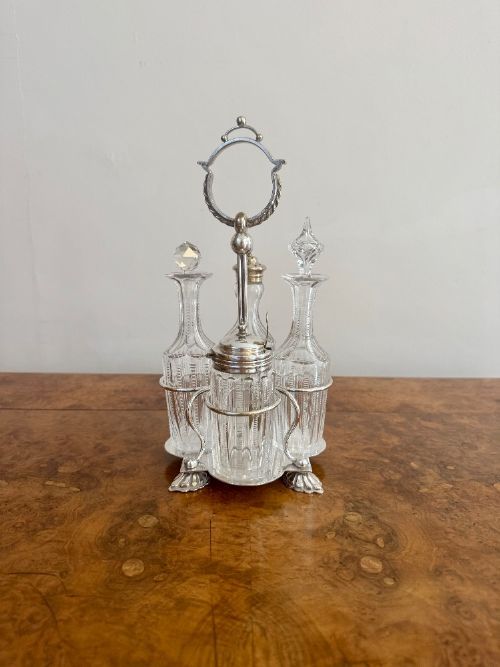
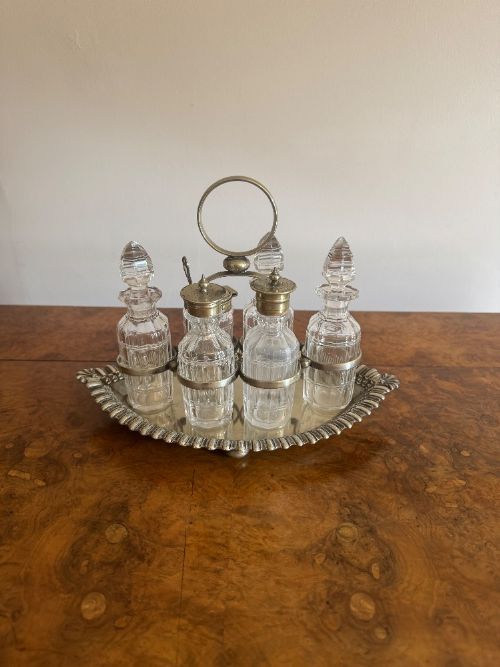
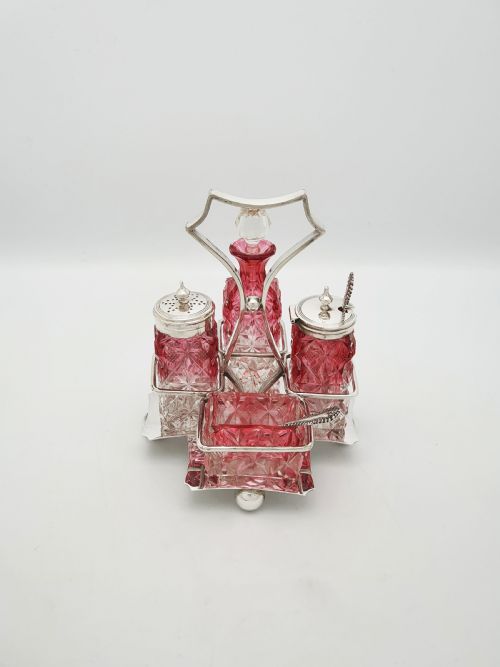
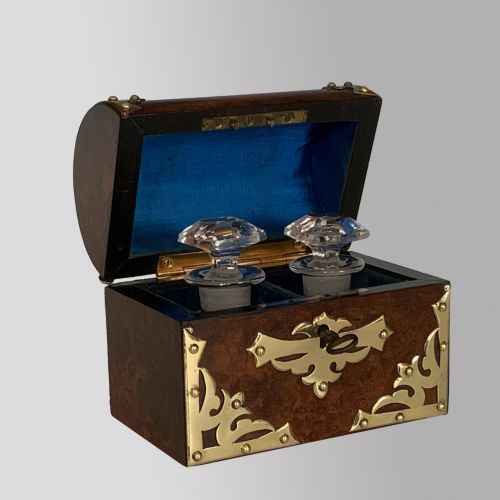
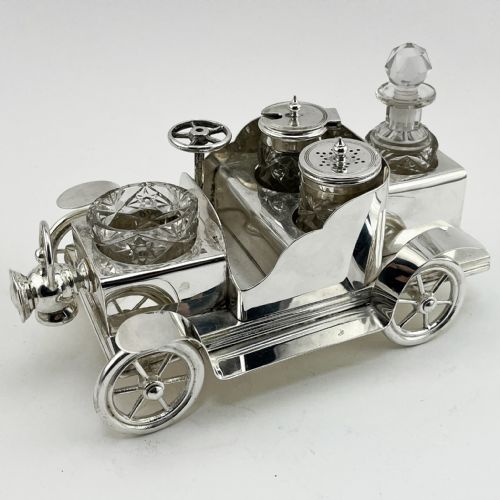
When searching for a cut glass bottle set, a buyer encounters matching glass containers housed in fitted frames, often designed as cruet sets, decanter sets, or tantalus housings. These gatherings range from Georgian dining table condiments to Edwardian liqueur holders and Victorian scent caskets.
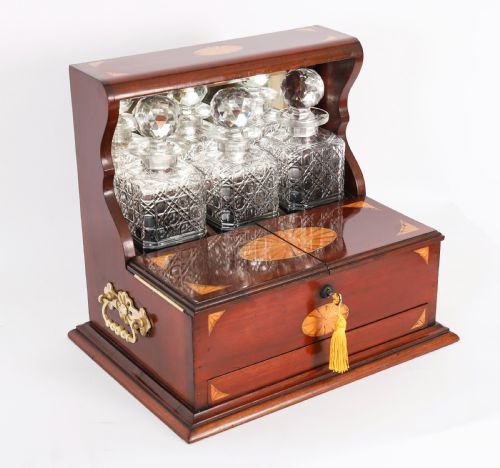
The most common examples on this page are Edwardian silver plated cruet sets holding multiple cut glass bottles, alongside Victorian oak tantaluses fitted with heavy crystal decanters. Tableware and dressing table items dominate the selection, crossing several periods from the Georgian era through to the mid-twentieth century.

How they were made
Makers shaped the bottles using heavy cut glass and lead crystal, applying deep wheel-cut facets, hand-cutting, or optical blowing to catch the light. Coloured glass varieties such as cranberry flashed and amethyst appear alongside clear crystal.
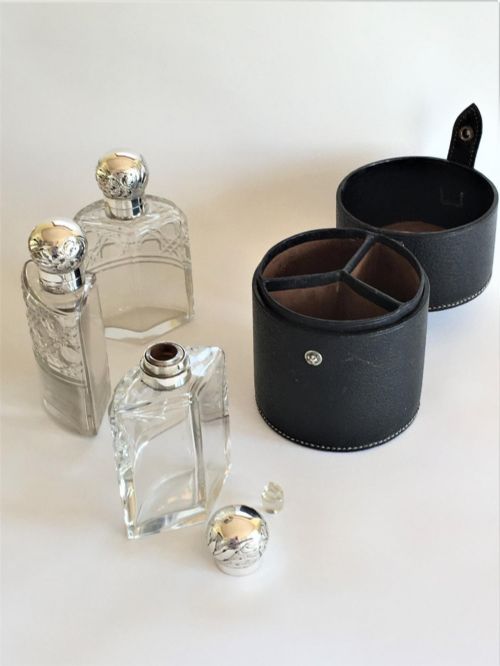
Frames and mounts relied on sterling silver, Old Sheffield plate, silver plate, and brass, paired with fitted wooden cabinetry in oak, walnut, satinwood, and ebony. Many items incorporate fitted leather cases or ormolu mounts to secure the glass securely within the stand.
What varies in quality
Quality rests in the crispness of the glass cutting and the weight of the crystal, where deeper, sharper facets indicate superior workmanship over softer, moulded patterns. The choice of mount also distinguishes the pieces, with substantial sterling silver or heavy Old Sheffield plate marking out finer examples.
The sophistication of the housing influences the overall standard, moving from simple bottle pairings to complex oak marquetry-strung tantaluses and cased travelling trios with fitted hardware. Complete sets retaining all matching original bottles outclass those assembled later from mismatched components.
Walker & Hall·Charles Thomas Fox·James Powell
The Cut Glass Bottle Set Glossary
- Cruet set
- A matched collection of glass bottles or cruets mounted on a stand, traditionally holding condiments, oil, vinegar, or sauces for the dining table.
- Tantalus
- A locking wooden frame that secures decanters behind a bar or handle, preventing unauthorized pouring while displaying the cut glass bottles inside.
- Cranberry flashed
- Glass created by applying a thin layer of red-pink glass over a clear base before cutting through the surface layer to reveal the clear glass underneath.
- Old Sheffield plate
- A composite material formed by fusing a thin sheet of silver to a thicker copper base, utilised in early stands and mounts before electroplating became common.
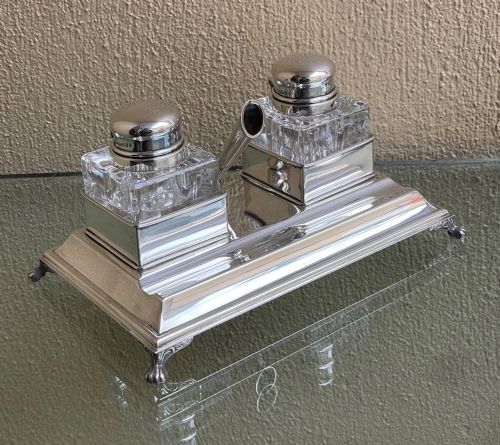
- Inkstand
- A desk accessory holding ink bottles and pen trays, often mounted in silver and ebony or solid silver for use in correspondence.
Cut Glass Bottle Set: Frequently Asked Questions
What is a cut glass bottle set used for?
These sets served various functions across dining rooms and dressing tables, holding table condiments, oils, vinegars, spirits, or perfumes. They kept matching vessels organised together in a portable stand or locking frame.
Dining sets sat on the table or sideboard during meals, while smaller tantalus frames and scent caskets protected liqueurs or fragrances in the drawing room.
How do I tell Victorian sets from Edwardian sets?
Victorian examples tend to feature darker woods like oak and walnut, often with heavy ormolu mounts, robust silver plating, and intricate marquetry. They lean towards formal dining arrangements and substantial lockable tantaluses.
Edwardian pieces frequently display lighter oak frames, extensive silver-plated cruet stands, and delicate cranberry flashed glass or multifaceted crystal bottles. The styling shifts slightly towards brighter dining and dressing table accessories.
Are the bottles in these sets original?
Most surviving sets retain their matching fitted bottles, especially those housed in specialised cruet frames and locking wooden tantaluses. Each bottle was ground to fit its specific slot in the stand.
Checking the facet patterns and glass tint across all bottles helps confirm that they belong to the same original production rather than being assembled from later replacements.
How should I clean a silver plated cruet set?
Silver plated stands require gentle cleaning with a soft cloth and a specialised silver polish formulated to preserve the plated surface. Harsh abrasives will wear away the thin silver layer over the underlying metal.
Glass bottles and decanters can be washed separately in warm soapy water, avoiding extreme temperature changes that might crack older blown or cut crystal.