
Antique Condiment Set
An antique condiment set brings period elegance to the table, combining silver, glass, and wood for practical seasoning.

What an antique condiment set is
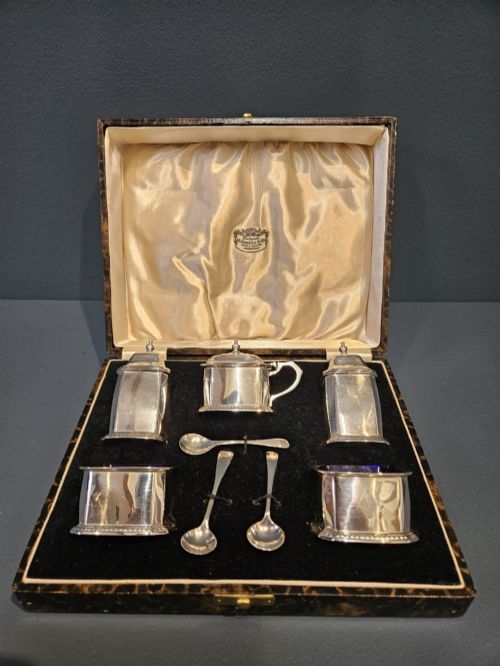
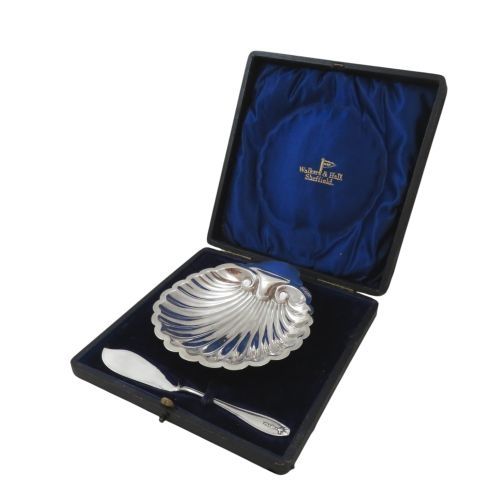
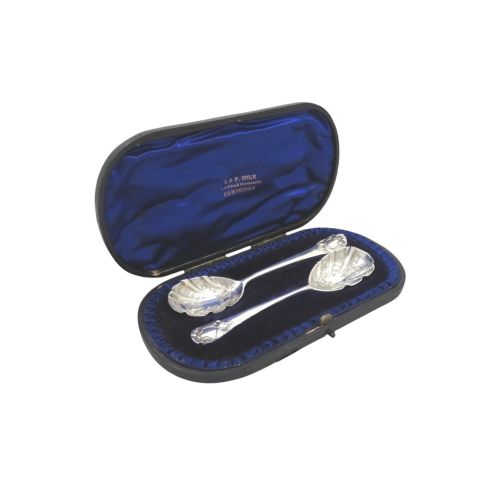
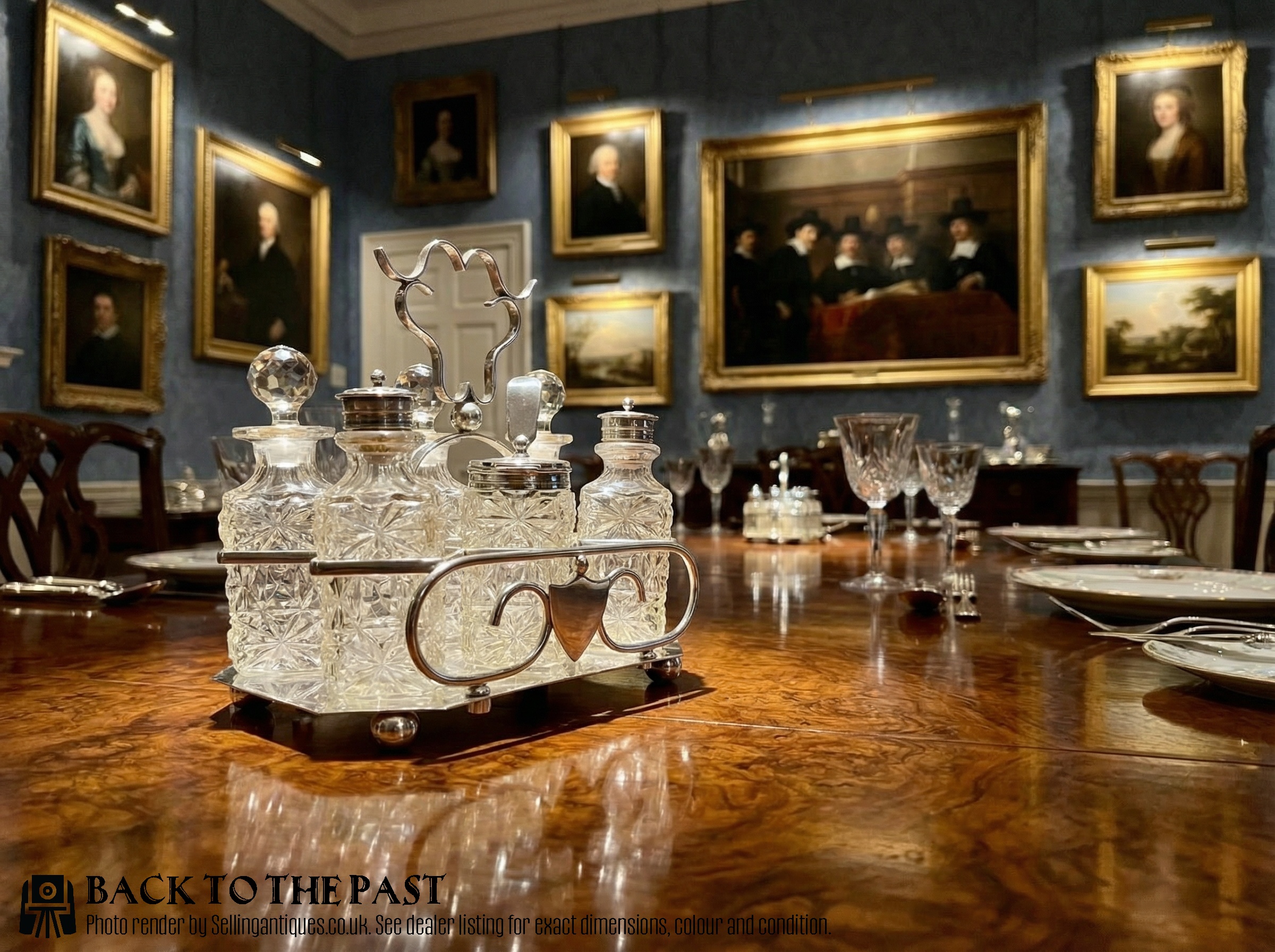
An antique condiment set gathers salt cellars, cruet stands, and relish caddies into a single tabletop arrangement. These items serve salt, pepper, mustard, and sauces using fitted glass bottles and small spoons.
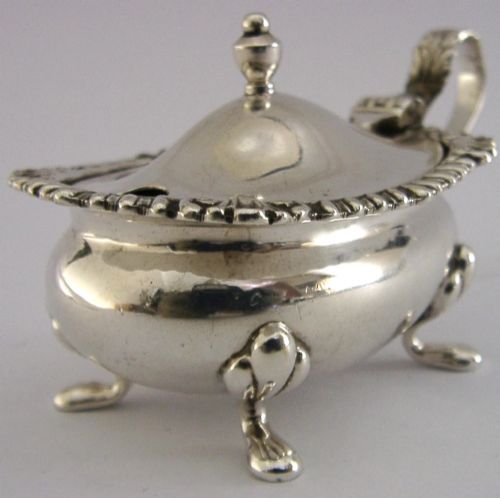
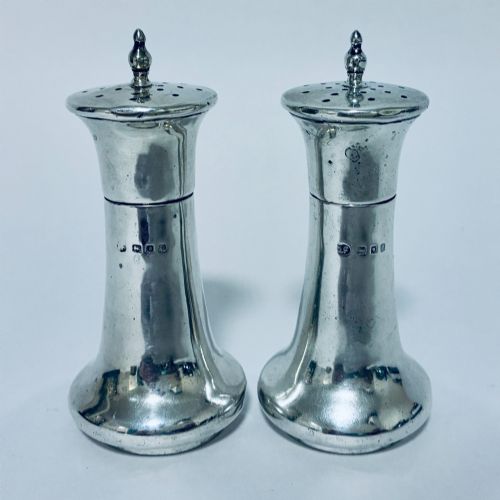
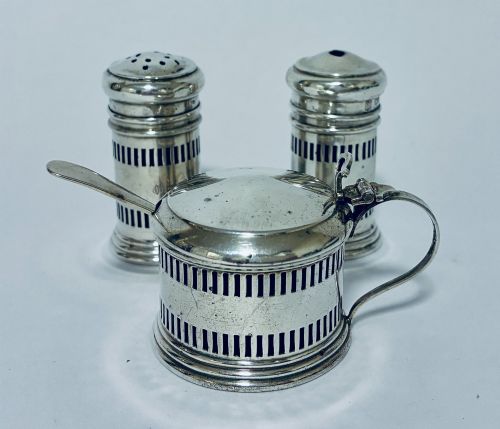
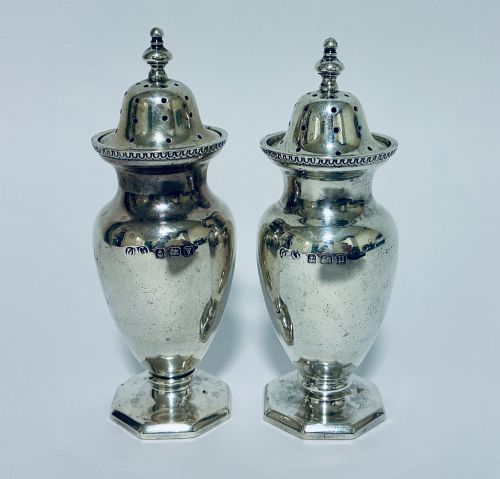
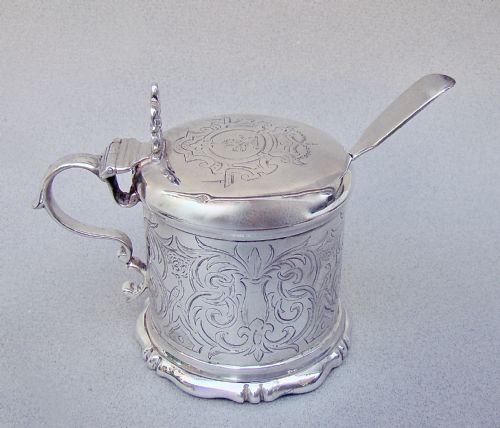
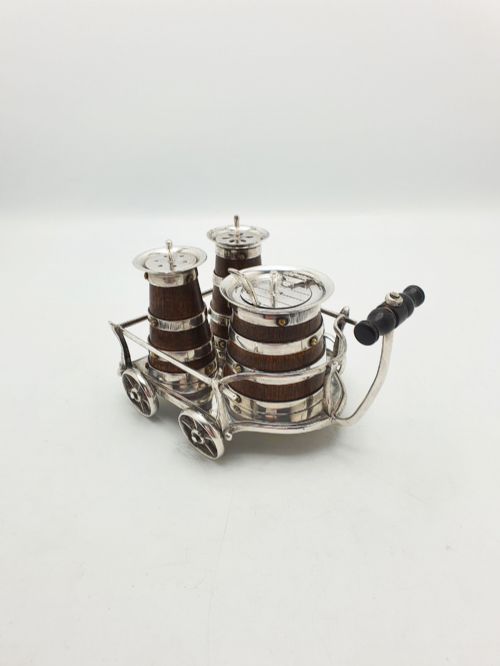
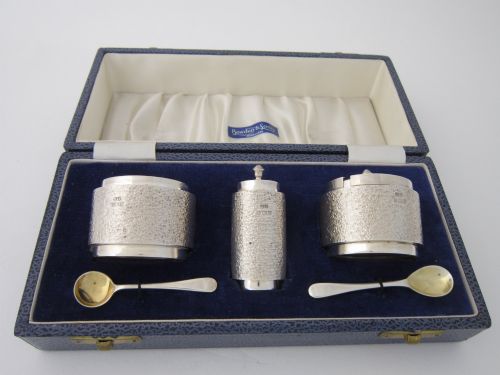
The pieces on this page span the eighteenth, nineteenth, and twentieth centuries, taking forms from Georgian ebonised stands to Edwardian silver plate and Art Deco salt cellars. Cruet sets and condiment stands form the core of what you will encounter.
Makers and workshops range from Birmingham silversmiths to novelty car designs and carved Black Forest bear figures. Buyers find both fitted cased sets and open table frames designed for daily dining.
How they were made
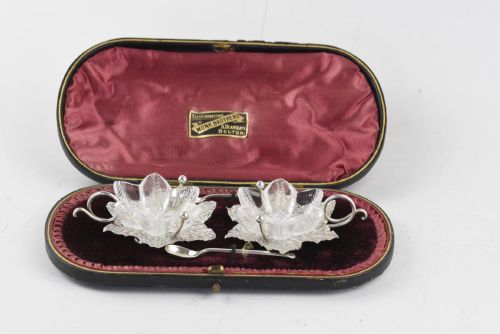
Silversmiths shaped sterling silver and silver plate into frames and mounts, while glassblowers produced cut glass, cranberry glass, and cobalt blue glass liners. Carved wood appears in Black Forest pieces and ebonised stands.
Techniques combine metal casting and plating with hand-cutting glass bottles and carving wooden figures. Fitted cases house multi-piece sets alongside individual glass inserts.
Retail Price Guide 2026
Typical UK retail prices for condiment set, calculated from the Sellingantiques database of over a million retail prices indexed since 2003. This retail price guide relies exclusively on Sellingantiques data; no external sources or auction records are used, so the figures do not describe the wider market.
A nineteenth-century carved wooden bear holds your mustard, bringing forest wildlife directly to the dining table.
What varies in quality
Quality rests in the weight of the silver or silver plate, the clarity of the cut glass or coloured glass liners, and the integrity of the fitted stand. Maker attribution to firms like Elkington & Co or Walker & Hall marks higher standard production.
The complexity of the set, from simple salt cellars to multi-bottle cruet stands with novelty or carved elements, distinguishes standard utility ware from finer dining accessories.

Walker & Hall·Elkington & Co·Henderson & Sorley·Ashbury
The Antique Condiment Set Glossary
- Cruet stand
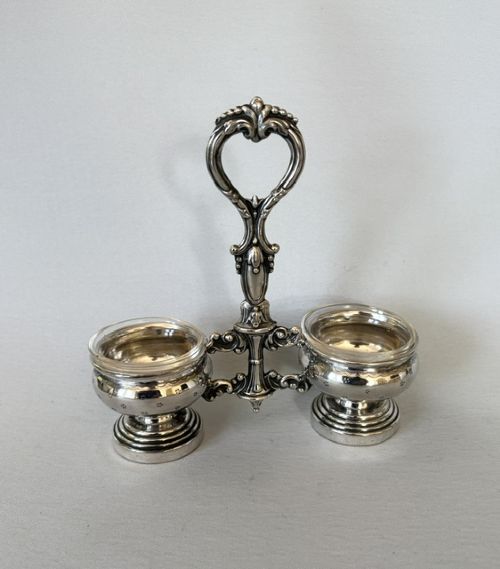
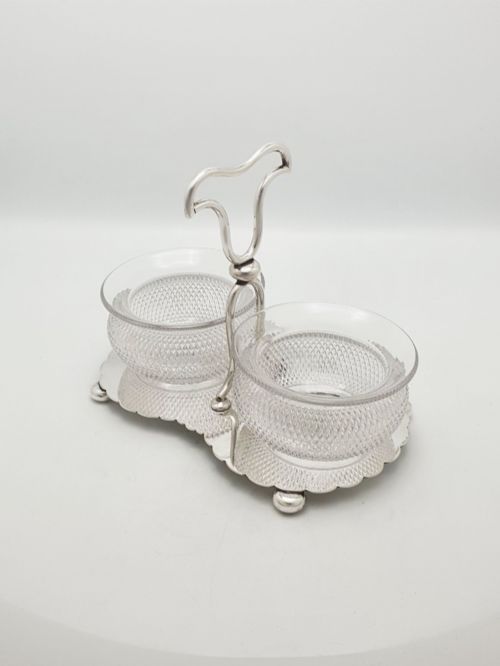
- A frame holding glass bottles for vinegar, oil, and condiments at the dining table. These frames often feature a central carry handle and silver plated or sterling silver construction.
- Salt cellar
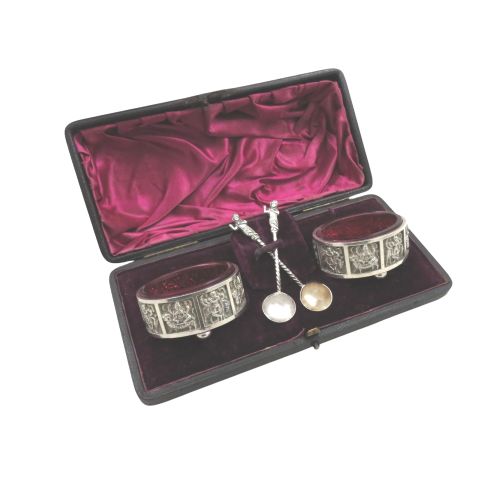
- A small open bowl or vessel used to hold salt before the invention of free-flowing table salt. They frequently include removable cobalt glass liners and matching spoons.
- Silver plate
- A base metal coated with a thin layer of silver through electroplating or old Sheffield plating techniques. This method allowed makers to produce durable tableware.
- Cranberry glass
- A rich pinkish-red glass created by adding gold chloride to the molten glass batch. It appears frequently in Edwardian and Victorian cruet bottles.
- Black Forest carving
- Detailed wooden sculpture originating from the Swiss and German border region, often depicting animals like bears holding condiment containers.
Frequently Asked Questions
What is an antique condiment set used for?
These sets hold and present table seasonings such as salt, pepper, mustard, oil, and vinegar during meals.
Historically, they sat at the centre of the dining table for guests to serve themselves.
How do I date a silver condiment set?
Sterling silver pieces carry Birmingham, Sheffield, Glasgow, or Chester hallmarked date letters that pinpoint the exact year of assay.
Style indicators like Art Deco geometric lines or Victorian florid engraving also help narrow the period.
Are glass liners original to the set?
Original glass liners fit snugly into the metal frames without excess movement or gaps. Cobalt blue glass and cranberry glass were typical choices for Edwardian and Victorian pieces.
Matching colour and exact fit confirm authenticity.
How do I clean silver plated cruet stands?
Use a soft cloth and a gentle silver polish formulated for plated items to maintain the shine without wearing through the metal layer.
Remove glass bottles before cleaning to protect the glass and wooden components.