


Edwardian Cruet Stand
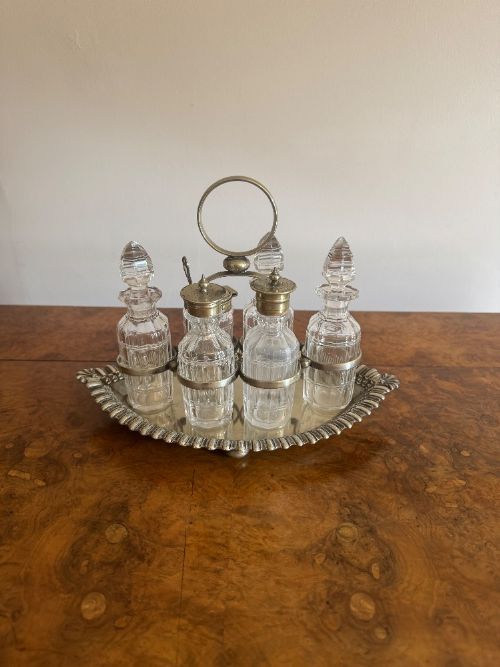
An edwardian cruet stand brings table service together, holding bottles and jars in a single frame.
Edwardian Cruet Stand
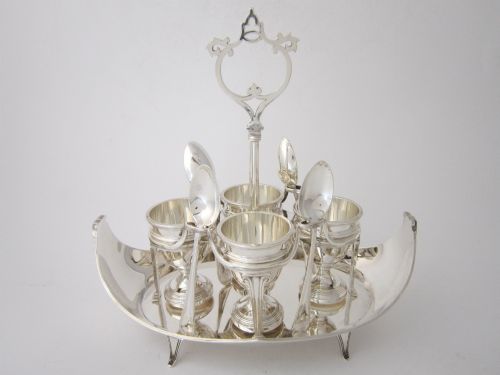
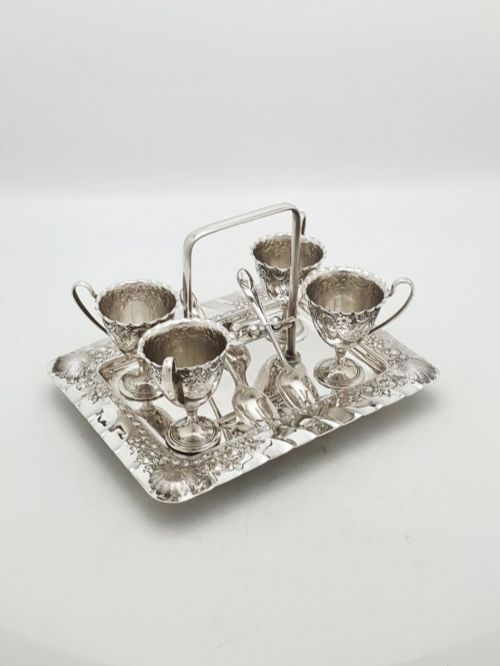
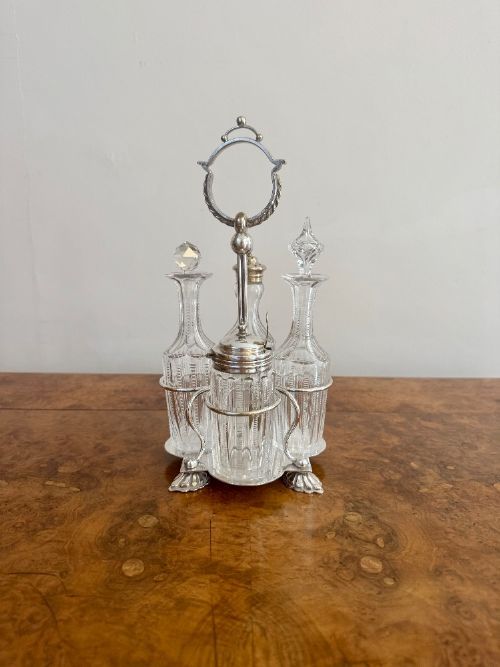
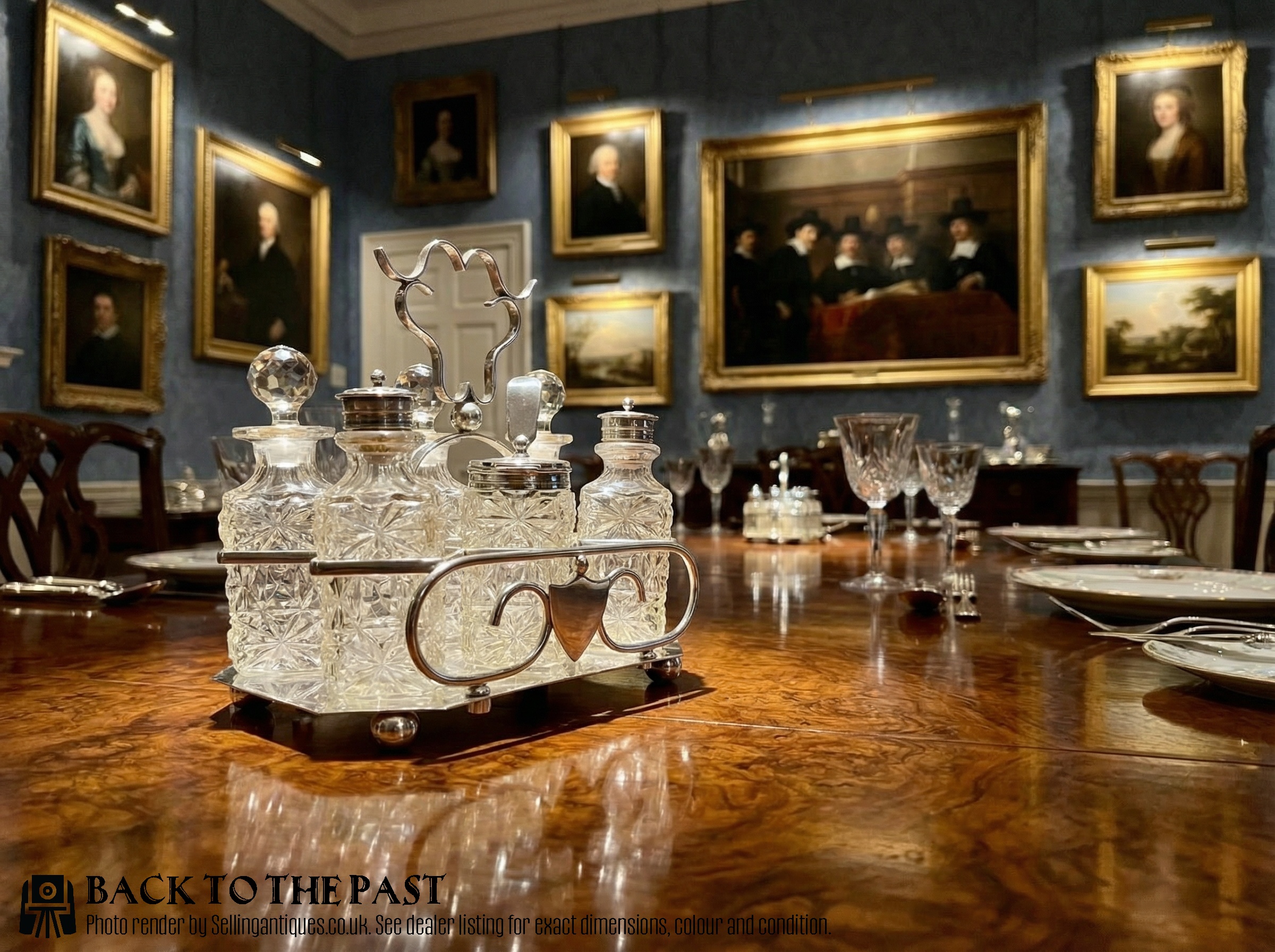
The edwardian cruet stand appears in several distinct forms, most commonly as a silver plated frame holding multiple cut glass bottles for condiments or as an egg cruet designed for breakfast service. These pieces originate predominantly from the Edwardian period, alongside related examples spanning the late Victorian era to the 1920s.
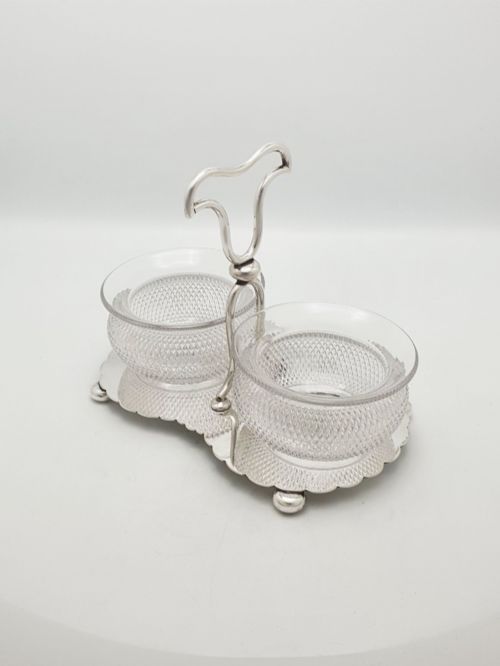
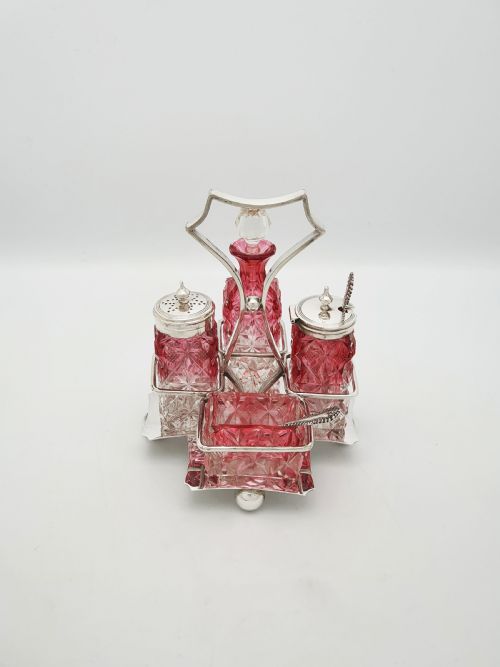
Beyond standard condiment sets and egg cruets, the selection includes specialised serveware such as decanter stands, bottle holders, and novelty figural pieces. Many incorporate twin glass bowls, cranberry flashed glass, or larger oval frames accommodating up to eight individual components.
The core function remains table organisation, keeping oil, vinegar, mustard, and pepper together in a portable stand fitted with a central handle. Buyers encounter both cased sets intended for gifting and everyday table stands bearing the marks of active domestic dining.
Materials and construction
Makers constructed the frames using silver plate, electroplated nickel silver, and sterling silver, often applying decorative embossing or casting to the metal handles and borders. This metalwork supports the weight of the bottles while providing a polished surface for the dining table.
The accompanying vessels utilise cut glass, crystal, and cranberry glass, shaped to fit securely into the silver plated compartments of the stand. These glass elements display precise wheel cutting and flasings that catch the light during service.
Listings feature silver plate, cut glass, crystal, and cranberry glass across Victorian, Edwardian, and Art Deco styles.
Assessing quality and craftsmanship
Quality rests in the weight of the metal frame and the integrity of the electroplating, where superior examples maintain an even, durable coating over the underlying base metal. Finer stands exhibit crisp embossing and substantial handles that remain rigid when lifted.
The matching glass vessels dictate overall excellence, with heavier cut glass and crystal inserts showing sharp, clean facets rather than soft mould lines. Complete sets retaining their original matching bottles command greater interest than those assembled later from mismatched parts.
Walker & Hall
The Edwardian Cruet Stand Glossary
- Cruet set
- A collection of glass bottles or jars held in a metal stand for sauces, oils, and condiments at the dining table.
- Egg cruet
- A specialised stand configured specifically to hold boiled eggs alongside matching spoons and condiment cups for breakfast service.
- Silver plate
- A layer of pure silver bonded to a base metal such as nickel silver, widely utilised for domestic tableware.
- Cranberry glass
- A rich red glass produced by adding gold chloride to the molten batch, frequently seen in Edwardian table pieces.
- Condiment stand
- An open metal frame designed to hold open pots or shakers rather than enclosed stoppled bottles.
Edwardian Cruet Stand: Frequently Asked Questions
What is an edwardian cruet stand used for?
An edwardian cruet stand serves as a tabletop caddy for holding seasoning bottles, oil, vinegar, and sauces during meals. It keeps condiments organised and allows hosts to pass multiple flavours around the table easily.
In period dining, these stands sat prominently in the centre of the table or on sideboards. Different configurations accommodated breakfast eggs or evening sauces depending on the household needs.
How do I clean the glass bottles safely?
Wash the glass inserts in warm, soapy water using a soft cloth or bottle brush to reach the interior corners. Avoid harsh abrasives that might scratch the surface or dull the clarity of the cut glass.
Remove the glass from the metal frame before cleaning to prevent moisture from becoming trapped in the silver plated mounts. Dry every piece thoroughly before placing them back into the stand.
Are all bottles in a set original?
Many sets survive with replacement bottles gathered over decades of use, as glass is easily chipped or broken. Inspect the fit and the pattern of the glass cuts to determine if the pieces match the style of the frame.
Matching glass weight, tint, and cutting patterns indicate an original assembly. Slight variations in the glass do not diminish daily utility but matter for strict collectors.
How do I care for the silver plate?
Polish the metal frame gently using a specialised silver cloth or mild cream designed for plated items. Vigorous scrubbing can wear away the thin silver layer over the underlying base metal, particularly on raised embossed details.
Store the stand in a dry environment away from direct sunlight to minimise tarnishing. Regular, gentle wiping maintains the shine without requiring heavy chemical cleaning.