


Silver Oil Vinegar Stand
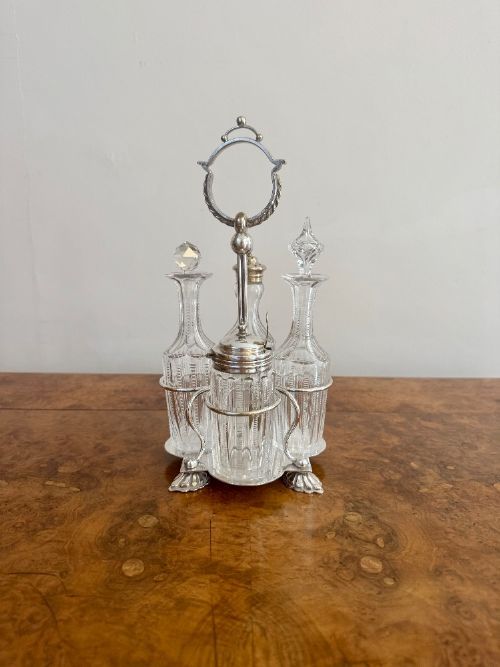
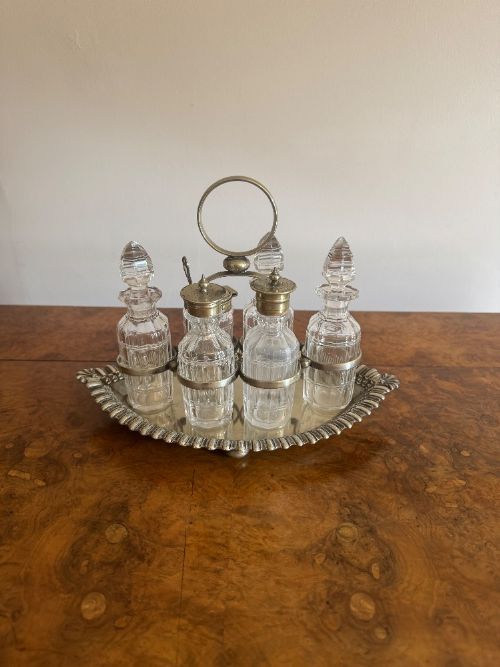
A silver oil vinegar stand holds the table condiments of past centuries, combining heavy glass bottles with metal frames.
Silver Oil Vinegar Stand
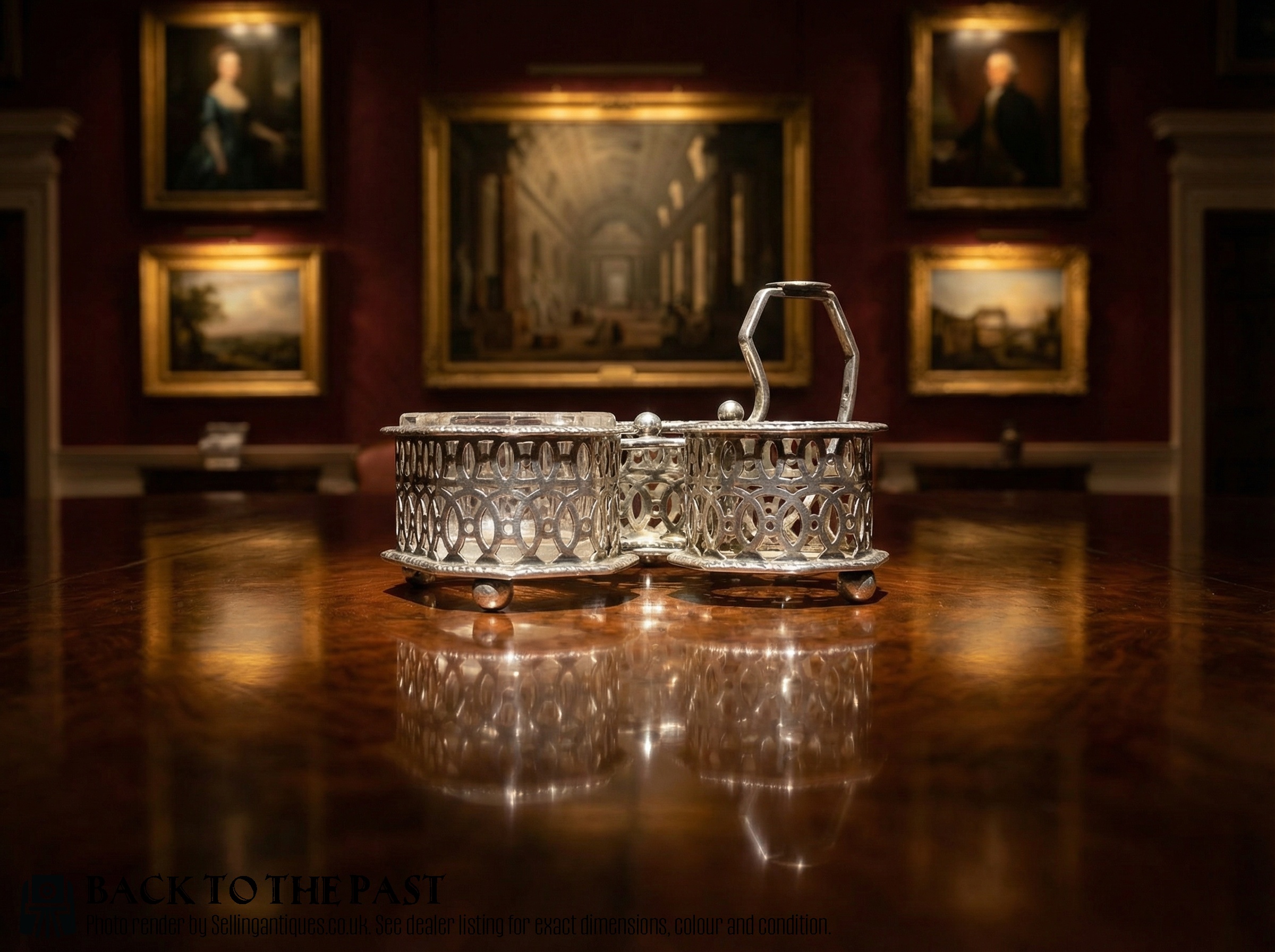
A silver oil vinegar stand gathers glass bottles and jars into a single metal frame for the dining table. When searching this phrase, buyers encounter examples ranging from Georgian designs to Edwardian and Victorian silver plated sets.
The most common pieces on this page are Edwardian and Victorian silver plated cruet sets holding multiple cut glass bottles. These domestic items served dining rooms by keeping oil, vinegar, and seasonings ready at hand.
Earlier Georgian pieces appear in sterling silver alongside George III ebonised wood stands with silver mounted glass bottles. Makers built these stands to hold anything from four to eight bottles depending on the dining requirements of the period.
Materials and construction
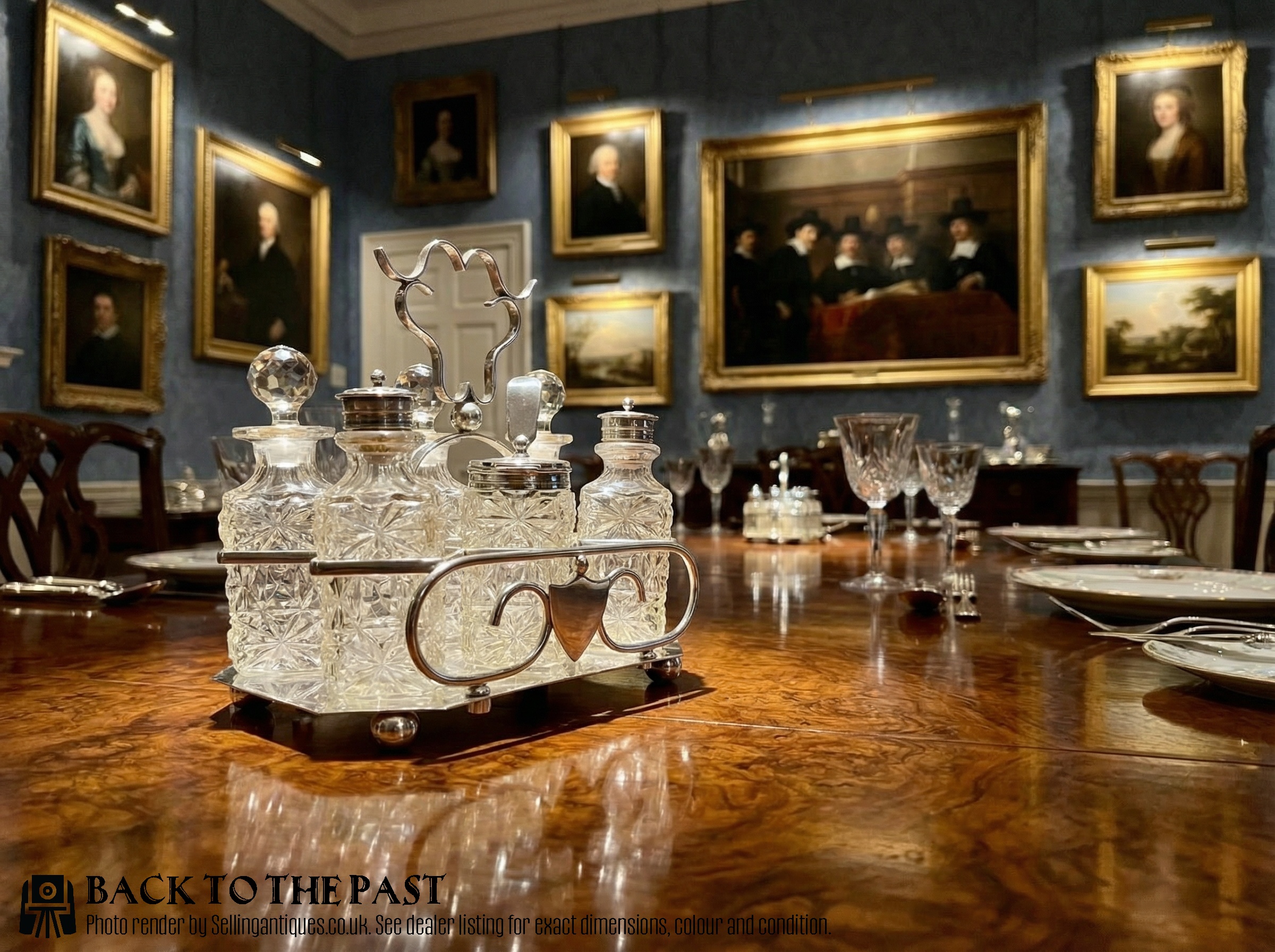
Silversmiths and manufacturers formed the frames using sterling silver or applied silver plate over base metals. Some Georgian pieces incorporate ebonised wood stands fitted with metal mounts.
The accompanying bottles and casters rely on cut glass and clear glass production techniques. Craftsmen fitted these glass vessels with silver mounts or stoppers designed to pour liquids cleanly.
Silver Oil Vinegar Stand Retail Price Guide 2026
Typical asking prices for silver oil vinegar stand among the pieces listed under this phrase on Sellingantiques today, from the lower quarter to the upper quarter. They describe what is for sale here now, not the wider market.
Materials found across the inventory include sterling silver, silver plate, cut glass, and ebonised wood.
Judging the work
Quality separates through the crispness of the metalwork and the integrity of the glass bottles. Early Georgian pieces and marked maker items demonstrate superior weight and refined chasing on the frame.
The completeness of the set dictates much of its standing. Retaining the original matching cut glass bottles and stoppers distinguishes a well-preserved example from one assembled later.

Mappin Brothers·Walker & Hall·Charles Thomas Fox·Elkington & Co·Hester Bateman·Wade Wingfield Wilkins·William Hutton & Sons·Thomas Bradbury & Son·Christofle
The Silver Oil Vinegar Stand Glossary
- Cruet set
- A collection of glass bottles or jars mounted in a frame for holding condiments at the table.
- Caster
- A small jar with a perforated top used for shaking sugar or dry spices over food.
- Silver plate
- A layer of silver fused to a base metal foundation to give the appearance of solid silver.
- Cut glass
- Glass decorated by cutting facets or patterns into the surface using a wheel.
- Ebonised wood
- Timber stained or treated to resemble heavy, black ebony wood.
Silver Oil Vinegar Stand: Frequently Asked Questions
What did they put in a silver oil vinegar stand?
These stands held bottles for olive oil and vinegar alongside containers for mustard, pepper, and salt. Diners used them to season food directly at the table.
Larger sets included casters for sugar and additional cruets for specialty sauces.
How do I date a cruet stand?
Dating relies on hallnina marks stamped into the silver or silver plate, combined with the overall style of the frame. Georgian pieces show different handle designs and feet compared to Victorian or Edwardian examples.
The shape of the cut glass bottles also helps confirm the manufacturing era.
Are all the bottles usually original?
Many sets lost individual bottles over generations of use, leading to replacement glass vessels being matched to the frame later. Checking whether the cut glass patterns match across all bottles indicates original composition.
Frames designed for specific numbers of bottles often show fitted partitions that reveal missing pieces.
How should I clean silver plated stands?
Silver plate requires gentle cleaning with a soft cloth and a specialised silver polish that removes tarnish without wearing away the thin metal layer. Harsh abrasives will strip the plating entirely.
Glass bottles wash safely in warm soapy water once removed from the metal frame.