


Silver Condiment Stand
These silver condiment stand examples organise table seasonings cleanly, offering sturdy frames and fitted bottles that suit daily dining.

What They Are
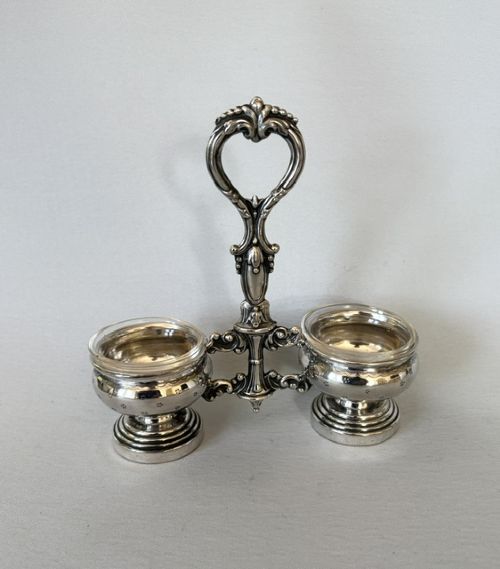
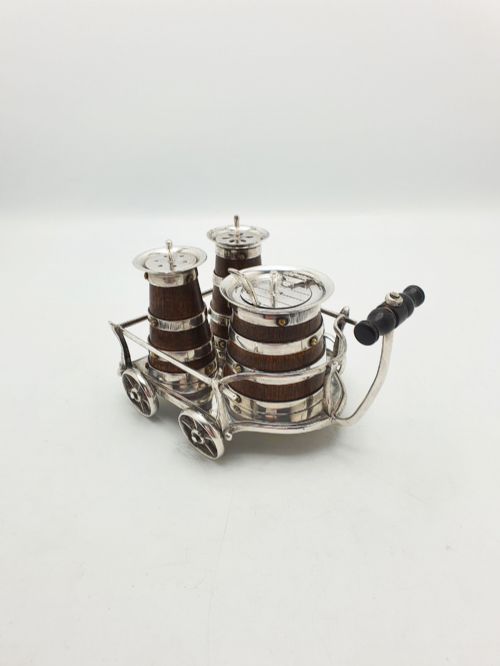
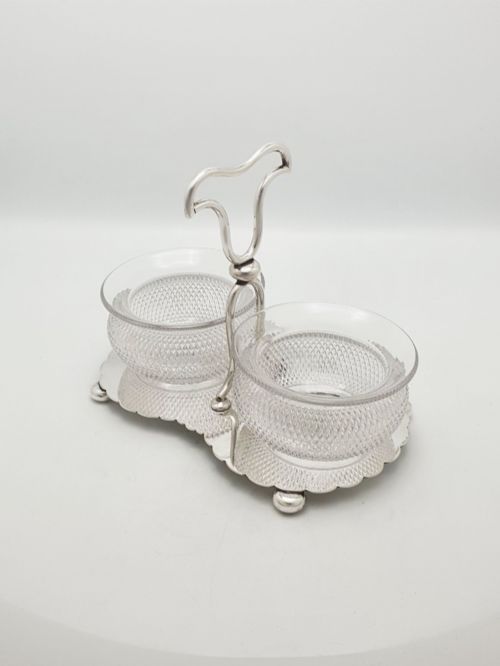
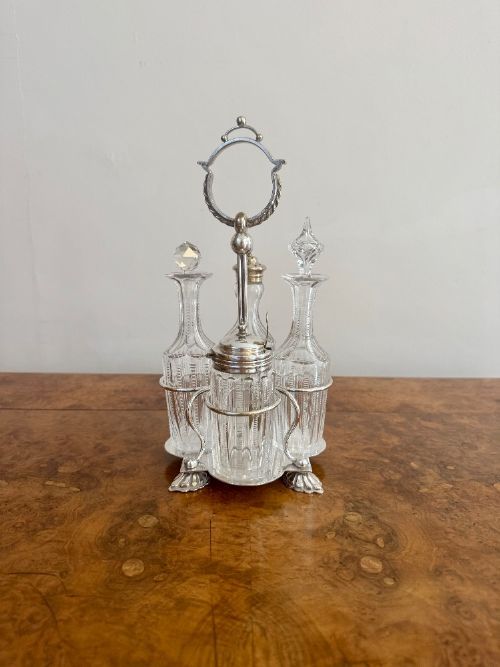
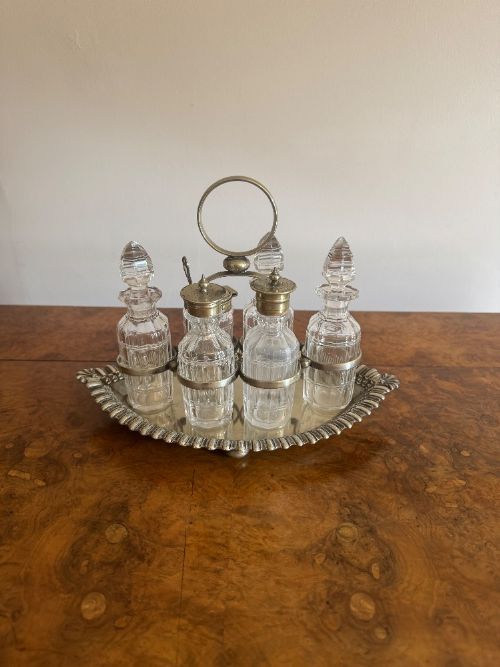
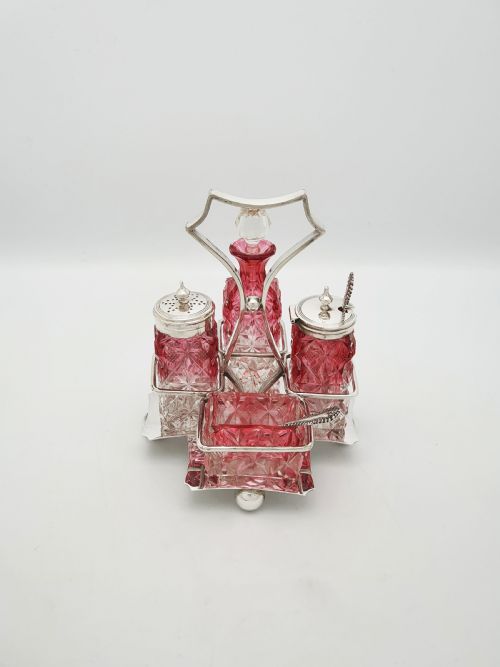
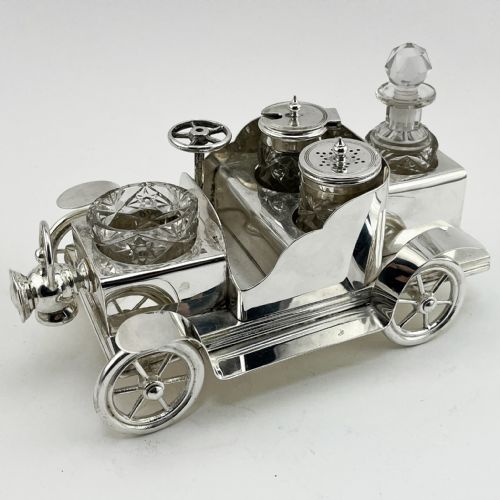
A silver condiment stand holds bottles, jars and shakers for mustard, pepper, vinegar and salt at the dining table. These pieces range from compact bachelor cruet sets to large oval eight-piece silver plated cruet sets.
The selections span the Victorian and Edwardian periods, alongside nineteenth century Russian and French examples. Buyers frequently encounter silver plated cruet sets alongside individual salt cellars and cruet stands.
How They Were Made
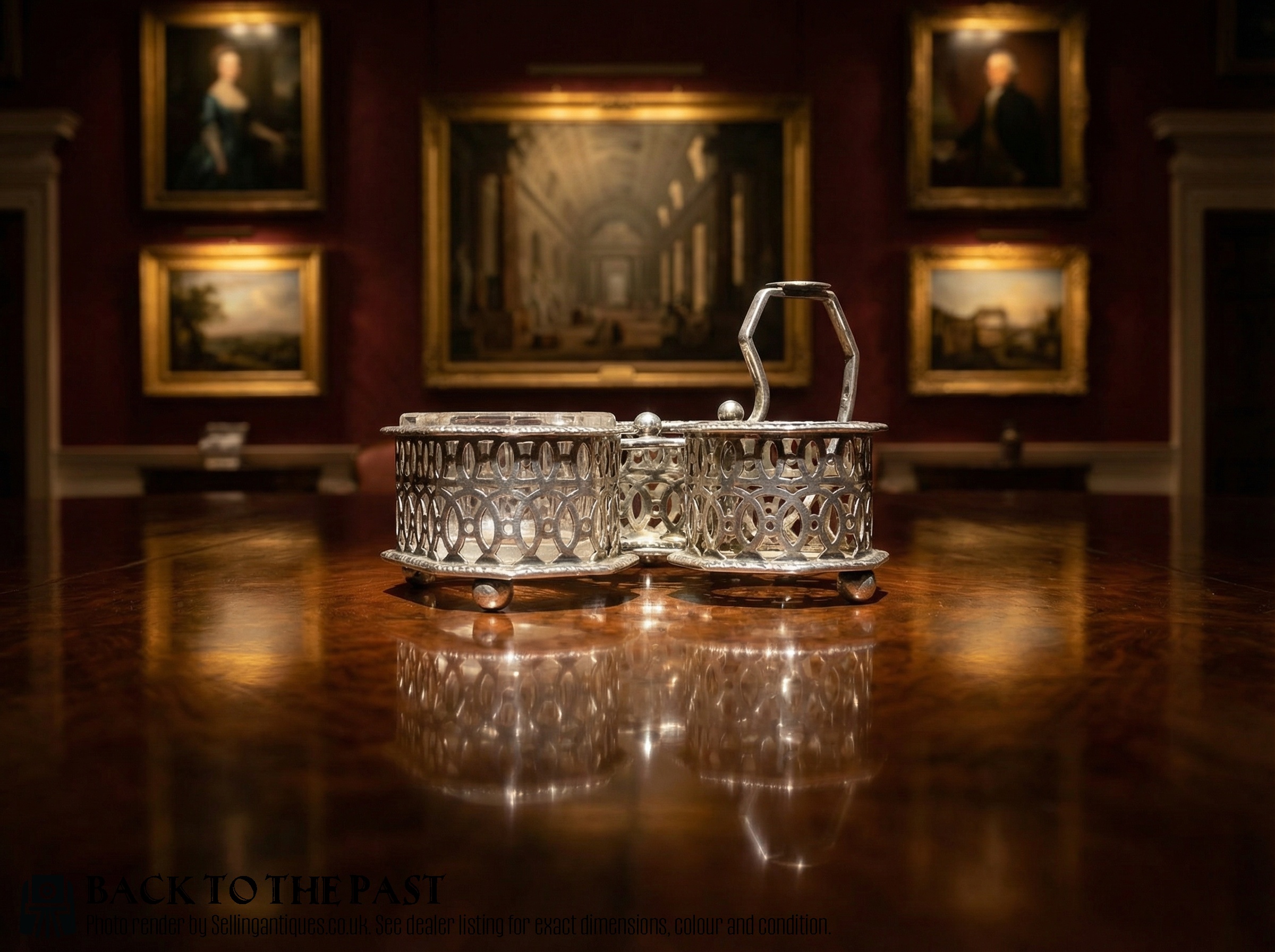
Frames employ silver plate and solid silver, including .950 standard silver. Pierced work creates openwork patterns in the metal body.
Vessels combine cut glass and plain glass bottles with metal mounts and blue liners. Artisans also paired silver condiment spoons with the main stands and salt cellars.
Retail Price Guide 2026
Typical UK retail prices for silver condiment stand, calculated from the Sellingantiques database of over a million retail prices indexed since 2003. This retail price guide relies exclusively on Sellingantiques data; no external sources or auction records are used, so the figures do not describe the wider market.
Materials across the selection include silver plate, solid silver, cut glass, and plain glass.
What Varies in Quality
Quality rests upon the weight of the silver plating and the crispness of any pierced ornamentation on the frame. Heavier gauge metal resists bending and keeps bottles secure.
The integrity of the glass inserts also defines the piece. Cleanly cut glass bottles and undamaged blue liners distinguish superior examples from standard ones.
Mappin Brothers·Walker & Hall·Michael Alexandrovich Romanov·William Hutton & Sons·Emile Hugo
The Silver Condiment Stand Glossary
- Cruet Set
- A matched collection of bottles and jars held in a single frame for table condiments. These sets generally include provisions for mustard, pepper, and vinegar.
- Bachelor Cruet Set
- A smaller cruet stand designed for individual or small-household dining. These compact assemblies feature fewer bottles than family-sized iterations.
- Silver Plate
- A base metal coated with a thin layer of silver. This technique provided the appearance of solid silver at a lower cost.
- Pierced Work
- Metal pierced with decorative openwork patterns. This technique lightened the visual weight of the stand.
- Blue Liner
- A cobalt glass insert placed inside open salt cellars or condiment dishes. The blue glass protects the metal from corrosive salts.
Frequently Asked Questions
What fits in a silver condiment stand?
These frames hold cut glass bottles, cruet jars, and salt cellars designed for table seasonings.
Individual spoons and blue liners accompany specific salt cellars and condiment dishes within the wider groupings.
How do I clean my cruet stand?
Wash glass inserts gently in warm soapy water and dry them thoroughly before replacing them in the frame.
Polish silver plate and solid silver surfaces with a suitable cloth to remove tarnish without damaging the metal.
Are these stands suitable for daily use?
Sturdy silver plated and solid silver frames handle regular placement on dining tables and sideboards.
Careful handling protects the cut glass bottles and delicate pierced metalwork during everyday service.
What period do most stands come from?
The available pieces originate largely from the Victorian and Edwardian eras, spanning the late nineteenth and early twentieth centuries.
Nineteenth-century continental examples also appear alongside these British domestic dining accessories.