


Antique Silver Cruet
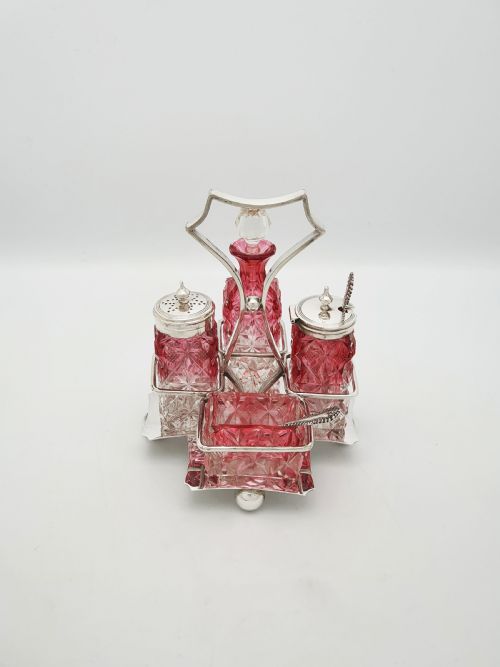
An antique silver cruet brings dining table history into domestic service through fitted silver frames and cut glass bottles.
Antique Silver Cruet
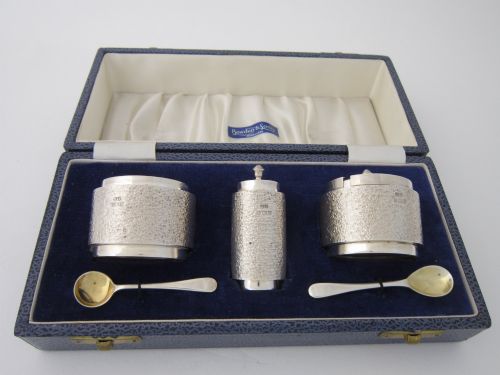
An antique silver cruet forms a matched assembly of condiment holders designed for the dining table, encompassing stands, frames, and bottles for oil, vinegar, mustard, pepper, and salt. These objects span periods from the Georgian era through the Victorian and Edwardian decades into the Art Deco period.
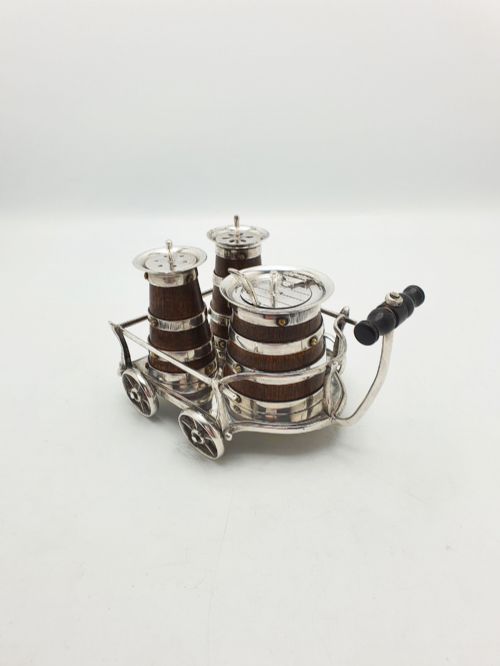
Collectors frequently encounter Edwardian silver plated sets featuring multiple cut glass bottles, alongside Victorian sterling silver iterations and Georgian framework designs. Formats range from large multi-bottle frames to specialist egg cruet sets and novelty animal pepper pots.
Materials and construction
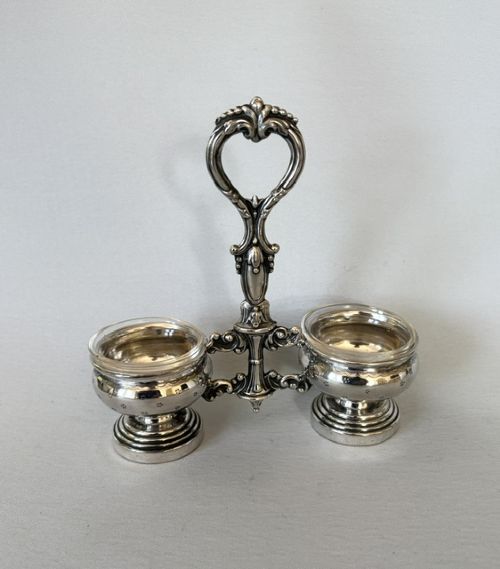
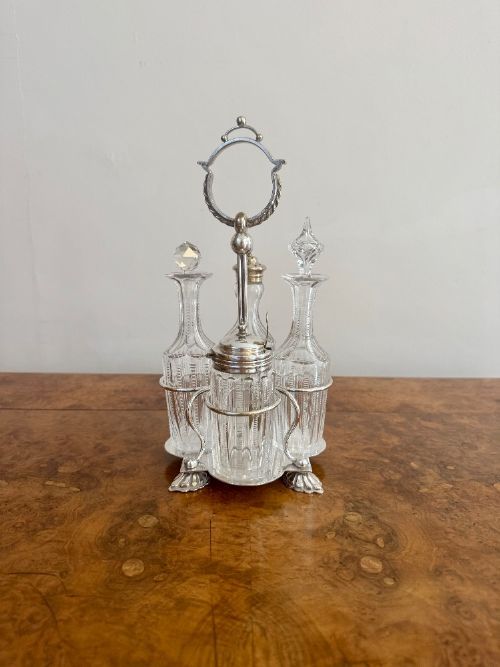
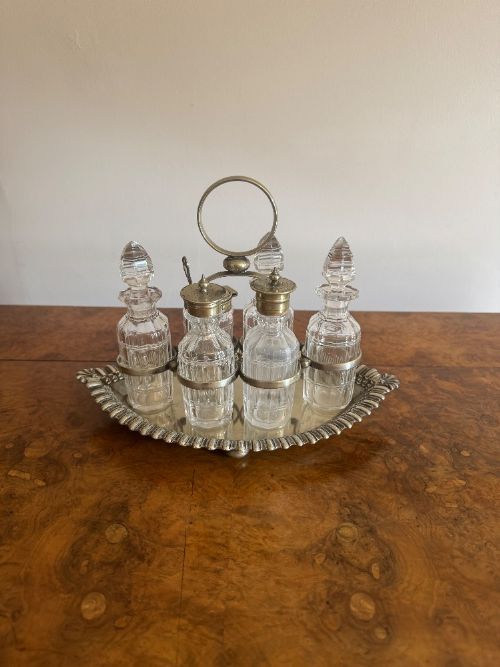
Silversmiths constructed frames using sterling silver, Old Sheffield plate, or electroplated nickel silver, often mounting them on elevated feet with central carry handles. Frames incorporated stamped, pierced, or chased decoration reflecting Georgian, Victorian, or Edwardian aesthetic preferences.
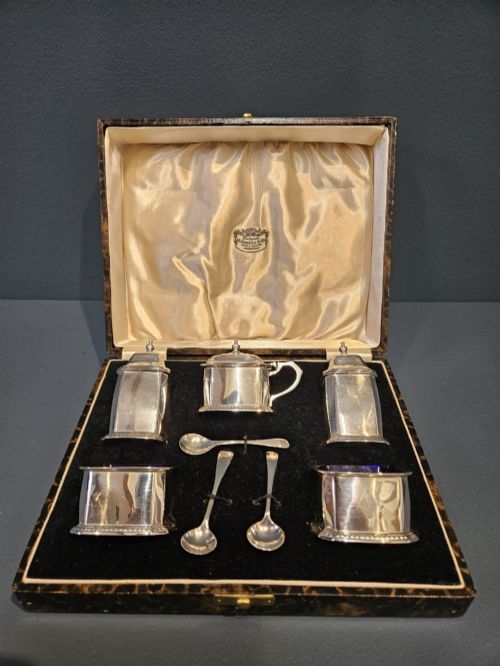
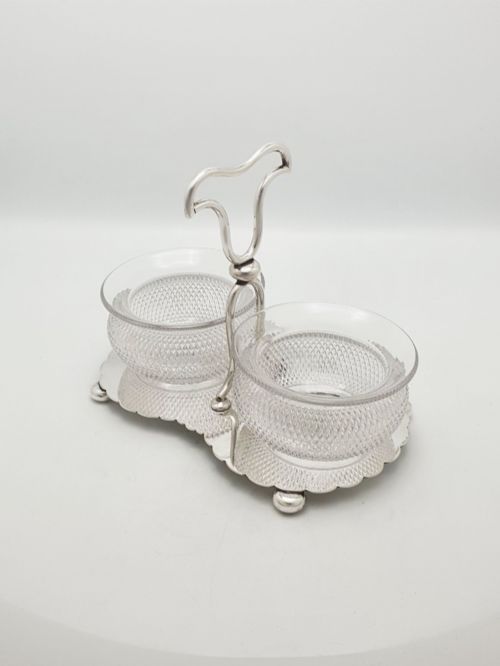
Vessels within the frames utilised heavy cut glass, cranberry flashed glass, and moulded crystal, occasionally fitted with silver mounts, stoppers, or lids. Specialised sets incorporated ceramic components, velvet linings, or satin elements to secure the individual condiment containers.
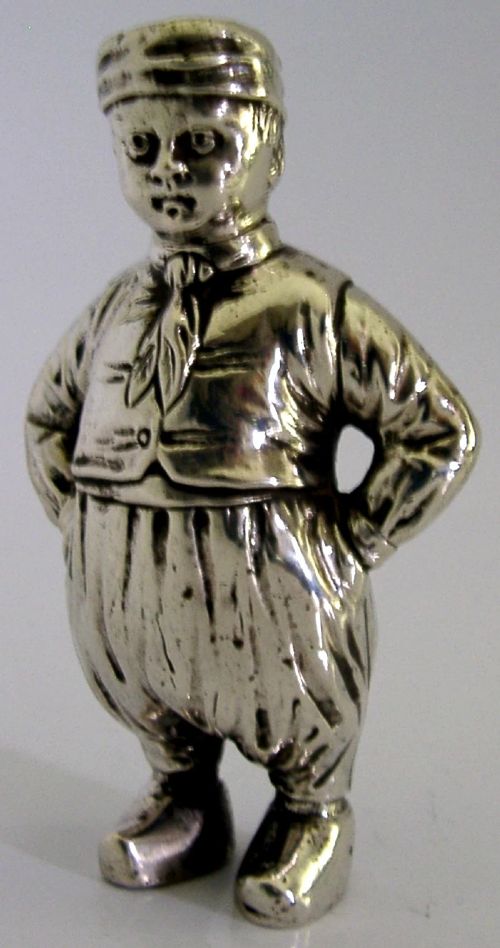
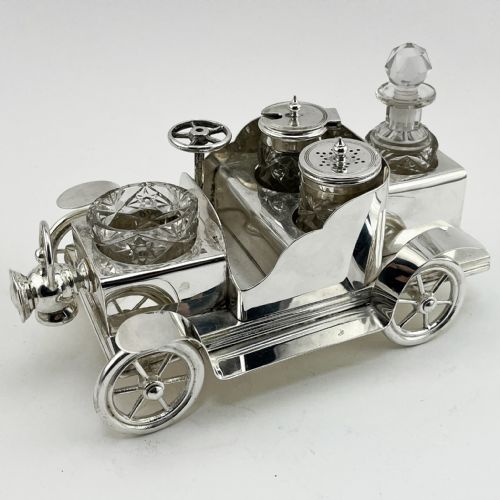
Victorian silversmiths fashioned novelty cruets into farmyard animals, dogs, and miniature butler trays to amuse diners.
Evaluating standard and distinction
Quality rests upon the structural integrity of the metal frame, the precision of the silversmith's piercing or casting, and the clarity of the associated glassware. Complete sets retaining their original matching cut glass bottles command greater attention than assembled groupings with replacement vessels.
The presence of crisp hallmarks, maker marks, and sophisticated decorative motifs such as embossed scrollwork or figural novelty elements elevate an example. Substantial weight in the silver and undamaged glass faceting indicate superior original manufacture.
Goldsmith & Silversmith's·William Neale·William Burwash·Charles Thomas Fox·Elkington & Co·Hester Bateman·Mappin Brothers·Walker & Hall·Martin Hall & Co·William Hutton & Sons·James Dixon & Sons
The Antique Silver Cruet Glossary
- Cruet
- A small glass bottle or ceramic vessel for holding vinegar, oil, pepper, or mustard at the dining table. They sit within fitted stands or frames.
- Castor
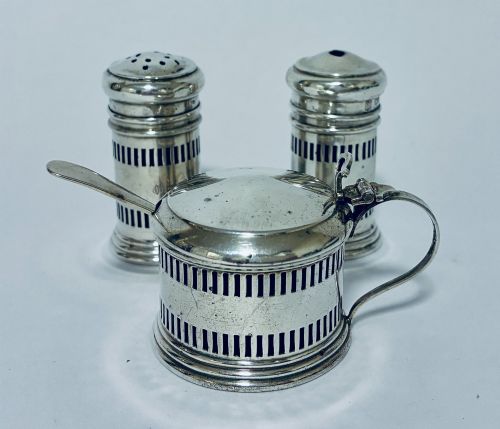
- A tall container with a perforated top used for shaking sugar or fine spices over food. These often accompany larger multi-bottle condiment stands.
- Electroplated Nickel Silver
- A base metal alloy coated with a layer of pure silver using an electrical process, introduced widely during the nineteenth century. This technique allowed manufacturers to produce affordable domestic tableware.
- Old Sheffield Plate
- A composite material formed by fusing a thin sheet of silver onto a thicker copper core before rolling them together. This method predates modern electroplating.
- Sterling Silver
- An alloy consisting of silver and other metals, usually copper, meeting a specific fineness standard of parts per thousand. British items bear official assay office hallmarks to confirm this purity.
Antique Silver Cruet: Frequently Asked Questions
What is an egg cruet?
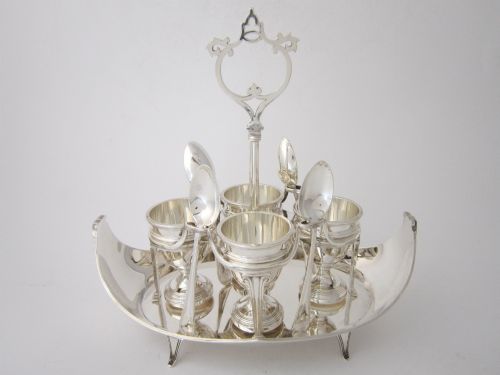
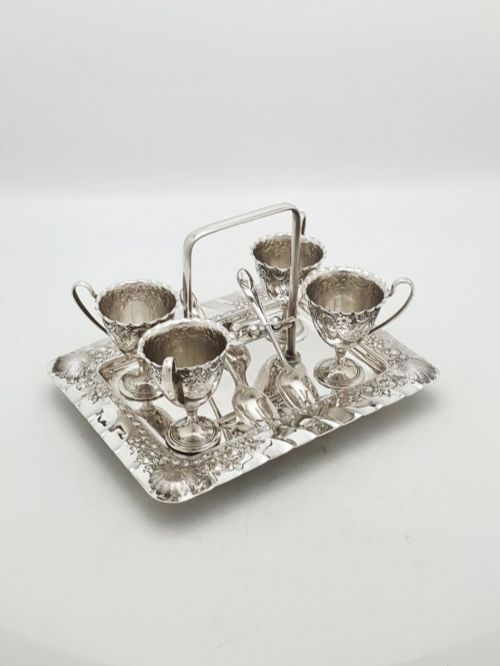
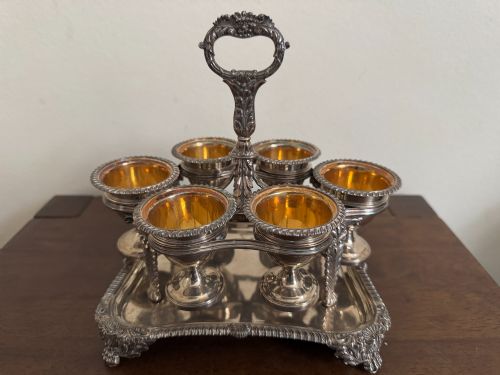
An egg cruet is a specialised tabletop stand designed to hold soft-boiled eggs alongside individual egg cups, spoons, and salt cellars. These pieces appeared frequently on Victorian and Edwardian breakfast tables.
Such sets often incorporate a central carrying ring and integrated toast racks or condiment bottles within the silver plated frame.
How were cruet sets used?
These sets held the essential liquid and dry seasonings required during a formal meal, allowing diners to adjust flavours at the table. Servants placed the central stand within reach of guests for self-service.
Individual bottles contained oil, vinegar, and sauces, while smaller castors held pepper, salt, and mustard.
How do I date a cruet set?
Dating relies upon examining the hallmarks stamped into sterling silver components, which indicate the specific assay office and year of manufacture. Stylistic clues such as George III framing or Art Deco geometry also point to the correct period.
Silver plated examples without date letters require stylistic comparison with documented manufacturer catalogues from the Victorian and Edwardian eras.
Are replacement bottles acceptable?
Replacement bottles occur frequently due to the fragile nature of antique glass, though matching the exact period cut and dimensions proves challenging. Sets retaining their original factory-fitted glass command higher regard among collectors.
Buyers should examine whether cut patterns and stopper styles match across all bottles in the stand.