
Silver Condiment Pot
A silver condiment pot brings tactile weight and functional elegance to the dining table.
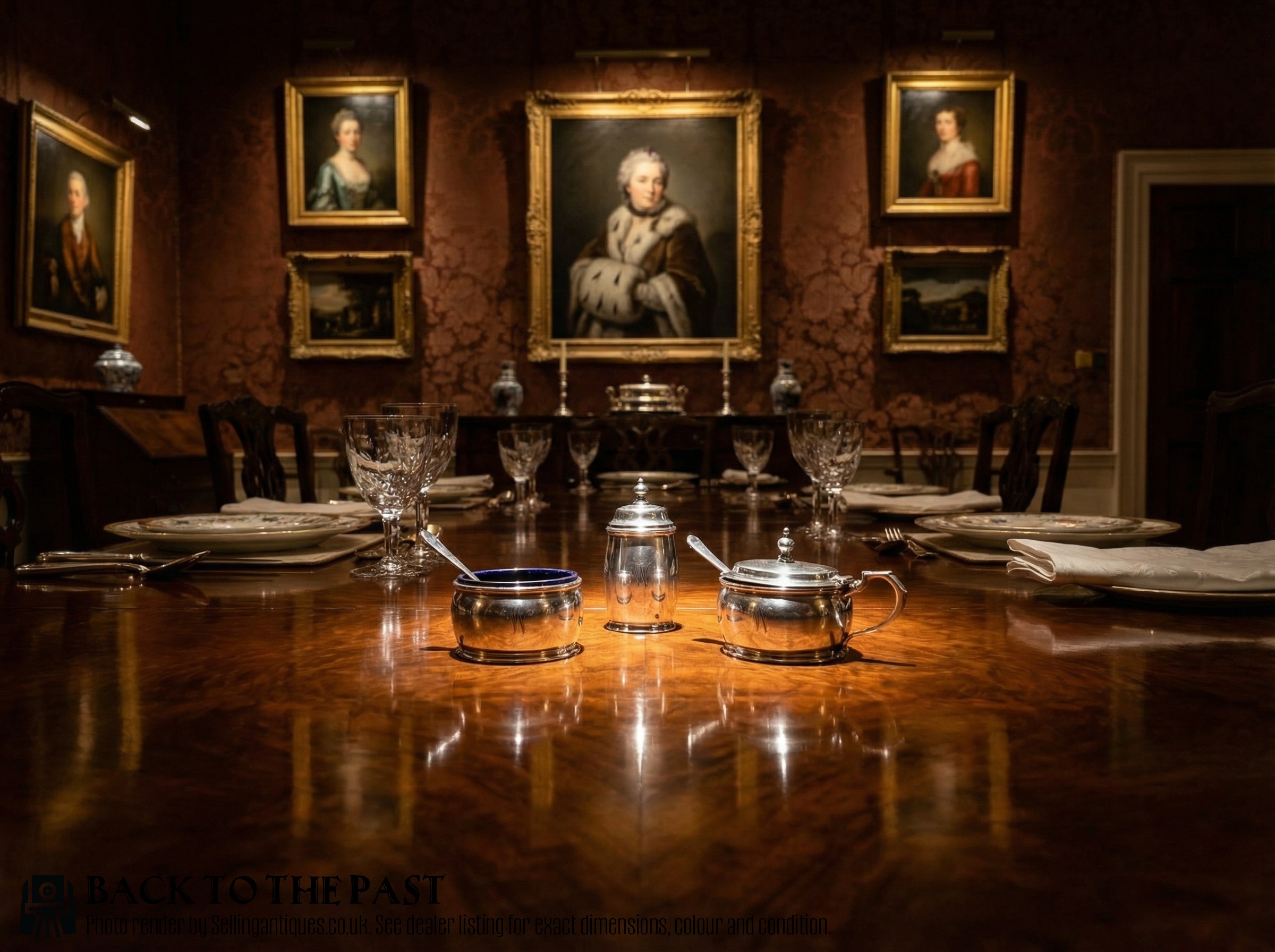
Silver Condiment Pot
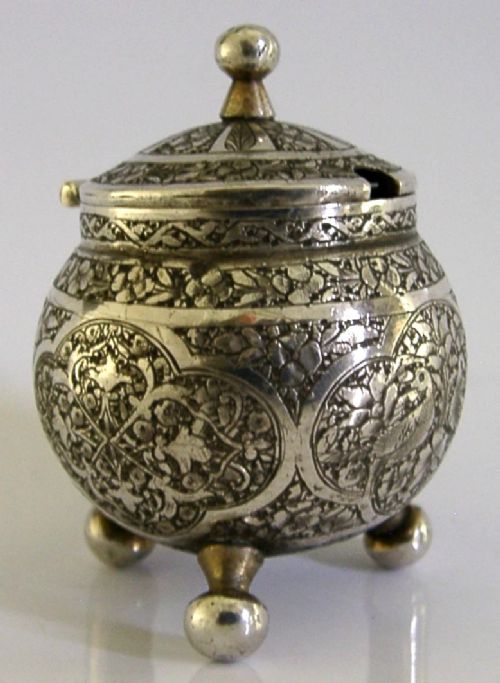
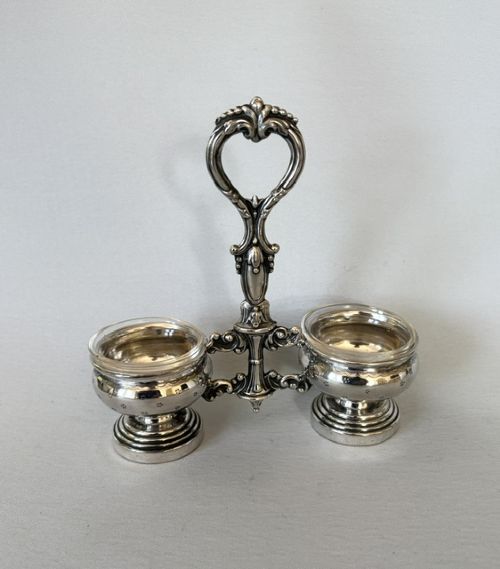
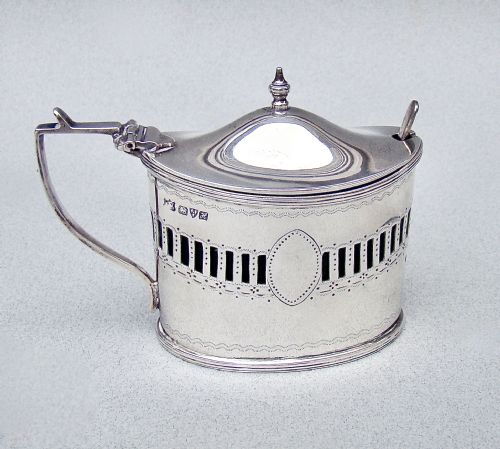
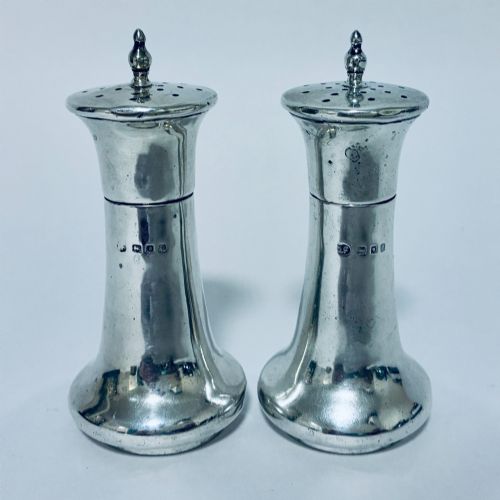
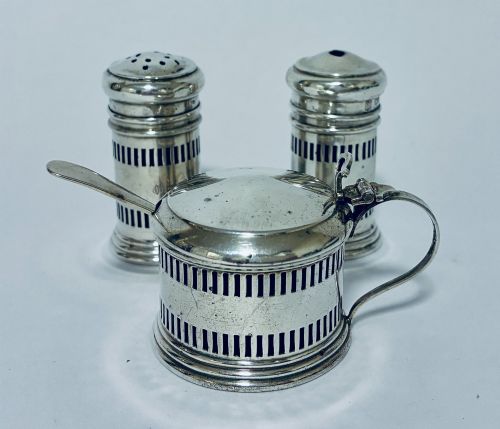
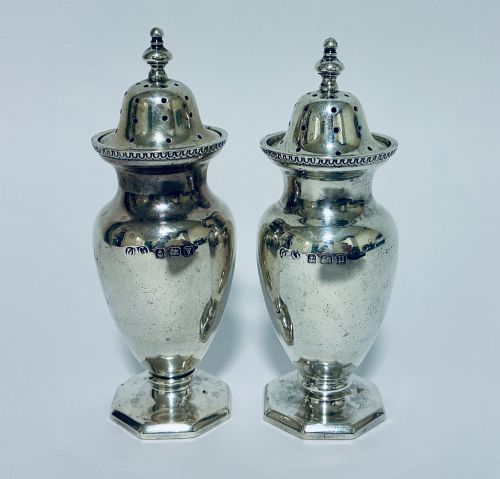
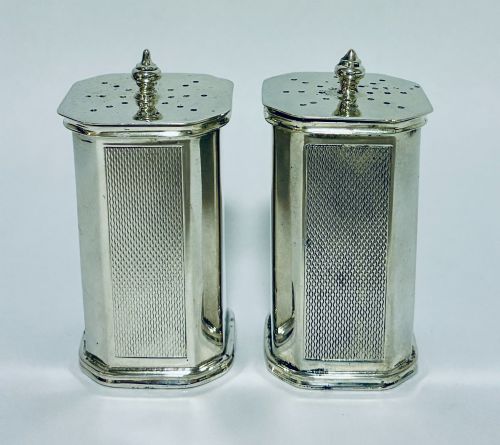
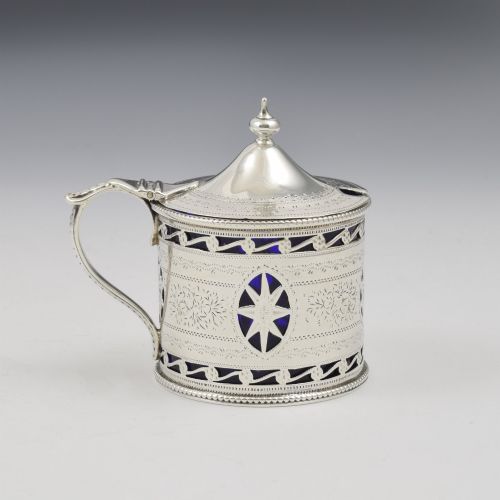
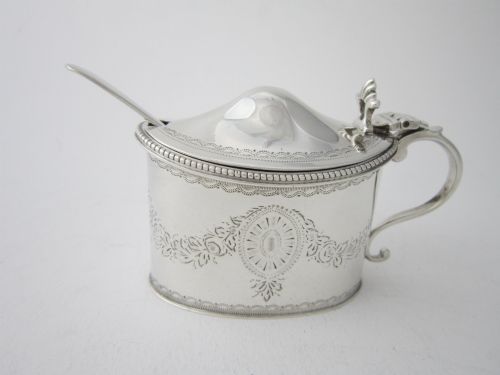
You are most likely to meet single mustard pots featuring coloured glass liners or pierced silver bodies, alongside pairs of pepper pots and matched cruet sets. The selection spans domestic English silver from Birmingham and London workshops alongside continental and Ottoman examples.
Materials and Techniques
Silversmiths constructed these vessels primarily from sterling silver, silver plate, and solid 800-grade silver, frequently combining metalwork with blown, cut, and flashed glass liners in cobalt, cranberry, or clear crystal. Piercing, chasing, and wirework define the decorative techniques applied to the metal bodies.
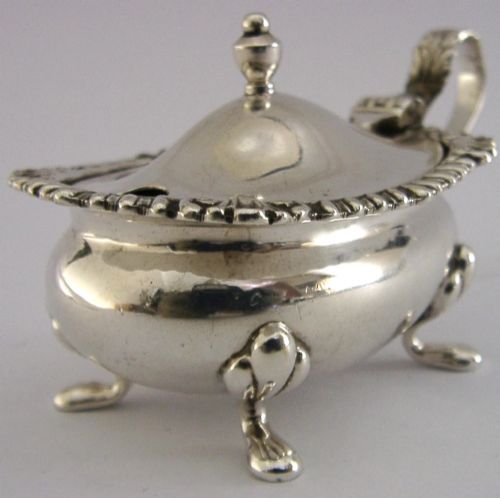
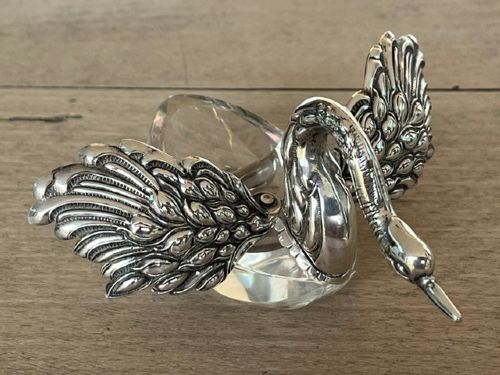
Makers utilised interior liners of coloured glass and velvet to protect the silver from corrosive condiments like mustard and salt. Hinged lids, thumbpieces, and movable elements such as swan wings or bird heads demonstrate precision mechanical assembly in both standard and novelty forms.
Silver Condiment Pot Retail Price Guide 2026
Typical asking prices for silver condiment pot among the pieces listed under this phrase on Sellingantiques today, from the lower quarter to the upper quarter. They describe what is for sale here now, not the wider market.
The listings show a strong representation of Victorian and Edwardian pieces, dominated by sterling silver mustard pots and cut glass cruet sets.
Judging Standard and Craftsmanship
The distinction between ordinary and superior pieces rests on the crispness of the piercing, the weight of the silver used in the body, and the retention of the original matching glass liner. Heavier gauge metal and clear hallmarks denoting specific makers and assay offices elevate an item's standing.
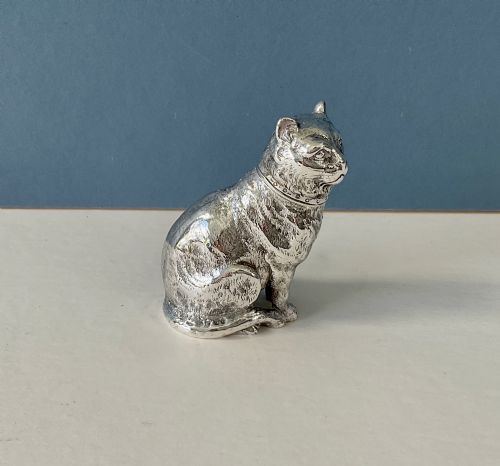
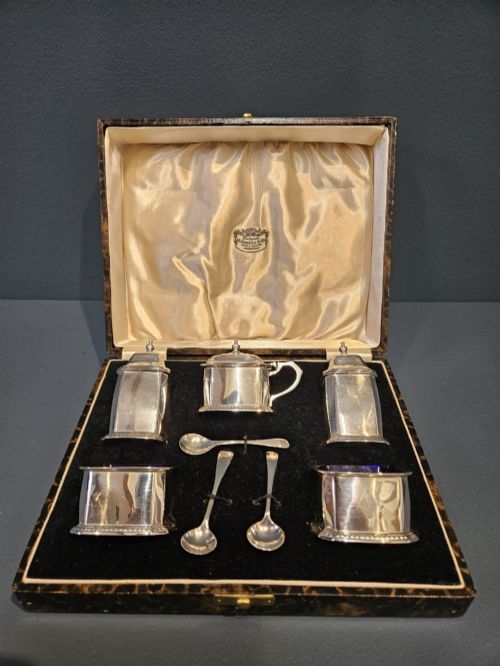
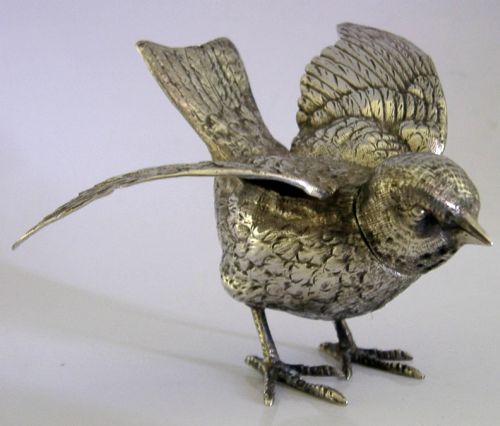
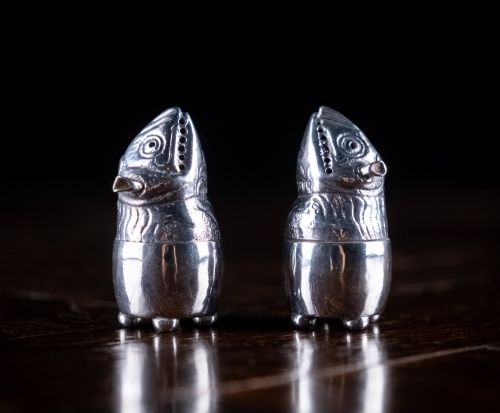
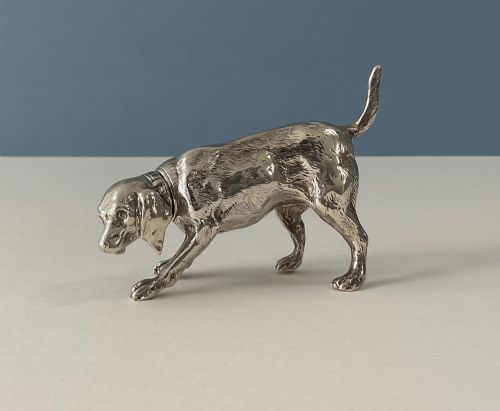
Novelty pieces derive their desirability from sculptural detail and anatomical precision in forms shaped like animals, birds, and plants. Cruet sets demonstrate higher quality when the bottles, frames, and original spoons match harmoniously in style and period manufacture.
Alfred Marston·Frederick Brasted·Nathan and Hayes·Charles and George Fox·Hukin and Heath·Mappin Brothers·Lee and Wigfull·Alexander Macrae·William Neale
The Silver Condiment Pot Glossary
- Cruet set
- A matched assembly of glass bottles and jars held within a metal frame for dispensing table condiments. These sets often incorporate mustard pots, pepper shakers, and salt cellars.
- Pierced work
- Metal perforated with decorative geometric or floral patterns to reveal the coloured glass liner beneath. This technique lightened the visual weight of heavy silver mustard pots.
- Hallmark
- A series of stamped marks indicating the metal standard, assay office, maker, and year of production. British silver relies on these stamps to establish authenticity and provenance.
- Liner
- A removable glass insert placed inside open salt cellars and mustard pots to contain corrosive substances. Liners appear in distinct colours including cobalt blue and cranberry.
- Novelty pepper
- A shaker fashioned into a humorous or realistic animal or figural shape. Examples span cats, dogs, birds, and human figures.
Silver Condiment Pot: Frequently Asked Questions
How were cruet sets used?
Cruet sets functioned as coordinated table servers that kept multiple condiments together on a single frame or stand. Diners used the individual bottles and pots to dispense liquids, powders, and pastes onto their plates during meals.
Larger sets featured multiple glass bottles for oils and vinegars alongside dedicated cellars and pots for dry spices.
How do I care for antique silver condiment pots?
Care requires gentle cleaning with a soft cloth and mild silver polish to preserve the original hallmarks and surface detail. Avoid harsh chemical dips that strip away desirable patina and damage delicate glass liners.
Removing old mustard or salt residue immediately after use prevents pitting and corrosion on both the interior silver and the glass.
How do I identify the period of a condiment pot?
Dating relies heavily on the stamped hallmarks, which record the assay office and specific year letter for British pieces. Stylistic indicators like Edwardian wirework, Victorian piercing, or Art Deco geometric lines also help determine the era.
Comparing the manufacturing technique and the presence of original glass inserts provides further clues to the decade of origin.