

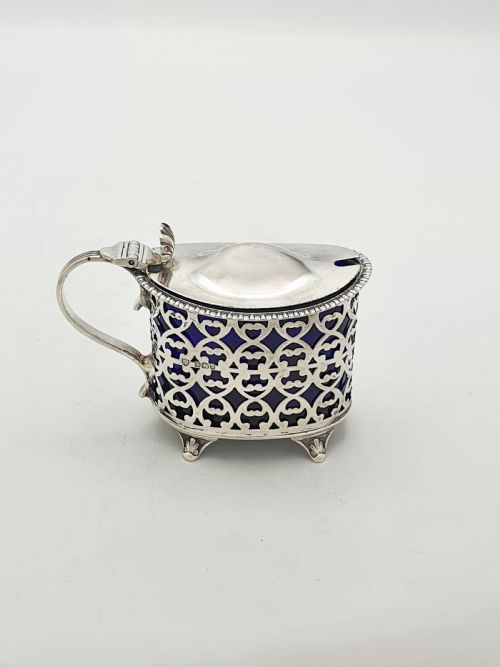


Blue Glass Mustard Pot
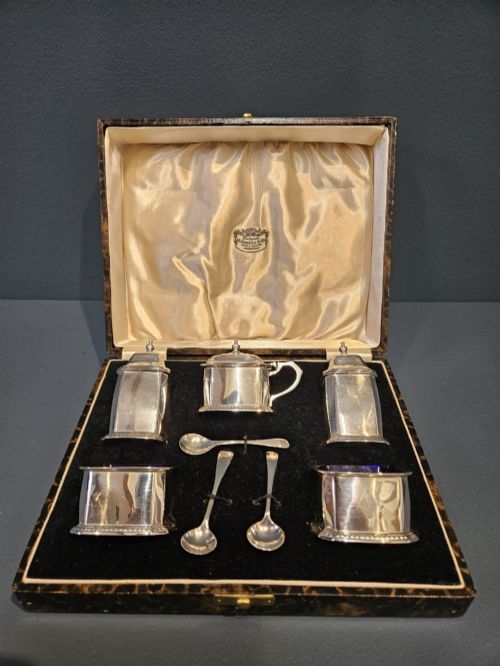
A blue glass mustard pot brings rich cobalt colour to the dining table, combining precious metalwork with vibrant blown liners.
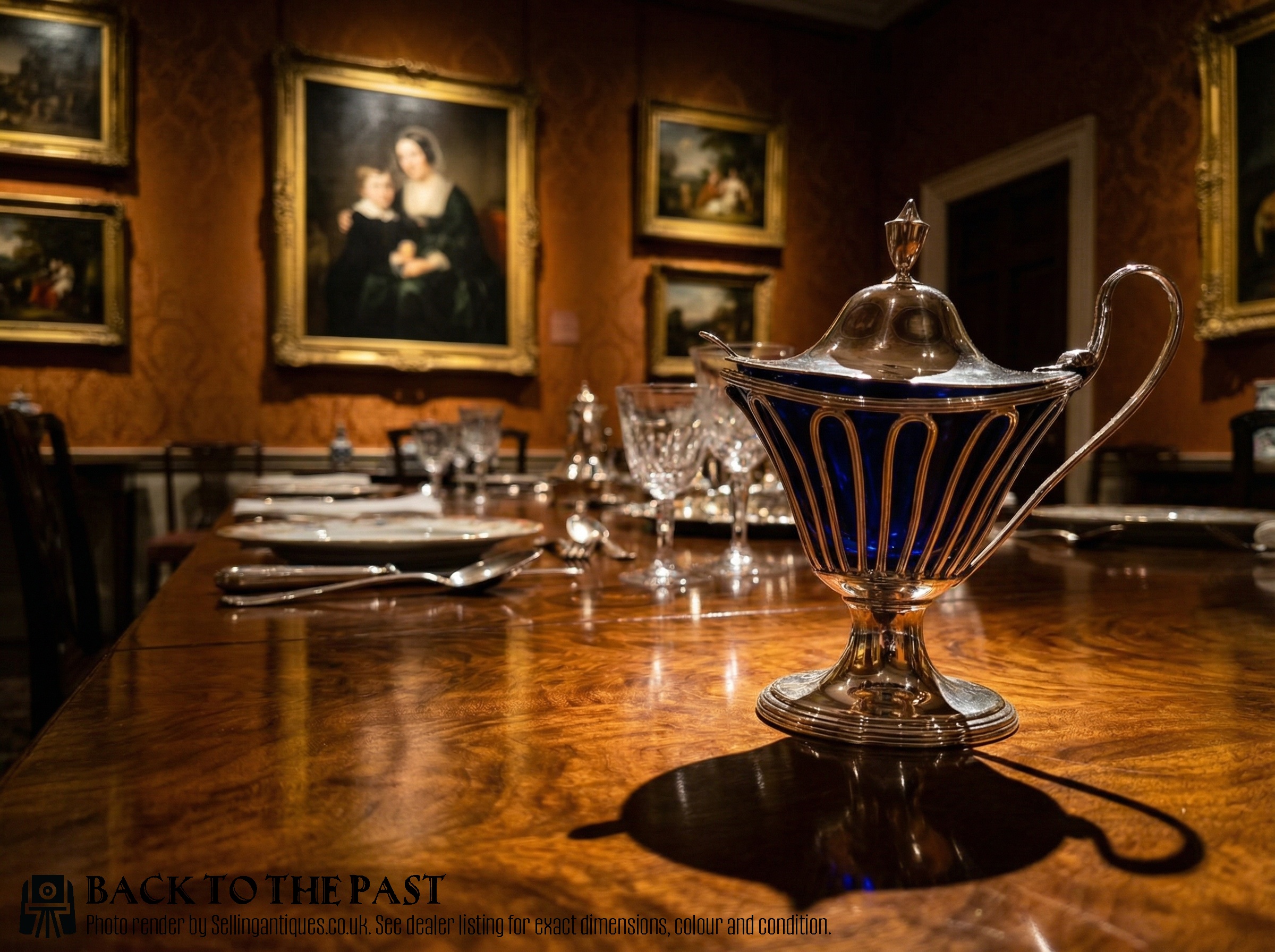
Understanding blue glass mustard pots
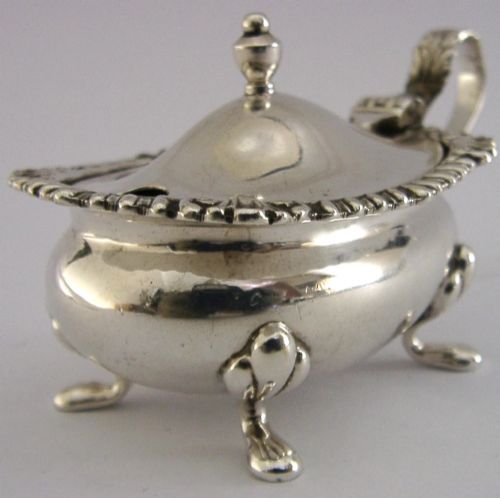
A blue glass mustard pot combines a protective metal exterior with a striking coloured interior liner. These condiment vessels appear in Georgian, Victorian, and later twentieth century forms.
The objects take various shapes, including drum forms, oval profiles, and novelty figural designs. Most examples found here date from the Victorian era through to the nineteen twenties.
Silver and silver plate mountings frame the rich glass containers, creating functional tableware for dining and display. Makers range from provincial silversmiths to notable designers such as Omar Ramsden.
Construction and materials
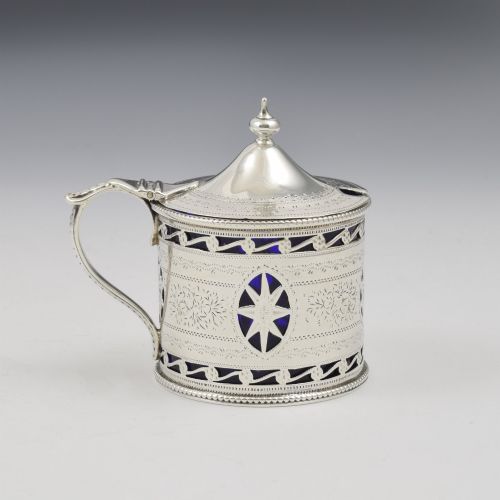
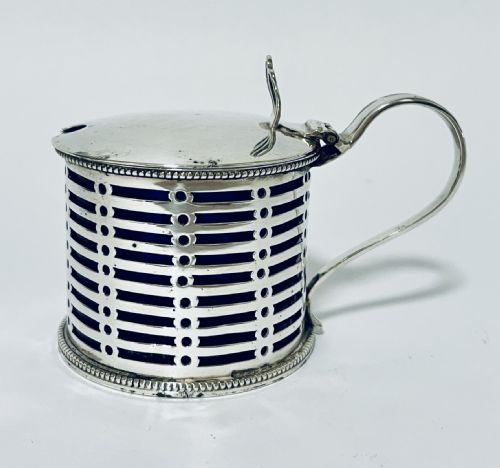
Makers utilised sterling silver, silver plate, and sometimes continental 800 silver to form the outer frames of these pots. Piercing techniques created delicate openwork patterns in the metal casings, allowing the intense cobalt or Bristol blue glass to show through.
The internal containers consist of blown or moulded blue glass liners fitted precisely within the silver or plated housing. Skilled metalworkers fashioned hinged lids, handles, and thumbpieces to complete each piece.
Retail Price Guide 2026
Typical UK retail prices for blue glass mustard pot, calculated from the Sellingantiques database of over a million retail prices indexed since 2003. This retail price guide relies exclusively on Sellingantiques data; no external sources or auction records are used, so the figures do not describe the wider market.
Listings feature sterling silver, silver plate, and 800 silver combined with cobalt and Bristol blue glass across Victorian and twentieth century periods.
Distinguishing quality
Quality rests in the weight of the metal and the precision of the piercing work on the outer jacket. Finer pieces display crisp hallmarks, substantial sterling silver construction, and well-fitted original glass liners.
Novelty forms and pieces by identifiable makers command greater interest than standard production wares. The depth and clarity of the blue glass also influence the overall character of the vessel.
Nathan & Hayes·Omar Ramsden·Thomas Bradbury & Son
The Blue Glass Mustard Pot Glossary
- Cobalt glass
- Deep blue glass coloured with cobalt oxide. This material provides the intense hue characteristic of traditional mustard pot liners.
- Pierced silver
- Metalwork decorated by cutting away sections to create openwork designs. This technique lightens the object and displays the coloured glass beneath.
- Liner
- The removable glass vessel that sits inside the metal frame to hold the condiment. Original liners add considerably to the integrity of the piece.
- Sterling silver
- An alloy of silver containing ninety-two point five percent pure silver and seven point five percent other metals, usually copper. It forms the primary metal for better quality pots.
- Hallmark
- Official stamps applied to precious metals indicating the maker, assay office, and year of testing. These marks date the metal components securely.
Frequently Asked Questions
What is a blue glass mustard pot?
A blue glass mustard pot is a small table vessel designed to hold mustard, featuring a brightly coloured glass insert housed within a decorative metal frame.
These pieces typically date from the eighteenth, nineteenth, or early twentieth centuries and serve both decorative and functional purposes on the dining table.
How do I know if the glass liner is original?
Original liners fit the contours of the metal frame precisely, matching the internal dimensions and height of the outer housing without rocking or protruding awkwardly.
Differences in glass colour, wear patterns, or bubbles can also indicate whether the liner belongs to the period of the silver mount.
What periods do these mustard pots come from?
The pieces span several eras, including the Georgian period, the Victorian reign, and twentieth century workshops up to the nineteen twenties.
Stylistic shifts move from neoclassical revival designs to arts and crafts execution and novelty figural forms.
How were silver mustard pots used?
Dining traditions required individual or shared condiment pots for serving mustard alongside meats and other dishes during formal meals.
A small spoon, often matching the pot, accompanied the vessel to portion out the condiment onto each diner's plate.