



Silver Mustard Pot Liner
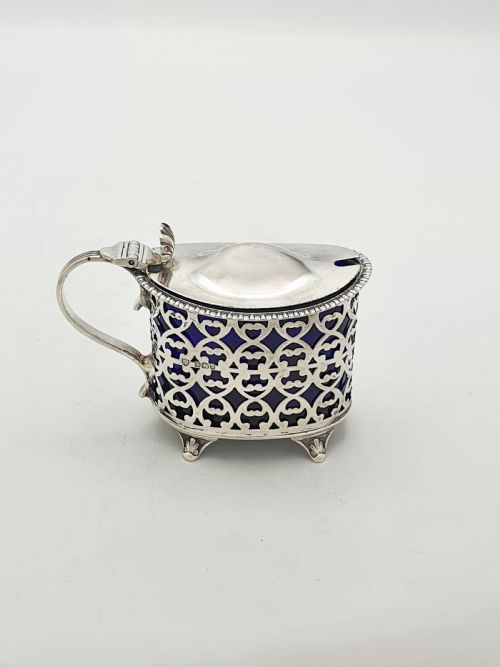
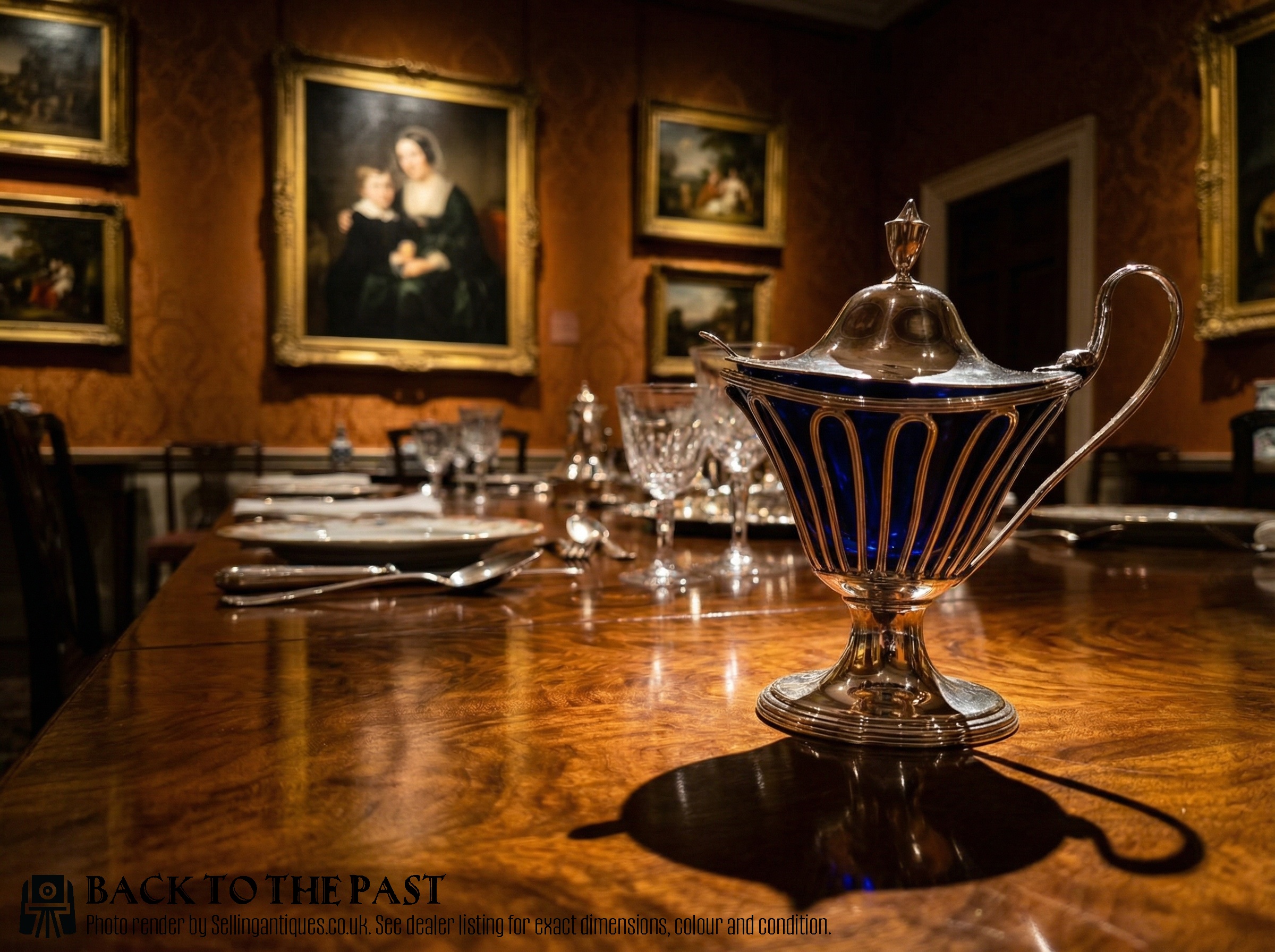
A silver mustard pot liner secures the fragile glass vessel inside a metal condiment jar while adding a flash of colour to the dining table.
Silver Mustard Pot Liner
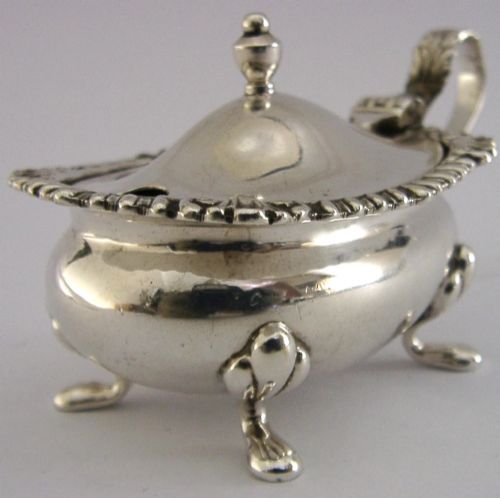
A silver mustard pot liner serves to protect the silver body of the condiment vessel from the corrosive nature of mustard, which would otherwise tarnish the metal over time. When searching for a silver mustard pot liner, a buyer encounters inserts designed for pierced drum mustard pots, octagonal shapes, and oval Victorian jars.
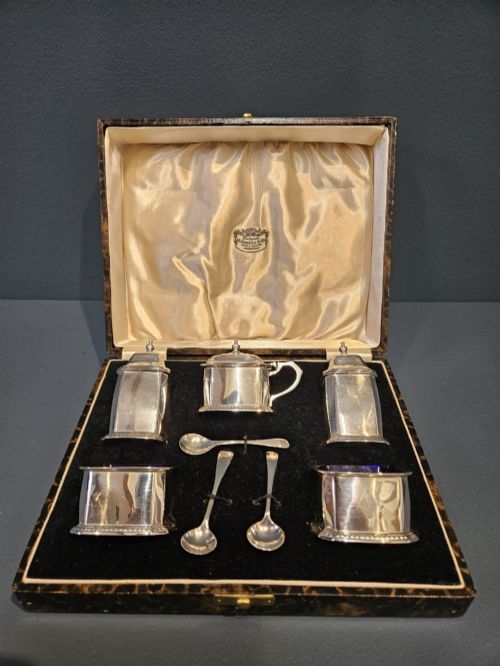
The pieces appearing on this page span the Victorian era, the Edwardian period, and the 1930s, alongside Georgian styles and William IV examples. These items originate from the nineteenth and twentieth centuries, often accompanying larger condiment sets or surviving as individual tableware pieces.
Most examples house a glass insert, which frequently appears in cobalt blue, Bristol blue, cranberry, or ruby red. The metal housings themselves utilise sterling silver, standard silver, and sometimes velvet or satin components within fitted sets.
Materials and Construction
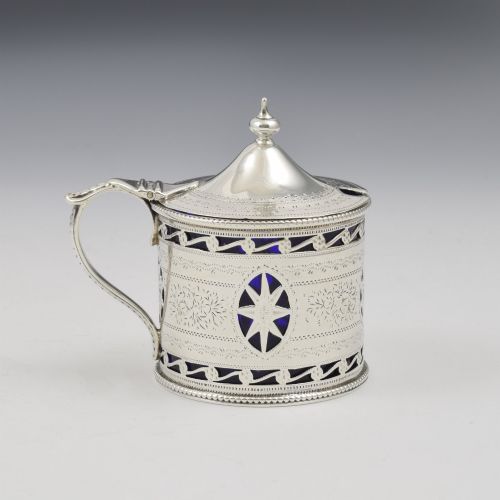
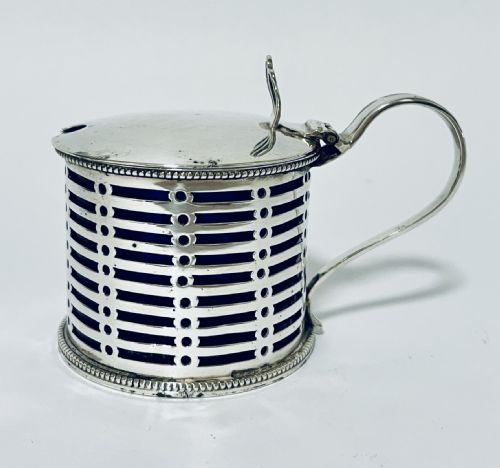
Silversmiths constructed the outer pots using sterling silver or standard silver, often employing piercing techniques to create intricate patterns that reveal the coloured glass within. Pierced drum shapes and chased bodies with cherub and bird motifs demonstrate the detailed metalwork typical of nineteenth-century workshops.
The interior vessels consist of blown or moulded glass, shaped specifically to fit the contours of the silver framework. Cobalt blue, cranberry, and ruby red glass inserts provide a striking chromatic contrast against the polished silver exterior.
The documented pieces span the Victorian, Georgian, Edwardian, and 1930s eras, encompassing both individual pots and complete condiment sets.
Evaluating Quality and Craftsmanship
The distinction between standard tableware and superior pieces rests upon the weight of the silver, the crispness of any pierced or chased decoration, and whether the glass insert remains original to the pot. Heavier gauge silver and fully marked components indicate higher production standards from established silversmiths.
The inclusion of a matching or original coloured glass liner significantly elevates an item, particularly when hues such as Bristol blue or cranberry are present. The harmony between the pierced metalwork and the internal glass colour dictates the visual success of the piece.
Nathan and Hayes·William Neale·Charles Stuart Harris·Omar Ramsden·Thomas Bradbury and Son
The Silver Mustard Pot Liner Glossary
- Pierced work
- Metalwork that has been cut through to create a decorative pattern or lattice. This technique allows the coloured glass liner to be seen from the outside of the mustard pot.
- Drum mustard pot
- A cylindrical form of condiment vessel popular during the Victorian period. These pots often feature straight vertical sides and flat hinged lids.
- Bristol blue
- A deep cobalt glass colour traditionally produced in the English city of Bristol. It remains a sought-after material for nineteenth-century condiment liners.
- Cruet set
- A collection of matching tableware vessels designed to hold condiments such as mustard, pepper, and salt. These sets frequently include coordinated silver frames and glass liners.
Silver Mustard Pot Liner: Frequently Asked Questions
Are the glass liners usually original?
Many pots retain their original glass inserts, particularly those in Bristol blue, cobalt, or cranberry hues, which fit the specific interior dimensions of the silver housing.
Replacement liners do occur frequently due to the fragile nature of glass over centuries of use, so checking for a snug fit helps determine originality.
What periods do these mustard pots come from?
The listings encompass Victorian, Edwardian, and 1930s examples, alongside Georgian style pieces and William IV items from the nineteenth century.
Victorian pieces often feature pierced drum designs or chased motifs, while later twentieth-century items reflect Art Deco preferences.
How do I clean a silver mustard pot?
Silver components require gentle polishing with a soft cloth and a suitable metal cleaner, taking care to avoid any delicate glass inserts.
Removing the glass liner before cleaning the silver prevents moisture and cleaning agents from becoming trapped between the metal and the glass.
What colours do the glass liners come in?
Cobalt blue and Bristol blue appear most frequently in the historical record, providing a traditional contrast against polished sterling silver.
Other variations include ruby red and cranberry glass liners, which occasionally accompany nineteenth-century condiment vessels.