


Edwardian Silver Mustard Pot
These pieces bring a distinct polish to the table, and an Edwardian silver mustard pot combines practical function with decorative silverwork.
Edwardian Silver Mustard Pot Forms
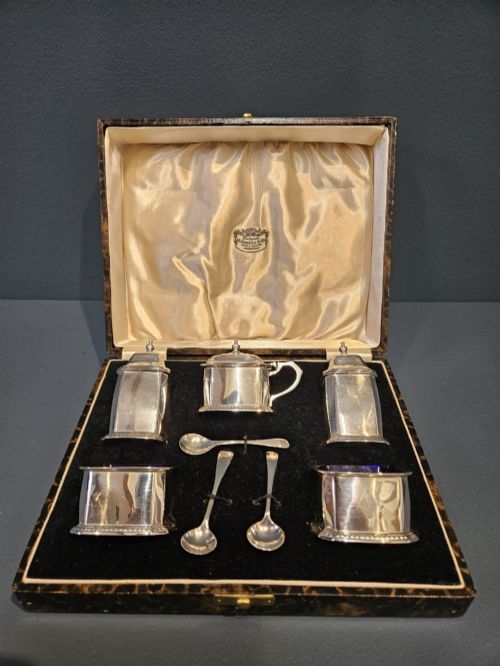
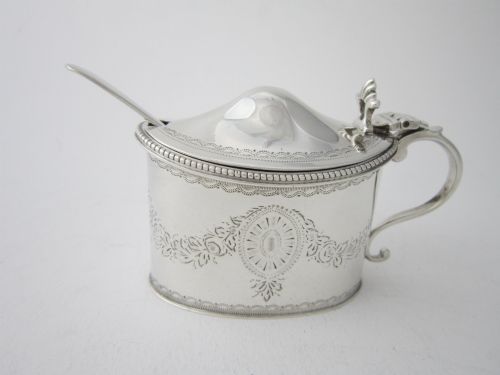
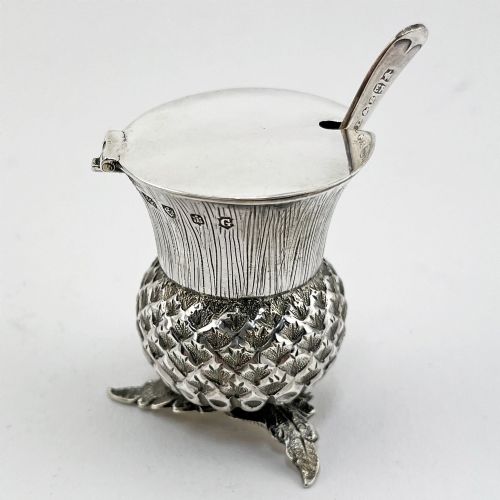
An Edwardian silver mustard pot is a small table vessel designed for holding and serving mustard, typically paired with a hinged lid and a fitted glass liner. The forms seen here range from simple drum shapes to urns, cylindrical pots, and novelty items modelled as thistles.
Most examples date from the Edwardian period or immediately adjacent years, with styles spanning Georgian Revival, Art Nouveau, Arts and Crafts, and Scottish Novelty. These pieces often arrive with their original or matched spoons, forming complete condiment sets.
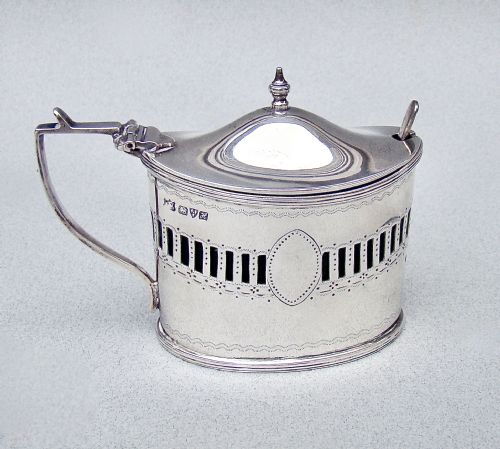
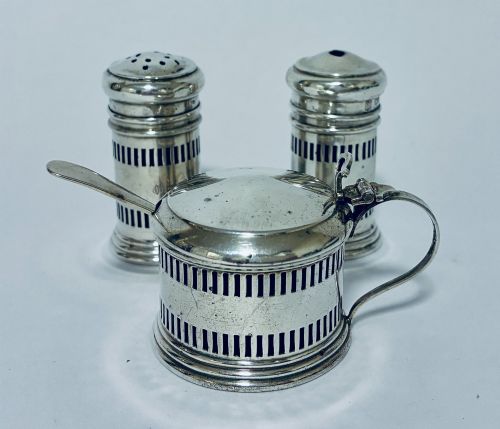
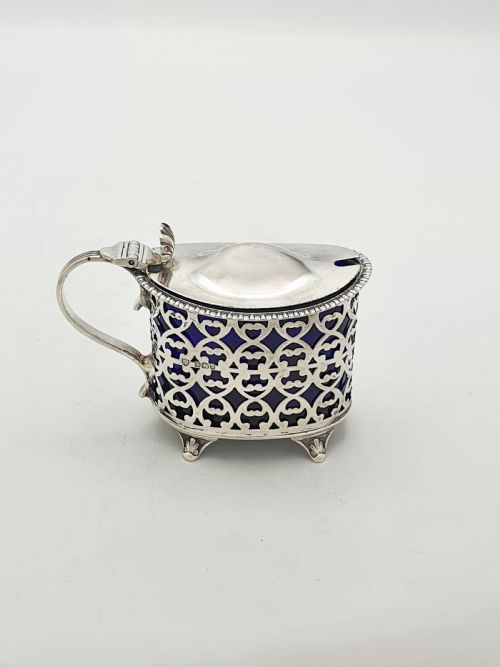
Makers from major assay towns such as Birmingham, Sheffield, and Chester produced these wares in quantity. Collectors encounter both plain polished silver bodies and pierced openwork designs that reveal coloured glass liners beneath.
Materials and Construction
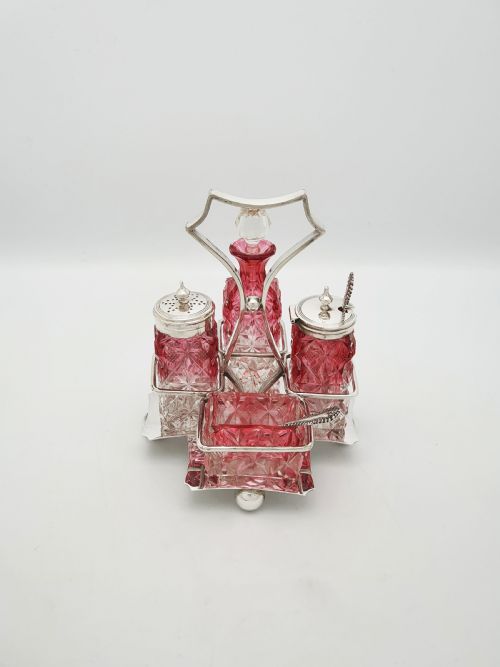
Silversmiths utilised sterling silver alongside clear and coloured glass for the internal liners. Glass components appear in shades of blue, ruby red, amethyst, and cranberry, held securely within the metal framework.
Construction techniques include piercing to create openwork lattice patterns, casting for heavier decorative elements, and hand-assembly of hinges and scroll handles. Assay office hallmarks stamped onto the metal record the year of manufacture, town, and silver standard.
Retail Price Guide 2026
Typical UK retail prices for edwardian silver mustard pot, calculated from the Sellingantiques database of over a million retail prices indexed since 2003. This retail price guide relies exclusively on Sellingantiques data; no external sources or auction records are used, so the figures do not describe the wider market.
Silver threshing made its way to the dining table in the form of a thistle.
Distinctions in Quality
Quality rests upon the weight of the sterling silver and the precision of the piercing work. Finer examples display crisp, balanced fretwork and robust hinges that close securely without slack.
The presence of the original coloured glass liner and a matching hallmarked spoon elevates a piece above those found lacking internal components. Maker attribution also plays a role, with works originating from known workshops commanding particular attention.
Alfred Marston·Omar Ramsden·Heath and Middleton·Levi and Salaman·Charles Weale·The Atkin Brothers·Samson Mordan·Nathan and Hayes·Joseph Rodgers and Sons·J and J Maxfield
The Edwardian Silver Mustard Pot Glossary
- Hallmark
- Official marks stamped onto precious metals to indicate the assay office, silver standard, and year of manufacture. These small punches provide the primary means of dating British silver.
- Piercing
- A technique where metal is cut away to create decorative openwork patterns. This lets the colour of the internal glass liner show through the silver wall.
- Cruet set
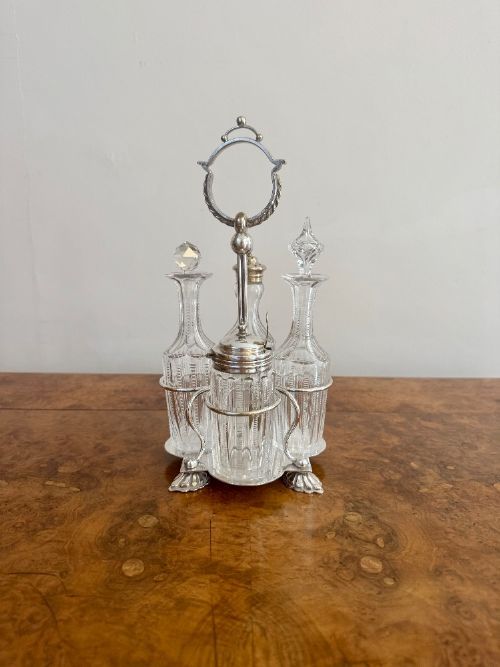
- A matched collection of small vessels for holding condiments such as mustard, pepper, and salt. They often share a uniform design aesthetic and maker.
- Liner
- A removable glass insert placed inside the metal pot to protect the silver from corrosion by mustard. They appear in various transparent colours including cobalt blue and cranberry.
- Sterling silver
- An alloy consisting of ninety-two point five percent silver and seven point five percent other metals, usually copper. British pieces meeting this standard bear the lion passant mark.
Frequently Asked Questions
What are these pots used for?
These vessels serve as table containers for prepared mustard during meals. They keep the condiment contained and presentable alongside matching cruet items.
Inside each piece sits a glass liner that protects the metal from the acidic properties of mustard. A small spoon accompanies the pot for serving.
How do I identify an Edwardian piece?
Dating relies primarily on the assay office hallmarks stamped into the silver. These marks include date letters that correspond to specific years of production.
Style also offers clues, as Edwardian items often incorporate Georgian Revival motifs or Art Nouveau curves alongside traditional forms.
Are the glass liners original?
Many pots retain their original coloured glass liners, which come in hues such as blue, red, and amethyst. Replacement liners also exist where the original glass was lost or broken over time.
A snug fit inside the silver frame generally indicates a correct pairing, though collectors prefer pieces retaining their factory glass.
How should I clean silver mustard pots?
Silver requires gentle cleaning with a specialised soft cloth to remove tarnish without harming the metal surface. Harsh dips should be avoided to protect the integrity of the hallmarks and any gilding.
The glass liner can be removed and washed separately in warm soapy water before being placed back inside the dry silver body.