


Silver Condiment Vessel
A silver condiment vessel brings table service alive, holding mustard, sugar or preserves with substance and grace.
Silver Condiment Vessel
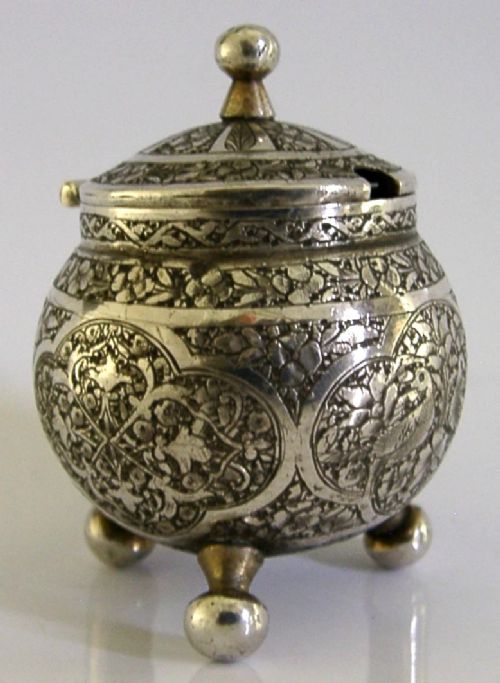
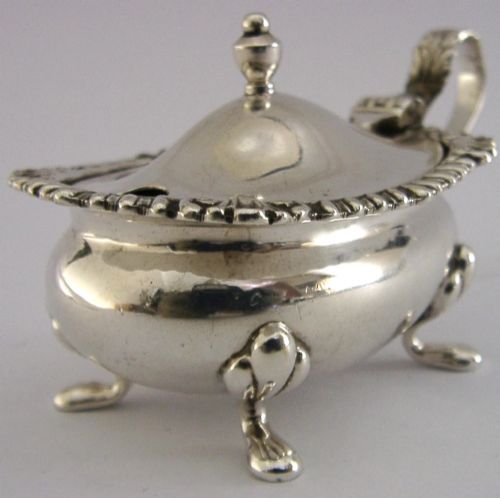
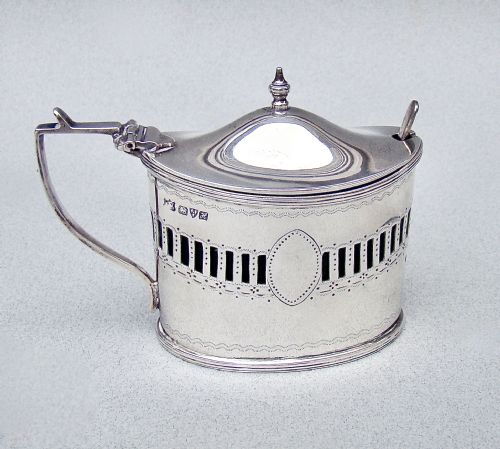
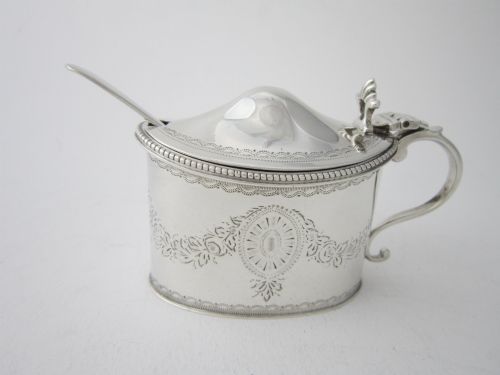
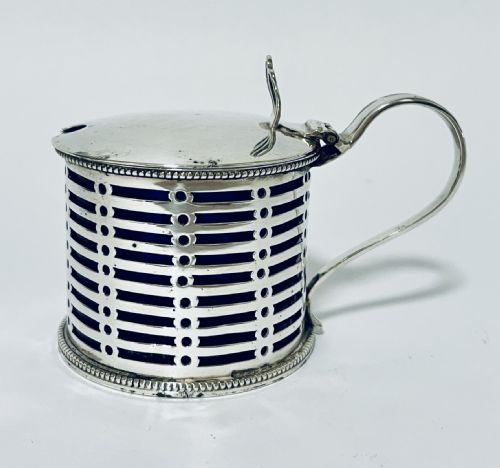
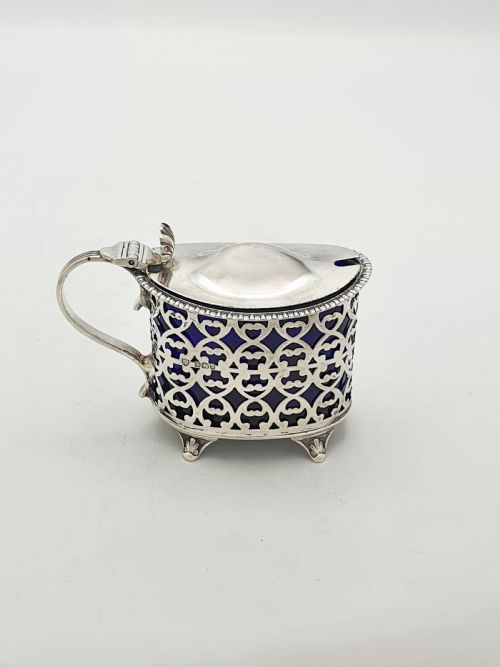
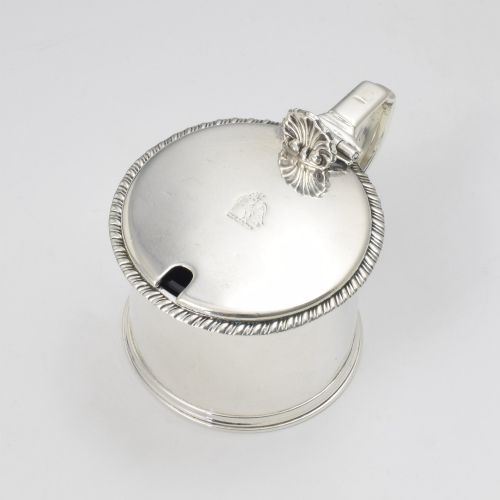
A silver condiment vessel encompasses mustard pots, sugar bowls, preserve jars, and novelty salt cellars found across the Georgian, Victorian, Edwardian, and Art Deco periods. The mustard pot appears most frequently on this page, taking forms from plain drums and octagonal bodies to pierced cylinders.
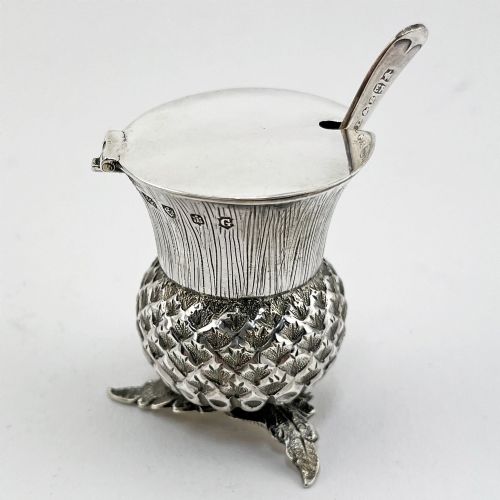
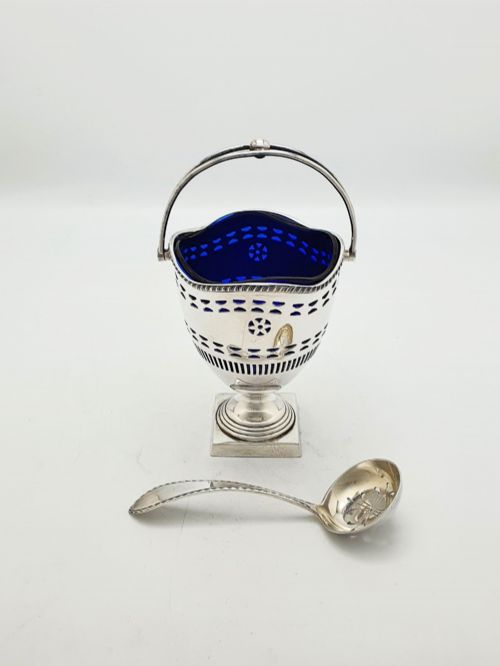
Pieces range from early Georgian plain designs by notable makers to elaborate Victorian pierced work and twentieth-century polygon shapes. Alongside standard tableware, the selection includes decorative dishes, cream pails, and whimsical Scottish novelty items shaped like thistles or animals.
Materials and construction
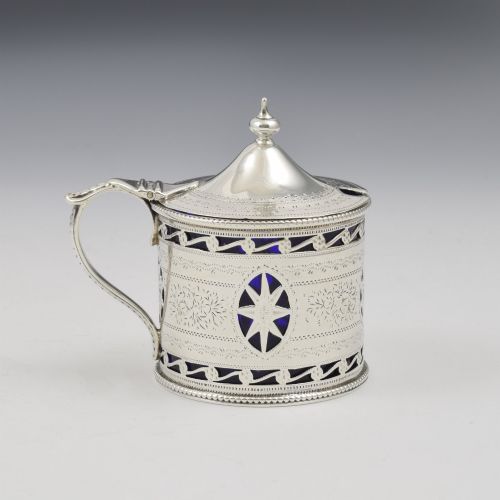
Silversmiths constructed these vessels primarily using sterling silver, silver plate, and brass, often mounting the metal frameworks onto glass liners. Cobalt glass, blue glass, and clear cut glass provide vibrant contrast inside pierced or openwork silver bodies.
Techniques varied from smooth, plain sheet silver to intricate pierced ornamentation, chased cherubs, and wirework stands. Interiors frequently retained removable glass containers to protect the metal from acidic condiments and preserves.
Silver Condiment Vessel Retail Price Guide 2026
Typical asking prices for silver condiment vessel among the pieces listed under this phrase on Sellingantiques today, from the lower quarter to the upper quarter. They describe what is for sale here now, not the wider market.
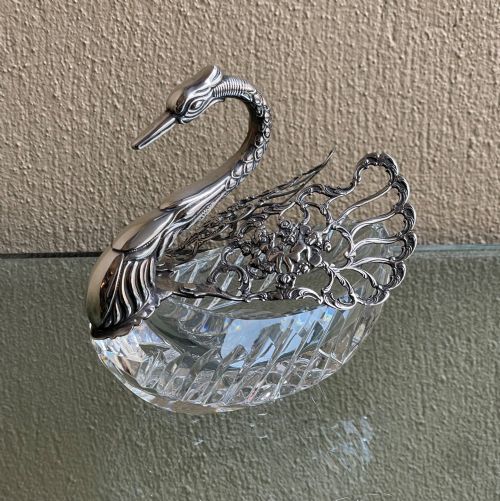
Squirrels and swans occasionally guard the dining table in the form of novelty sugar boxes and salt cellars.
Assessing quality
Quality rests upon the weight of the metal, the crispness of any pierced or chased decoration, and the integrity of the glass insert. Heavier gauge silver and substantial maker output distinguish superior items from standard production.
The precision of the hinged lid, the balance of handles, and the survival of original matching glass liners elevate a piece. Evidence of master silversmith involvement through clear hallmarks adds substantial merit.
Alfred Marston·Nathan and Hayes·Charles Fox II·Matthew Boulton·Robert Hennell I·Charles Stuart Harris·Omar Ramsden·Roberts and Belk·Heath and Middleton
The Silver Condiment Vessel Glossary
- Pierced silver
- Metalwork cut through in decorative patterns to reveal the coloured glass liner beneath.
- Drum mustard pot
- A cylindrical lidded vessel shaped like a small drum, typical of Georgian and Victorian dining tables.
- Sterling silver
- An alloy containing a high proportion of pure silver, standard for quality British tableware.
- Cobalt glass
- Deep blue glass commonly utilised for contrasting liners inside openwork condiment pots.
Silver Condiment Vessel: Frequently Asked Questions
How do I clean my silver condiment vessel?
Wash the silver gently in warm soapy water with a soft cloth, removing glass liners first to protect them.
Dry thoroughly with a microfibre cloth and avoid harsh chemical dips that strip away historic patina.
Are glass liners original to the pieces?
Many Victorian and Edwardian pots retain their original cobalt or cut glass liners, which fitted snugly into the pierced metal frame.
Replacements do occur, so check whether the rim sits flush and matches the interior dimensions.
How do I tell a Georgian mustard pot from a Victorian one?
Georgian examples often favour plain, elegant geometric lines or restrained classical engraving, reflecting earlier neoclassical tastes.
Victorian pieces tend towards heavier pierced decoration, embossed floral motifs, and more elaborate animal or cherub designs.
Can I use these vessels for everyday dining?
Solid silver and glass condiment pieces suit modern table use provided you wash them promptly after holding mustard or preserves.
Acidic foods should not remain in contact with silver for extended periods to prevent tarnishing.